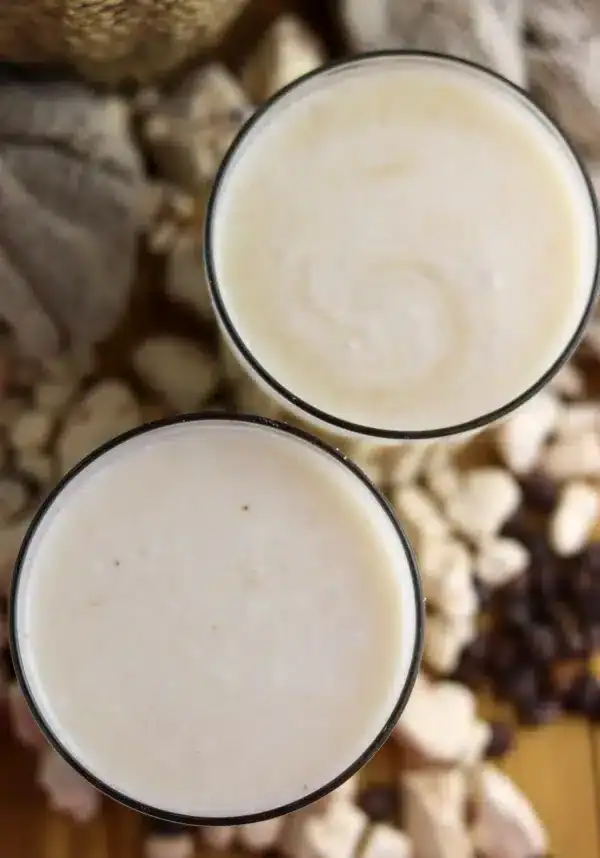
Baobab Juice With Coconut
Easy recipe for a creamy, organic baobab juice with coconut and banana flavour.
EQUIPMENT
- 1 bowl
- 1 strainer
INGREDIENTS
- 300 g baobab pulp with seeds OR
- 150 g baobab powder without seeds
- 1 l water
- 2.5 dl coconut milk
- sugar or sweetener (optional)
- banana (optional)
Pin
Print
INSTRUCTIONS
- Place the baobab pulp in a bowl and cover it with water. Stir a few times so all the pieces are submerged. Set aside and let it soak until the pulp softens and starts to break down, about 2 hours, depending on room temperature. Do the same if you're using already processed baobab fruit powder. The water may turn slightly orange or reddish - this is normal and comes from the seed fibers.
- Once softened, use clean hands to gently squeeze the pulp. This helps release the juice and separate it from the seeds and fibers.
- Strain the mixture through a fine strainer or clean kitchen towel, pressing firmly to extract as much liquid as possible. Don’t discard the solids too quickly; push any remaining pulp through the strainer with a spoon. If needed, strain the juice once more for a smoother result. Save the seeds for baobab coffee.
- Sweeten the juice to taste with sugar or a preferred sweetener, stirring until fully dissolved.
- Add the coconut milk and stir well. For a natural boost of flavor and creaminess, add a small banana and blend until smooth. If you plan to store the juice longer, a little lemon juice helps keep it fresh.
- Optionally, if you like it more creamy, blend in a banana using a blender or food processor.
- Transfer the juice to a bottle or glass and chill in the refrigerator. Serve cold. Enjoy!
Video
NOTES
USEFUL TIPS
- Buy baobab pulp from reliable sellers, and choose organic when possible.
- Coconut milk can be swapped for condensed milk or powdered milk. Lemon juice won’t affect condensed milk, but use powdered milk carefully, as it can react differently with acidic ingredients.
- Baobab juice has a naturally tangy flavor and blends well with other juices. Pineapple, orange, mango, apple, and ginger pair great with baobab.
- You can turn the juice into a smoothie by blending it with fruits like orange or mango and adding a bit of fresh ginger for extra warmth.
- The same base works well for frozen treats. It can be made into sorbet, popsicles, or even ice cream by adding whipping cream or heavy cream before freezing.
- Freezing the juice into ice cubes is always a good idea. Drop a few cubes into cold drinks for a refreshing boost.
- Baobab pulp is also easy to use without making juice. Stir a few spoonfuls into yogurt, oatmeal, pudding, tea, coffee, or fruit sauces, or use it in healthy desserts like baobab bars, bites, or cookies.
- Baobab seeds don’t need to go to waste. Once dried and roasted, they can be brewed into baobab coffee. The leftover seeds can even be burned as a natural mosquito repellent.
- Dry baobab pulp keeps very well when stored in an airtight container in a cool, dry place. Stored properly, it can last for 2–3 years.
- Prepared baobab juice can be kept in the refrigerator for up to 5 days. Store it in a closed bottle or jar, and add fresh fruit like bananas just before serving.
- Freezing is also an option. The juice can be frozen for 8–12 months, the easiest way to freeze it is using plastic bottles.
- For long-term storage, baobab juice can be gently heated to 80°C (176°F), poured into sterilized bottles, sealed, and stored safely for up to 1 year.
NUTRITION
Serving: 274g ~Calories: 221kcal ~Carbohydrates: 50.5g ~Protein: 2.8g ~Fat: 10.3g ~Saturated Fat: 9.01g ~Sodium: 16.3mg ~Potassium: 1113mg ~Fiber: 25.2g ~Sugar: 3.8g ~Vitamin C: 75.7mg ~Calcium: 158.4mg ~Iron: 4.6mg