
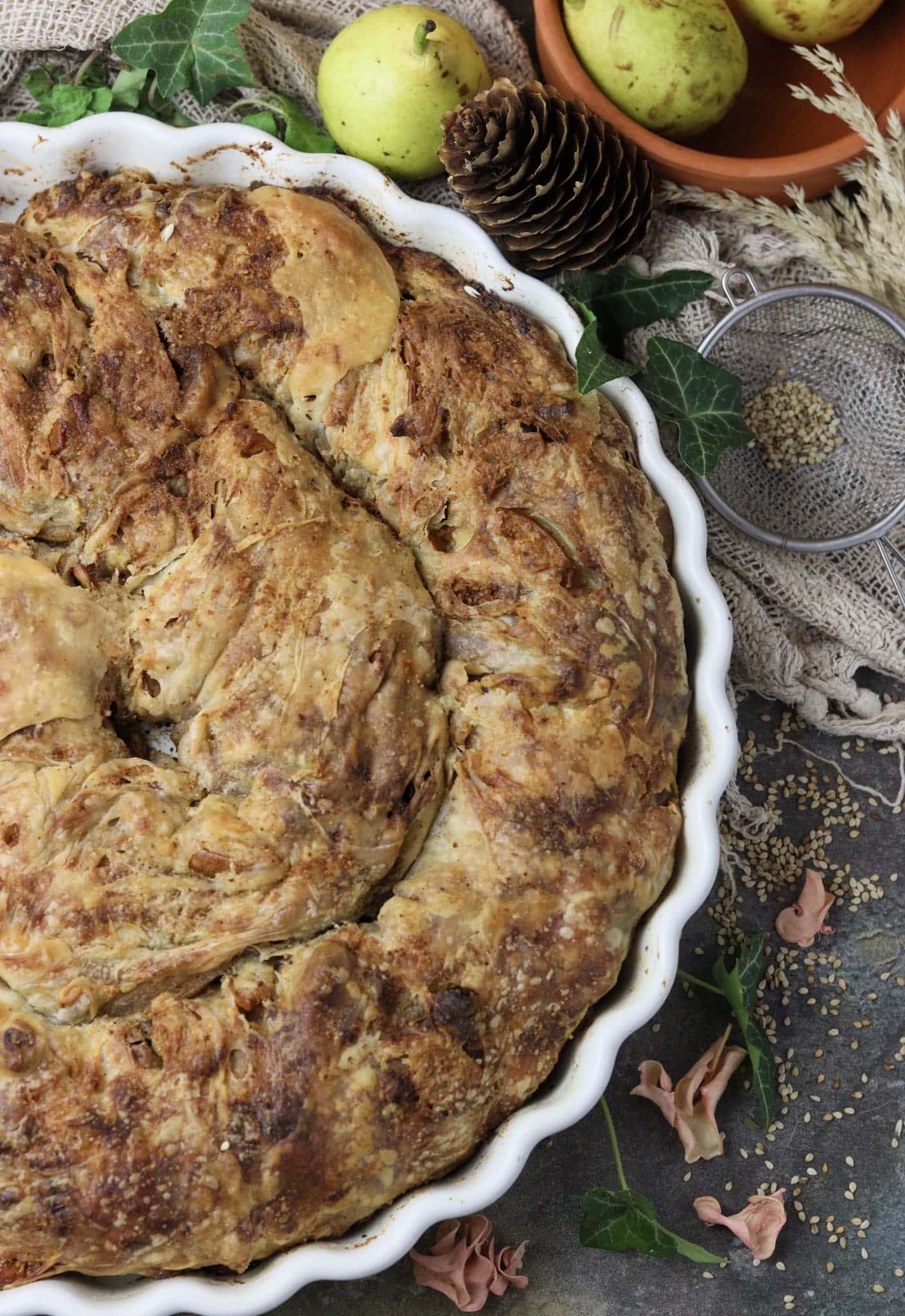
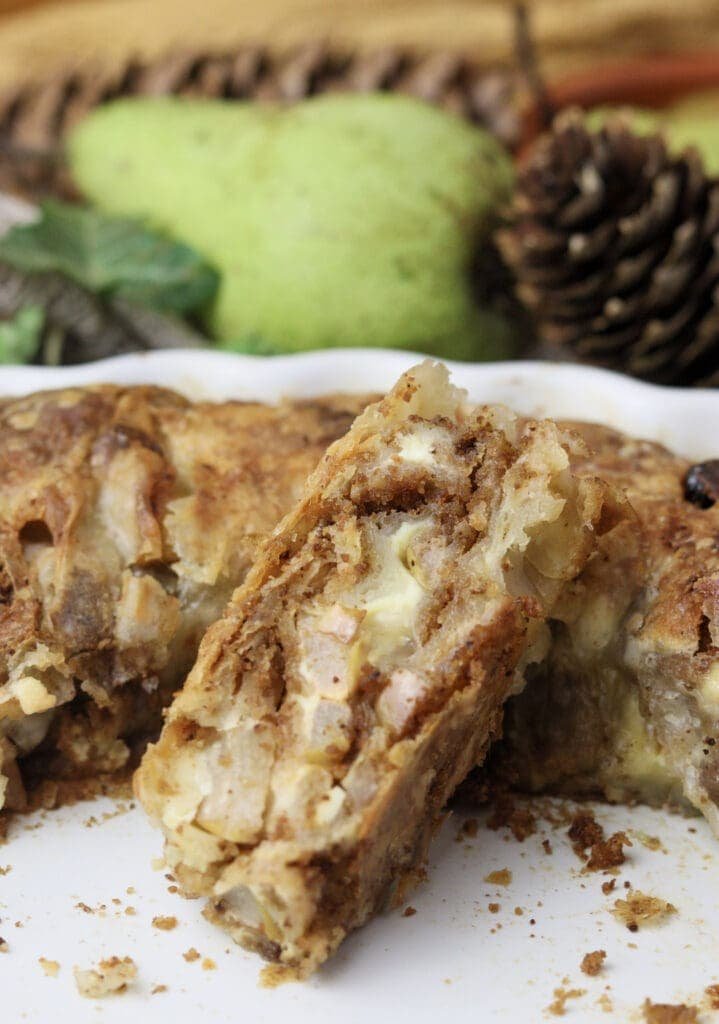
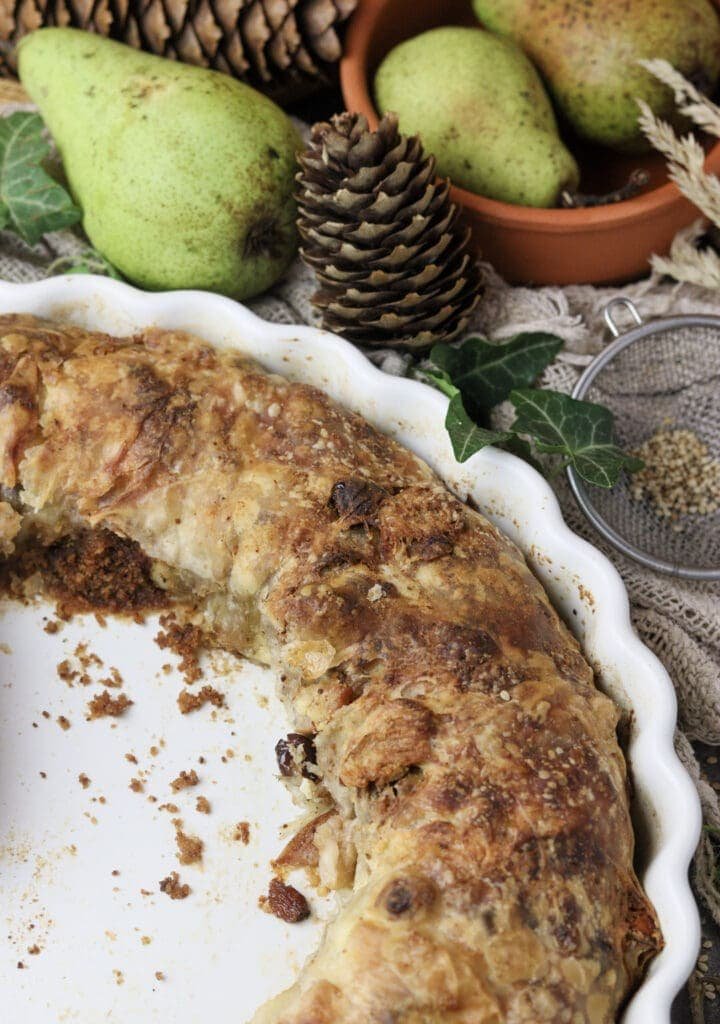
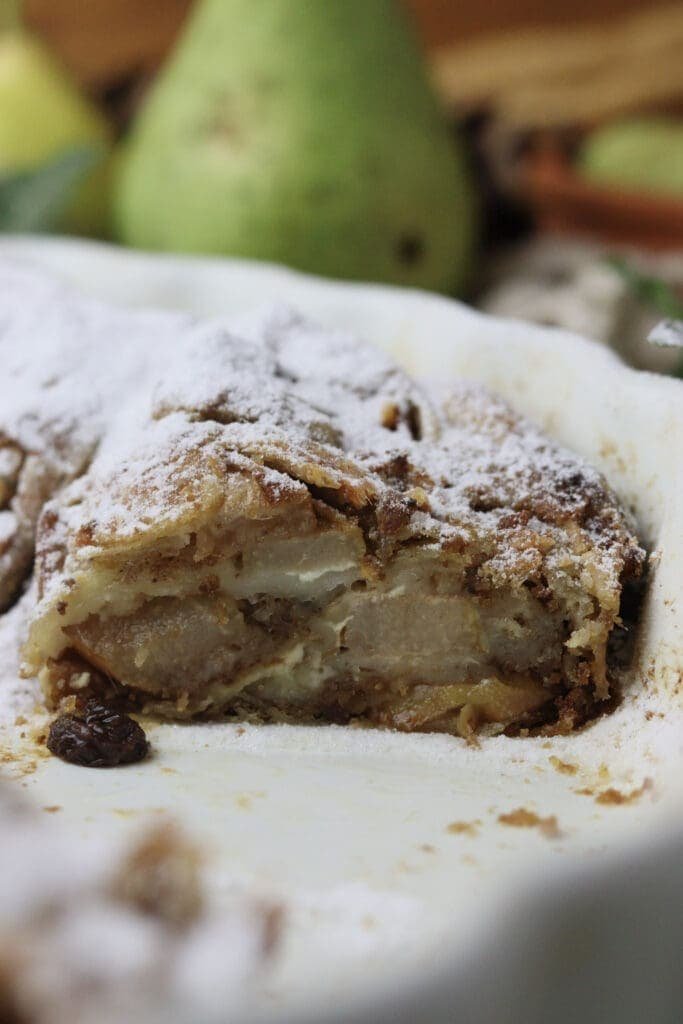
Is there anything sweeter than the smell of homemade strudel baking in the oven while you sip your morning coffee or gather around the kitchen with your family? This pear strudel recipe brings cozy warmth to any day with its buttery, flaky layers and dreamy combination of cottage cheese, pears, raisins, and cinnamon.
If you have a surplus of fresh pears, homemade pear strudel is a very budget-friendly fall dessert you definitely need to try.
Reading love letters through the pear strudel dough
While strudel is a renowned Austrian dessert, its roots can be traced farther east. It was actually introduced to Europe by the Moors during their conquests of what are now Spain and France. Instead of the rolled dough we know today, the Moors crafted their version by layering thin sheets of dough on top of one another.
Turkish conquests also propelled the spread of strudel across Europe. From the Balkans and Hungary, this beloved treat found its way into Austrian kitchens, where it became a staple of local cuisine. The charming dessert was baked in a covered cast-iron pan over an open flame in its earliest days.
Quickly enough, strudel became a star dessert of the entire Austro-Hungarian empire. Even today, you can more or less trace the old empire’s borders by which households still bake it. The Austrian imperial chef established the gold standard for its preparation, decreeing that the dough must be stretched so thin that a love letter – or even a newspaper – could be read through it.
Apple strudel usually hogs the spotlight from the Austro-Hungarian empire, but pears had their moment too, thanks to Empress Maria Theresa. She’s the one everyone credits with shaking up the region through reforms, and apparently fruit trees were part of the plan. Visionary, right?
She ordered a pear tree planted in every courtyard, since pears are tough, reliable, and produce like crazy. The state even handed out the seedlings for free. Imagine your government mailing you a pear tree instead of a tax bill!
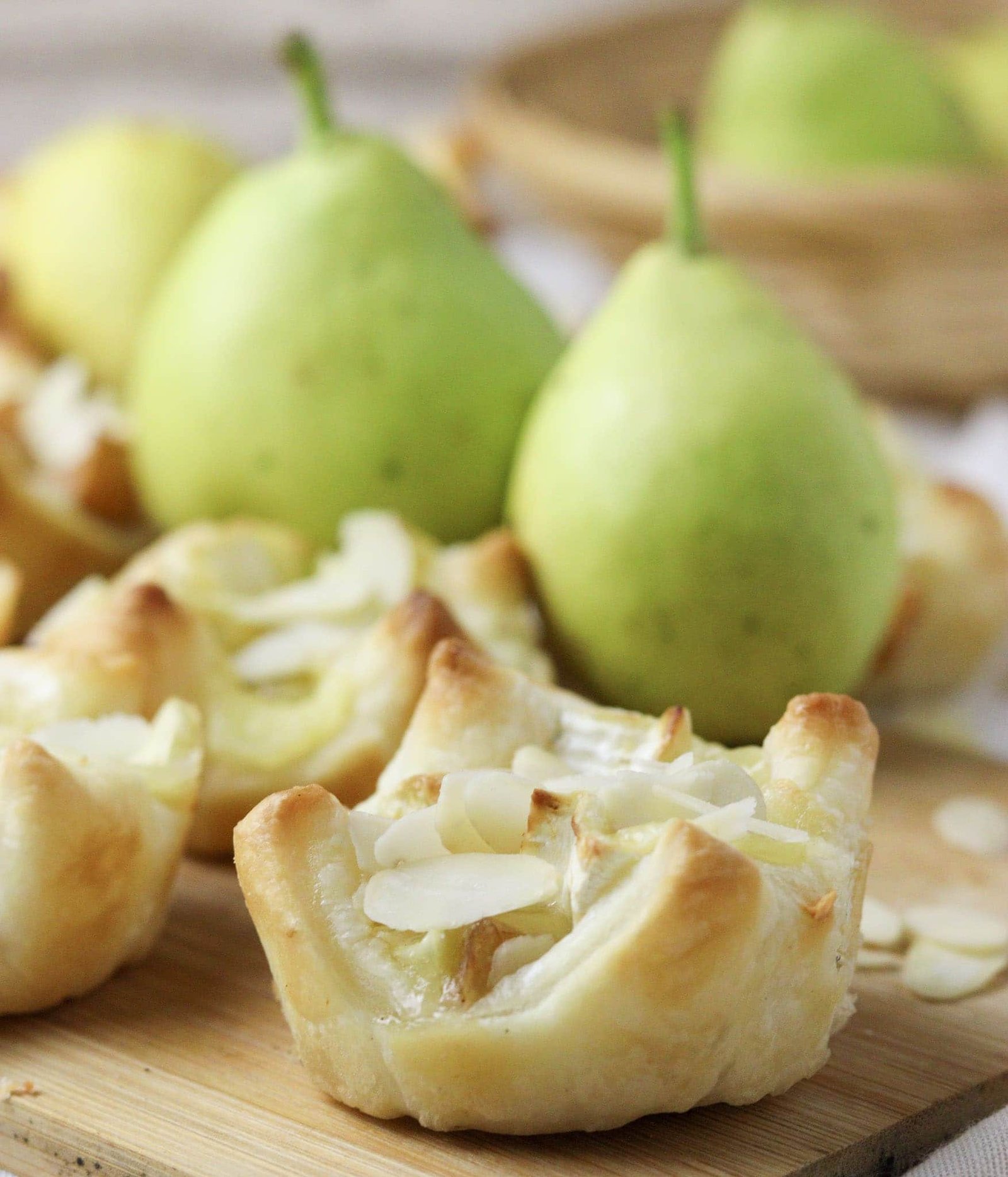
If you’ve enjoyed our brie and pear puff pastry or pear potato soup, pear cheese strudel is another delicious one to add to the list. It’s got that same rustic, Austro-Hungarian charm as in times of Maria Theresa.
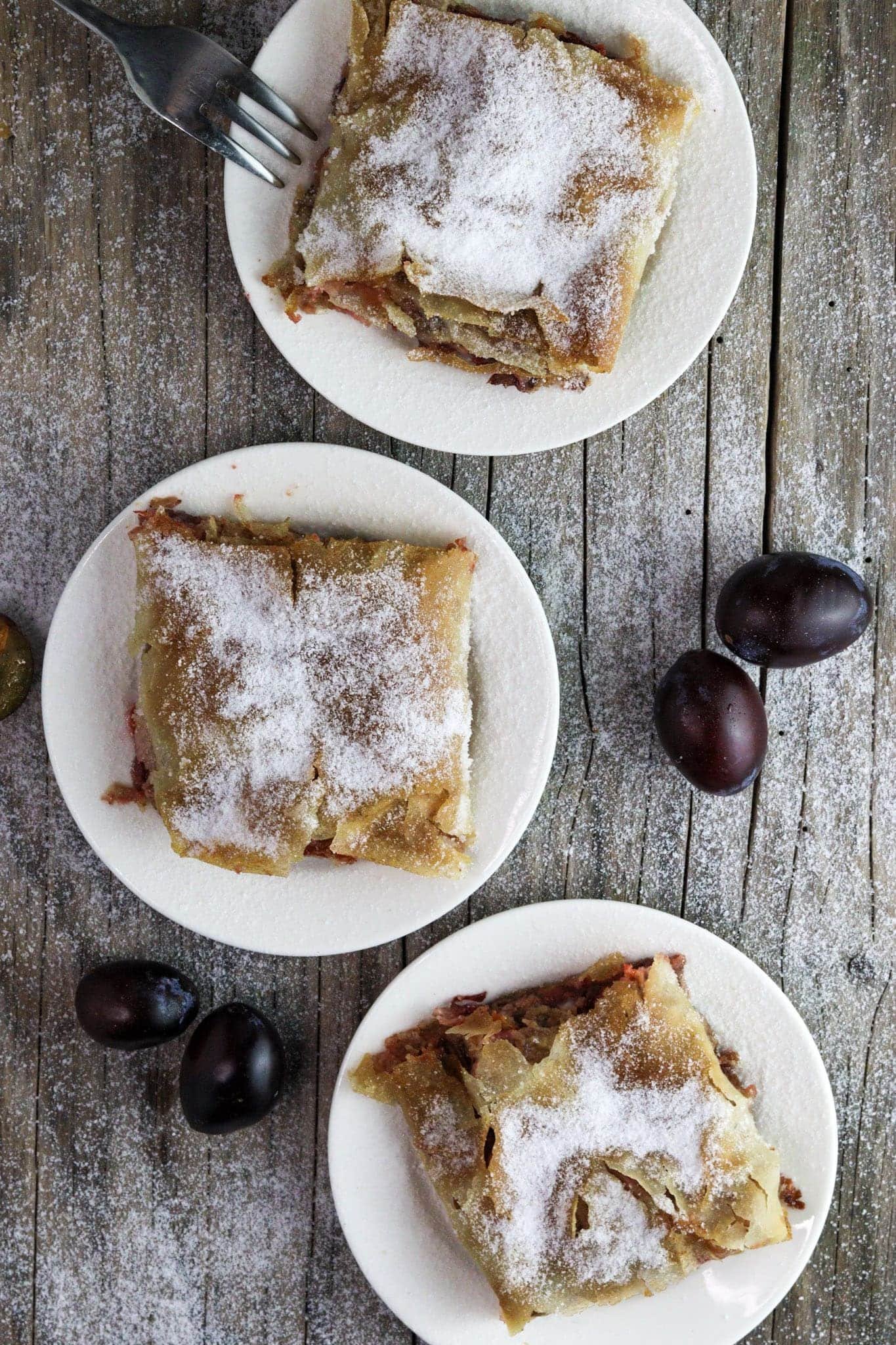
And if you don’t have time to stretch dough by hand, no shame in that. Just follow our plum strudel recipe and use premade phyllo sheets instead.
Pear cheese strudel ingredients
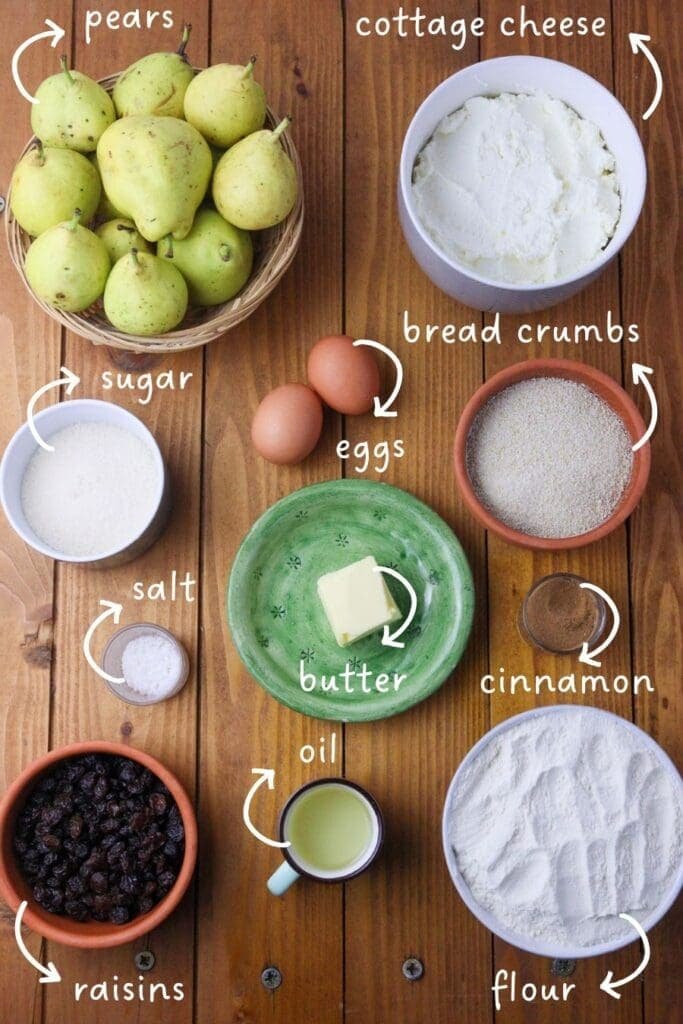
PEARS – We used fresh, ripe pears for this recipe. Their natural sweetness and juiciness make them the perfect star of the strudel. You can swap pears or add other fruits like apples, plums, basically whatever fits in a phyllo pastry sheet.
FLOUR – In this recipe, organic, unbleached all-purpose flour was used for its clean, natural taste and texture. If you’re making the dough from scratch, this is the best to use.
COTTAGE CHEESE – Full-fat cottage cheese is essential for a rich and creamy filling. It may be a bit messy, but once baked, it transforms into a velvety, cheesy layer that pairs beautifully with the pears.
RAISINS – Dried raisins add a lovely sweetness and a bit of chewy texture. Soak them in warm water, juice, or even rum for extra flavor before adding them to the filling.
BUTTER – Butter is key to a beautifully flaky crust and rich flavor. High-quality butter makes quite a difference, so don’t skip on this one.
EGGS – These are added to the cheese and nicely glue the cheese layer together. For the best flavor, opt for quality eggs from free-range chickens.
OIL – A little oil on top of the dough is what keeps it soft and stretchy enough to pull paper thin without tearing.
SUGAR – We used granulated sugar for a perfectly sweet filling and powdered sugar to sprinkle on top once the strudel is baked. If you have a coffee grinder, you can make powdered sugar yourself. Brown sugar is even better to use.
CINNAMON -Two tablespoons of cinnamon add warmth and spice, going well with the pears’ natural sweetness. It creates a cozy, irresistible smell. Nutmeg can also be used here.
SALT – A small pinch of salt enhances all the other flavors and it will help the dough to stretch more easily.
How to make pear strudel from scratch
PREPARING THE PEAR FILLING
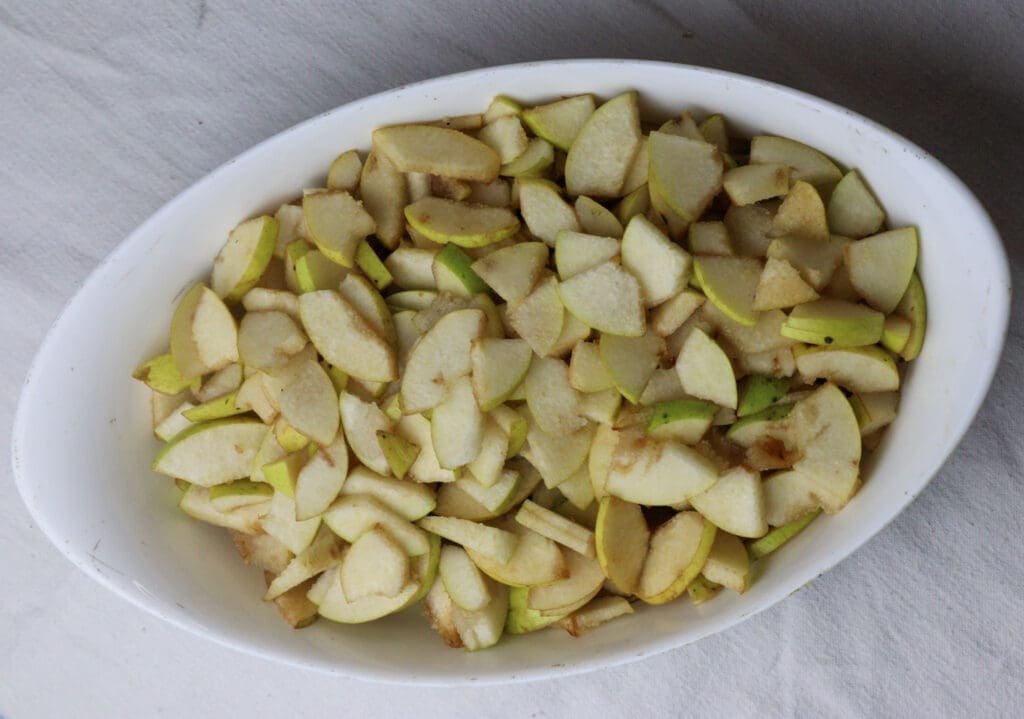
STEP 1: Start by slicing the pears into small slices. They should be thin enough that you’ll be able to roll the dough, but still chunky enough for your strudel to taste juicy. If you prefer, you can also shred them into tiny pieces using a usual shredder.
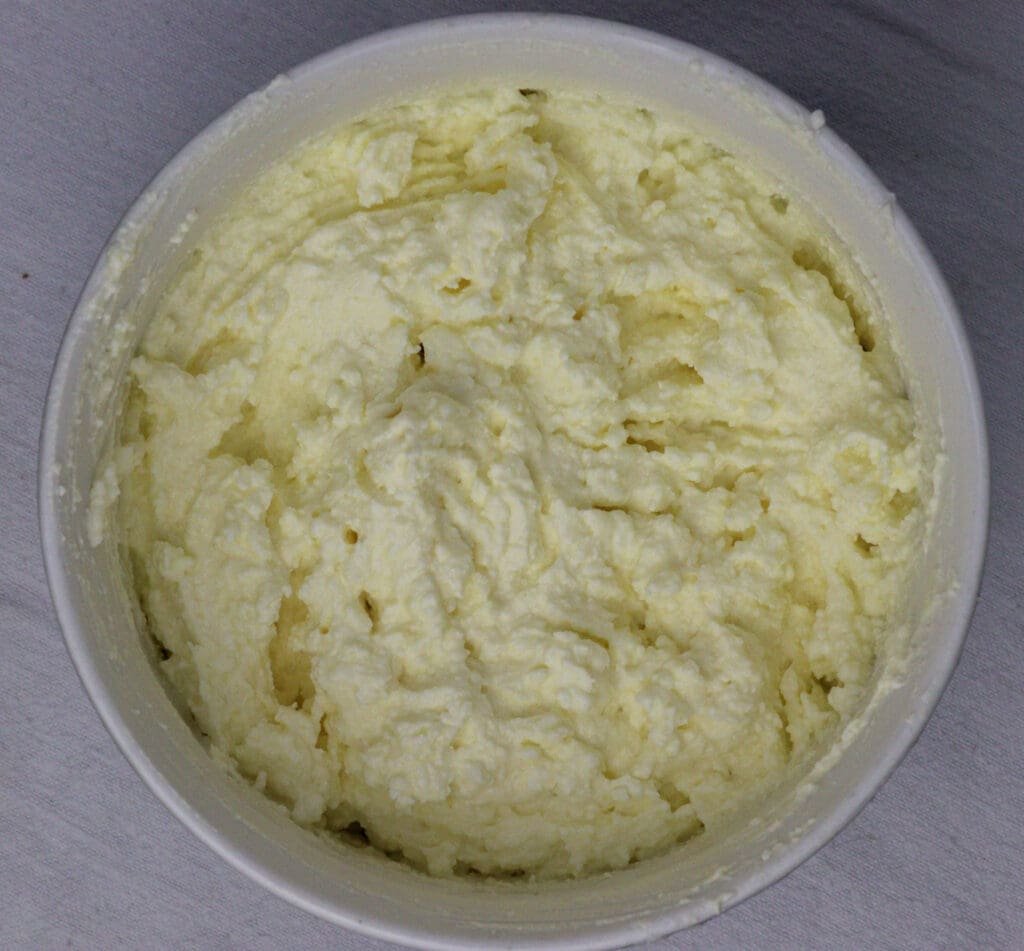
STEP 2: In a large bowl, mix two eggs and sugar. Add the cottage cheese and mix thoroughly with a fork or spatula.
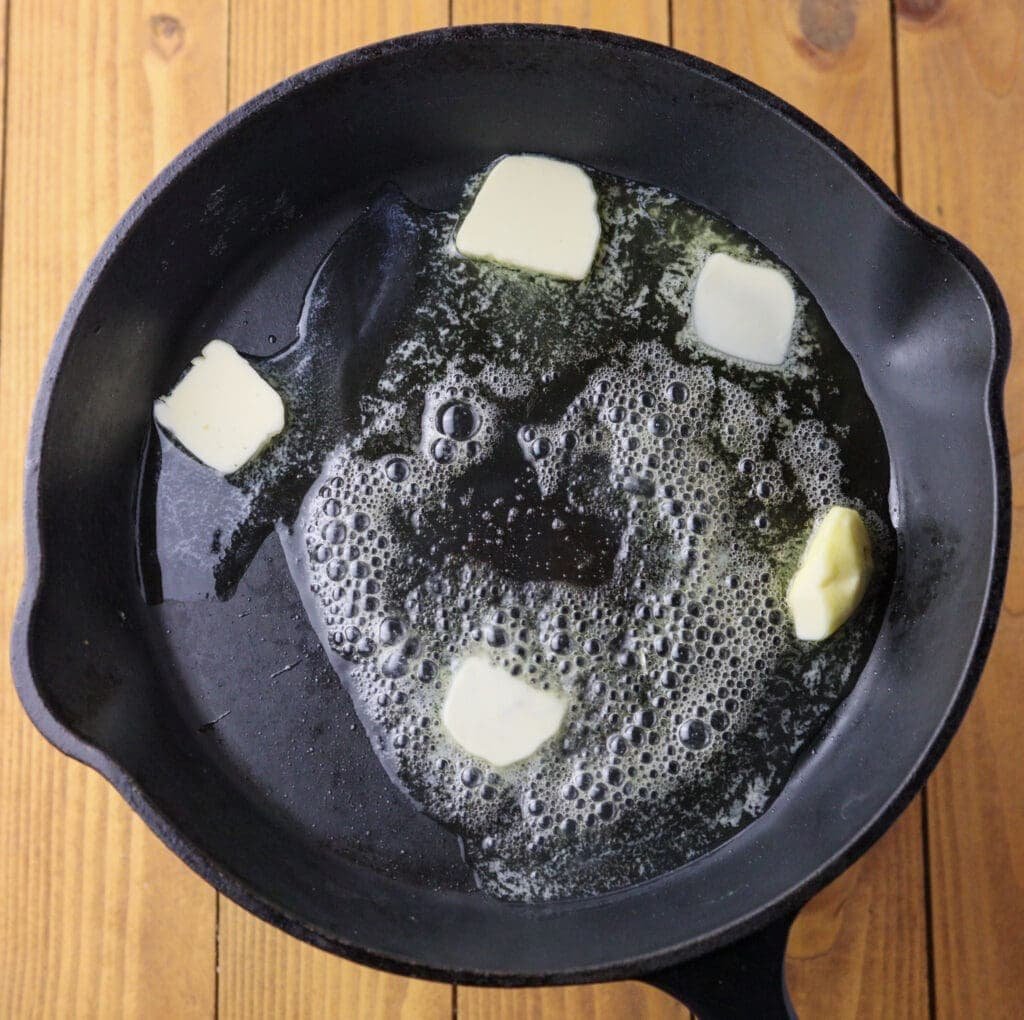
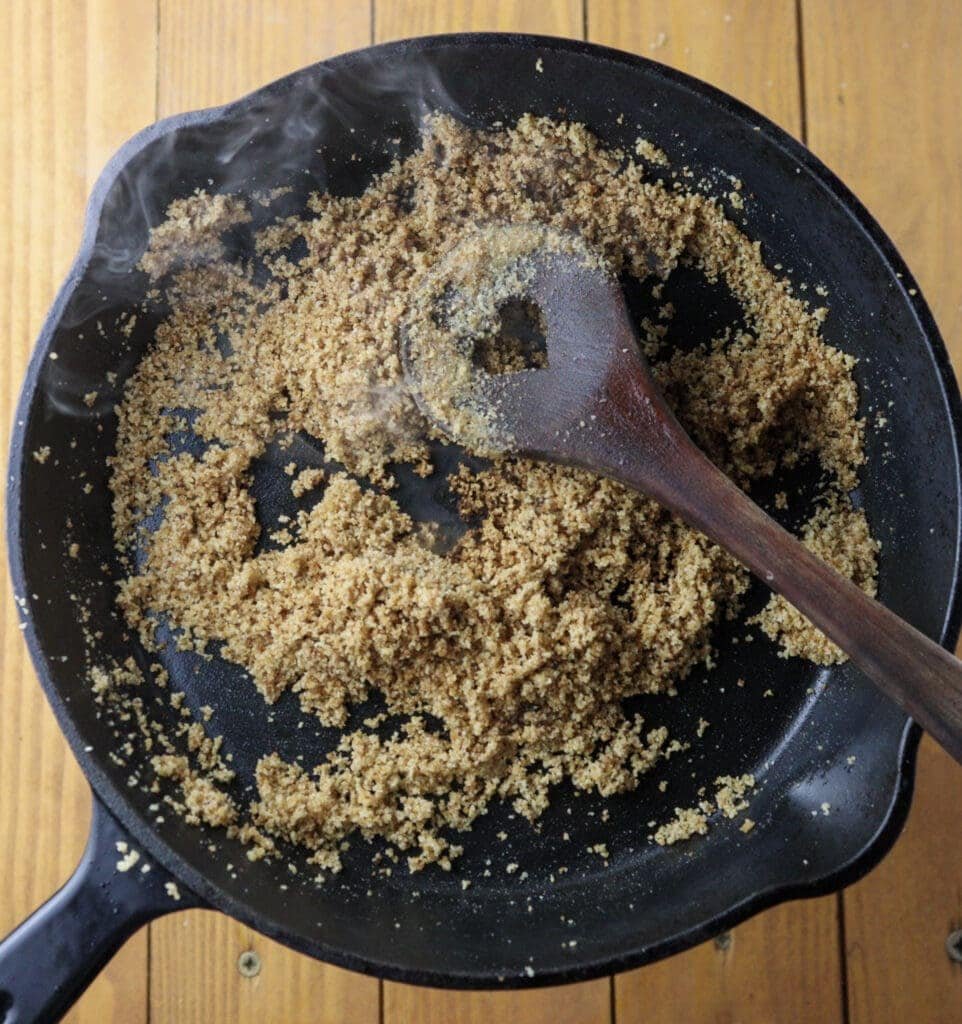
STEP 3: Melt the butter in a frying pan and toast the bread crumbs until they soak up the butter and become nicely browned.
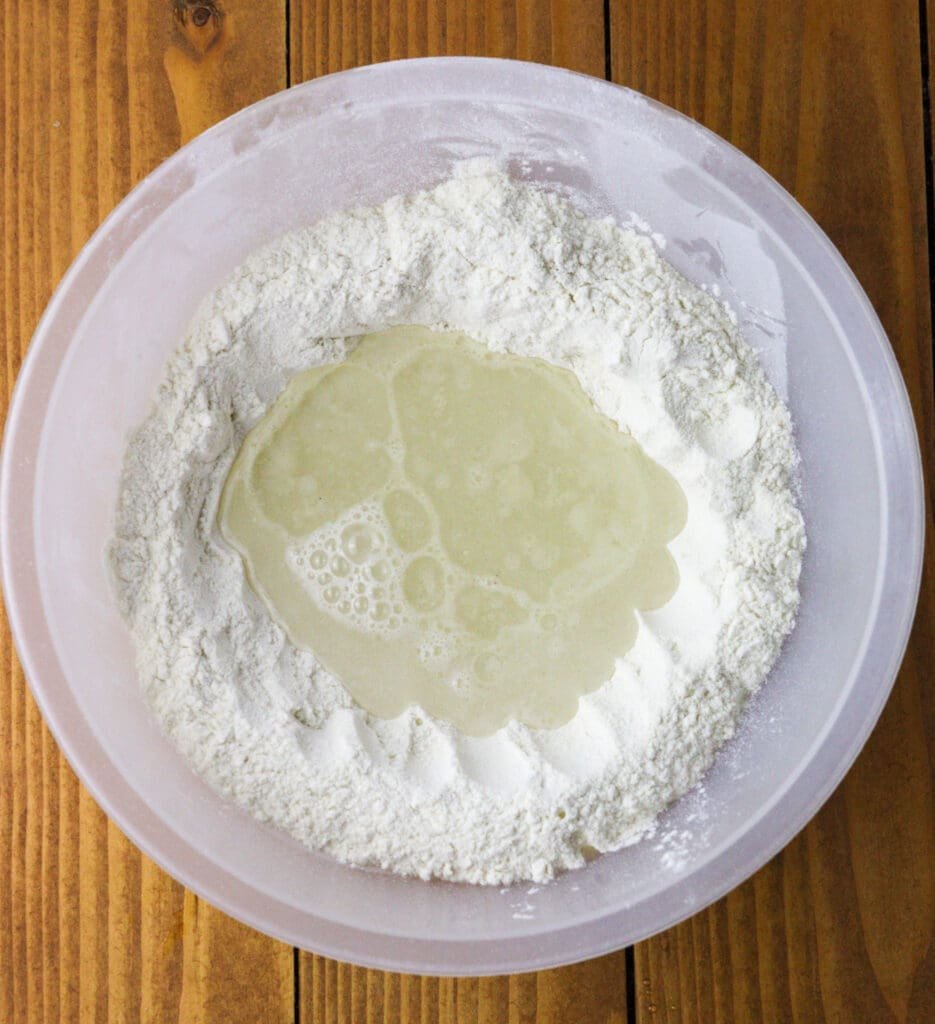
STEP 4: Place the flour into a bowl and create a well in the center. Pour in the water with dissolved salt and oil. Using your fingers or a fork, gently mix the ingredients until they come together to form a rough dough.
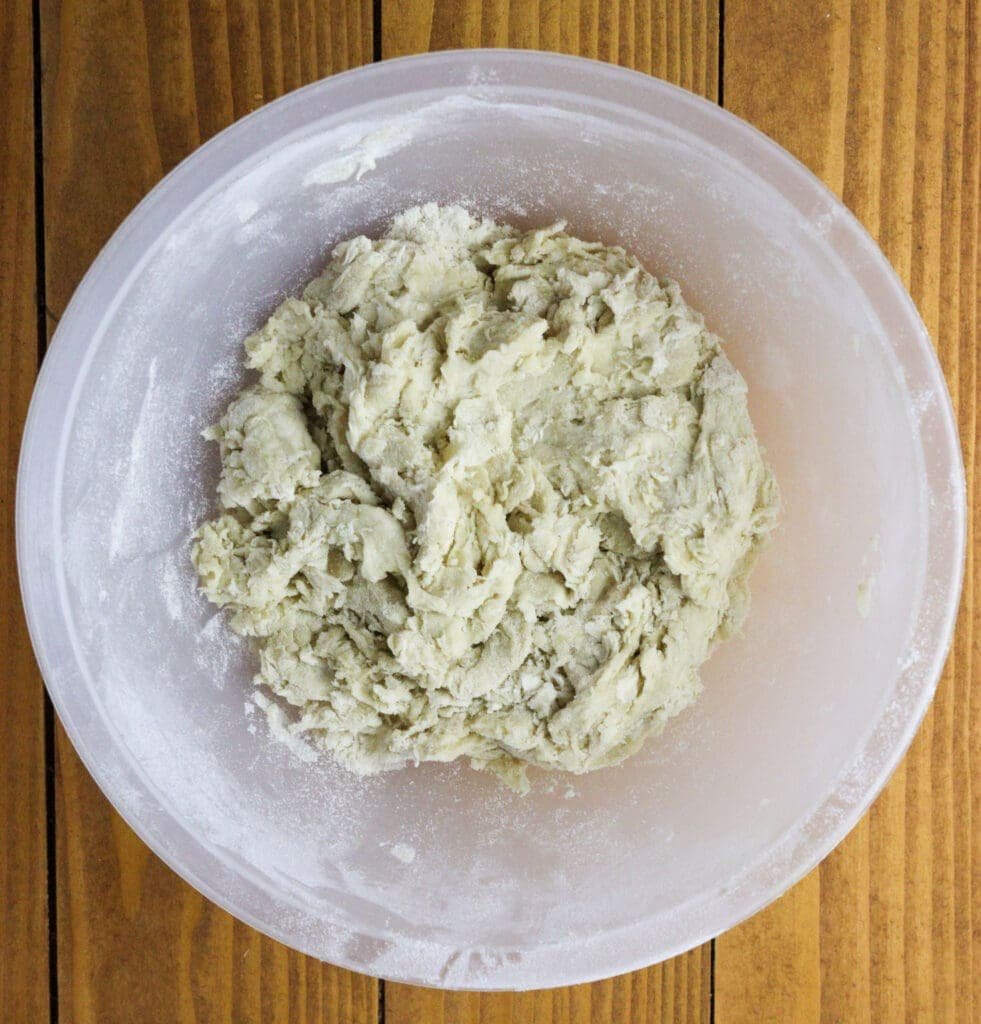
STEP 5: Transfer the dough to a work surface and knead for 5–10 minutes until smooth, soft, and elastic. If the dough feels too dry, add more water, one spoonful at a time. If using a stand mixer, set it up with a dough hook and knead for 8 minutes on medium speed.
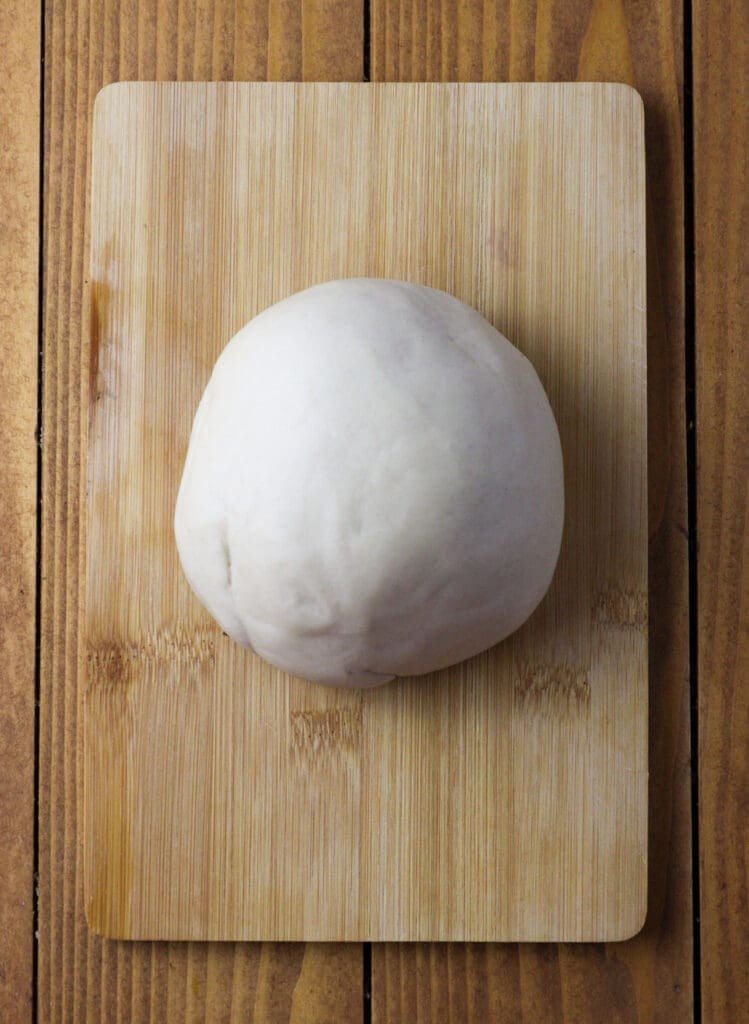
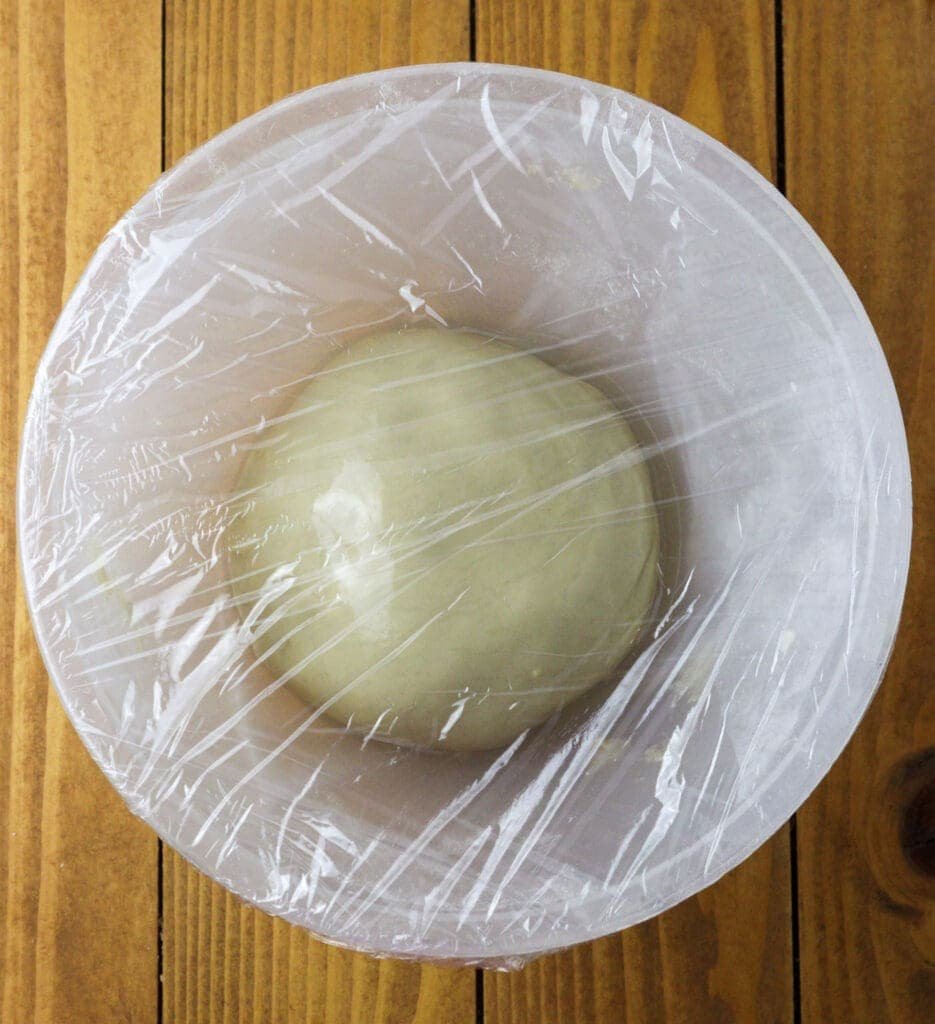
STEP 6: Shape the kneaded dough into a ball, coat it lightly with oil, and place it in a bowl. Cover it with plastic foil and let it rest at room temperature for one hour.
STRETCHING THE DOUGH AND FILLING THE STRUDEL
STEP 7: Preheat the oven to 356°F/180°C.
When the dough is ready, cover a larger, clean surface (we used our kitchen table) with a clean cotton tablecloth. Flat bed sheets work perfectly, too. Whatever you use, generously sprinkle it with flour.
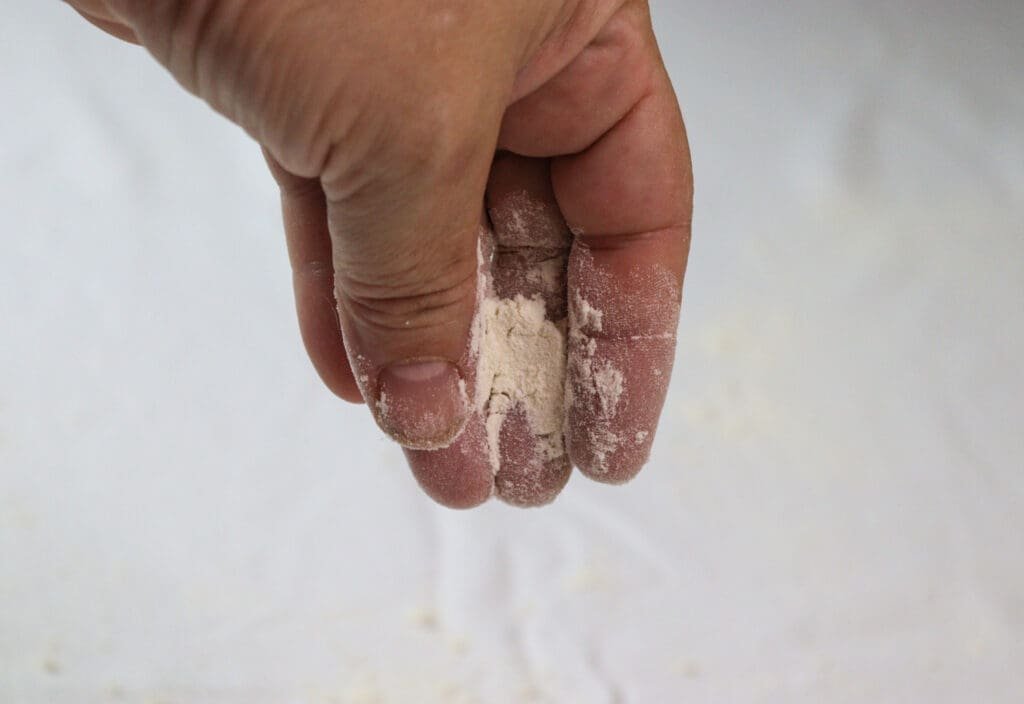
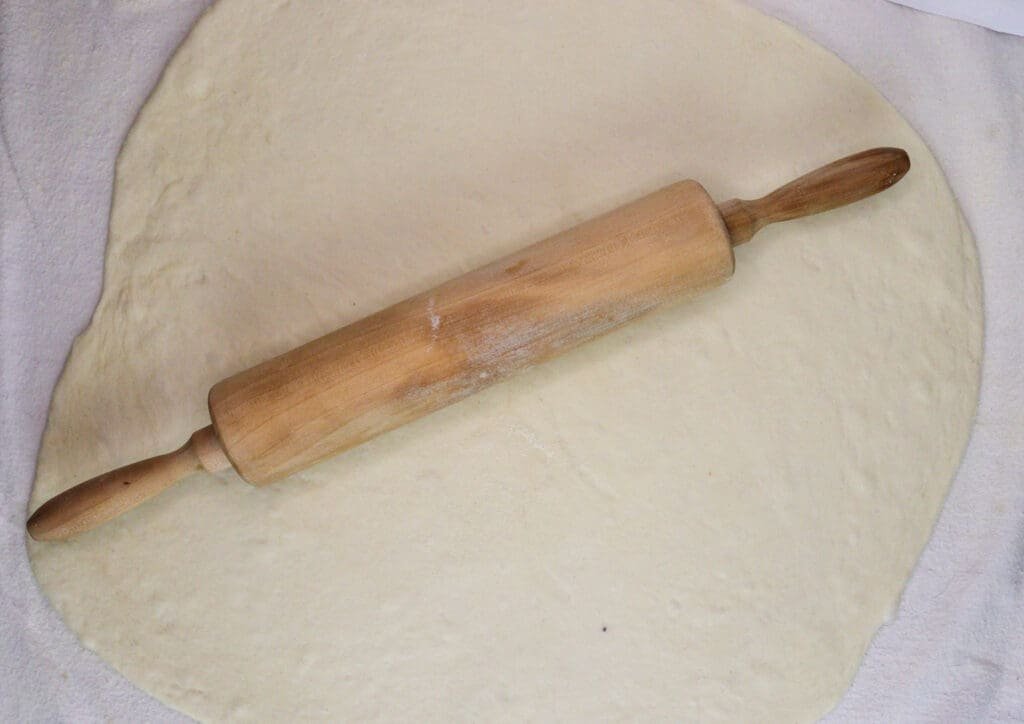
STEP 8: Reload the dough onto the table and sprinkle it with flour before you roll it out into a larger patch.
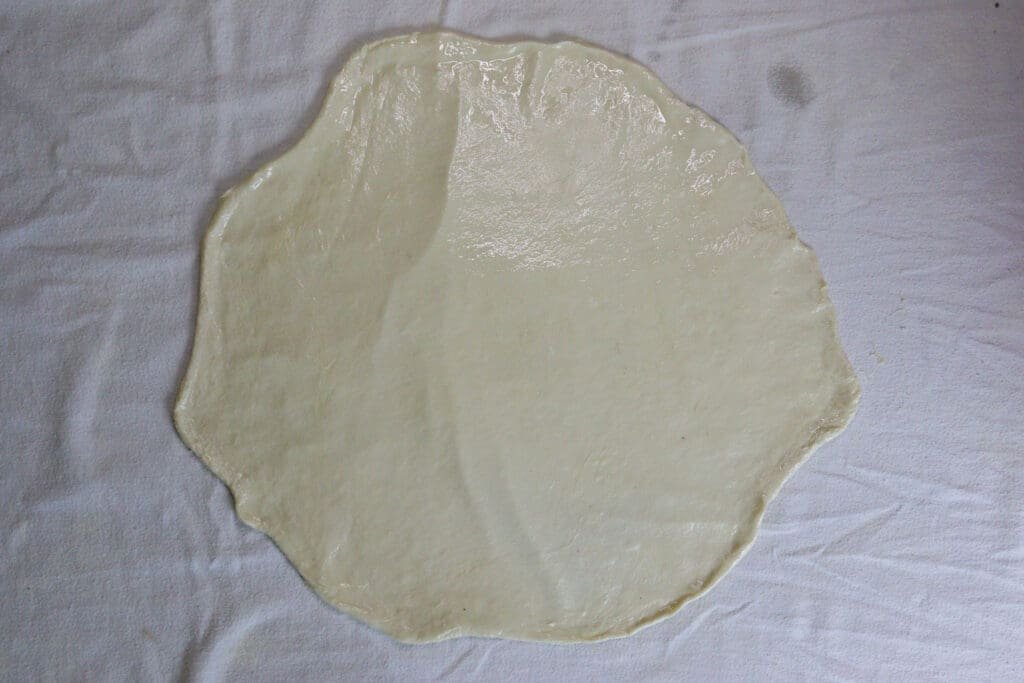
STEP 9: Grease it generously with oil, then let it rest, covered, for about 10 minutes before continuing to work with it.
STEP 10: Next, carefully stretch the dough thin by working from the center towards the outward edges. Slip one or both hands under the dough and gently pull it toward yourself using the backs of your hands, taking care not to tear it.
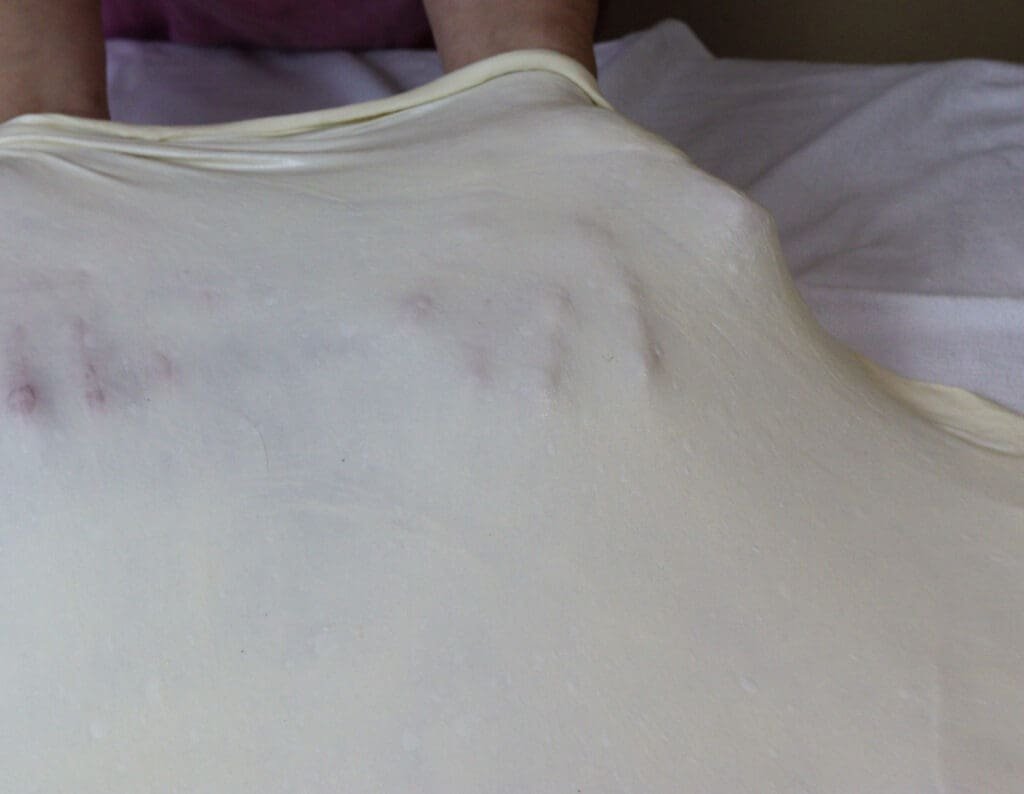
STEP 11: The dough should be stretched slowly and evenly until it becomes delicate and paper-thin – so fine, in fact, that you could almost “read a newspaper or a love letter” through it.
STEP 12: When done, the edges of the strudel dough will remain a bit thicker. Trim them off using a small, sharp kitchen knife.
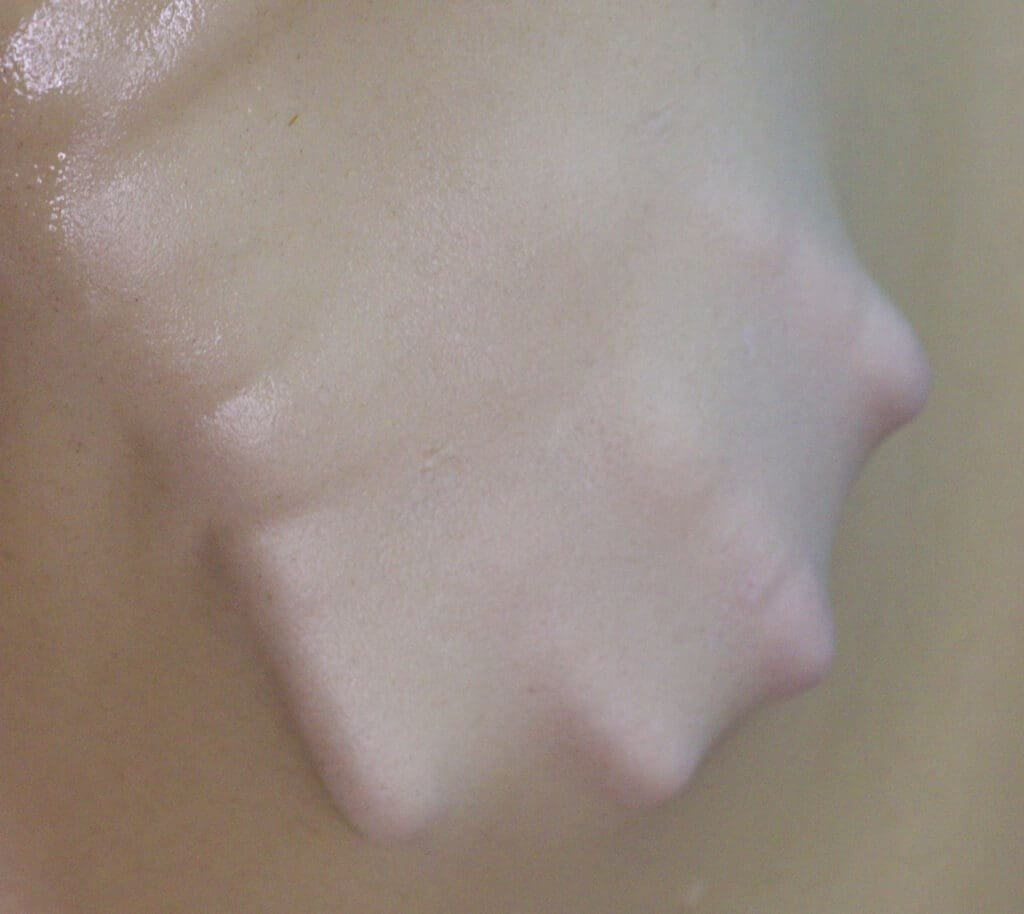
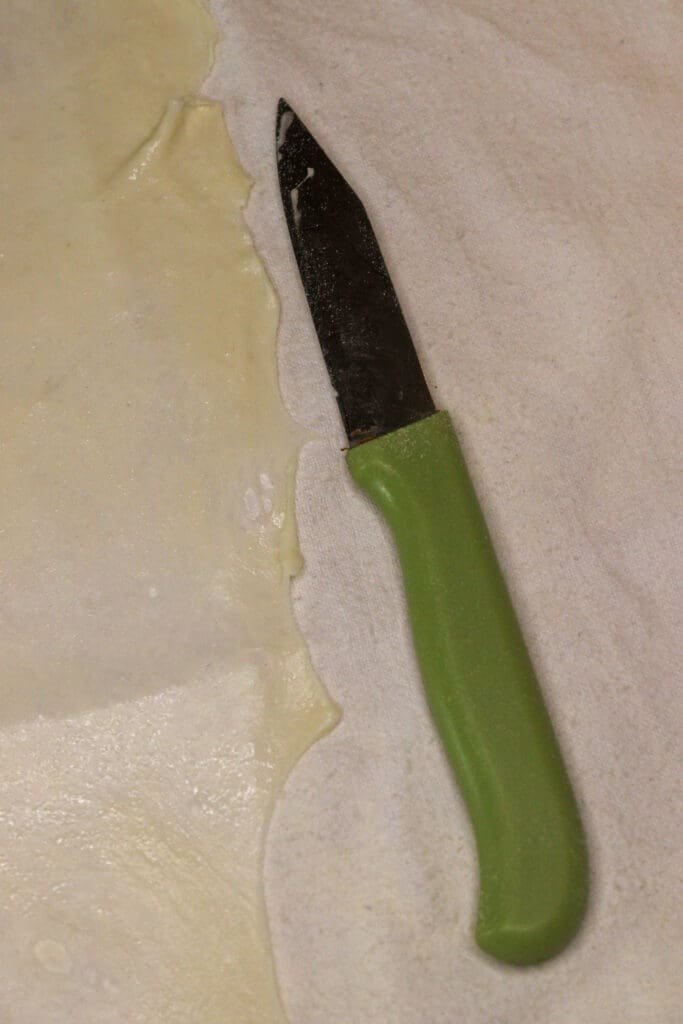
STEP 13: Spread the cheese mixture evenly over the stretched dough, then cover about two-thirds of the surface with pear slices, lightly squeezing out any excess juice if necessary.
The traditional recipe calls for spreading the breadcrumbs first, creating even crunchier dough layers when baked.
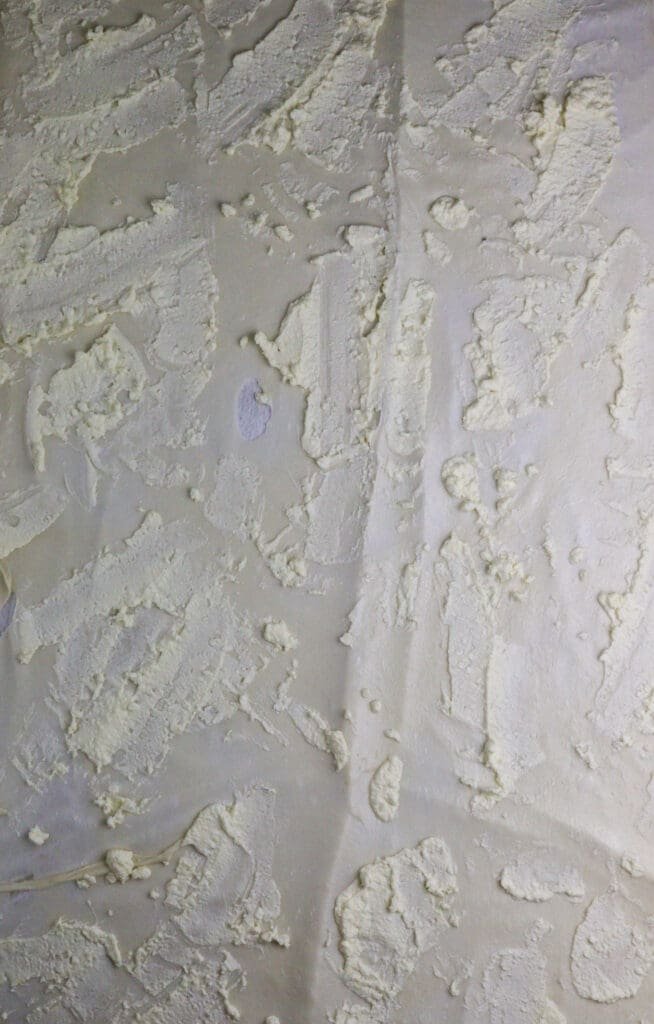
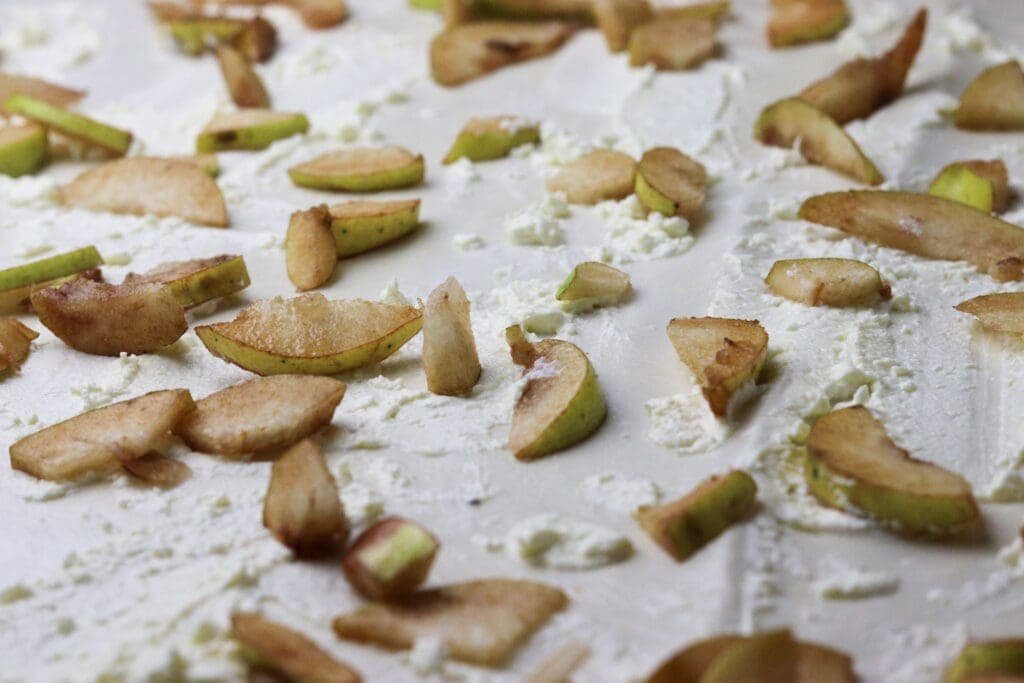
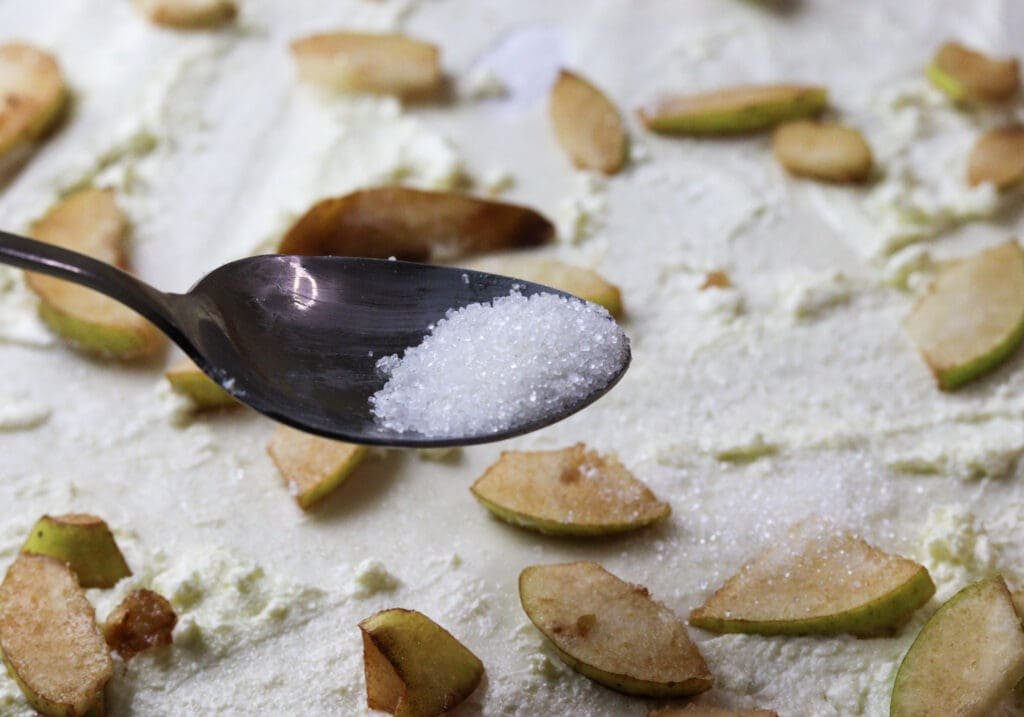
STEP 14: Add sugar over the pears and cheese and sprinkle everything with cinnamon to your liking.
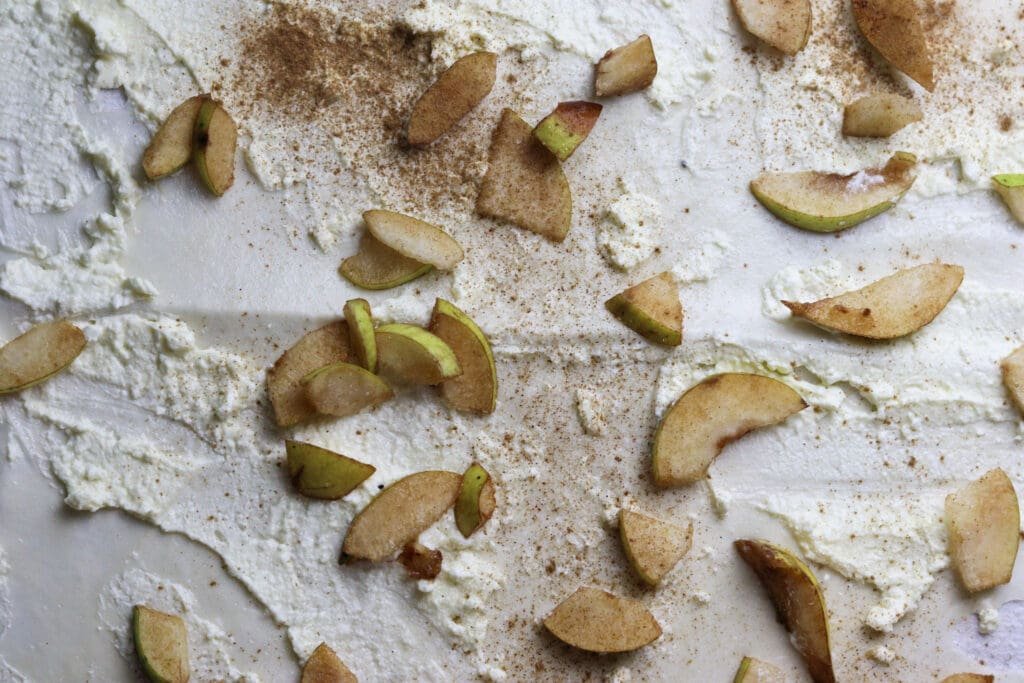
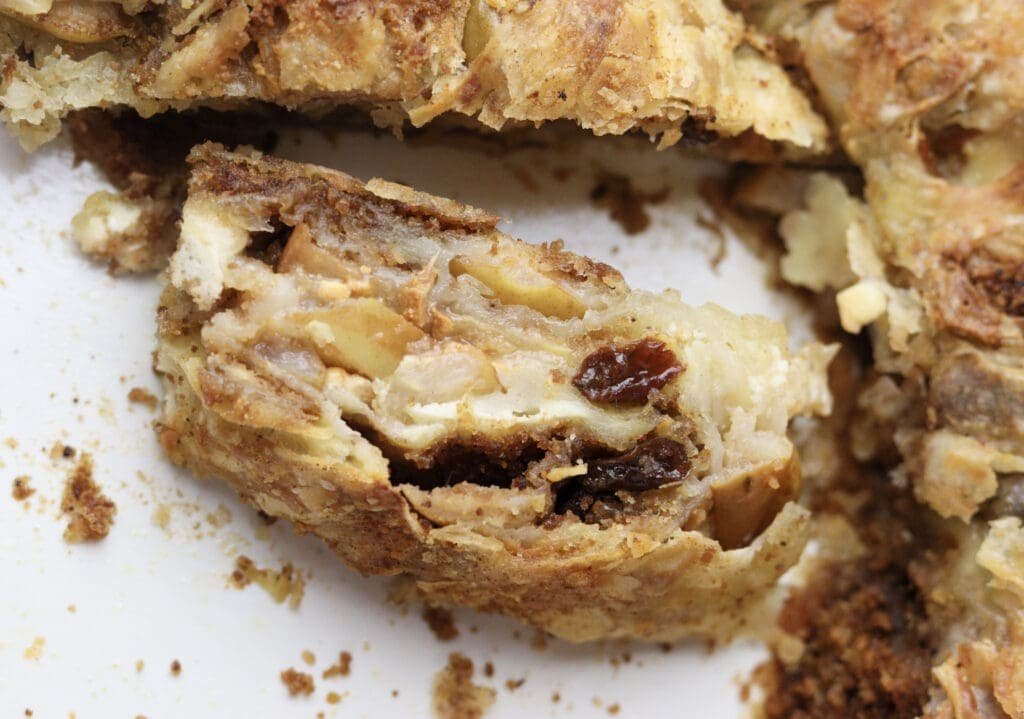
STEP 15: Next, evenly spread the raisins over the whole covered surface. If desired, drizzle them with a bit of fresh lemon juice for an extra touch of brightness.
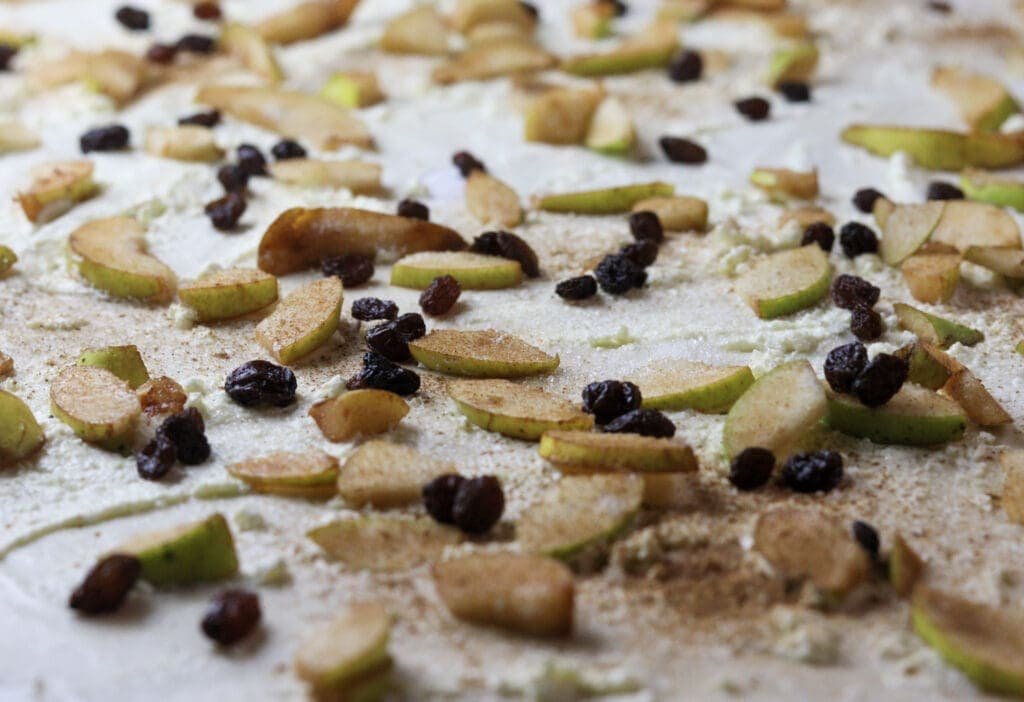
STEP 16: Lastly, spread the toasted bread crumbs if you haven’t already. They should be sprinkled evenly all over the covered surface of the dough.
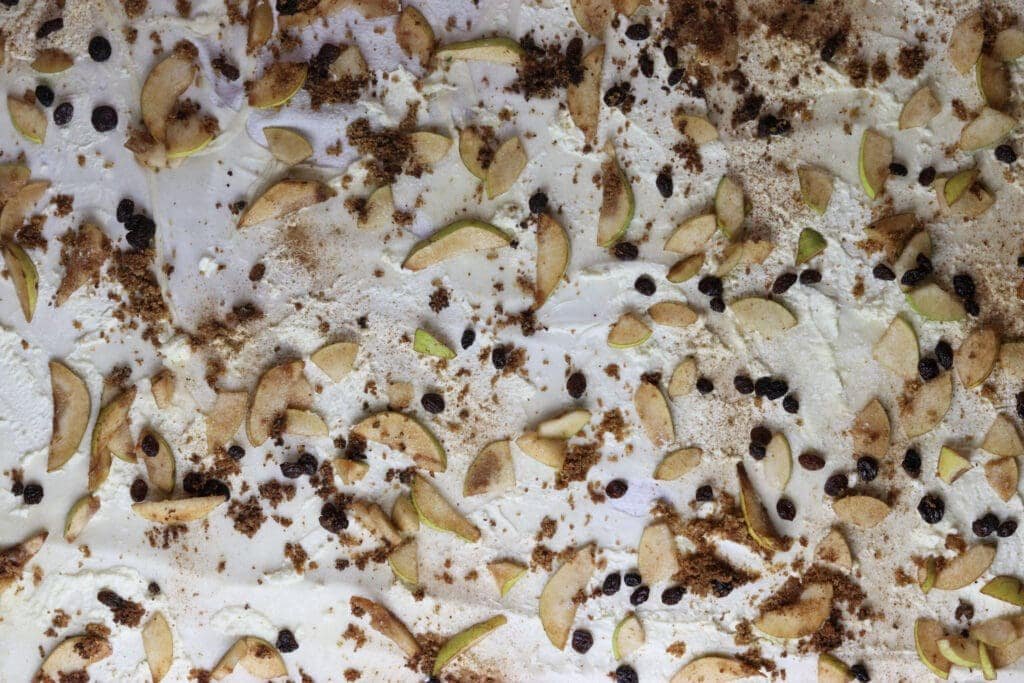
STEP 17: Now it’s time to roll up your strudel! Fold the sides slightly over the filling to enclose it. Using the tablecloth for support, gently roll the dough into a strudel, starting from the side with the filling.
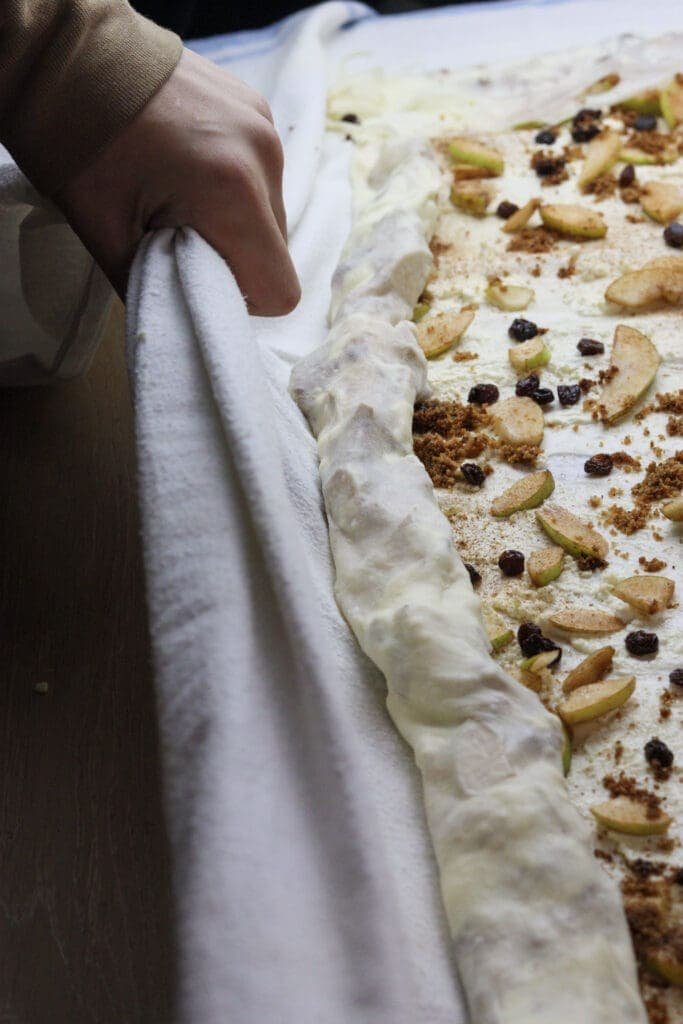
BAKING IN THE OVEN
STEP 18: Depending on the baking tray you’re using, you can cut the strudel into longer sections and carefully transfer them onto a greased baking pan.
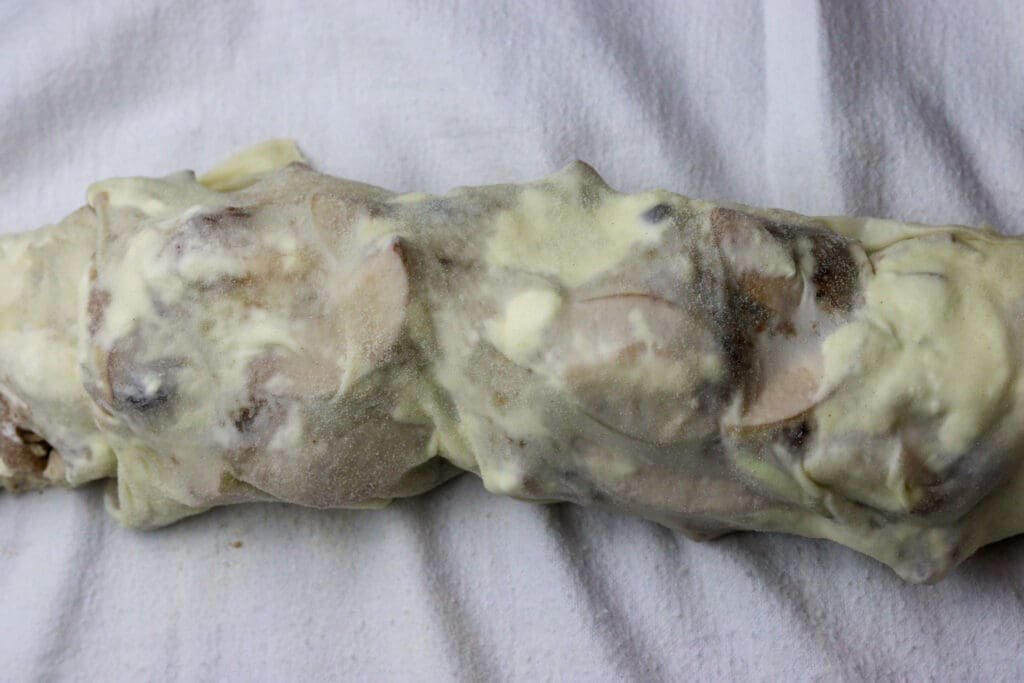
STEP 19: If you prefer to bake the strudel whole in a round pie dish, use the tablecloth to carefully transfer it into the pan. Be sure to grease the pan generously with butter before placing the rolled strudel inside.
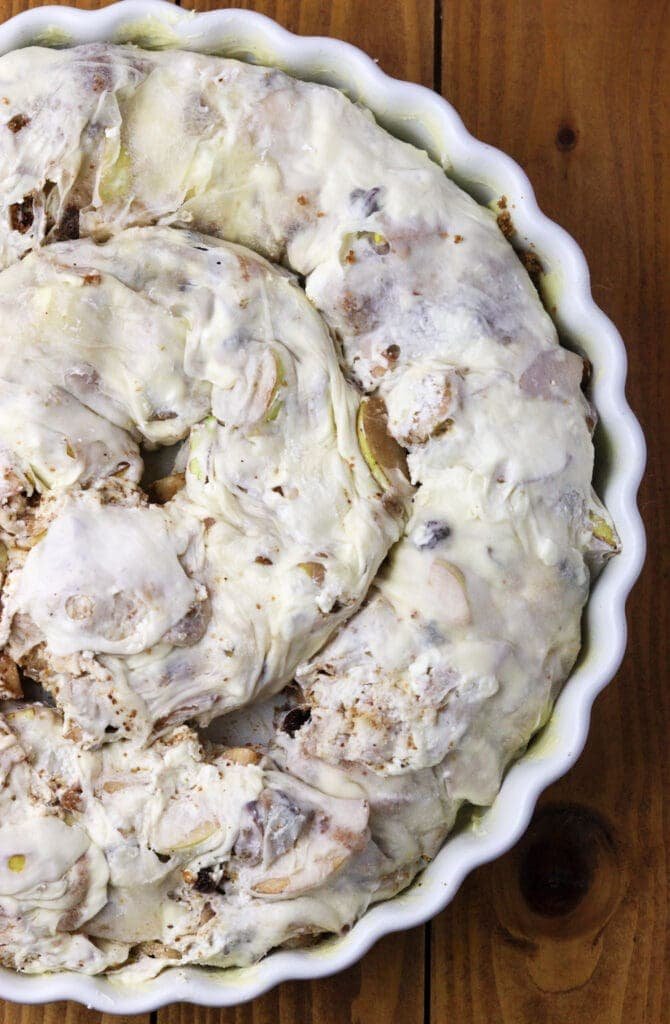
STEP 20: Finally, before sliding your strudel into the oven, place a few pieces of butter on top to achieve that beautifully golden, crispy finish. Egg wash is not used here, just butter.
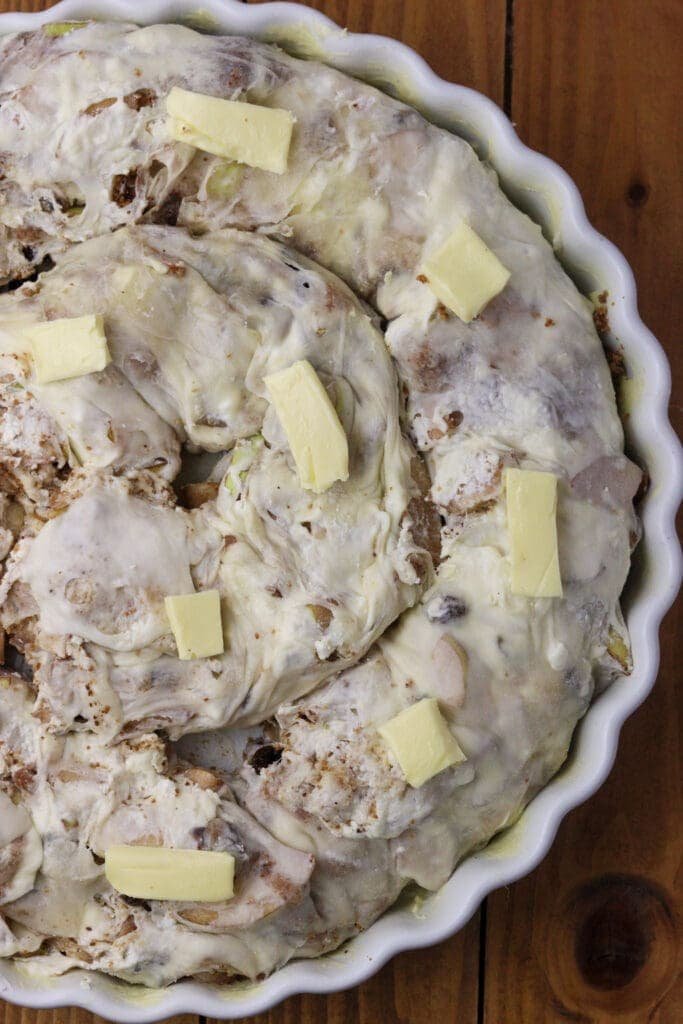
STEP 21: Bake the strudel in a preheated oven at 356°F (180°C) for approximately 55 minutes. It’s ready when the pastry turns golden brown and looks beautifully crispy.
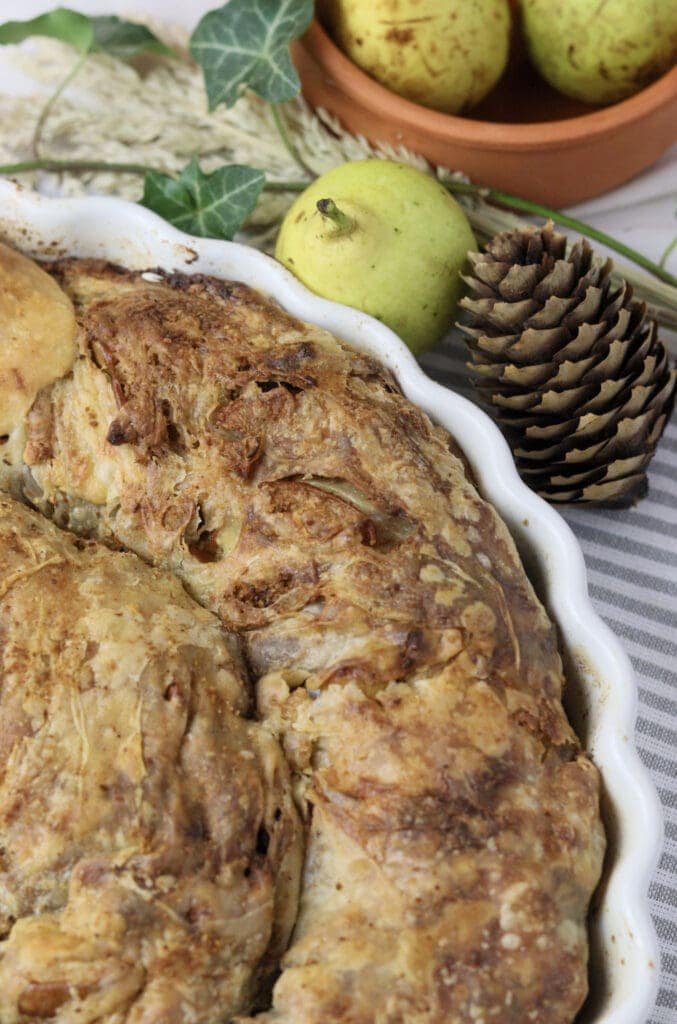
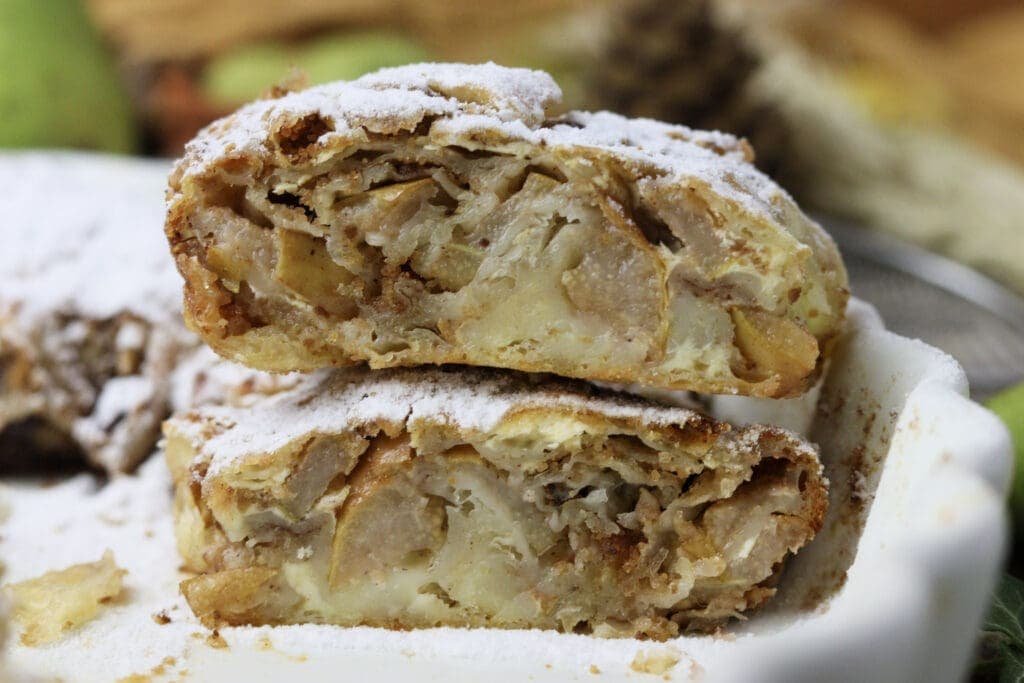
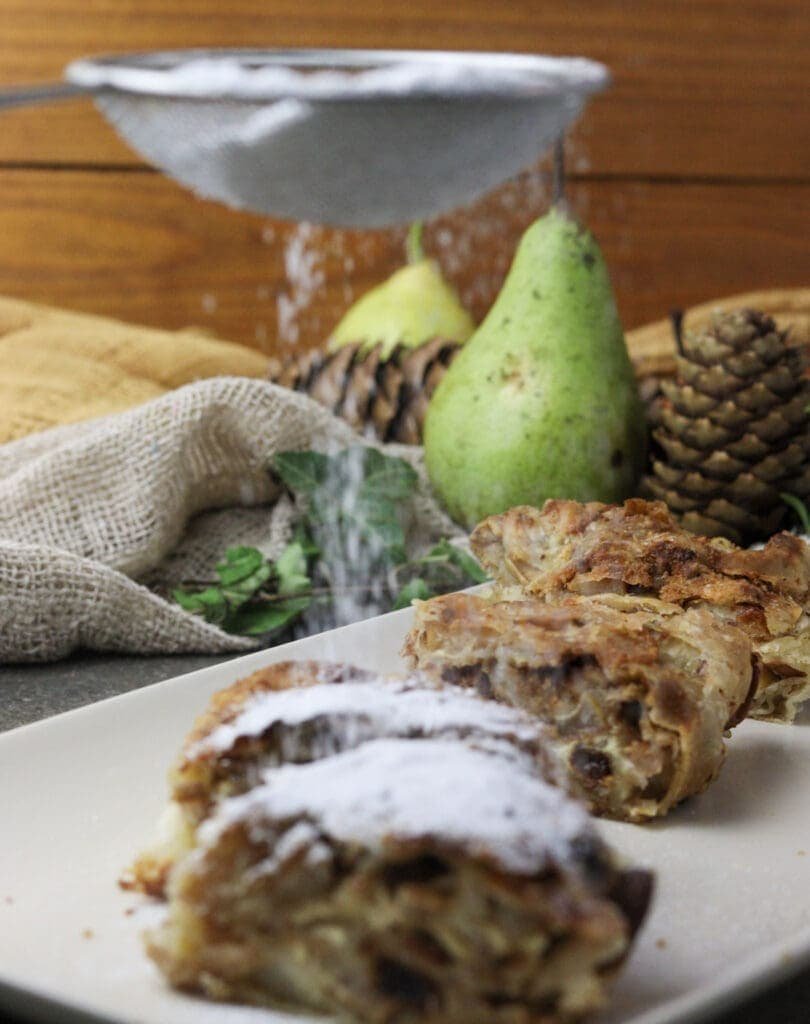
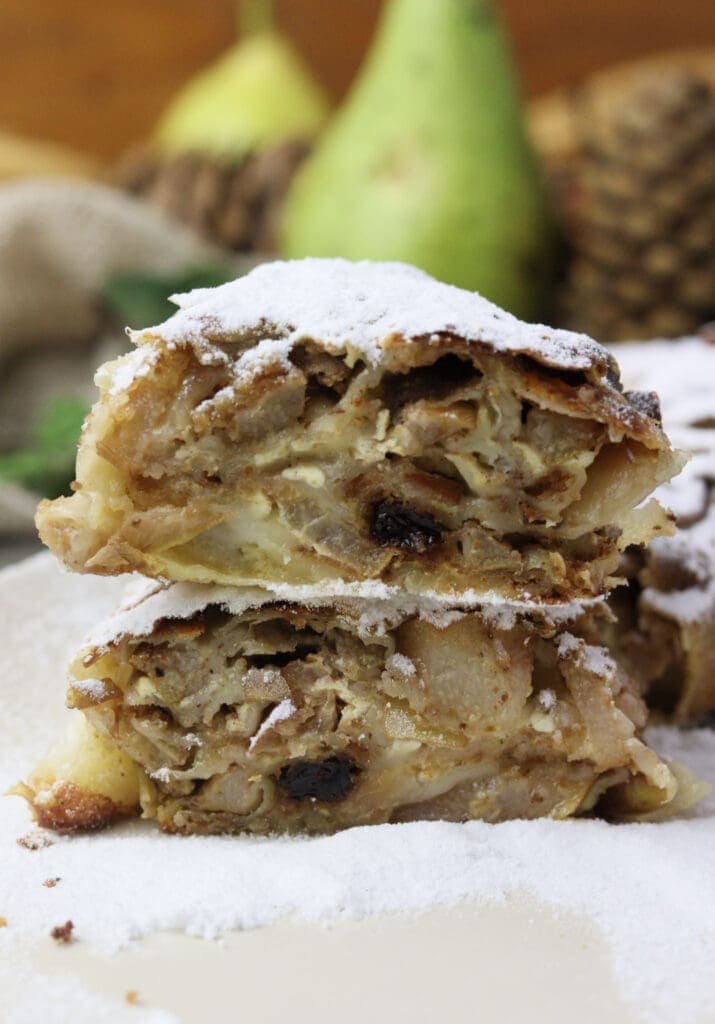
STEP 22: When baked, remove the baking tray with the strudel from the oven and place it on a cooling rack. Let the finished strudel cool slightly, then dust it with powdered sugar, slice it into pieces, and serve. Enjoy!
Tips and notes for the best pear strudel
Rest the dough long enough to relax the gluten for easier stretching. This is crucial and it will be much easier to work with.
Once rolled out, generously brush the dough with oil – this keeps it more flexible and makes it easier to stretch.
Use your hands to gently pull the dough outward, starting from the center and working your way to the edges with slow, steady movements. Work on a spacious kitchen table for best results, allowing you to move freely around it and stretch the dough evenly on all sides.
Toasted breadcrumbs add flavor and help absorb any excess moisture from the filling, keeping the pastry crisp. If you prefer it even crispier, spread the breadcrumbs generously over the whole surface of the dough before filling it with other ingredients.
For more juiciness, soak the raisins before baking in warm water or (if you don’t mind a bit of alcohol) in rum.
Ensure the pears are sliced thinly enough and not too moist to avoid tearing the delicate, paper-thin dough. If you prefer a softer filling, shred the pears using a hand grater or lightly sauté them with sugar until they soften and release their juices.
Keep a close watch on your strudel as it bakes. Don’t rush things – allow it to bake slowly to ensure the inside is fully cooked. If the exterior starts to brown too quickly, cover it with parchment paper for the final 15 minutes to prevent over-browning.
To make the underside perfectly crispy, bake the strudel directly on the bottom of the oven (not on a rack) for the first 20 minutes.
For an even crunchier pastry, brush the dough with butter once more during baking. This keeps it from drying out too much, and the caramelized butter will add a divine, irresistible flavor.
Variations you might want to try
Strudel is such a versatile dessert that you can get really creative with the filling. Here are some delicious variations:
- Apple cheese strudel – replace pears with thinly sliced apples for a more traditional flavor.
- Plum strudel – use ripe, juicy plums for a tasty summery twist.
- Cherry cheese strudel – like the cherry cheese babka, this combo is unbeatable.
- Berry cheese strudel – swap pears for a mix of berries like blueberries, raspberries, or blackberries for a tart, vibrant filling.
- Savory strudel – this creates a delicious borek-like pastry. You can combine spinach, cabbage, zucchini or squash with the cheese filling; all of these are gorgeously tasty when baked wrapped in a thin phyllo dough.
Serving suggestions
Homemade pear strudel is often served to round out the hearty European meals. It pairs beautifully with classic Slavic food like ričet, the Slovenian barley soup, jota soup, or a bowl of flavorful traditional goulash. With just the right sweetness, it’s incredibly delicious alongside winter favorites like stuffed cabbage rolls.
A lightly sweetened whipped cream dollop is the perfect finishing touch, pairing well with the crispy, golden phyllo pastry. Among beverages, a cup of coffee or delicate elderflower tea goes beautifully with the dessert’s flavors.
Or you want to serve it warm with a scoop of vanilla ice cream? It’s a combination that never fails 🙂

Storage instructions
You can store it in an airtight container for up to three days. This can get even longer if stored in the refrigerator.
It can also be frozen; this way, it will last up to three months in the freezer, although it’s definitely more delicious and crispier when frozen raw.
When freezing it raw (not sliced), take it out of the freezer and let it sit for about an hour. Then, bake it at 212°F (100°C) for 30 minutes to fully thaw, then continue baking it at the regular temperature as usual.
Pear cheese strudel FAQs
No, the phyllo dough in the strudel is made of flour; therefore, it contains gluten, too.
Absolutely! Simply skip the cheese filling (including eggs) and replace the butter with vegetable oil. This will make your strudel vegan-friendly.
Yes! Although homemade phyllo dough tastes better and is usually made in one larger piece, making it easier to wrap the strudel filling. When making strudel with premade pastry (like this plum strudel), you’ll need to make several smaller rolls.

Our traditional desserts
More strudel & pear recipes

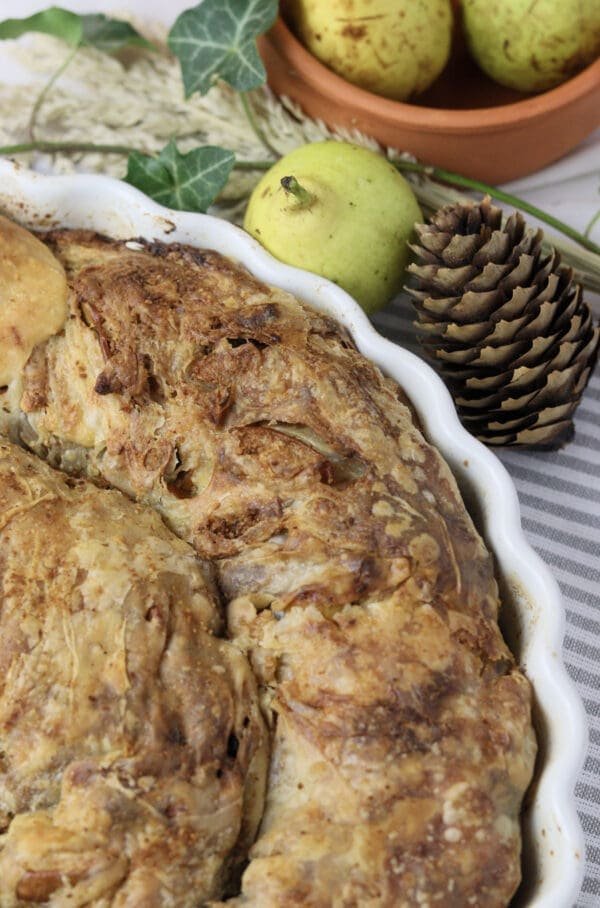
Pear Strudel With Cottage Cheese and Raisins
EQUIPMENT
- 1 baking pan
- 1 Rolling Pin
INGREDIENTS
For the dough:
- 300 g flour
- 150 ml water
- 1.5 tbsp oil
- 1 pinch salt
For the filling:
- 1 kg pears
- 500 g cottage cheese
- 2 eggs
- 75 g butter
- 100 g dried raisins
- 6 tbsp bread crumbs
- 4 tbsp sugar
- 2 tbsp cinnamon
INSTRUCTIONS
- Slice the pears ( 2.2 lb) thin enough to roll the dough easily, but leave them chunky for juiciness. In a bowl, mix two eggs, sugar (2 tbsp), and cottage cheese (2.38 cups) until smooth.
- Toast the breadcrumbs (6 tbsp) in melted butter until golden and fragrant.
- In a bowl, mix flour (2.4 cups), water (0.63 cups) with dissolved salt, and oil (1.5 tbsp). Combine with fingers or a fork until a rough dough forms.
- Knead the dough for 5–10 minutes until smooth and elastic. Add water if too dry.
- Shape into a ball, lightly oil, and rest covered at room temperature for 1 hour.
- Preheat oven to 356°F (180°C). Cover a kitchen table with a floured cloth or sheet.
- Roll out the dough, brush with oil, and let it rest for 10 minutes.
- Stretch the dough gently towards the table edges using the backs of your hands until paper-thin. Trim thicker edges.
- Spread the cheese mixture over the dough, but cover only two-thirds with the filling. Add pear slices.
- Sprinkle with sugar, cinnamon (2 tbsp), and raisins. Drizzle with lemon juice if desired and add toasted breadrumbs, spreading them evenly over the filling.
- Fold the sides over the filling and use the cloth to roll the dough into a log.
- Cut into sections and transfer to a greased baking tray or roll whole into a greased round pan. Dot with butter for a golden, crispy finish.
- Bake for 55 minutes at 356°F (180°C) until golden brown and crisp.
- Let cool slightly, dust with powdered sugar, slice, and enjoy!
NOTES
NUTRITION
If you think this pear cheese strudel recipe is good, please rate it in the comments below.
Show your love by sharing ❤️
Amazing looking, WOW, thanks for sharing at Yum Yum Hungry Hangout & Giggles, bookmarking it,.
Thanks Esme, I hope you’ll give it a try!
I miss the smell of strudel; it’s been a long time since I made one. My strudel experiments are usually not very successful. Your recipe looks wonderful, and you described it so thoroughly that I might give strudel another shot.
Thank you Milo, you absolutely need to give it a try. It’s just about practice, more often you make it, the easier it gets. Let me know how it worked out for you!
Oh my goodness, I need to try this right now! It looks wonderful and you have explained the process perfectly! Saving the recipe.
Thank you, Lisa! It does take a bit of time, but it’s super budget-friendly and absolutely delicious. I hope you enjoy making it, and we’d love to hear how it turns out for you. Thanks so much for stopping by!
OMG…this is so tempting. I’m 2nd generation Dane and we of course have Kringle…and the ingredients are the same except Danes multi-layer butter and dough. Photos are magnificent…and I will definitely give the ingredients a shot with my Mors’Mor…(Grandmother’s Kringle) recipe…Happy Holidays.
Thank you so much! The comparison to Kringle is so interesting—it’s such a beautiful pastry, a bit sturdier, I’d say, while strudel has that ultra-thin, stretched dough and lots of crispiness. Still, both share a similar charm. In the end, the shape doesn’t matter as much as the love we put into what we bake. I’d love to hear how the pears and cheese work with your recipe. Wishing you Happy Holidays and happy baking!
Your strudel looks so good, needs patience and practice to make it, thanks for sharing. Wishing you Happy Holidays and Prosperous New Year…
Thank you! Wishing you plenty of easy and delicious strudels ahead!
This recipe sounds delicious. I think I would pair it with whipped cream or ice cream, as you suggested in the post. But also, I am sure it would go great with my morning coffee. I love your recipes, and you always provide excellent steps along the way.
Thanks, Steph! I absolutely love strudel with whipped cream or ice cream. Around here, it’s often baked on Sundays in big baking sheets, so there’s usually plenty left for coffee too — something to look forward in a foggy Monday morning!