
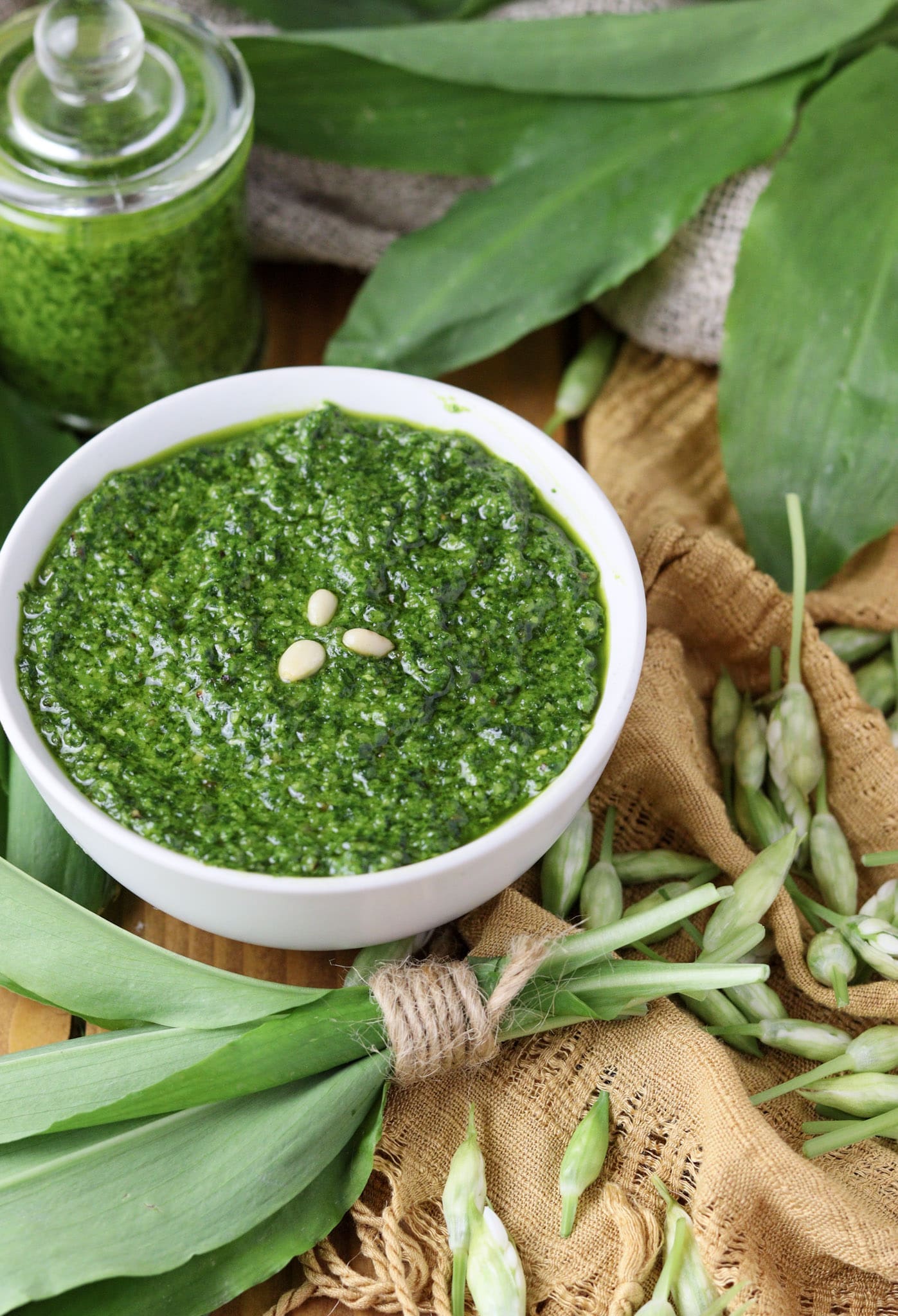
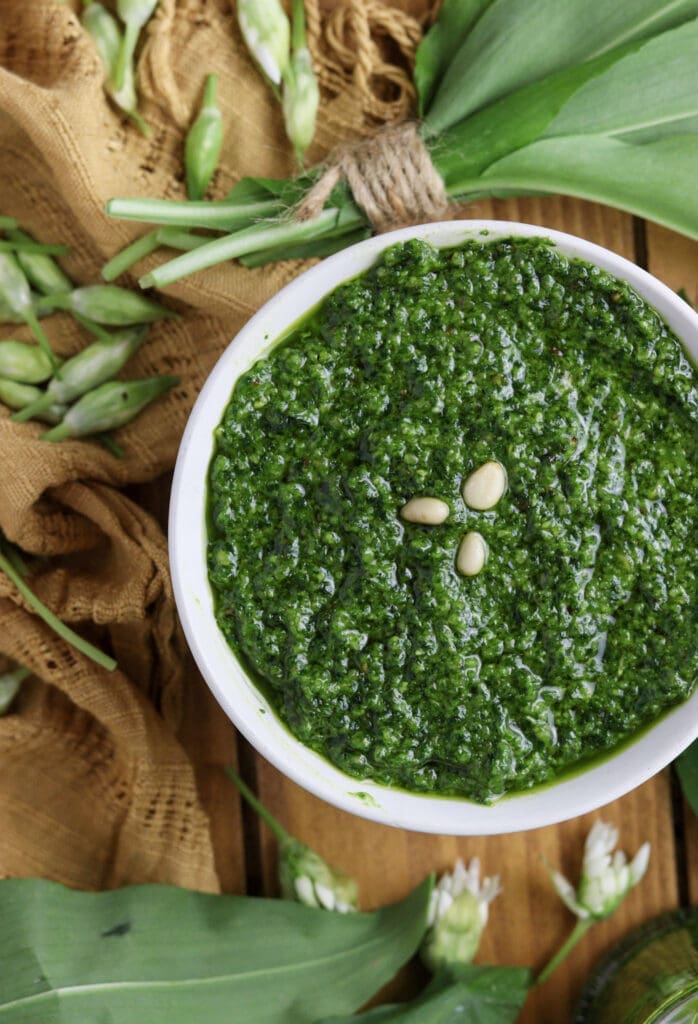
This bright, garlicky and refreshing wild garlic pesto with toasted pine nuts is something you’ll want to use with literally everything – bread, pasta, roasted potatoes, grilled chicken, gnocchi or pizza. Or just eat it straight off the spoon when no one’s looking.
A fresh wild garlic season
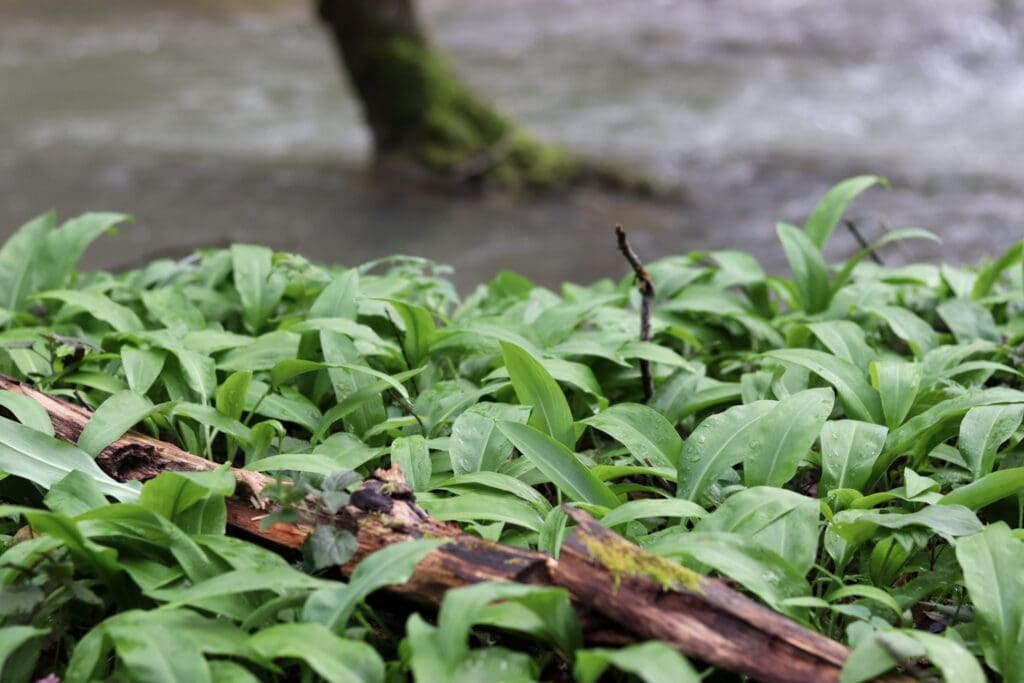
For me, the new year doesn’t really begin in January – it begins with wild garlic season. Foraging for wild garlic (or ramsons, as they’re also called) has become a favorite springtime thing to do, and a sunny day spent with a basket in a wild garlic patch feels like the end of the long wait for a fresh start.
Years ago, I found this beautiful valley with a river, beaver dams, and enormous wild garlic patches growing on both sides. Just standing there, listening to the water tumbling over stones, the birds singing overhead, and breathing in that spring scent in the air feels like magic. A whispering promise of longer days ahead might be the most beautiful moment of the year.
Wild garlic (Allium ursinum) is well known for its medicinal properties, so this spring ritual feels a bit like changing the oil in your car – everything runs smoother after.
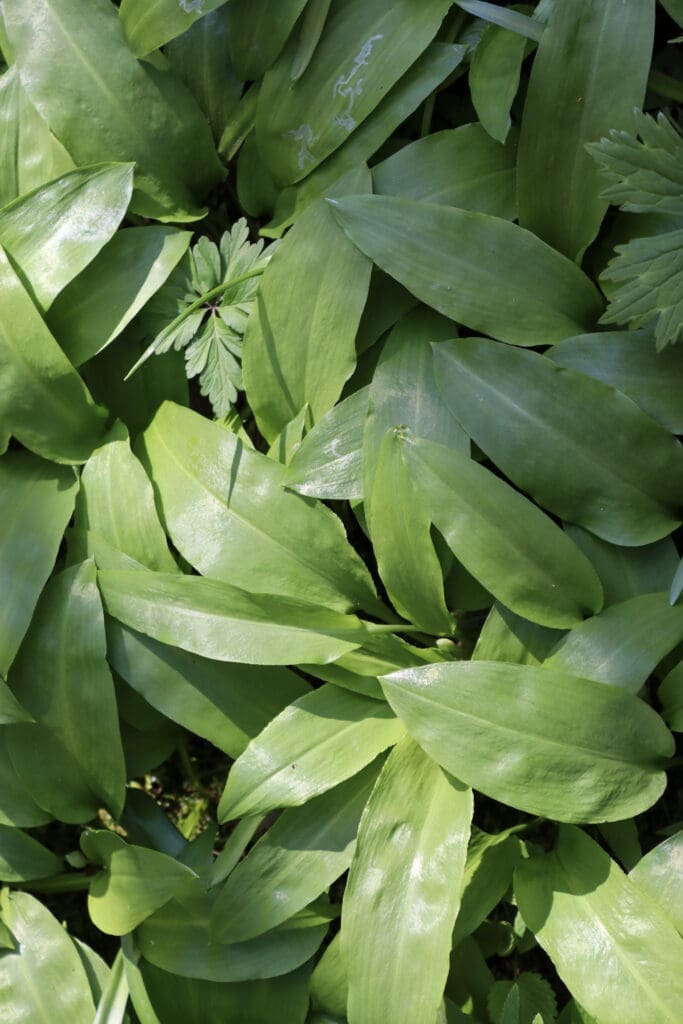
It usually starts popping up in early April in the valleys, especially near riverbanks and streams where the soil is rich and moist. Once it’s blooming down there, you can still find fresh patches up in the mountains well into June.
The leaves have that unmistakable garlicky smell when you crush them between your fingers – you really can’t miss it. And if you’re still a bit nervous about confusing it with Lily of the valley, just wait until it starts producing flower buds. Then there’s absolutely no mistaking it.
There’s really so much to cook with it, and each year we make something new. Wild garlic pizza, bright green wild garlic pasta dough, flavorful wild garlic risotto – and the list just keeps growing.
What you need for wild garlic pesto
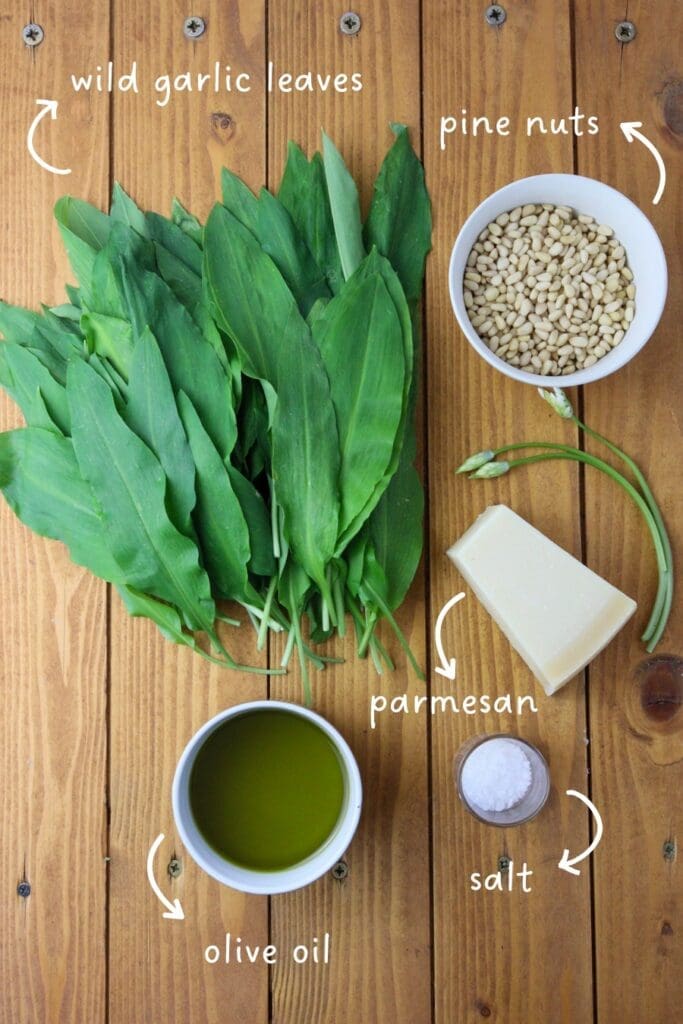
WILD GARLIC LEAVES – Stored in the fridge, these will stay usable for over a week. If the leaves start looking a bit sad, dry, or pale, don’t panic. Stand them in a glass of water, and they’ll perk right back up, bright and green again, like nothing ever happened.
PINE NUTS -Not mandatory. You can easily swap them for walnuts, hazelnuts, pistachios, or even sunflower seeds.
PARMESAN CHEESE – Buy a whole piece if you can, and shred or break it up just before blending. Pre-grated cheese doesn’t have the same depth, and this pesto deserves the real thing.
OLIVE OIL – Use a good-quality olive oil, ideally organic. Wild garlic is clean food, and it feels wrong to drown it in anything that contains chemicals.
SALT– That’s it. Nothing else is really needed. Some people like to add pepper or lemon juice, but we tend to leave it out. Wild garlic already has more than enough aroma on its own.
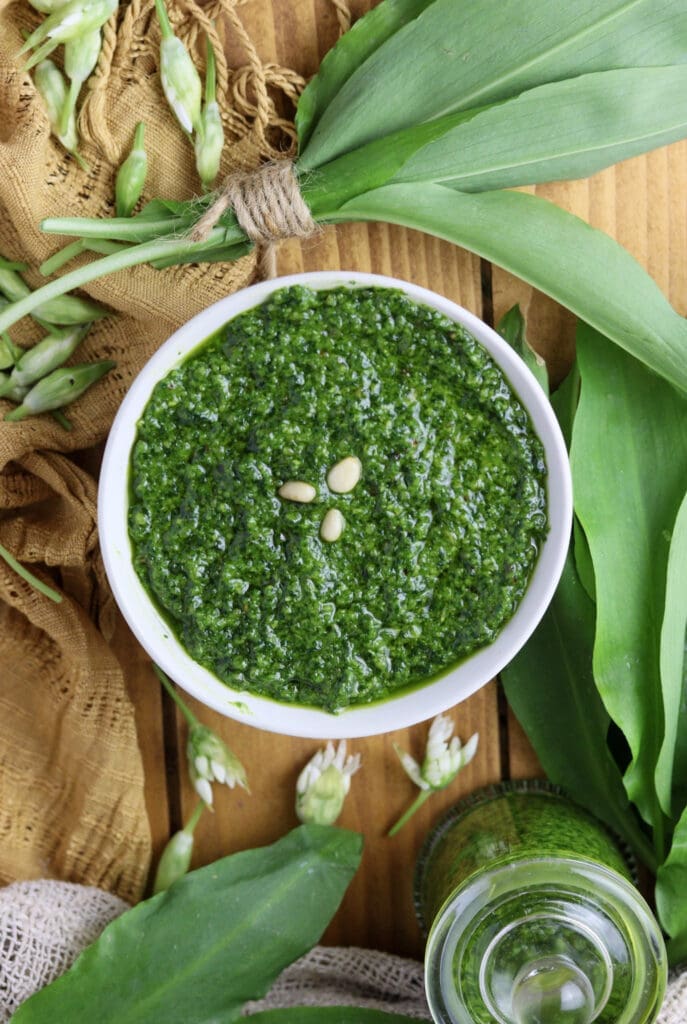
How to make wild garlic pesto with pine nuts
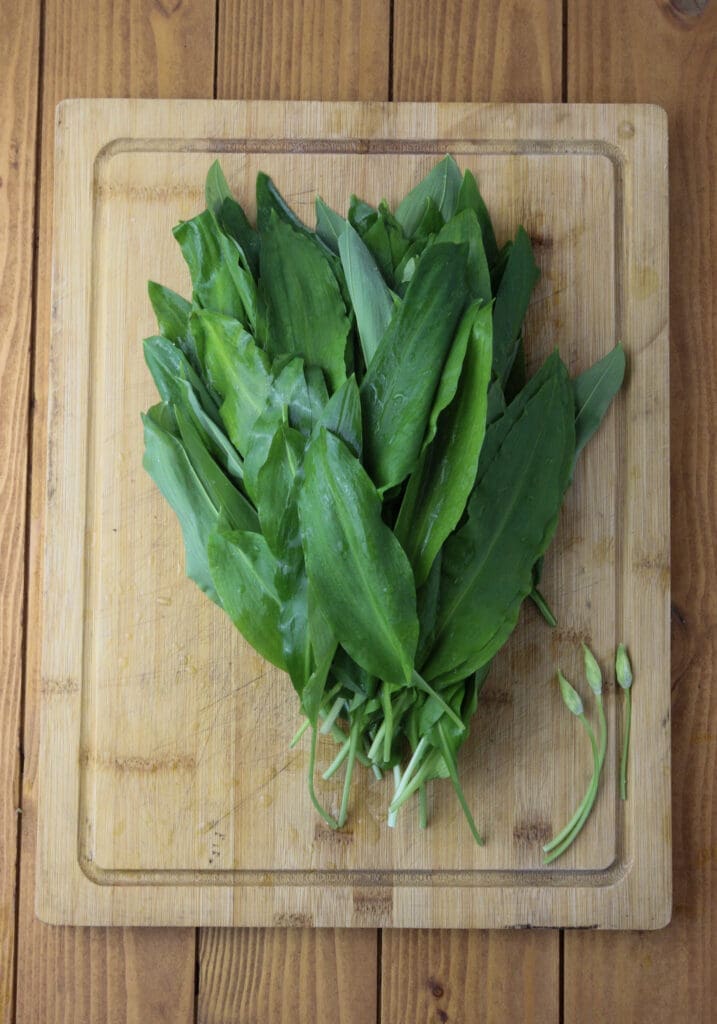
STEP 1: Give the wild garlic a proper rinse and check between the leaves for any tiny creatures hiding in there. And if you do find one or two, don’t be alarmed, that’s usually a good sign. It means you’ve picked the right plant. Animals don’t feed on poisonous things.
Once washed, pat the leaves completely dry with a clean kitchen towel. Seriously, don’t skip this. Removing excess water helps the pesto last longer and keeps the right texture.
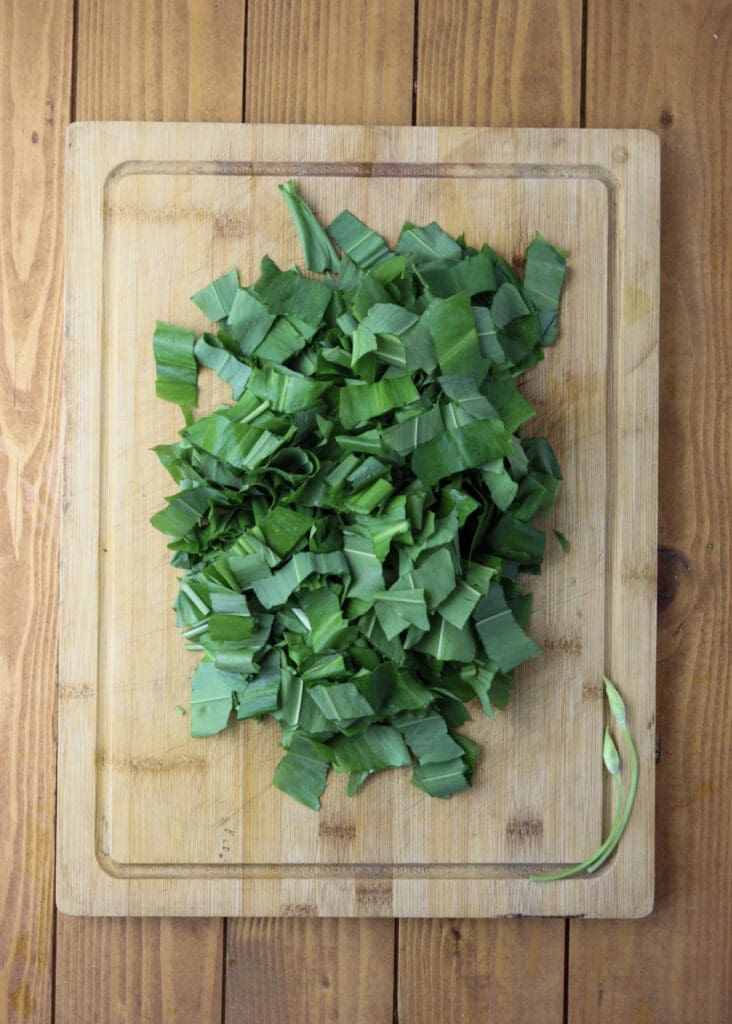
STEP 2: Next, roughly chop the wild garlic into smaller pieces. No need for perfection here, just small enough so your blender doesn’t struggle.
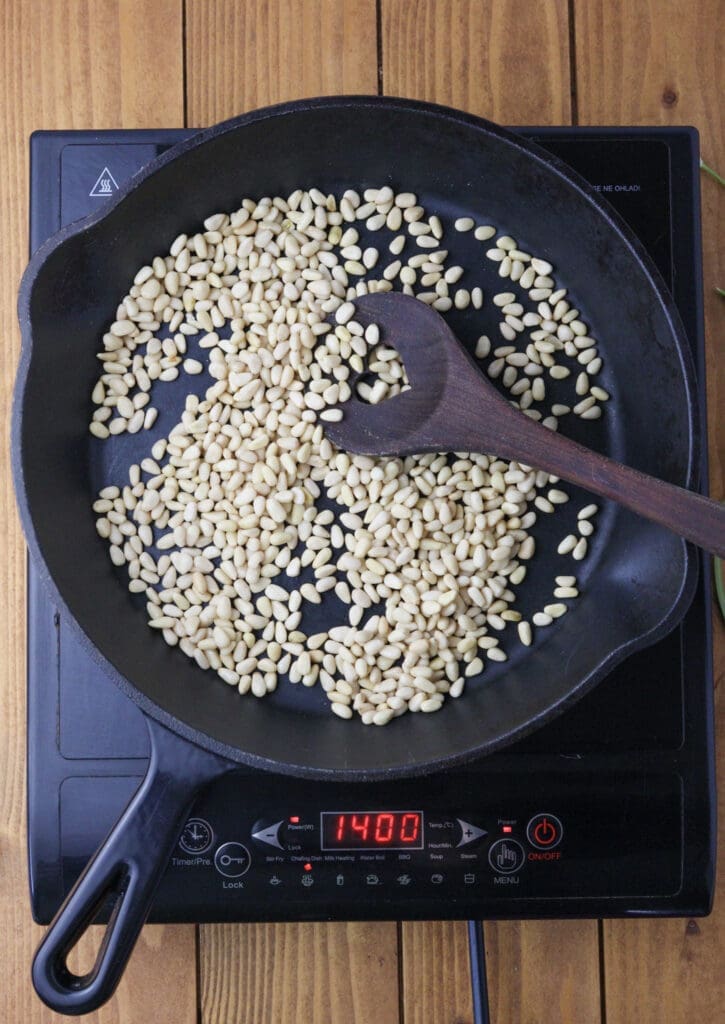
STEP 3: Place the pine nuts in a dry frying pan or skillet, large enough so they sit in a single layer. No oil needed. Toast them over medium heat, stirring almost constantly. Pine nuts can go from beautifully golden to tragically burnt in seconds, so stay nearby. Once they turn lightly brown and smell nutty and warm, take them off the heat.
Toasting makes a difference. It deepens the flavour and gives the pesto that extra richness you just don’t get from raw nuts.
STEP 4: If your parmesan is in a solid chunk, now’s the time to grate or slice it. You don’t need it finely grated; just small enough pieces that your blender can handle them without protest.
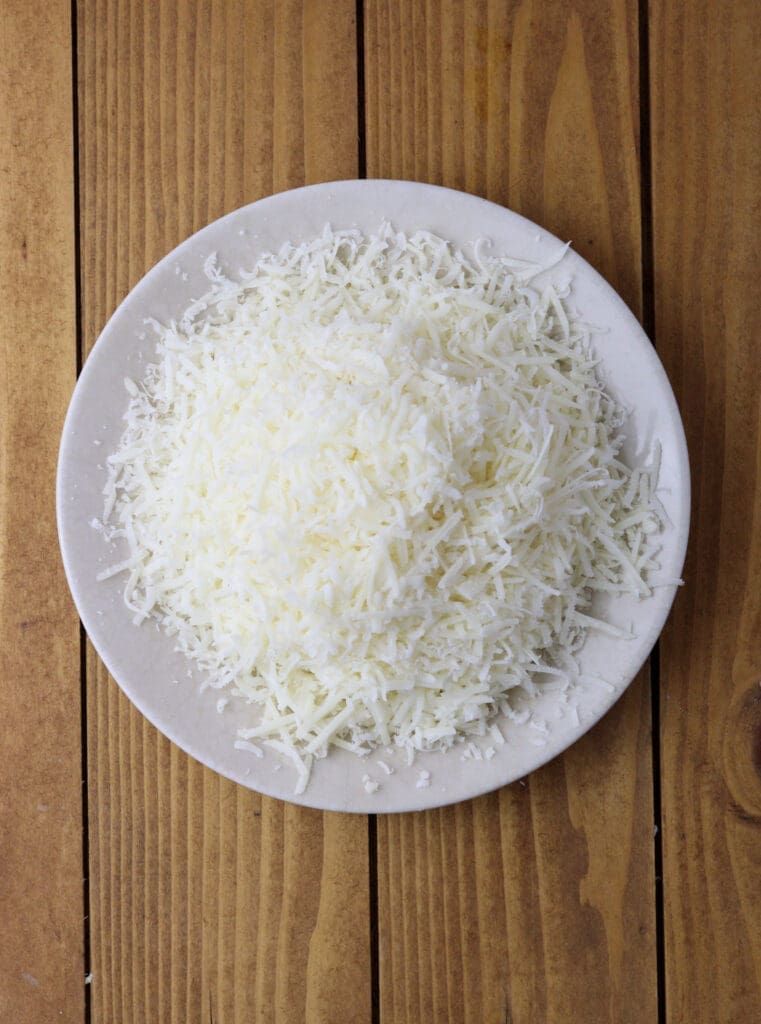
STEP 5: Add the chopped wild garlic, a pinch of salt, olive oil, and the parmesan into your blender or food processor. Pulse gently in short bursts rather than blending aggressively in one go.
You’re aiming for a slightly coarse texture. If you ask me, pesto should have some chunks of nuts and cheese; it shouldn’t be blended into baby food.
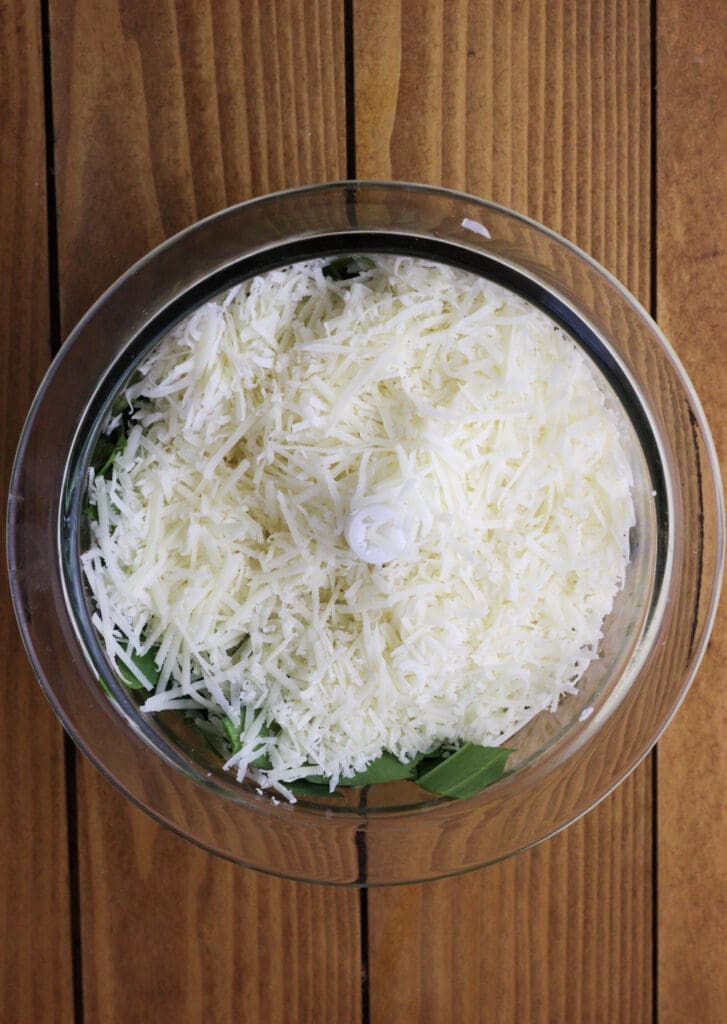
STEP 6: If the mixture sticks to the sides of the blender bowl (and it probably will), stop and scrape it down with a spatula once or twice. Then pulse again. And that’s it. It really is that simple.
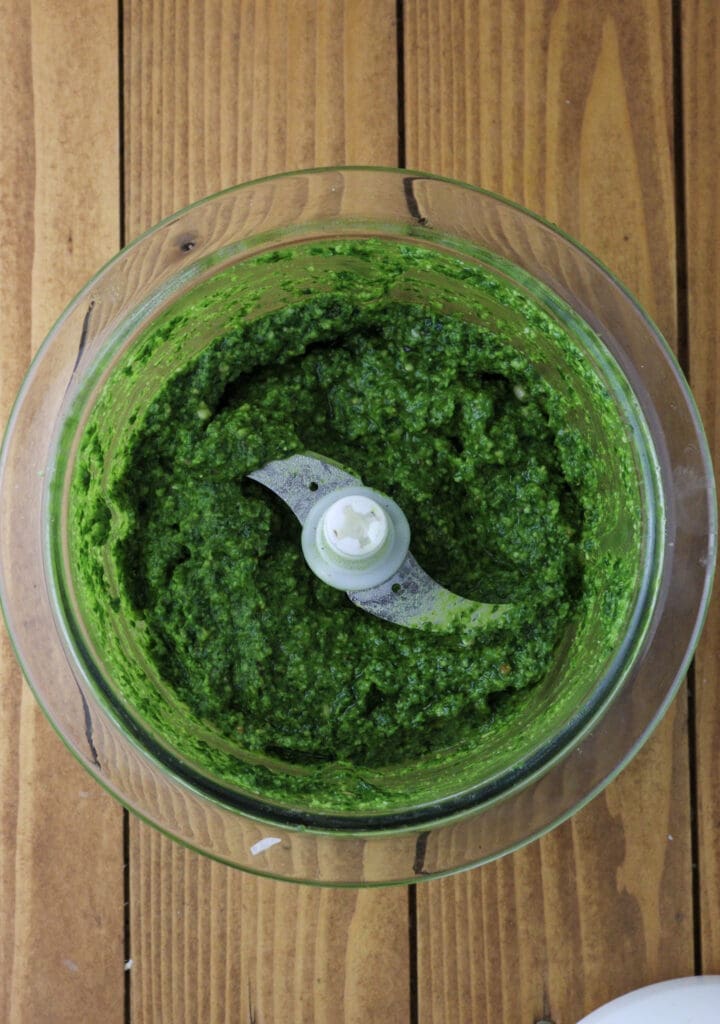
STEP 7: If you’re serving it straight away, spoon it into a bowl or toss it through warm pasta. If you’re storing it, transfer the pesto into clean jars and pour a thin layer of olive oil over the top. This helps protect it from the air and keeps it fresh.
Then try not to eat it all with a spoon before dinner!
Ways to change this recipe
Use toasted walnuts. If you’d like a more rustic version, swap the pine nuts for toasted walnuts. The flavour deepens and becomes slightly earthier, similar to spruce tip pesto with walnuts. It feels more local, more countryside. Wild garlic still leads with its bold, garlicky punch, and walnuts pair beautifully with that strength.
Try other nuts. Walnuts aren’t the only option. Hazelnuts work wonderfully and add a subtle sweetness. Cashews make the pesto softer and creamier. Each nut shifts the aroma slightly, but the base remains wild garlic pesto.
Use seeds instead. We’ve made it with sunflower seeds and pumpkin seeds as well. The result? Milder, gentler, but still very tasty. The garlic note becomes softer, rounder.
Swap Parmesan for Grana Padano. I often make pesto with Grana Padano. It’s milder than Parmesan, usually more affordable, and you don’t sacrifice quality at all.
Other hard cheeses work too. Sometimes pesto happens spontaneously, using whatever is sitting in the fridge. If that happens to be a hard cheese like Gouda, try it. With wild garlic, it still works. It won’t taste wrong.
Add other herbs or greens. You can stretch this pesto further by folding in young nettles. They grow at the same time as wild garlic and blend in beautifully, slightly softening that bold garlicky aroma. Or stir in some cooked peas and blend again to make a gentler green sauce. It becomes lighter and a little sweeter (great with pasta).
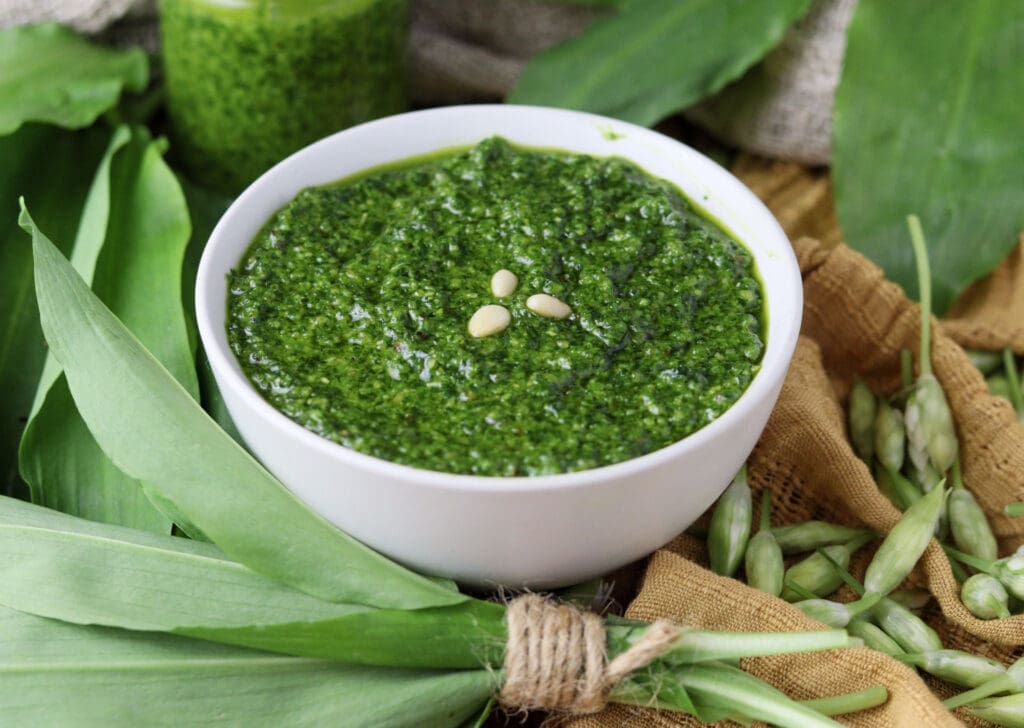
How to use pesto with wild garlic
- It’s perfect with pasta or folded into homemade gnocchi.
- You can also spread it straight onto good bread and eat it just like that. Add a slice of proper homemade cheese on top, and you really don’t need much else.
- Stir a spoonful into a rustic soup or stew instead of fresh garlic.
- It works wonderfully as a sauce for fish or as a finishing garlicky touch to risotto.
- And on pizza? Absolutely wonderful. Swirl it over the base before baking or dot it on top after it comes out of the oven.
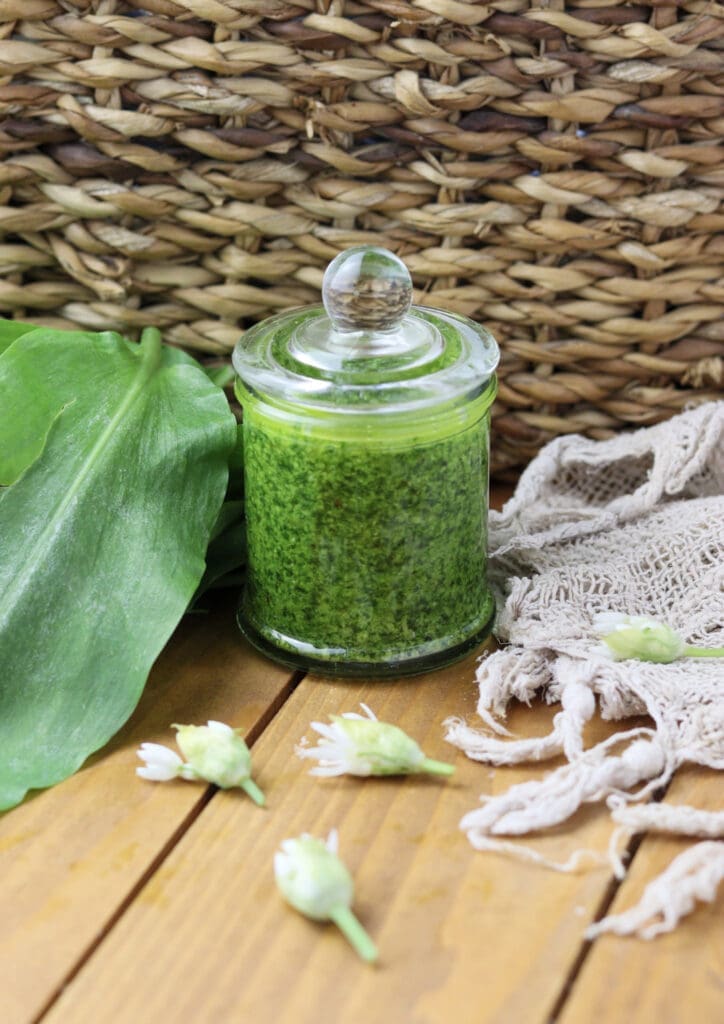
How to keep it longer
Store it in a jar. Transfer the pesto into a clean jar and keep it in the fridge. It will stay fresh for up to a week. Pour a thin layer of oil over the top before closing the lid (this protects it from air).
Freeze in cubes. Spoon the pesto into ice cube trays and freeze it in small portions. Once frozen solid, pop the cubes out and store them in a freezer bag. This way, you can grab just one or two cubes whenever you need it.
Flat freezer bag method. Another easy option is to spread the pesto into a thin, even layer inside a freezer bag. Press it flat, lay it down in the freezer, and let it freeze completely. Later, you can simply break off pieces as needed. It will keep well for up to four months.
Note: For the best texture after thawing, use a little less salt and freeze the pesto without the cheese. Add freshly grated Parmesan once it’s thawed. The flavour stays brighter and the texture smoother this way.
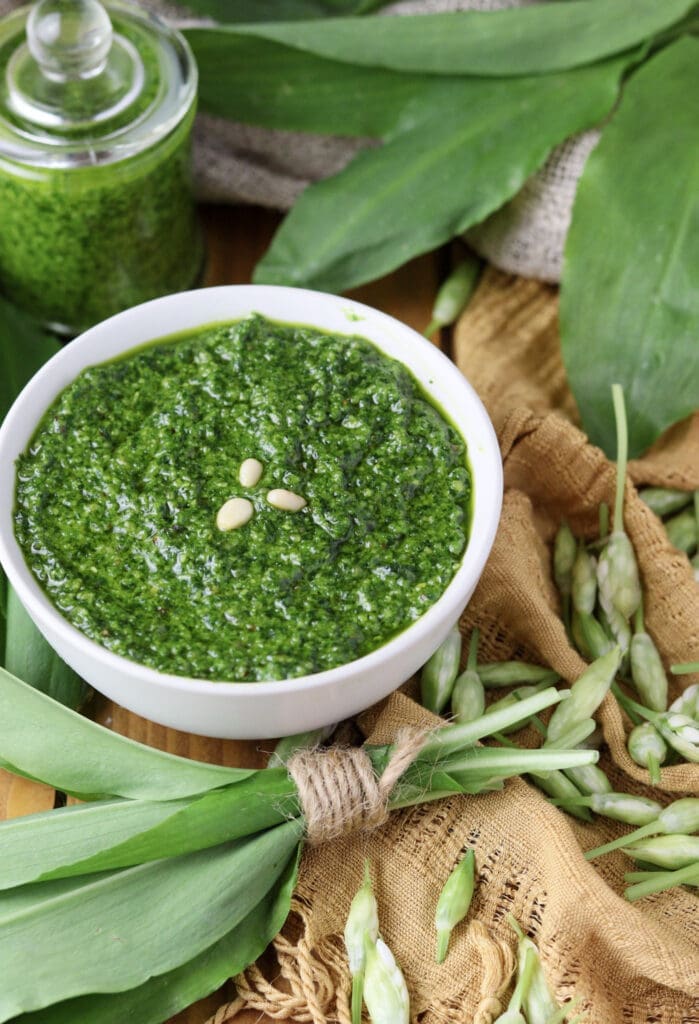
You might be wondering
Not exactly, but they’re very close relatives. Wild garlic (Allium ursinum), common in Europe, and ramps (Allium tricoccum), native to North America, both belong to the same allium family. They share the garlicky aroma and broad green leaves and behave similar in the kitchen – also for pesto.
Absolutely not; don’t cook it before making pesto. Wild garlic is at its best when it’s fresh and raw. The moment you cook it, a lot of that sharp, green, garlicky aroma fades away. For pesto, it should go straight from the forest to the blender. That’s when it tastes brightest, boldest, and most alive.
Yes, you can absolutely combine wild garlic leaves with basil. The flavour becomes softer and less aggressively garlicky, with the natural sweetness of basil, it becomes a little more gentle and familiar.
If the flavour feels too strong for you, simply pop it back into the blender and add a bit more cheese and nuts. That will mellow the sharpness. You can also soften it by blending in other herbs, such as young nettles, or even cooked peas. Both will tone down the intensity.
More wild garlic recipes
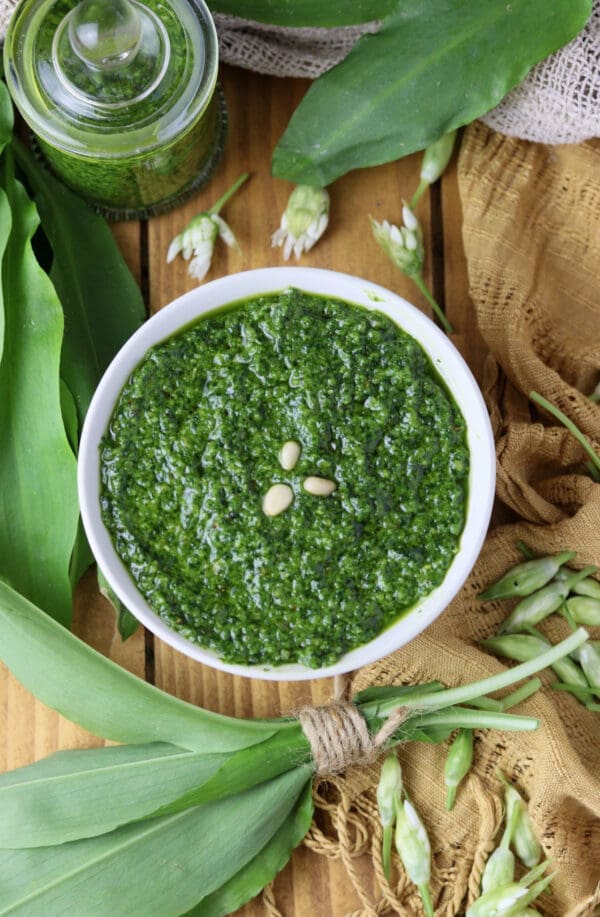
Pesto With Wild Garlic and Toasted Pine Nuts
EQUIPMENT
- 1 blender
INGREDIENTS
- 200 g wild garlic leaves
- 80 g pine nuts
- 100 g Parmesan cheese
- 150 ml olive oil
- ½ tsp salt
INSTRUCTIONS
- Rinse the wild garlic well under cold water and check the leaves for any small insects. If you spot a few, that’s normal when foraging. Dry the leaves thoroughly with a clean towel – you don't want extra water to affect texture and shelf life.
- Cut the leaves into rough pieces so they blend more easily. No need for precision
- Spread the pine nuts in a dry skillet in a single layer. Don't use any oil. Toast over medium heat, stirring frequently, until lightly golden and fragrant. Remove from the pan immediately to prevent burning.
- Grate or thinly slice the Parmesan into small pieces so it blends smoothly.
- Place the wild garlic, salt, olive oil, and cheese into a blender. Pulse in short bursts until combined. The pesto should stay slightly textured, not completely smooth.
- Scrape down the sides as needed and pulse again until evenly mixed.
NOTES
NUTRITION
This recipe has been featured at Esme’s Salon, Scratch Made Food and Homemade on a Weeknight.
Oh my goodness. This sounds absolutely amazing! I had no idea wild garlic was a thing. Wow. This looks delicious. Visiting from the Senior Salon Pit Stop linkup.
Thanks Jennifer, hope you’ll try it out!
Mariama, this recipe sounds wonderful. Thank you for sharing it with us.
Thanks Steph! I hope spring and ramps arrive at your place soon! Here, wild garlic is already starting to pop up in the warmer valleys.
This is a great colorful recipe! Thanks so much for linking up on the #SSPS. I hope you will come again next week, as I am featuring your post.
Wow, thank you so much, Estelle! See you soon!
Never used wild garlic leaves, sure does give a vibrant green color
Thank you so much for linking and sharing with us at SSPS 398. See you again at 399, do not miss out on a surprise
Thanks Esme, I won’t!
Dear Mariama
Congratulations, this is one of my featured posts at SSPS 399, see you Monday. Thanks for sharing.
Thank you so much Esme!
One of my features for SSPS #399! Thanks for sharing with us!
Thanks Melynda, you made my day 🙂
I finally saw wild garlic last year near Dorset, UK. I had no idea they could grow so big and tall, at least compared to their North American cousins, the wild leeks (allium tricoccum). I will see if I can forage for some of them next time I go there. It’d be interesting to compare their flavors. You’re lucky to have found such bounty!