
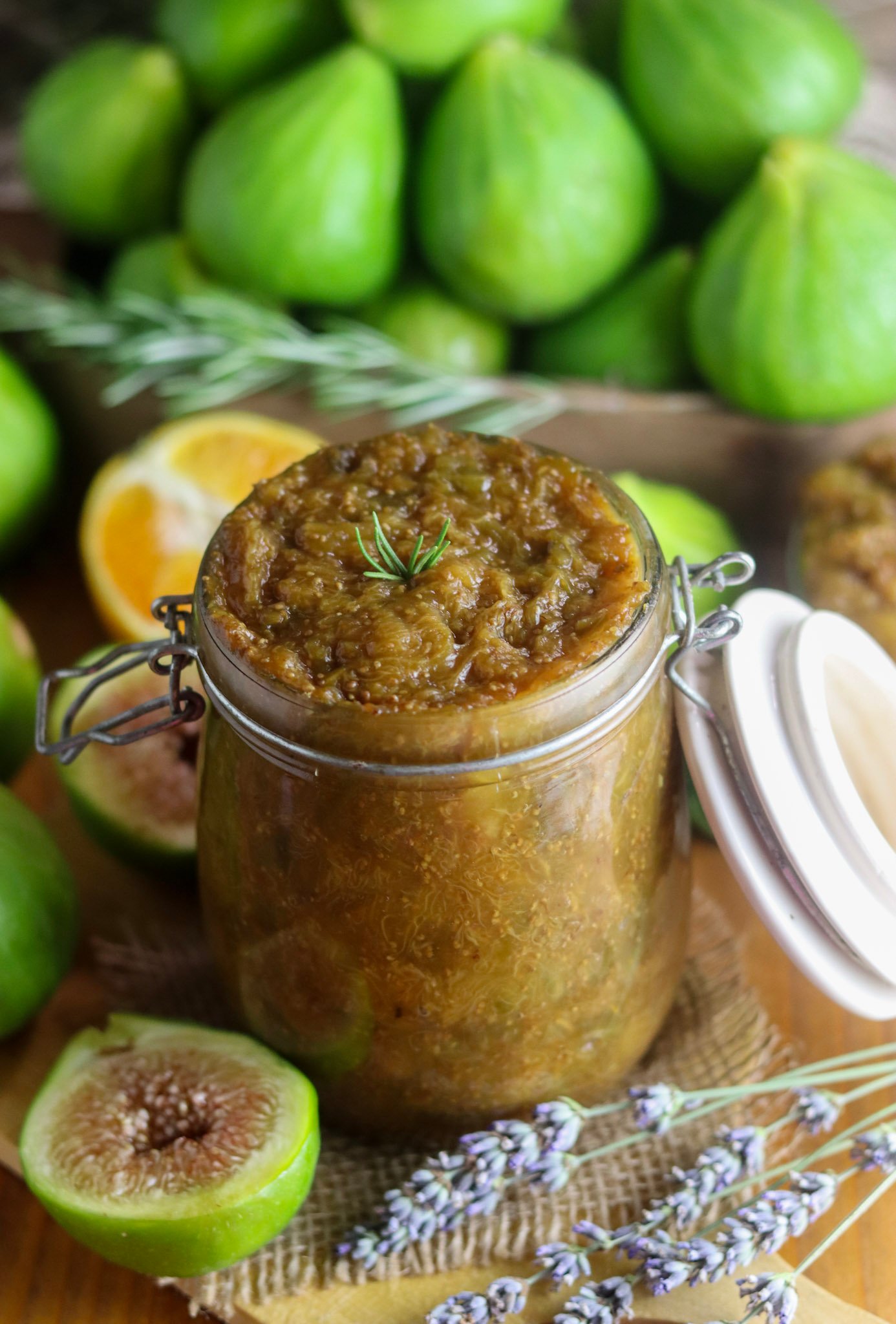
This sugar-free fig jam gets all its flavor from a little rosemary and a good amount of orange zest; nothing else is required. Add honey if you want, or skip it; the figs are pleasantly sweet enough on their own. Got a fig tree that’s out of control? Count your blessings! This recipe is exactly what you need, and it’s perfect for canning up for winter.
The old fig tree and one tasty sugar-free fig jam
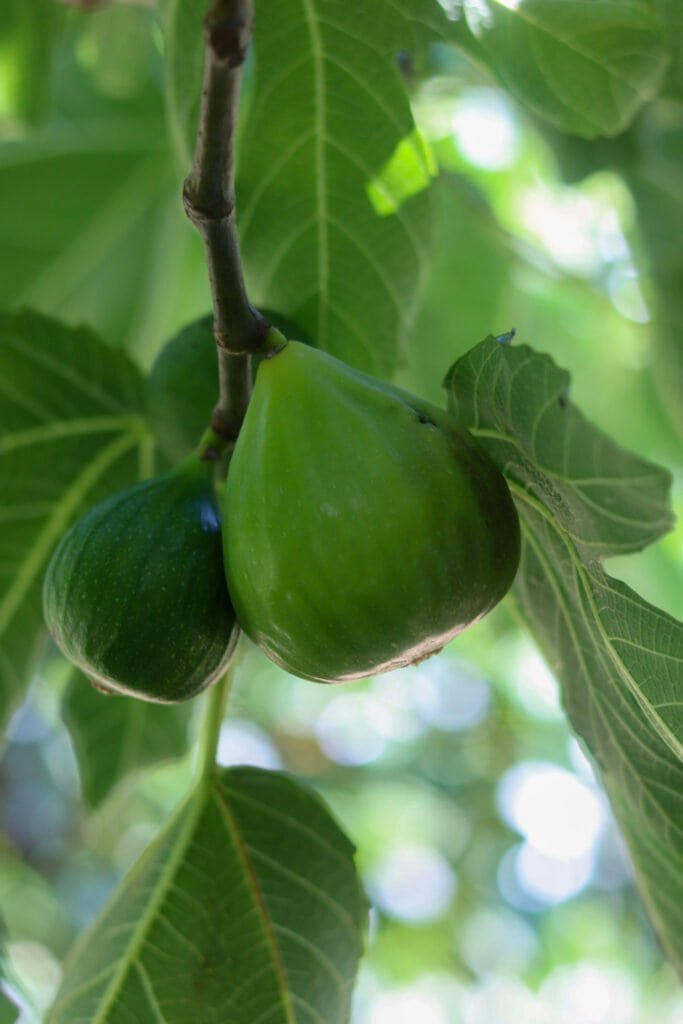
I adore our old fig tree. It’s about sixty years old, an Adriatic fig (Ficus carica), also called Verdone by an Italian botanist in the 1700s and Grosse Verte by the French. The skin on these figs is so delicate you’ll hardly ever spot them at a market. These would crack by only one delicate touch, and they’re so full of water they’d never survive a delivery truck in one piece.
Whoever planted this tree was probably never aware of how huge it would grow. And for how long will it live! At this point, it’s so huge that the trunk has basically claimed squatter’s rights on the yard.
And when it fruits in its own fig season, it does not do so in moderation. First week, a few figs. Next week, the whole tree is showing off with plump green bulbs everywhere, and every single one needs dealing with in almost a day, before the bees or gravity turn it into a sour mess. You really need to catch the exact moment with these bulbs, when the skin is taut, straining, just about ready, but hasn’t split open yet.
I talk to this tree every year. About boundaries. About burnout. About pacing itself. But the beloved thing never listens. It’s really hard to dry these huge bulbs, so fig jam is almost your only option left to preserve a little bit of summer magic. We used the leaves for the fig-leaf-wrapped fish recipe.
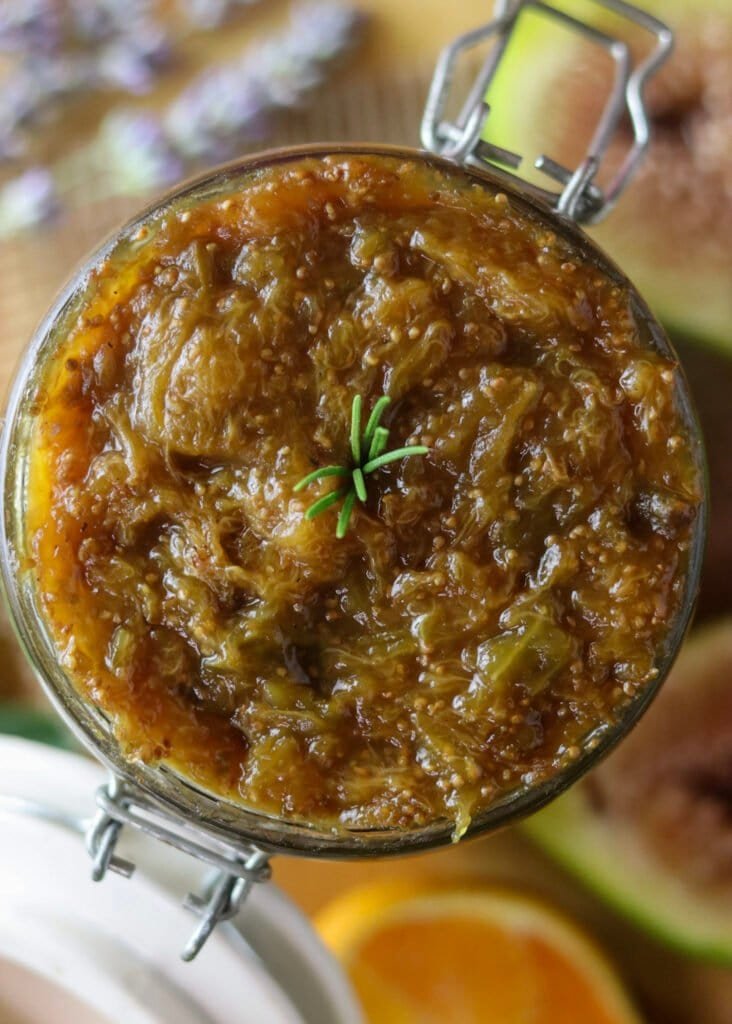
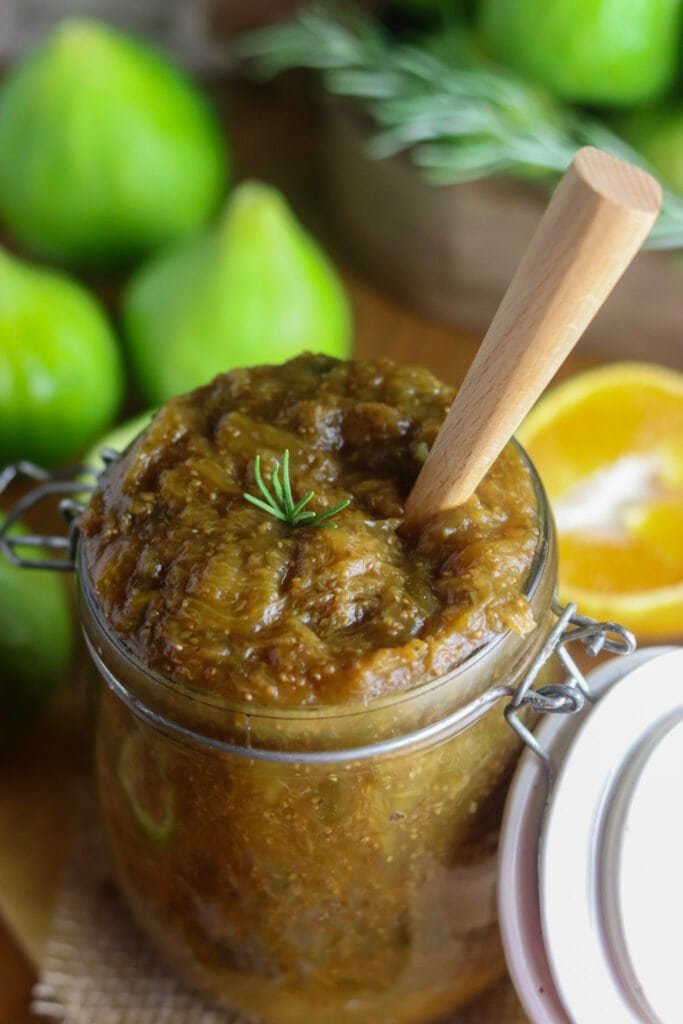
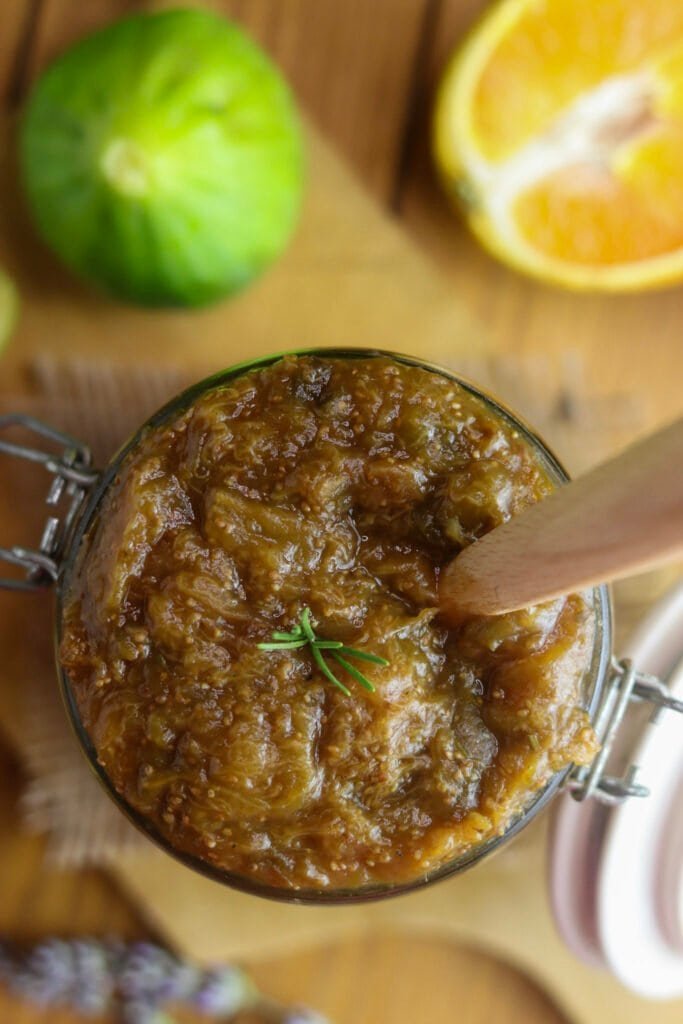
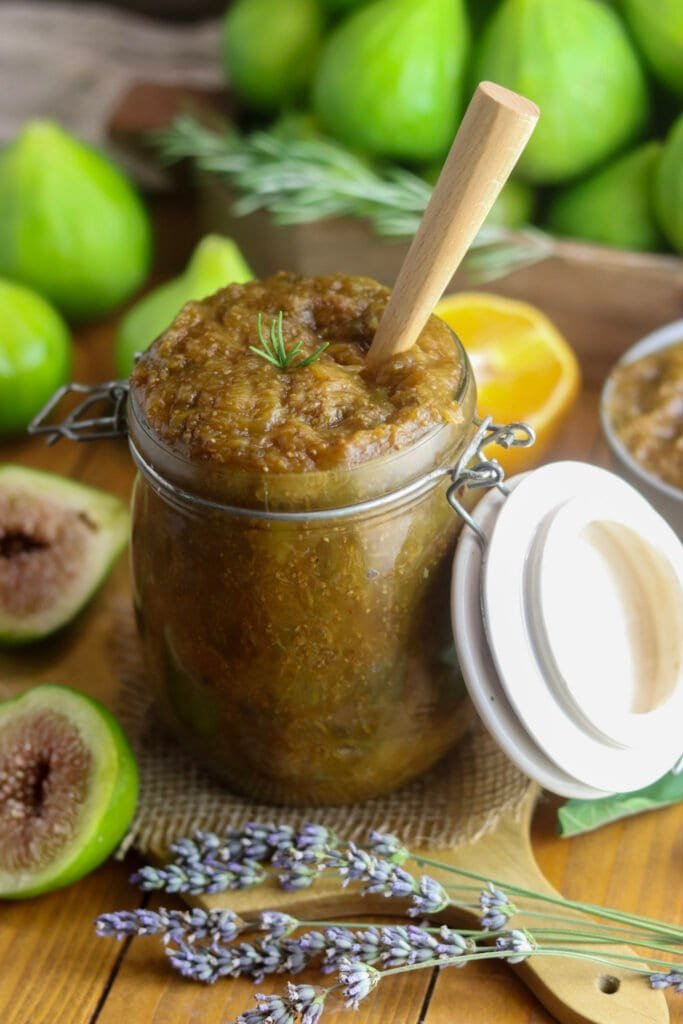
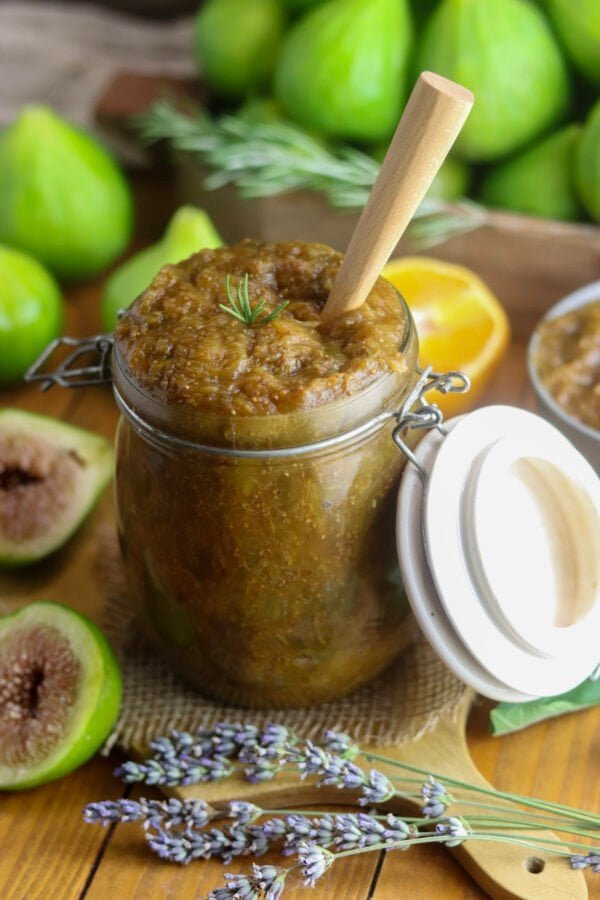
It’s thick, glossy, with zero added sugar and zero pectin packets. With a little orange zest, a little fresh rosemary, which sounds like a mistake until you actually taste it. Leave the skins on, reduce it, and it thickens up on its own; no sugar needed. Can it properly with a real water bath method, a little citric acid too, and the jars will sit on your shelf for a whole year. If you loved our sugar-free plum jam, this one earns a spot right next to it.
The color of this jam might not be the prettiest, but it’s so delightfully naturally sweet. Spread it on warm toast or buckwheat soda bread with a little kajmak, stir a spoonful into your yogurt, or save a jar for winter and thank yourself later. There are hundreds of ways to put this jam to work. Jam-filled empanada cookies, a savory fig-jam pizza, fig-jam crackers with brie or goat cheese, a fig BBQ sauce, or delicious summer cakes taste amazing with this fig jam.
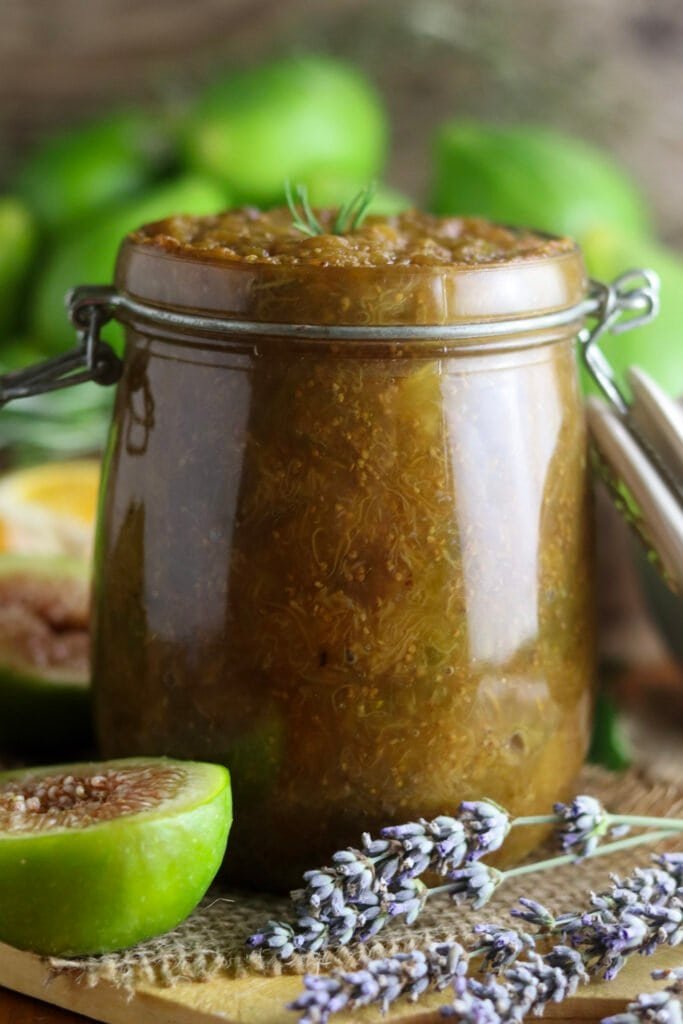
What you’ll need to make it
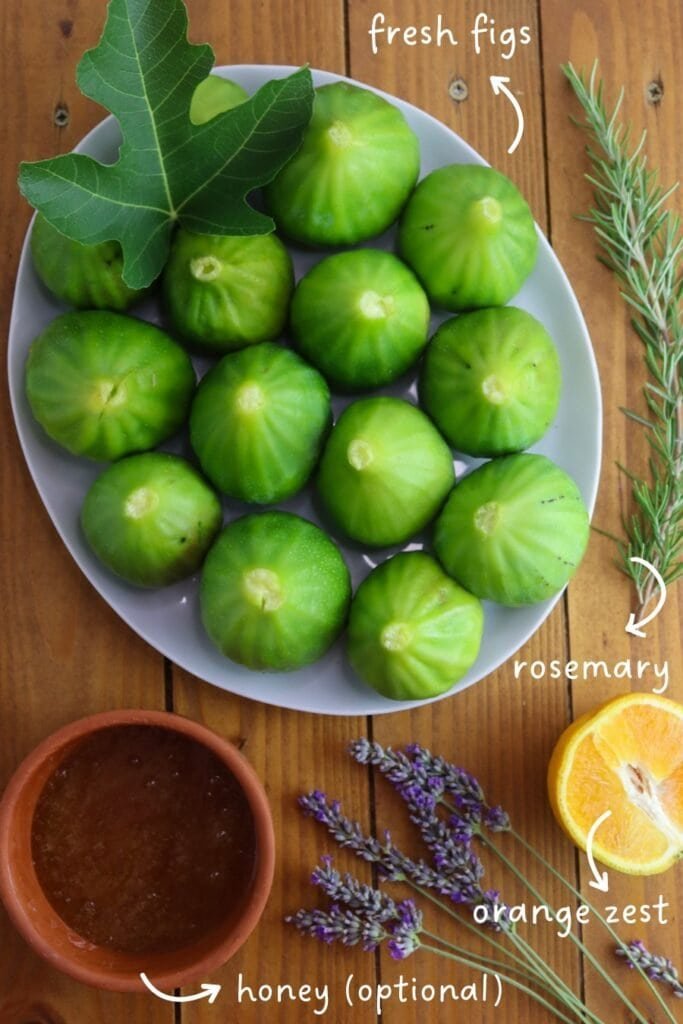
FRESH FIGS – Any fig works here; the jam will vary a little in sweetness and consistency depending on the variety. Best to pick and jam them while they’re still fresh, especially with Adriatic figs, since they don’t hang around long once picked. If you need to hold onto them a day or two, the fridge is where they go.
ORANGE – Organic, no exceptions. You’re using both the juice and the whole zest, so you want a peel that’s never been treated with wax or pesticides.
ROSEMARY – A small fresh sprig does the job, though dried works in a pinch. Go easy here; this jam is about the figs. Rosemary is just a quiet little nudge in the background, not the main note. You could use other spices like cardamom, cinnamon, or ginger too.
HONEY (optional) – Some years, some figs just aren’t sweet enough to stand entirely on their own. If that’s the case, stir in 1/4 cup of honey right at the end of cooking, off the heat, so it retains its good qualities. Figs and honey were basically made for each other anyway.
CITRIC ACID (for canning only) – Not optional if you’re canning this for the shelf. A quarter teaspoon per pint jar brings the acidity to the level needed for safe water bath canning. Figs sit right on that borderline where a little help is genuinely necessary. Skipping it means this becomes a refrigerator or freezer jam instead, which is completely fine too; just store it that way instead of on the shelf.
*See the recipe card below for exact amounts.
How to make sugar-free fig jam for canning
STEP 1: Remove any stems still hanging on, rinse off any debris, and give your figs a good wash. Slice them in half, or into quarters if they’re the bigger sort. If any look a little suspicious, toss those aside. The ones that have already cracked open tend to taste sour, and you don’t want those sneaking into your jam.
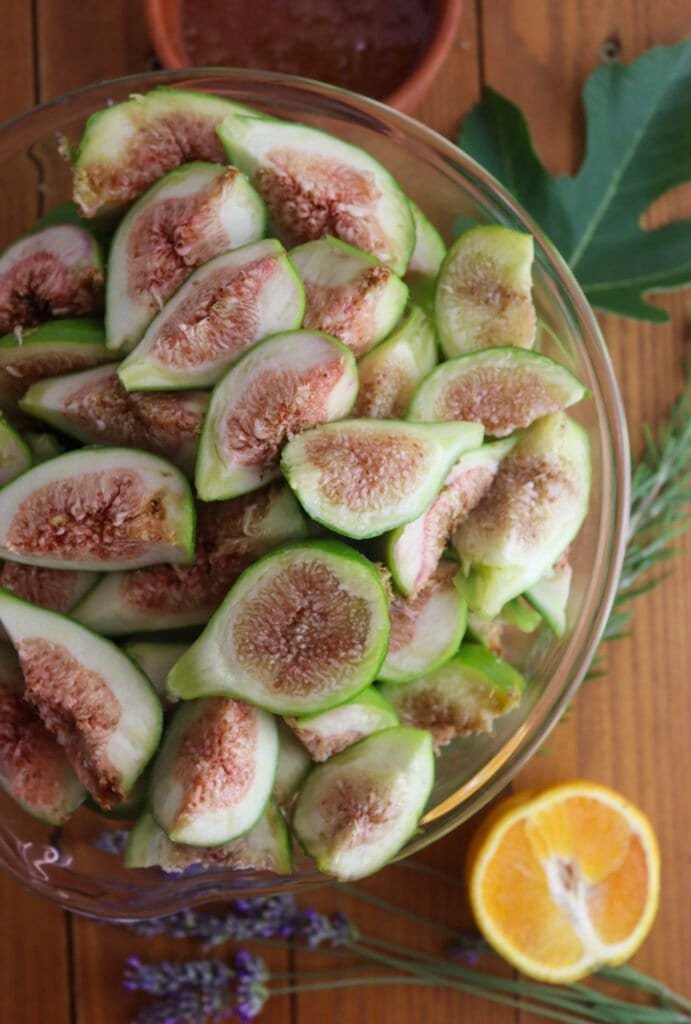
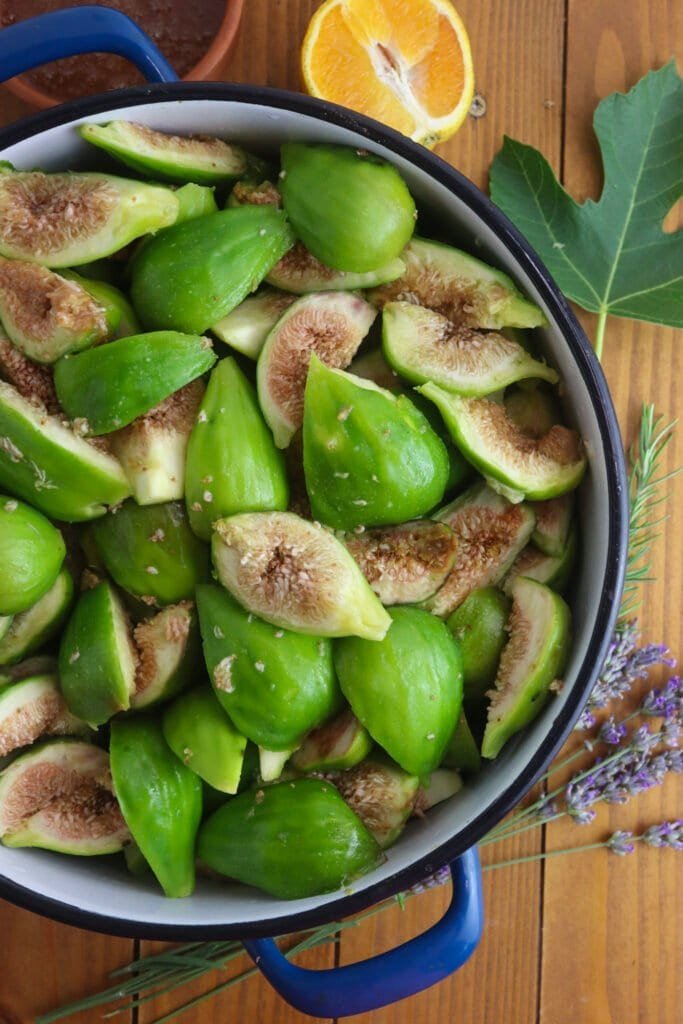
STEP 2: Toss the figs into a large pot and set it over medium-high heat. Grate the orange zest, squeeze in the juice, and drop both into the pot right from the start, along with your rosemary sprig.
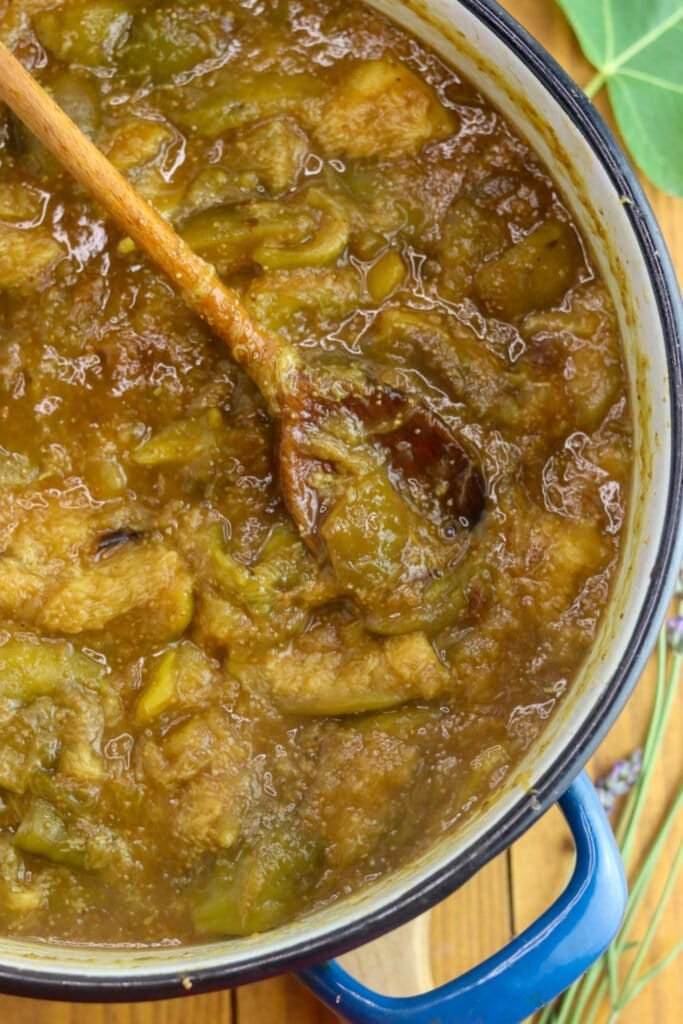
STEP 3: Bring everything to a boil, then turn the heat down to low and let it simmer. Stir often, more than feels necessary, so nothing catches at the bottom. Cook for about an hour, until the jam has reduced by at least half and looks properly jammy. Glossy, thick, no longer soupy. When done, fish out the rosemary sprig and taste the jam. If it needs a little more sweetness, stir in some honey now and let it melt over low heat.
STEP 4: Canning today? This is where the citric acid comes in. About ¼ teaspoon per pint jar (473 ml), or ½ teaspoon per quart (946 ml). Bottled lemon juice works too: 1 tablespoon per pint or 2 tablespoons per quart. Keep in mind that lemon juice will make the jam taste a bit lemony, while using citric acid will keep the sweet fig aroma.
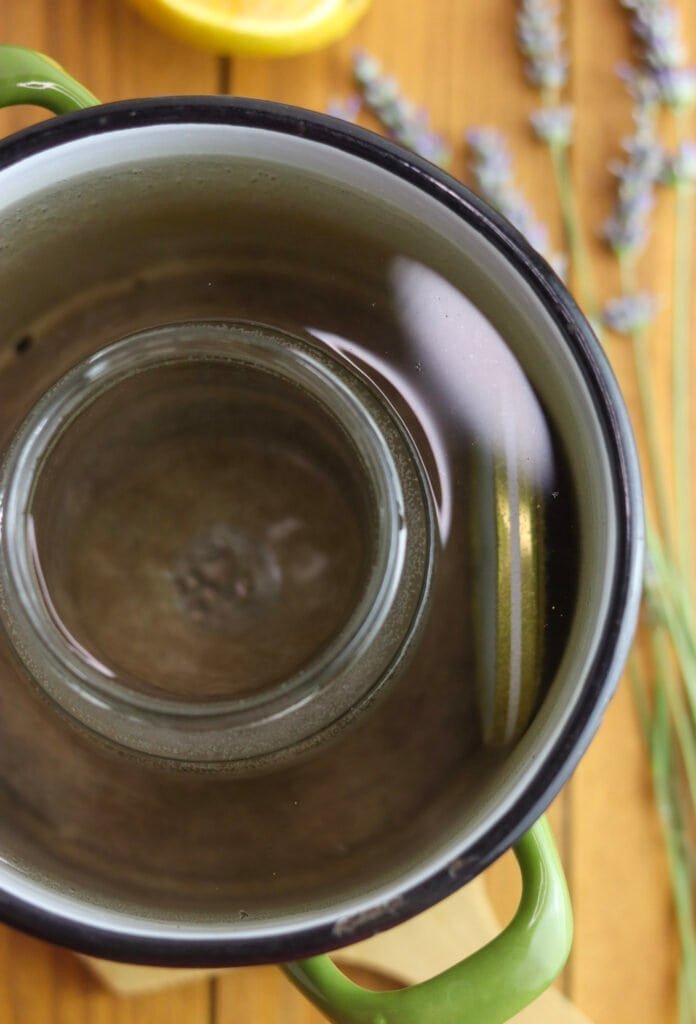
STEP 5: Sterilize your jars and lids before you fill them. Boil them fully submerged for a few minutes, or pop them in the oven at 100°C (212°F) for about ten minutes. If your jam cooled down while you were fussing with jars, bring it back up to a boil before filling. Ladle it in hot, run a clean knife or spoon around the inside to chase out any trapped air, wipe the rims, and seal the lids on tight.
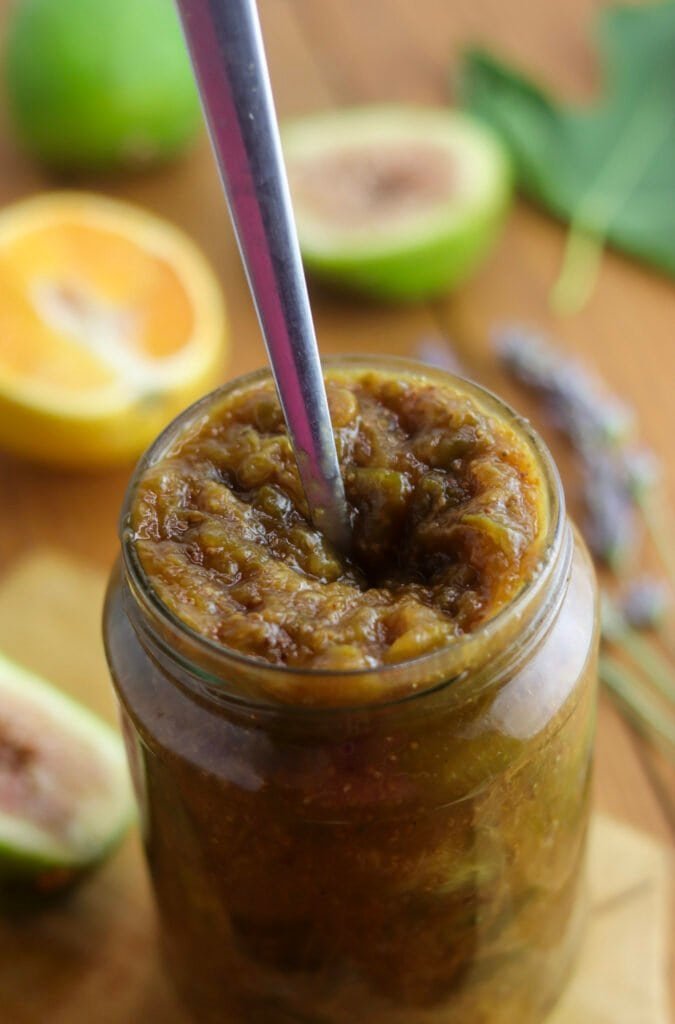
STEP 6: Process the filled jars in a boiling water bath, fully covered by a couple of inches of water, for 10 minutes, longer if you’re up in the mountains somewhere. This step is what actually makes the jam shelf-stable, so don’t skip it just because the jars already look sealed.
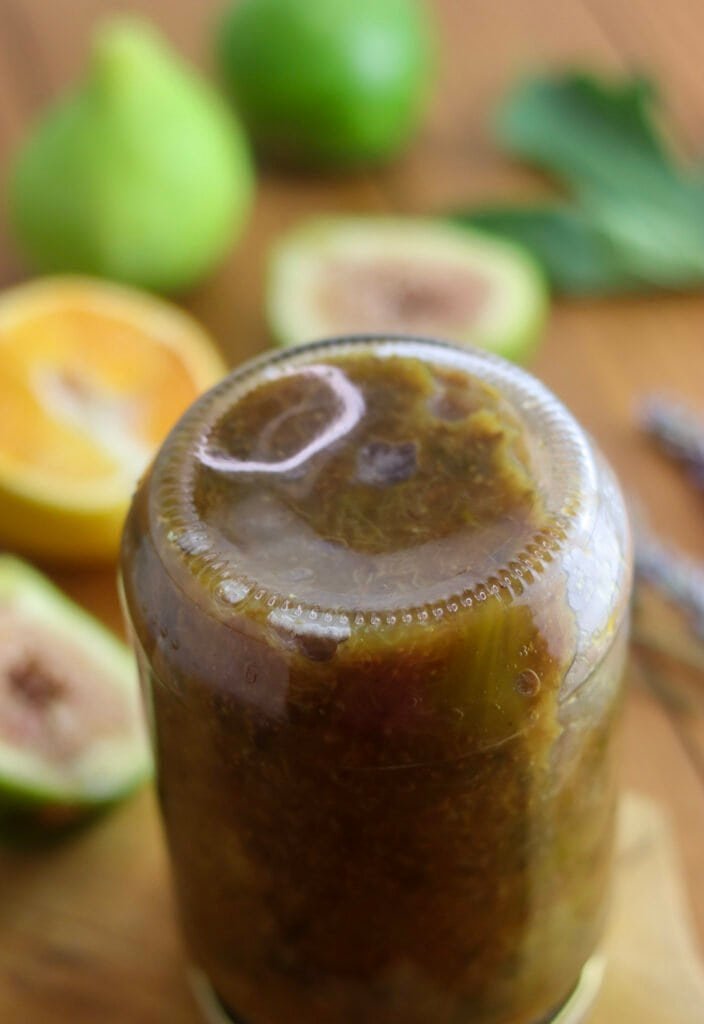
STEP 7: Lift the jars out and find them a quiet corner. This is where the wool blanket comes in, an old trick which we still use. Turn the jars upside down, wrap them up snug, and let them cool slowly overnight, right there on the counter till morning. The next day, once cooled, press the center of each lid. If it doesn’t pop back, that jar goes in the fridge, not the pantry.
STEP 8: If you’re not doing the canning, you can skip the citric acid, spoon the jam into clean jars, press out the air, and keep it in the fridge. It’ll last several weeks this way, quite enough to use it all.
A few tips that might help you
Pick figs that are properly ripe, not just soft. A slightly underripe fig will fight you the whole way through cooking and give you a jam that’s more polite than sweet. You want figs that practically give in when you touch them.
Don’t walk away from the pot. Fig jam without added sugar or pectin needs a bit more attention while it reduces, since there’s no sugar to buffer against scorching. Stir it more often than you think you need to, especially once it starts thickening.
Use rosemary lightly. It’s tempting to think more is better, but it is not. A little sprig goes a long way, and too much will turn your fig jam into rosemary jam with fig aspirations.
Add other spices if you like. Cardamom, ginger, or a little cinnamon get along beautifully with figs, if you want a warmer, more holiday-leaning jar, this is where to experiment.
Don’t skip the citric acid if you’re canning. Fig jam sitting on a shelf for a year needs that extra acidity to be safe from botulinum bacteria. You can also add lemon juice instead, but I prefer citric acid so the jam doesn’t taste as lemony.
Let the jars rest after processing. Resist the urge to move them, tilt them, or check on them every five minutes. Give them a full 12 to 24 hours to cool and seal in peace under a blanket.
Carefully check every single seal before storing. Press the center of each lid. If it doesn’t pop back, you’re good to shelf it. If it does, that jar goes in the fridge instead and gets eaten first.
How long will this fig jam last with no added sugar
In sterilized jars kept in the fridge, this jam lasts several weeks. Canned properly, with citric acid and a real water bath, it’ll sit safely on your shelf for about a year. Long enough to work through a batch before the next fig season rolls around.
A word on checking your jars, though: taste and looks aren’t a reliable test; jam jars can seem completely fine even when they aren’t. What actually matters is getting the acidity right from the start. Figs sit right at that borderline where a little citric acid (or bottled lemon juice) is what makes shelf storage truly safe. Skip it, and the jam’s still lovely; just keep it in the fridge or freezer instead of the pantry.
Always check that the lids are still down and sealed, never popped up. And trust your senses too: if a jar smells off, looks cloudy, or the jam tastes strange in any way, don’t risk it. Discard that jar without a second thought.
Sugar-free fig jam FAQ’s
You can, though the figs already bring plenty of sweetness on their own; that’s the whole point of this jam. A couple of tablespoons stirred in the pot if you want it sweeter; just know it’ll shift the flavor and set a bit differently. One thing that doesn’t change either way: the citric acid still needs to be there for safe canning; sugar isn’t what makes this jam shelf-stable.
Not on its own, no. A bulging lid can be a sign of spoilage, but its absence isn’t proof that a jar is safe. This is exactly why using the right amount of acid matters more than checking the jar afterward; a jar can look and seal perfectly fine even if something’s off inside.
Yes, and it’s a completely valid option if you’d rather skip the canning process altogether. Just leave a little headspace in your container before freezing, since the jam will expand slightly.
Related recipes


Sugar-Free Fig Jam
EQUIPMENT
- 4 pint jars (475 ml)
- 2 large pots
INGREDIENTS
- 3 kg fresh figs
- 1 orange
- 1 rosemary sprig
- 4 g citric acid
- 60 ml honey (optional)
INSTRUCTIONS
- Trim off any leftover stems, rinse away debris, and wash the figs thoroughly. Cut them into halves or quarters if they're on the larger side. Remove any that look off, cracked or split.
- Add the figs to a large saucepan or pot over medium-high heat. Zest and juice the orange straight into the pot, along with the rosemary sprig.
- Bring to a boil, then lower the heat and simmer, stirring frequently to prevent sticking. Cook roughly an hour (at least) until reduced by half and thick and glossy. Remove the rosemary, taste, and stir in honey if you'd like it sweeter, letting it melt in off the heat.
- For canning, add citric acid now, ¼ tsp per pint (473 ml) or ½ tsp per quart (946 ml). Bottled lemon juice is an alternative: 1 tbsp per pint or 2 tbsp per quart, though it will shift the flavor toward lemon rather than letting the figs lead.
- Sterilize jars and lids, either boiled fully submerged for a few minutes or baked at 100°C (212°F) for ten. Reheat the jam to boiling if it's cooled, then fill jars while hot, removing air bubbles, wiping rims, and sealing tightly.
- Process in a boiling water bath, fully submerged, for 10 minutes (longer at higher altitude). This step is essential for shelf stability, don't skip it.
- Remove jars and let them cool undisturbed, wrapped in a blanket overnight. Check seals the next day, press each lid center. Unsealed jars go in the fridge.
- If you're not canning the fig jam, skip the citric acid too, fill clean, sterilized jars, remove air, and refrigerate. Good for several weeks.
NOTES
NUTRITION
The recipe was featured at Esme’s Salon, Our Hopeful Home, Pieced Pastimes and Life and Linda blog.
Thanks for this amazing post, as mentioned before wish I had fresh figs. You will be featured at SSPS on Monday and pinned to Senior Salon Pit Stop InLinkz Linkup Shares
Thanks, Esme!
The recipe for sugar-free fig jam sounds grand Mariama. I saw it at the Sept. Sweet Tea & Friends linkup. Please look for me there too. Warm regards, Nancy Andres @ Colors 4 Health.
Thanks Nancy, I’m so glad you stopped by!
Honestly, this sounds wonderfully decadent!
We are getting a few fresh figs, but have to fight the deer for them, and we often lose!
I love that it is sugar-free, and I think figs and honey just sound so vintage, almost Biblical!
Thank you so much for sharing your recipe at the Homestead Blog Hop 614. Pinning this recipe to remember!
Laurie
Ridge Haven Homestead
Oh yes, the deer love the figs, sounds very familiar! I’m actually proud that, in times like these, the figs are still from our own tree and the honey is from our hives. I’ve bought an organic orange, though, and never thought this combination would be so tasty. And I’m super glad that you stopped by!
I love figs! This fig jam recipe sounds amazing. Thank you for sharing your recipe with us.
Thank you, Steph. It’s always a pleasure!
Looks delicious. We have a fig tree outside of our study. I love the sweet taste of them plain too. I am happy to feature your sugar free fig jam at Love Your Creativity.
Aww, what a wonderful surprise 🙂 And yes, plain figs without sugar are the best, if you ask me!
I wish I could find figs. I even checked at the farmers market.
Thanks so much for sharing with Sweet Tea & Friends this month dear friend. I’m so happy you’re here.
Hi Paula! I sincerely suggest that you buy a fig plant and grow your own. When these trees fruit, they do so in abundance! Plus, you can use fig leaves for tea, syrup, and other recipes.
Oh yes, I am doing this, got more figs than I can possibly eat, was going to try drying some, but this is so much easier. Thanks for sharing with #pocolo, sorry it’s taken me so long to get round to commenting
Hi Suzanne, I’m really happy you like it, and I hope the recipe serves you well!