
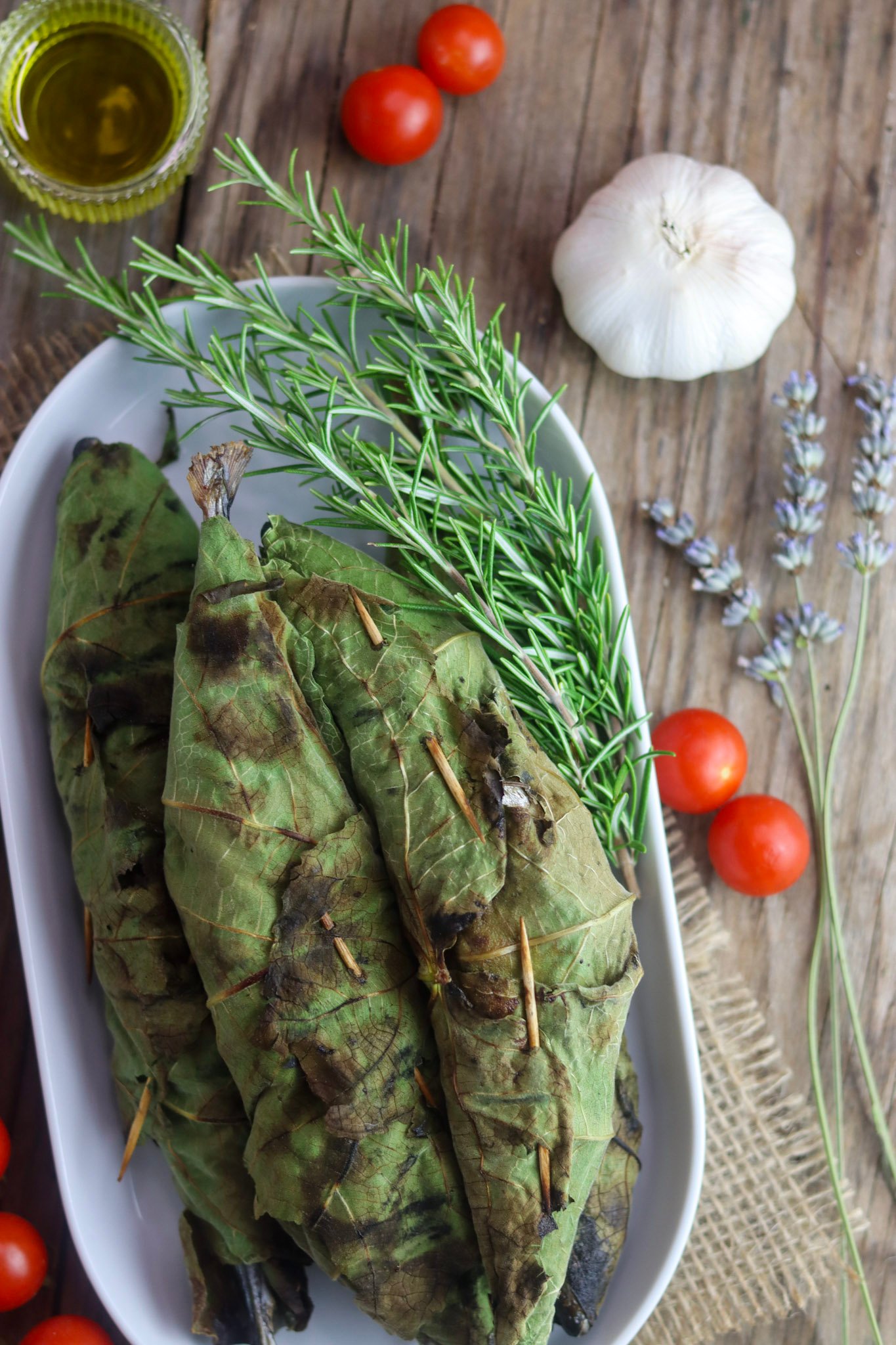
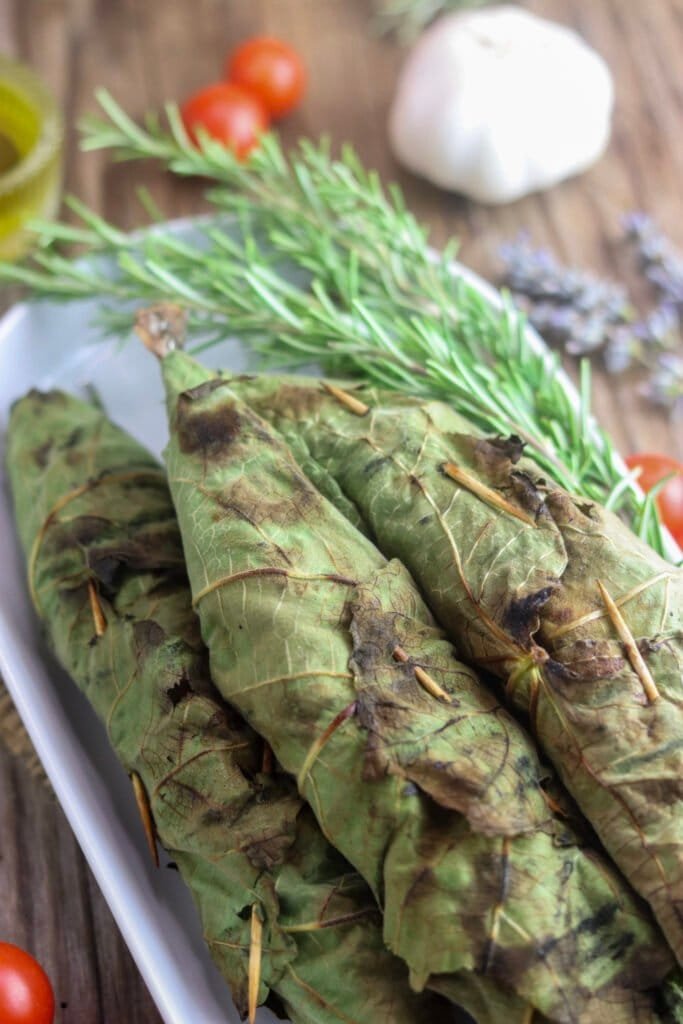
Delicious fig-leaf-wrapped fish recipe featuring grilled chub mackerel stuffed with garlic, lemon slices, and rosemary. If you’ve got a fig tree nearby, congratulations, you’re sitting on the best free fish-wrapping material around, and it’s absolutely worth a try. The result? A ridiculously tasty summer dish under the blue sky.
Just mackerel, wrapped in fig leaves and grilled
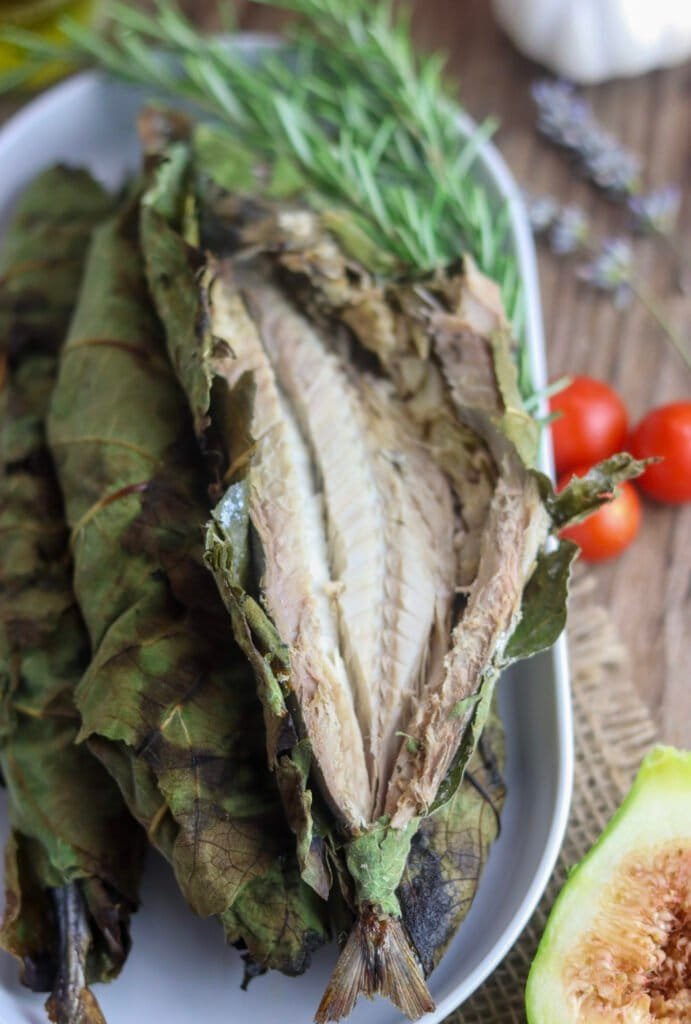
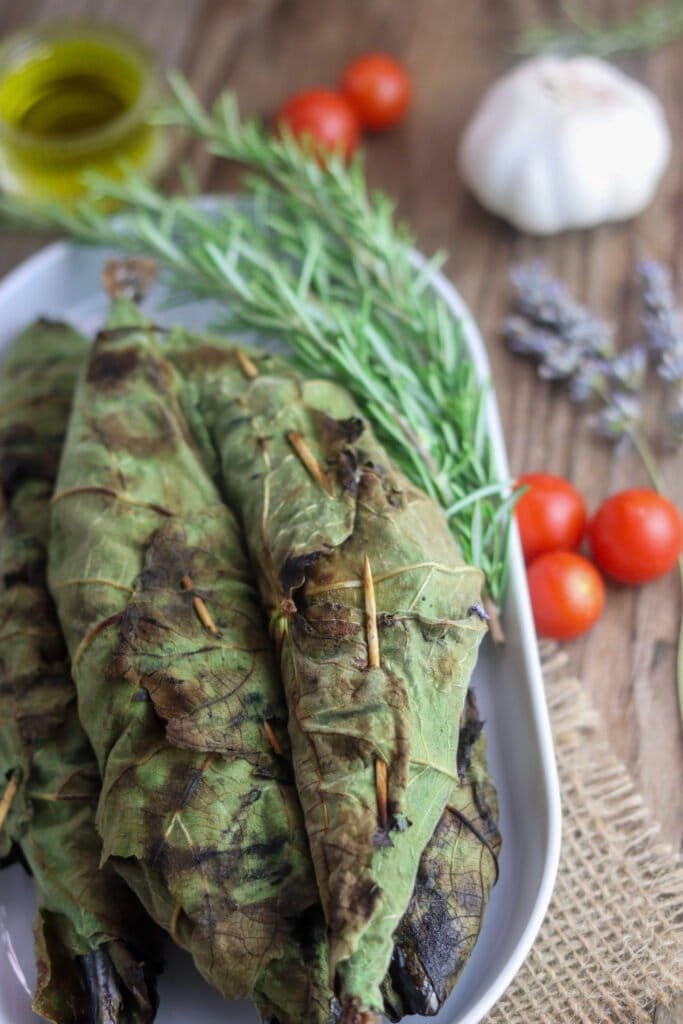
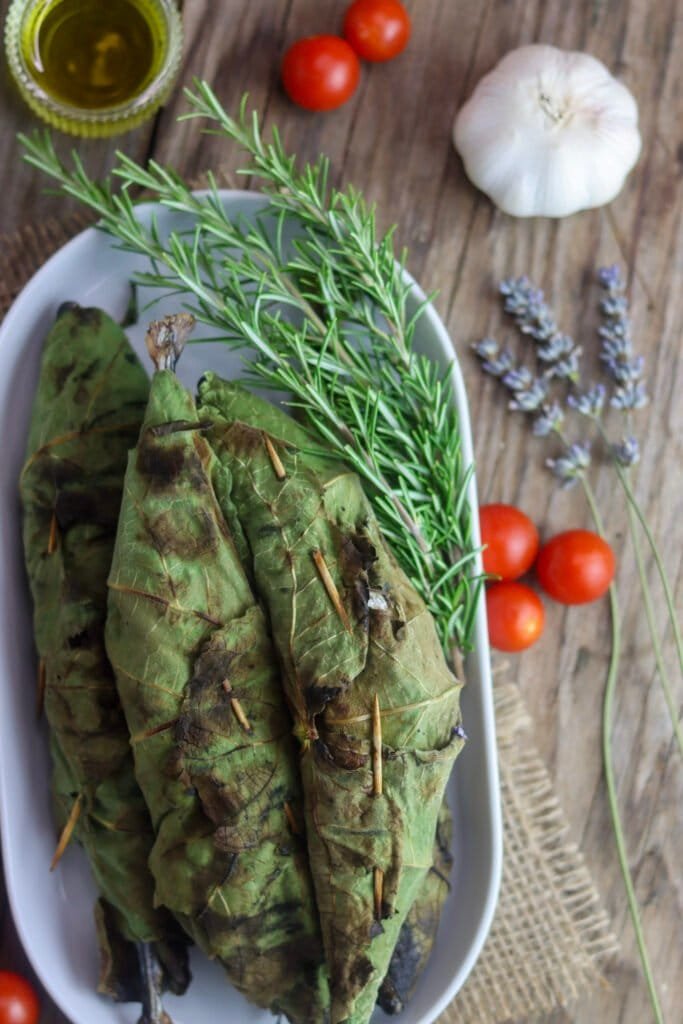
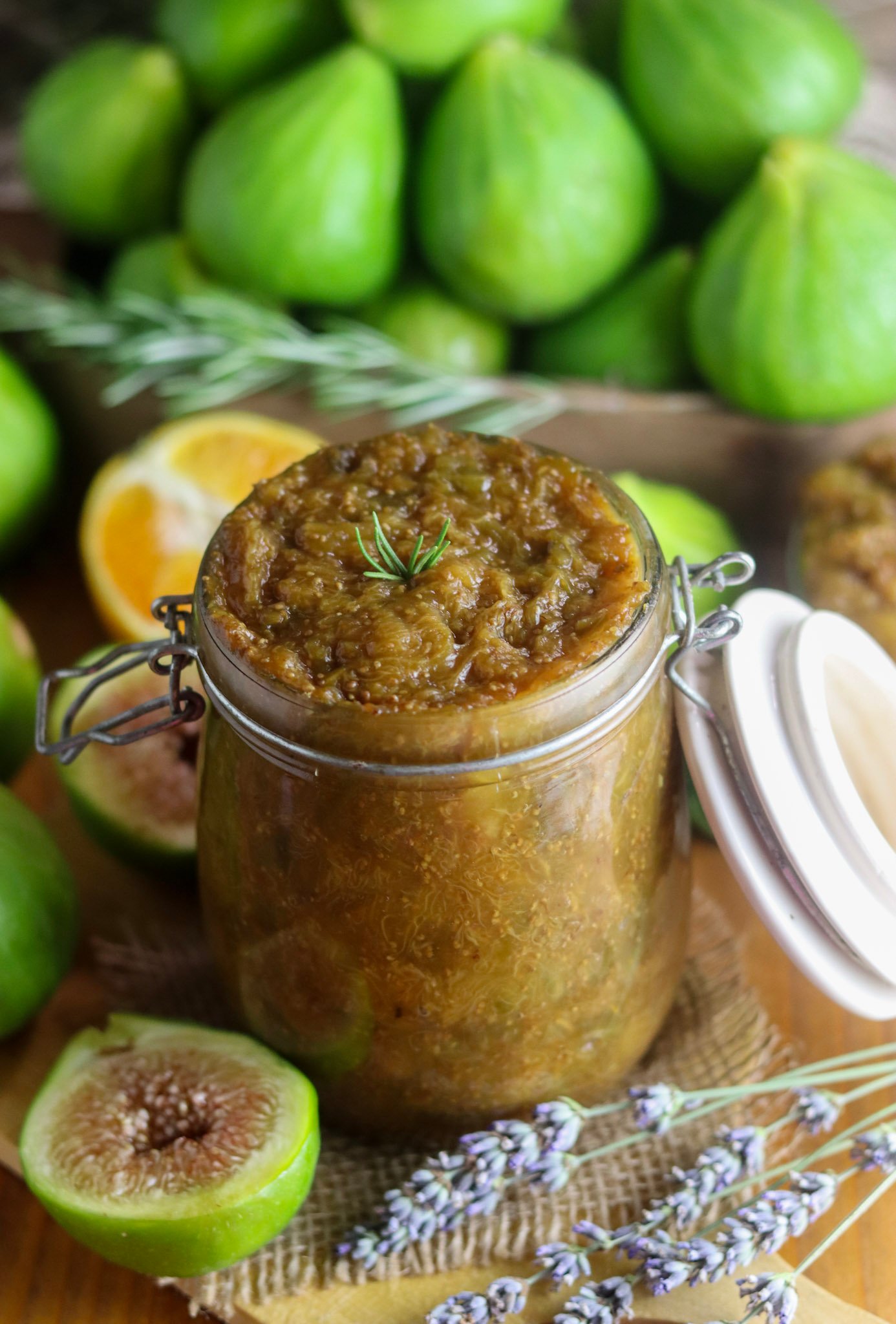
This recipe is just as frugal as our baked grey mullet, and if you’ve got a fig tree somewhere nearby, it’s really not only fig jam you can make from these trees, but also delicious fig leaf-wrapped fish on the grill. The fig leaf wrapping steams the fish inside while keeping it pleasantly smoky and grilled on the outside. Fresh fig leaves leave a subtle, coconut-like flavor, gentle enough that it never competes with the smoky-tasting flesh.
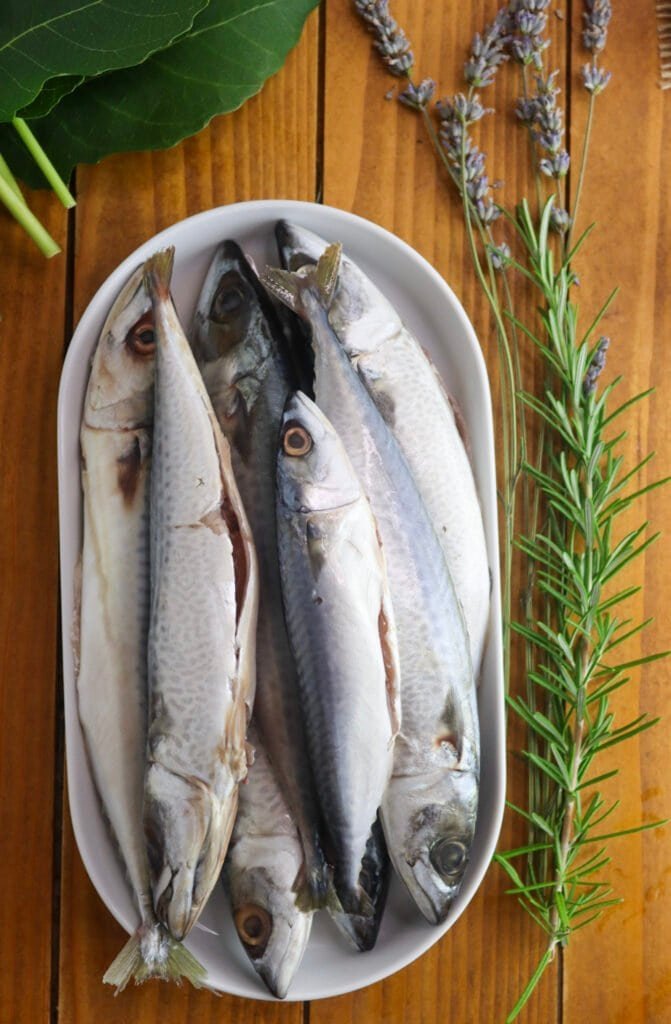
You can use any fish for this recipe. I love experimenting with the more affordable, usually underrated ones. So we got some chub mackerel (Scomber japonicus in Latin, or lokarda in Croatian) from the local fishmonger. Cheap as they are, these oily fish are far from a downgrade nutrition-wise; they’re rich in Omega-3 fatty acids, and being smaller than regular mackerel actually works in their favor. Sea creatures lower on the food chain tend to bioaccumulate less mercury and other toxins than the big guys do. (Sound familiar, humans?)
Out of respect for the older generation of Adriatic fishermen, who always said quality fresh fish shouldn’t be spiced with anything more than salt and olive oil to keep the sea’s magic intact, that’s what we used on top. We stuffed the fish with a little diced garlic, rosemary, and lemon slices.
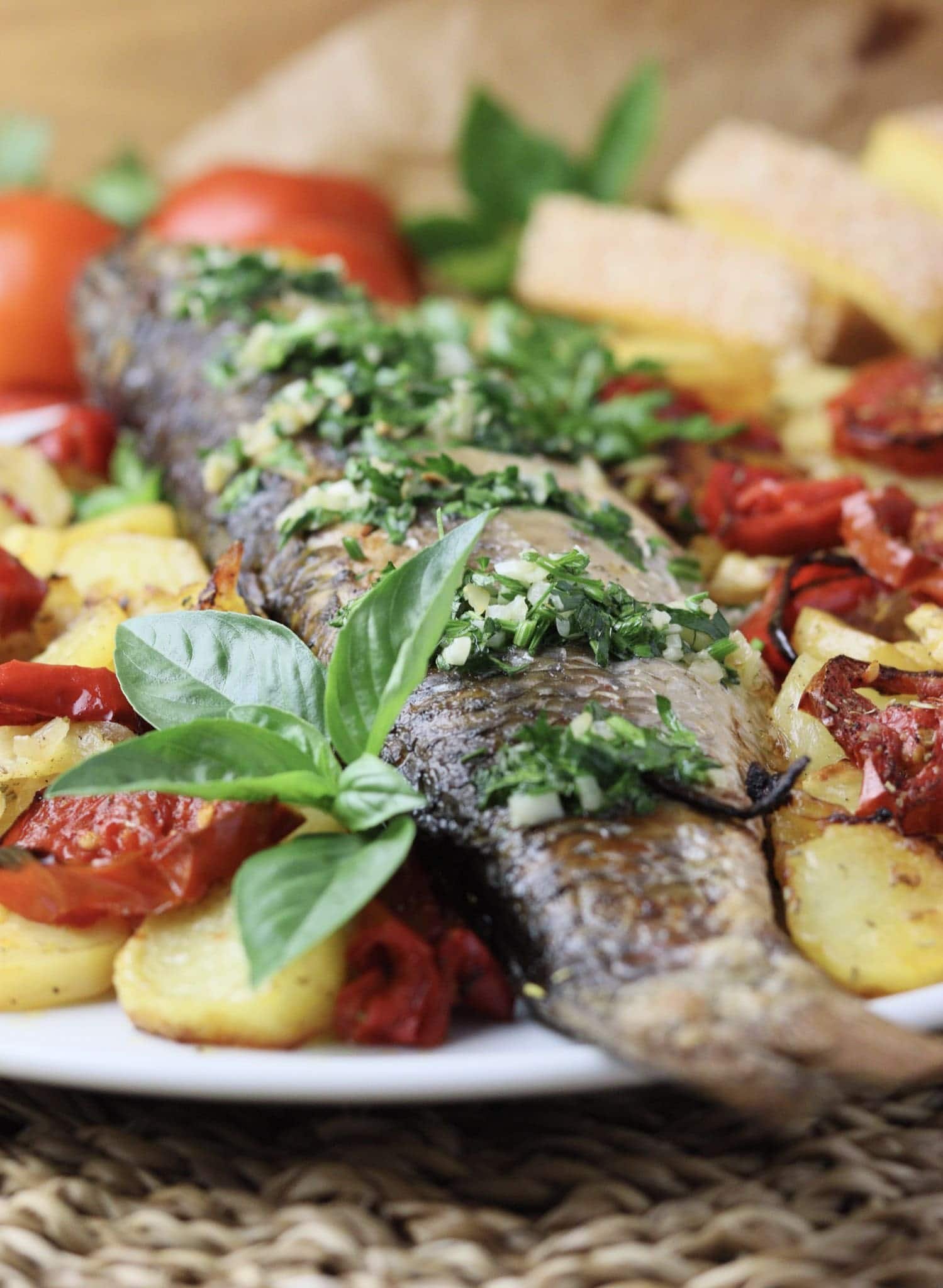
When you open up these grilled chub mackerel, add some garlic parsley sauce if you like, and the fish pairs beautifully with simple summer salads like taboule oriental. Or, like in the old days, just a drizzle of virgin olive oil, a slice of homemade bread, like black pepper focaccia or sun-dried tomato focaccia, and a glass of good wine.
The ingredients
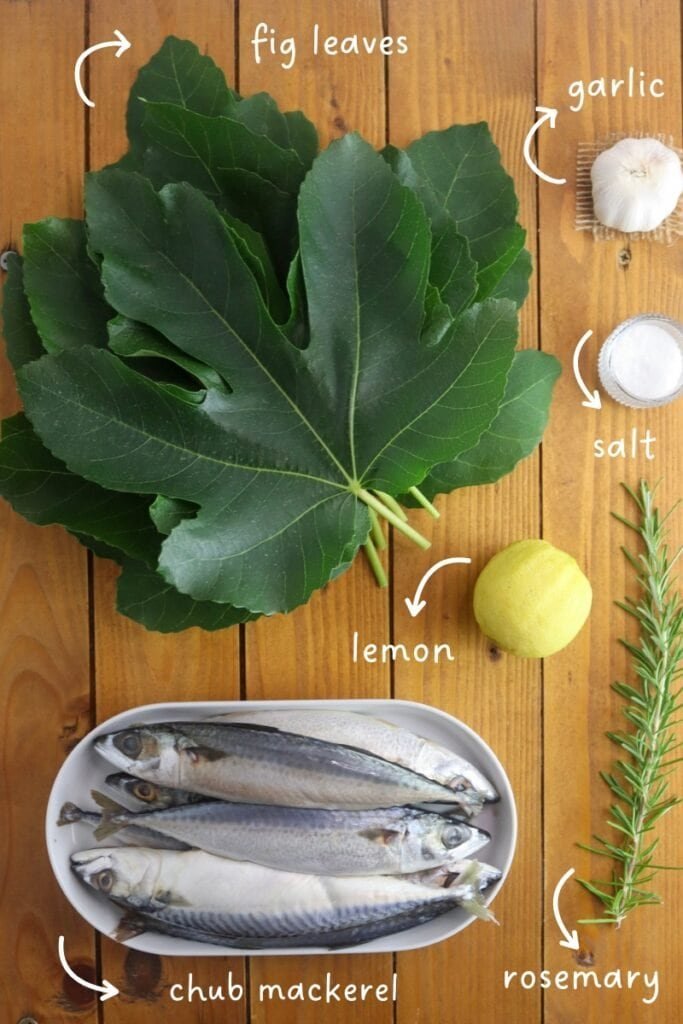
CHUB MACKEREL – Keep these fresh and small enough to wrap. The bigger ones will need more than one fig leaf to get properly covered on the grill. It’s worth grabbing ones of a similar size so they all cook evenly.
FIG LEAVES– Bigger is better. Younger, softer spring leaves are more flexible for wrapping, but if you trim the stems and tough veins, the older ones work just as well.
GARLIC – Just a few cloves to stuff into the fish, plus a few more if you’re the type who loves your fish drowning in garlic parsley sauce.
LEMON – Organic, please. You want your fish free of chemicals. No big deal if you skip the lemon altogether; the fish will still taste great.
ROSEMARY – Fresh is best if you’ve got it, but dried rosemary works just fine too.
OLIVE OIL– The better the oil, the better the fish. We use organic, cold-pressed virgin oil from Greece.
How to make fig leaf wrapped grilled chub mackerel
PREPARE THE FISH
STEP 1: Clean the fish, removing anything you don’t need, and salt it. The mackerel taste best if you skip fresh water and rinse them directly in the sea instead, keeping the natural sea salt on. If you do that, go lighter on the added salt than you would if cleaning them in fresh water.
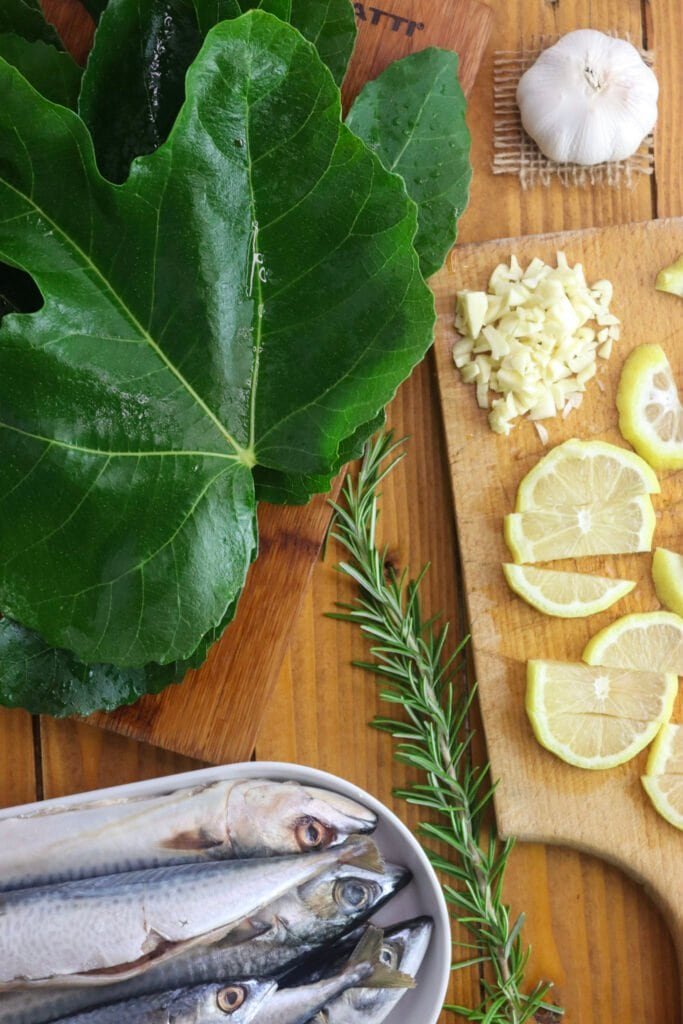
STEP 2: Wash the fig leaves. It’s fine if they stay a little wet; the grill is usually hot enough to dry them off in minutes. Then slice or crush the garlic into small pieces and cut the lemon into slices thin enough to tuck inside the fish. Oh, and a bit of rosemary too.
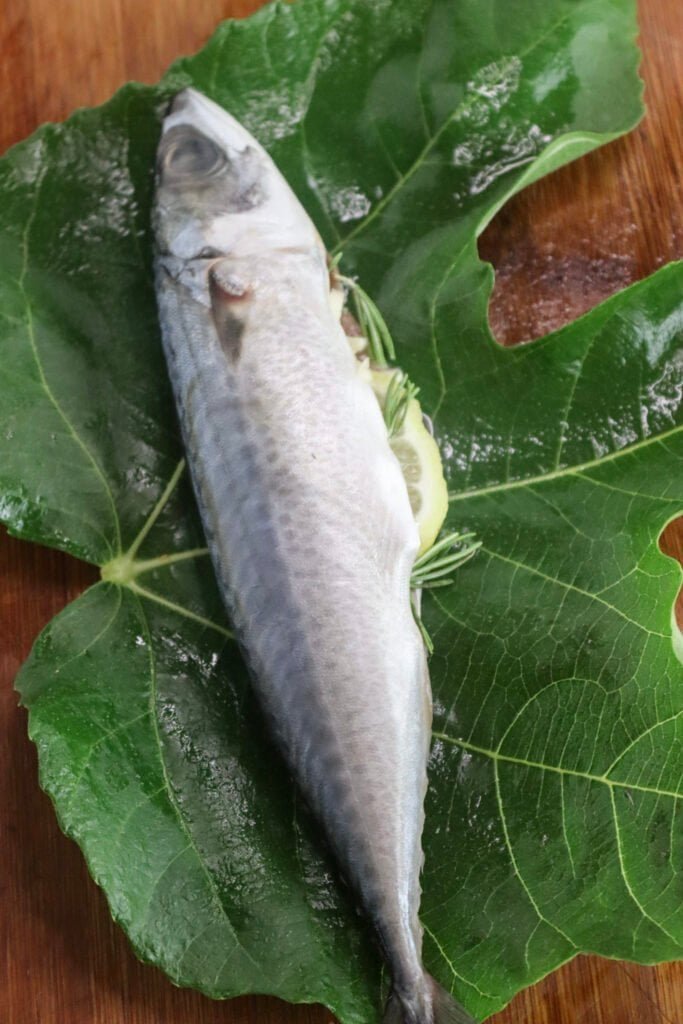
STEP 3: Stuff the fish with garlic mixed with a tablespoon of olive oil, a slice of lemon, and a little bit of rosemary. Place each chub mackerel on a fig leaf so it lines up with the longer side. If the whole fish is bigger than the leaf, use two leaves.
STEP 4: Wrap the fish starting at the sides of the leaf, then fold the longest part of the leaf over the center to close it up.
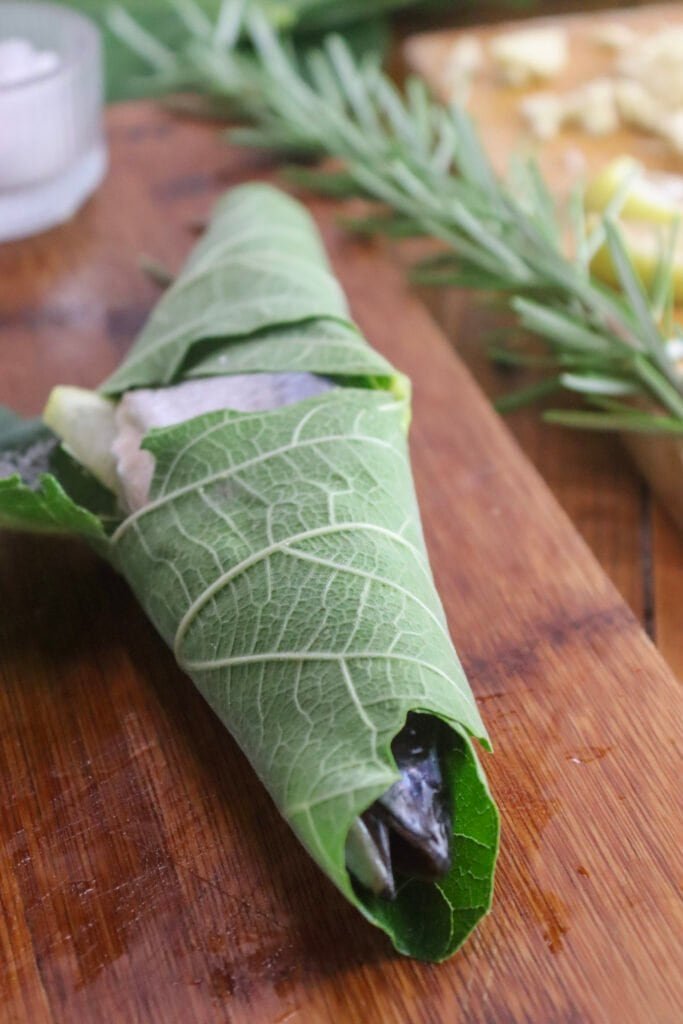
STEP 5: Secure the leaf with a toothpick, just tight enough to hold both sides together.
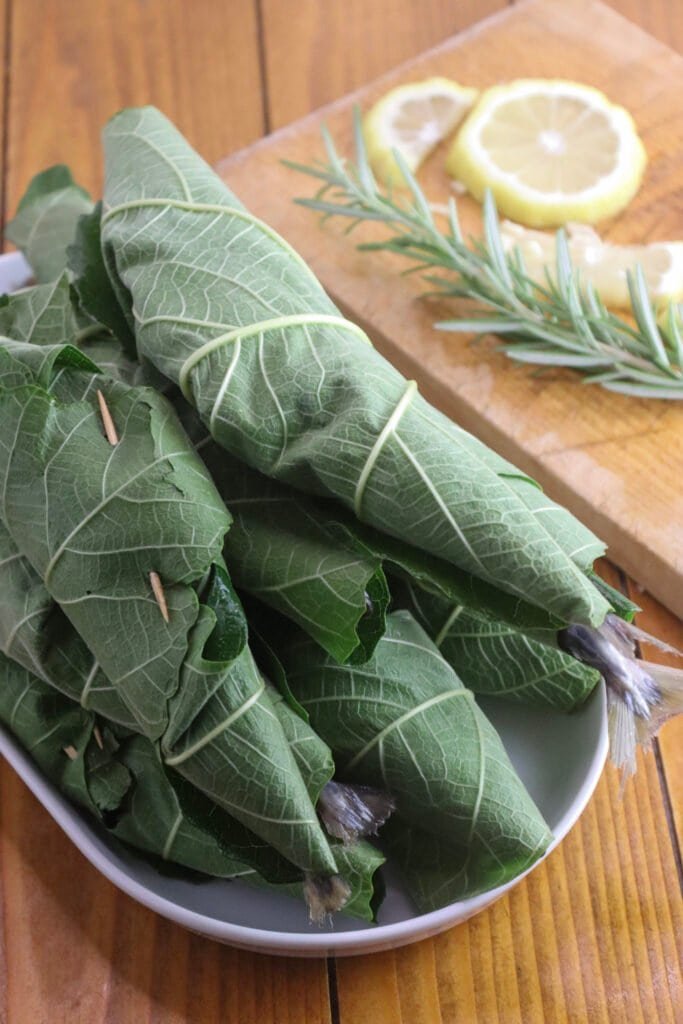
GRILLING
STEP 6: Get your barbecue going. If you’re using charcoal, let it burn down to a steady, even heat so the fish doesn’t scorch too fast.
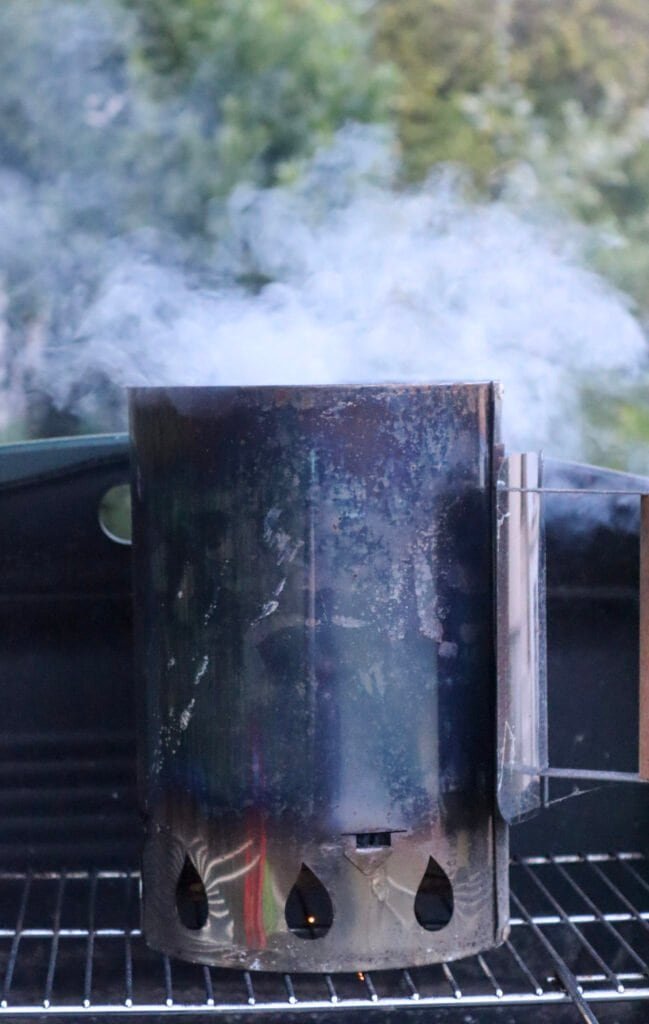
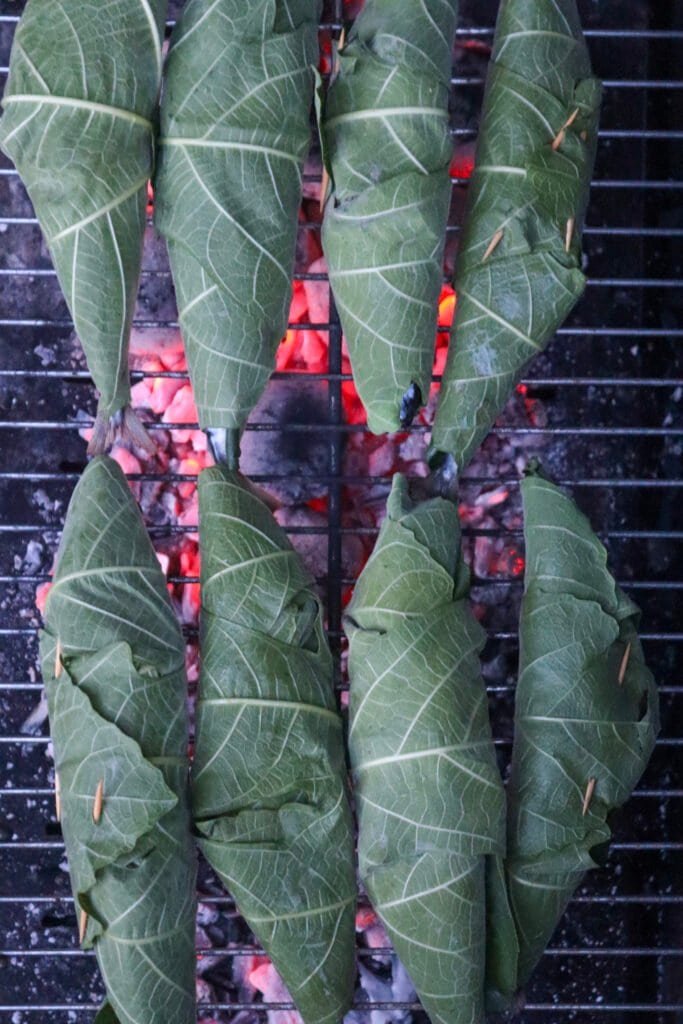
STEP 7: Grill the mackerel for 10 minutes on one side, then carefully flip.
STEP 8: Grill for another 10 minutes on the second side. If the leaves char a bit on the outside, don’t worry; the fish inside stays untouched. When in doubt, grill a little longer rather than less, unless you prefer your fish more on the rare side.
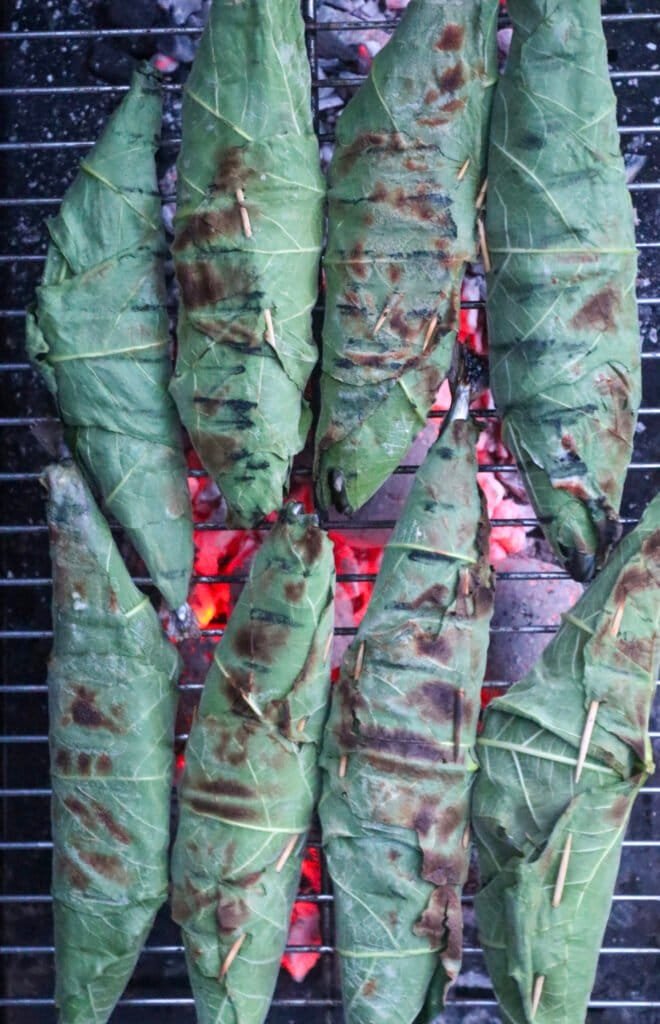
STEP 9: Leave the fish to rest for a few minutes before serving. They taste best when still hot, but since they’re wrapped, they hold their heat longer than an unwrapped fish would. To open, just remove the toothpick, slice along the top of the mackerel, and lift out the bones. A garlic parsley olive oil sauce works great with grilled mackerel, and a little bit of fresh lemon juice if you like.
Tips to make this recipe taste great
Use soft leaves. In summer, these tend to be softer in the morning than the ones hardened by the afternoon heat. Make sure you pluck leaves big enough for your fish.
If they tear, use two. Patch them with another leaf; the char and steam still work fine with a slight overlap. Save the extra leaves for decoration, or use them as a makeshift grill liner.
Use mackerel of even size. They need to grill uniformly; mix big and small fish together, and you’ll end up with one perfectly done and one sadly overcooked.
You can make this recipe with any fish. If chub mackerel isn’t available, this trick works just as well with sardines, salmon, or whatever your fishmonger’s got looking good that day.
Resist unwrapping while grilling. Ten minutes on each side should get the mackerel there. If curiosity persists, unwrap just one at the end and leave the rest be.
How to store grilled chub mackerels
The wrapping acts as a shell, so these fish are easy to store in the refrigerator for a day or two.
Make sure they’re at room temperature before storing, and avoid wrapping them in anything else while they’re still warm; it’ll make them sweat and cook more than grill on the inside, and nobody wants soggy fig-leaf fish.
Questions you might have
Grape leaves or banana leaves. Whichever leaves you use, make sure they are thick enough for the grill so they won’t burn too quickly on hot charcoal.
You can, although whole grilled chub mackerel holds up better to the wrapping and steaming, and the bones actually help keep the flesh moist during grilling. If you only have fillets, wrap them the same way as whole mackerel, just shorten the grilling time to about 5-6 minutes per side.
Thyme, oregano, or fresh dill. However, it’s good to stick to the old saying that a good fish needs nothing more than salt and good olive oil.
Recipe
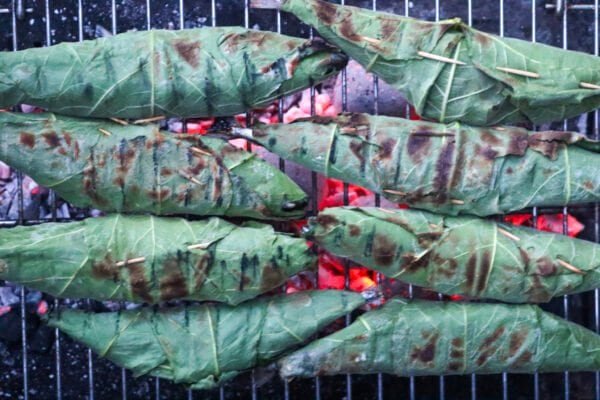
Fig Leaf Wrapped Grilled Chub Mackerel
EQUIPMENT
- 8 toothpicks
INGREDIENTS
- 8 chub mackerel
- 8 fig leaves
- 3 cloves garlic
- 1 tbsp olive oil
- 1 lemon
- 5 g rosemary
INSTRUCTIONS
- Gut and clean the fish, then salt it. Rinsing in the sea instead of fresh water keeps some natural salt on the skin, so cut back on added salt if you are cleaning them in seawater.
- Rinse the fig leaves (a little dampness is fine). Prep your garlic, lemon slices, and rosemary for stuffing.
- Mix the garlic with a tablespoon of olive oil and stuff each fish with the mixture, a lemon slice, and a touch of rosemary. Lay the fish along the length of a fig leaf. Grab a second leaf if it's oversized.
- Fold the sides of the leaf in first, then bring the long end over to seal the package.
- Pin it shut with a toothpick, snug but not forced.
- Fire up the grill. With charcoal, wait for the flames to settle into a steady heat before adding the fish.
- Grill 10 minutes per side, flip once, and grill on for another 10 minutes on the other side. Longer on the grill beats shorter here, unless you like it on the rarer side.
- Let the fish rest a few minutes before serving. When ready to eat, pull out the toothpick, cut along the top, lift out the bones, and enjoy with a garlic-parsley-olive oil sauce and a squeeze of lemon.
NOTES
NUTRITION
The recipe was featured at Melynda’s Scratch Made Food, Crazy Little Lovebirds, and Angie’s Fiesta Friday.
Amazing, you share such interesting meals. Thank you for sharing with us at SSPS 426. See you Monday
Thanks Esme, I’m so glad you like our recipes.
Beautiful! One of my features at SSPS 427, thanks so much for sharing with us!
Thank you so much, Melynda! It makes me super happy that a great cook like you likes it 🙂
Mariama, wow, what an amazing recipe; I am sure the flavors come together so well. I will be featuring your post this Friday at The Crazy Little Lovebirds link party.
Your words make my heart sing! Thank you 🙂
Many stores in the UK have stopped selling mackerel due to over fishing. It is being replaced with Jack Mackerel which is less oily and has less omega 3.
Thanks for sharing with #pocolo, sorry it’s taken me so long to get round to commenting
Oh, what a strange time we live in… Each year I’m happier to stick to my wild food for as long as it still grows. And yes, you can basically wrap any fish in these leaves—just use a few more if one isn’t big enough for the Jack.