

These buckwheat porcini ravioli are made from scratch with fresh or dried porcini mushrooms, 100% buckwheat flour, and Grana Padano cheese. Topped with a simple walnut sauce, these turn into a delicious, healthy, gluten-free, and umami-rich dinner.
Gluten-free buckwheat ravioli with porcini mushrooms

Most people I know aren’t even foraging for porcini mushrooms. They just walk the same old spots every year and pick them up, like checking on their tomatoes. It’s like everyone has their own porcini garden somewhere in the woods, and no, you don’t get its address.
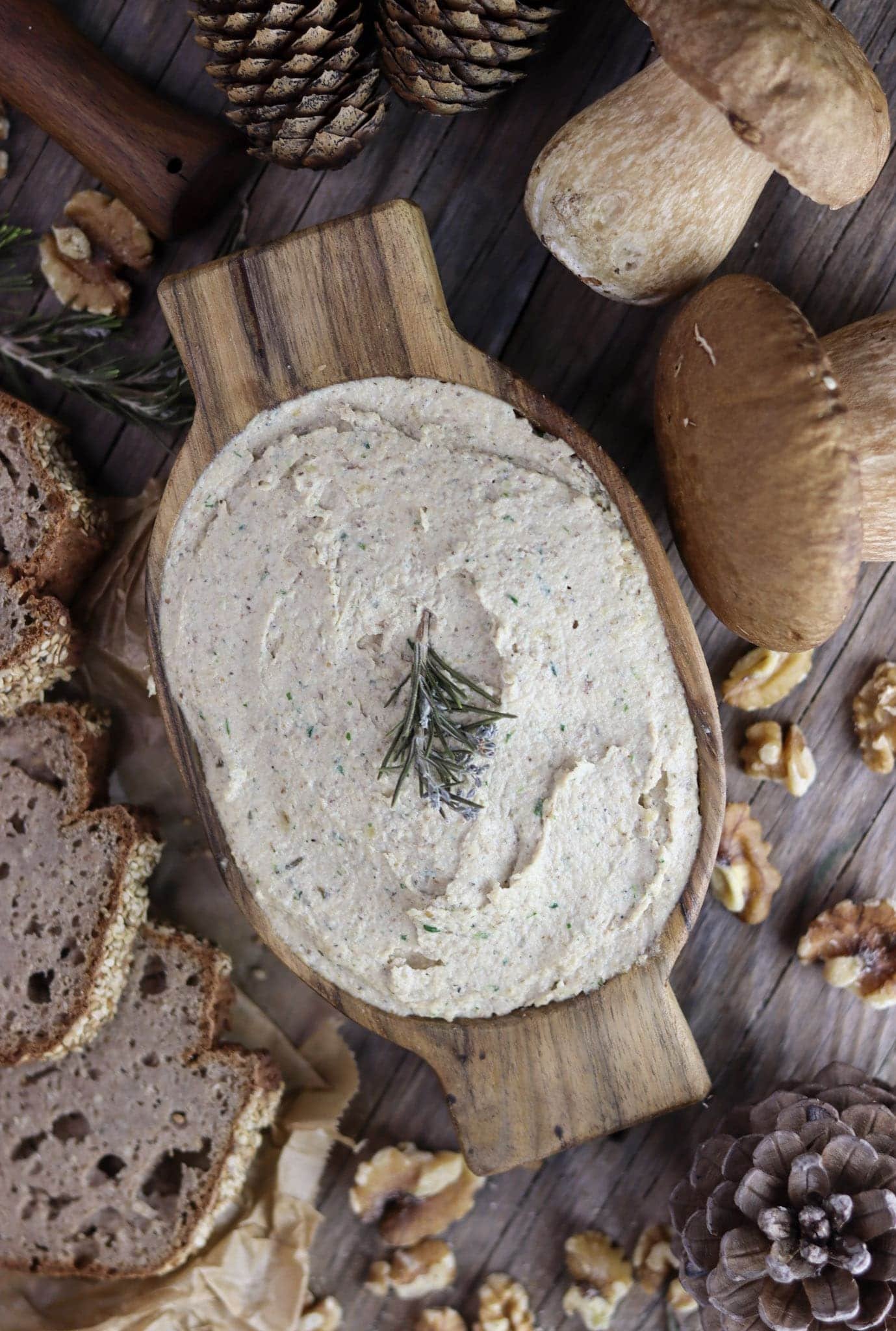
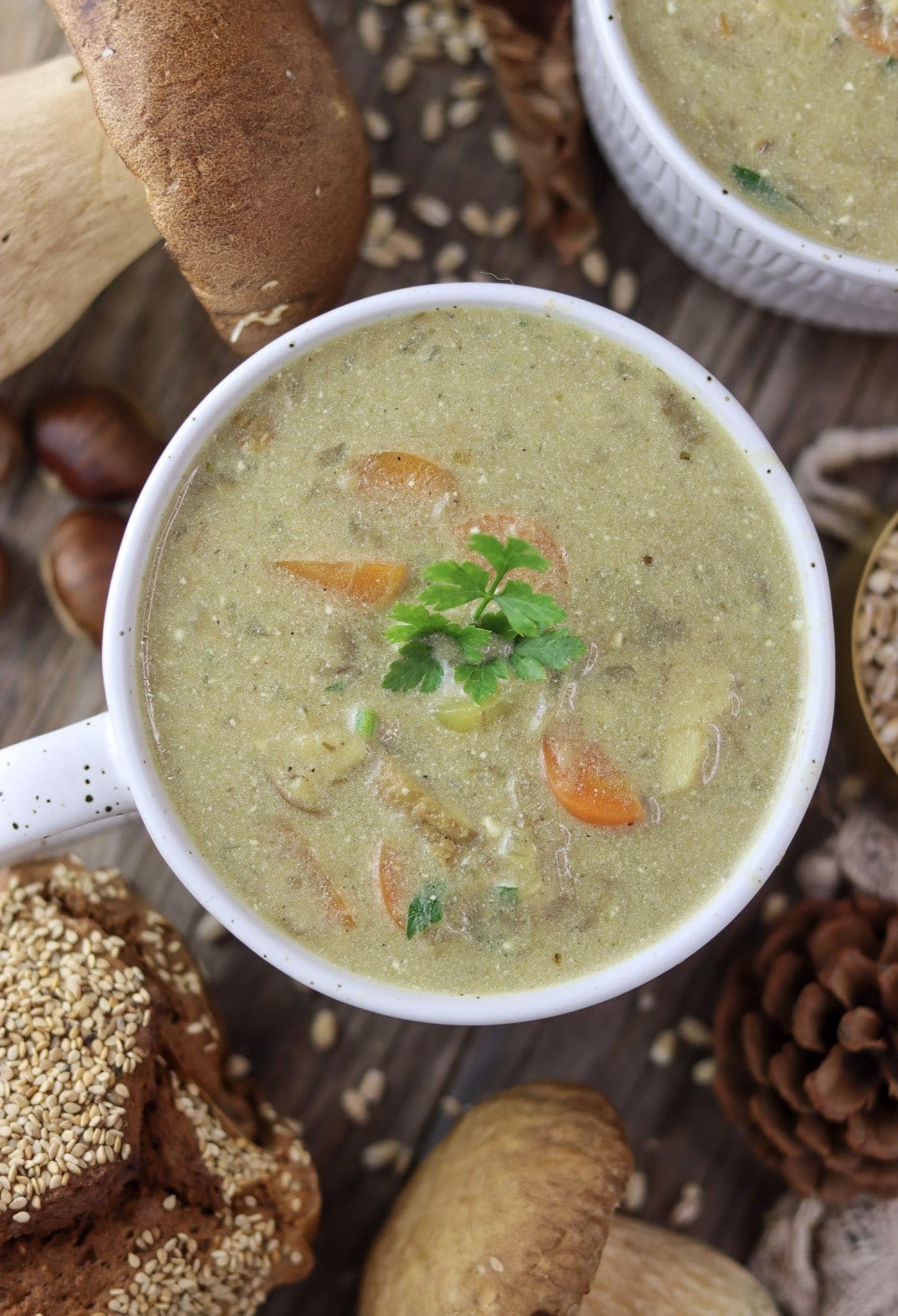
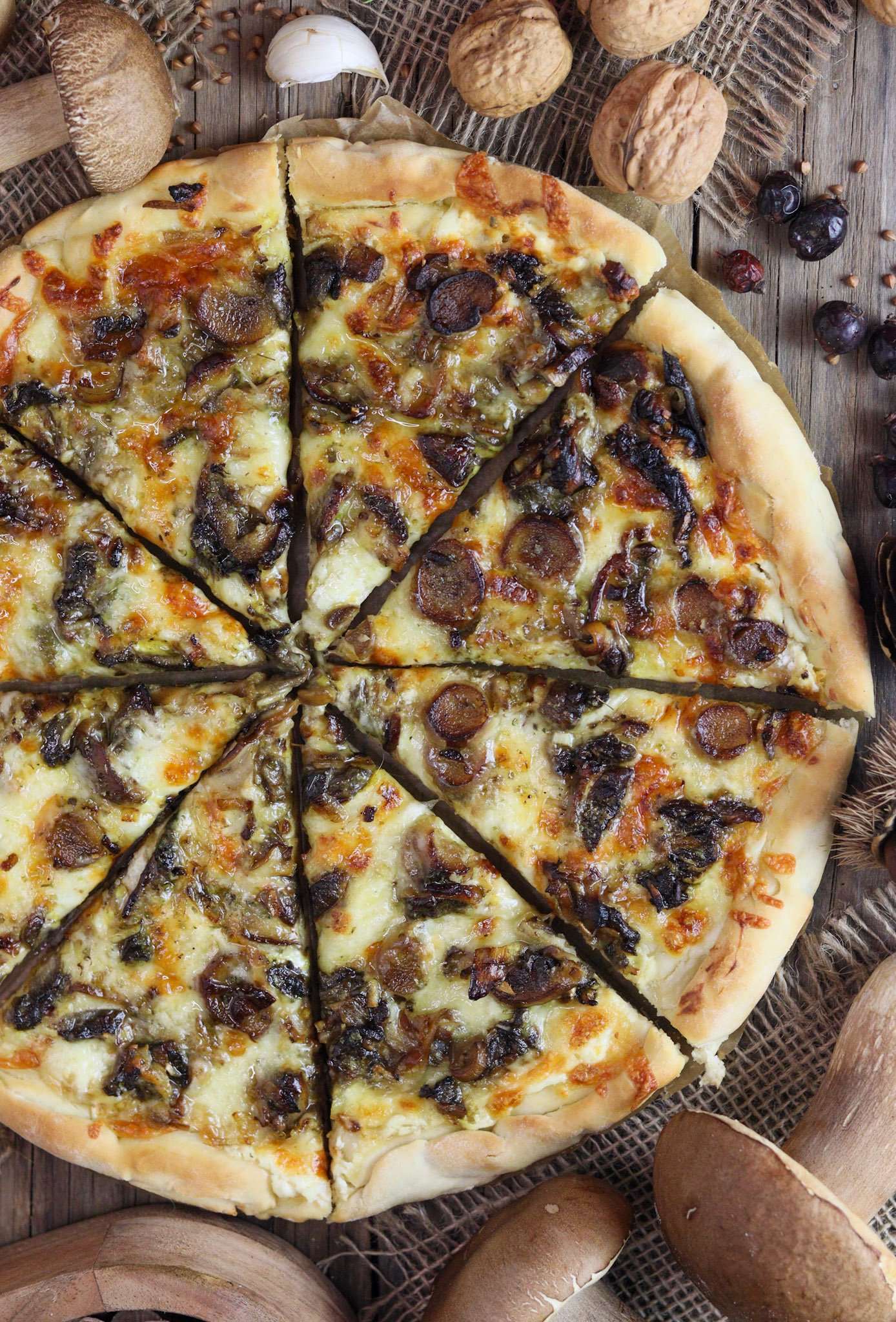
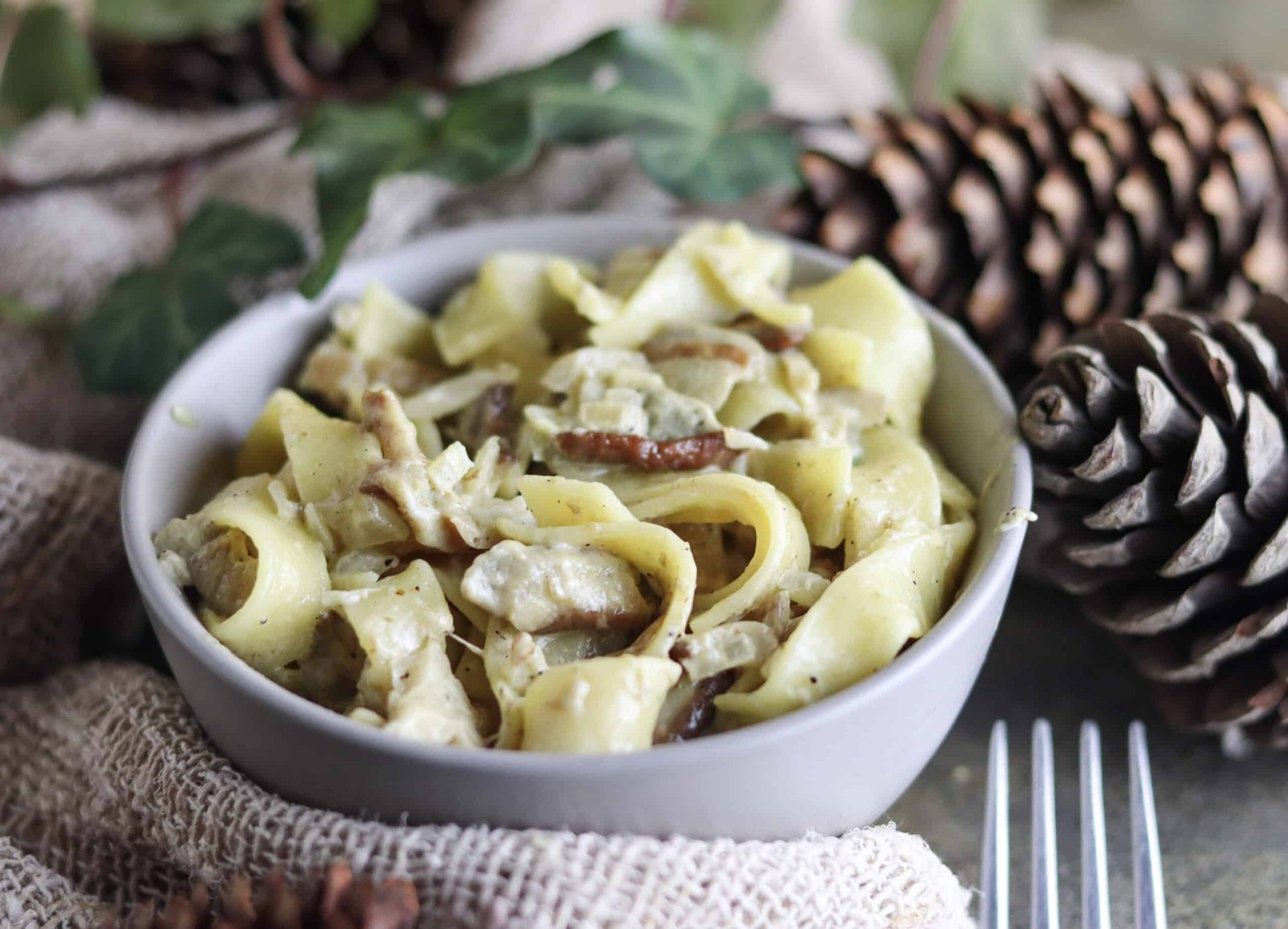
But even if you don’t know their spots, the best recipe for finding porcini during wild mushroom season is simple. Walk long enough in the forest. Most of my wanderings end in a traditional creamy porcini soup or a super-delicious porcini walnut pâté, and no one ever says no to a porcini pizza.
If you ask me, though, buckwheat with porcini mushrooms is an unbeatable duo. These ravioli are easier on the stomach than classic pasta with porcini mushrooms, gluten-free and deliciously nutty. And they’re not nearly as much of a hassle as you might think. With either fresh or dried porcini, the whole dish is ready in less than an hour.
If you’ve ever made buckwheat lazanki noodles, you know buckwheat dough has no gluten, so it won’t stretch like regular pasta dough. It will tear if you roll it paper-thin. That means these ravioli come out a little thicker than the all-purpose flour kind. But oh, so delicious with the porcini inside.
For the sauce, you have some options. If you want to keep it gluten-free, mushroom ravioli taste great with our creamy porcini sauce. Or, as we did, make salsa di noci, an Italian walnut sauce traditionally served with stuffed pasta.
Either way, this is a cozy, rustic, healthy-ish fall dinner that turns into a real porcini feast with a glass of good wine. And it’s absolutely worth the little flour dust on your sweater.

What you need to make these ravioli
PORCINI MUSHROOMS – You’ll need about 250 grams of foraged porcini or 25 g of dried porcini for the ravioli. If you want to use them in the sauce too, double the amount.
BUCKWHEAT FLOUR – Light buckwheat flour works better for these ravioli because the dough is easier to roll out. You can try it with dark flour too, but keep in mind the ravioli will probably come out thicker. And darker.
EGGS – Three whole eggs and one extra egg white for the dough. The leftover yolk goes to your dog.
CHEESE – We used Grana Padano in this recipe because its flavor is a little lighter, so it doesn’t run over the porcini umami. However, you can swap it for Parmigiano Reggiano, like in classic ravioli recipes.
OLIVE OIL – If possible, go for organic, cold-pressed olive oil. You only need two tablespoons for the porcini filling. If you like it more buttery, use butter.

ONION – One medium onion is stir-fried with the porcini before they’re packed into the ravioli. Slowly fried onion turns sweet and soft, while rushed onion stays sharp. A shallot works too and is a little milder.
GARLIC – Fresh garlic or garlic powder goes into the filling together with the mushrooms. Two cloves are perfect.
SALT & BLACK PEPPER – A teaspoon of each in the filling and a teaspoon of salt in the ravioli dough will be enough. Taste the filling before you fill the ravioli to adjust.
MARJORAM – Feel free to play with other spices, like fresh thyme, but we find a single teaspoon of marjoram brings out the gentle depth of porcini best.
FOR THE WALNUT SAUCE (optional) – If you want to serve these with a quick walnut sauce (salsa di noci), you’ll also need a slice of white bread, ground walnuts, milk, another garlic clove, more Grana Padano or Parmesan, and a little more olive oil. Everything goes into one blender. For a gluten-free version, use gluten-free bread.

How to make buckwheat porcini ravioli from scratch
If you’re using dried porcini, soak them in warm water for 20 minutes while you make the dough, then squeeze them out and chop them. Skip slicing the fresh porcini in step 4 and continue with frying them with the onion.
STEP 1: Crack three eggs and one egg white into a large bowl and add a teaspoon of salt. Whisk the eggs until smooth.

STEP 2: Add the buckwheat flour and mix it with the eggs. At first, the dough looks dry and crumbly, but keep mixing. The flour slowly soaks up the moisture.

STEP 3: Once it’s moist enough, transfer it to a floured surface and knead it into a smooth dough that forms a large ball easily. You can use a stand mixer with a dough hook, a food processor with a dough blade, or just your hands. About five minutes is enough either way.

STEP 4: Return the ball to the bowl, cover it with plastic wrap (cling film), foil, or a kitchen towel, and let it rest for 15 minutes. In the meantime, prepare the filling. Thinly slice the porcini and onion, crush or mince the garlic, and grate the cheese if it isn’t already grated.

STEP 5: Heat the olive oil in a large skillet over medium heat and fry the onion, stirring constantly.

STEP 6: When the onion softens, turns golden and translucent, and starts to smell sweet, add the sliced porcini and garlic. Season with salt, black pepper, and marjoram.

STEP 7: Cook for about seven minutes, until the porcini release their water and shrink noticeably. If the pan gets sticky and there isn’t enough liquid from the mushrooms, add two tablespoons of water or white wine.

STEP 8: Transfer the mushrooms to a bowl so they cool faster. Once they’ve cooled, mix in the grated Grana Padano (or Parmesan, if that’s what you use). You should get a thick filling that holds its shape and doesn’t fall apart.

STEP 9: By now the dough has rested. Place it back on the floured surface and divide it into 8 equal pieces.

STEP 10: Dust each piece generously with flour so it doesn’t stick, then roll it out with a rolling pin into a long strip, similar to a lasagna sheet. It will be thicker than regular pasta, because buckwheat dough doesn’t stretch like all-purpose flour dough.

STEP 11: Cut each strip in half and run it through the pasta machine (or a pasta roller attachment) on the second-thickest setting, then once more on the next one. You can try going even thinner; how thin you can go depends on the flour and how well you kneaded the dough.

STEP 12: Dust a baking tray (or a corner of the counter) with flour, lay each sheet of pasta on it, and repeat with the rest of the dough. Keep plenty of flour between the sheets so they don’t stick together.

STEP 13: Place rounded teaspoons of the porcini filling down the center or the side of a pasta sheet, spaced far enough apart.

STEP 14: Depending on how wide your sheets are, either fold one half of the sheet over the filling or cover it with a second sheet. Smooth the pasta with your fingertips and press firmly to seal the edges and sides.

STEP 15: Cut the ravioli into squares or rounds with a knife, pasta cutter, or ravioli mould, then transfer them to a parchment-lined sheet pan dusted with buckwheat flour. Repeat with the rest of the dough and filling.

STEP 16: Bring a pot of water with a teaspoon of salt to a boil. Cook the ravioli for 3 to 4 minutes, taste one to check, then lift them out with a slotted spoon onto a serving dish or plates.

What sauce goes well with these buckwheat ravioli
For a quick and simple sauce, I made salsa di noci with walnuts, Grana Padano (or Parmigiano Reggiano), garlic, olive oil, and old bread. Start by soaking the bread in milk until it’s completely soft, then squeeze it out and save the milk. Blend all the ingredients, adding the milk little by little until you get a smooth, creamy sauce.

Traditionally, salsa di noci is served at room temperature and tossed with the hot pasta, but you can also warm it gently. It’s rich and creamy, and its nutty flavor pairs great with buckwheat and porcini.

Still, if you have any porcini left, the classic creamy porcini sauce is hard to beat with these ravioli.
A few helpful tips
Keep the work surface well floured. These ravioli are easy to make, but the one thing that can go wrong is the pasta sheets sticking to your kitchen counter or pasta machine. Sticky sheets will tear and are really hard to work with.
Don’t stir while they’re boiling. Ravioli are delicate and can break if you stir them. Keep the water at a gentle boil, and lift them out carefully with a slotted spoon, one by one.
Use the leftover dough. Roll out the scraps you trim off while cutting the ravioli, and you’ll get a few more porcini ravioli. If you run out of filling, fill them with cheese only.
Don’t overcook them. Fresh buckwheat dough, doubled up in ravioli, needs no more than 3 to 4 minutes. If you cook them longer, the dough softens too much and the ravioli can split open.
Storage and leftovers
Cooked buckwheat ravioli keep for one day in a covered container in the fridge. Because of the mushroom filling, reheat them only once.
If you have a lot of fresh porcini or other wild mushrooms, make a bigger batch and freeze the uncooked ravioli for up to two months. Spread them on a floured baking sheet, and once they’re frozen solid, move them to a container or freezer bag. Cook them straight from frozen, without thawing, and give them a minute or two longer in the boiling water.

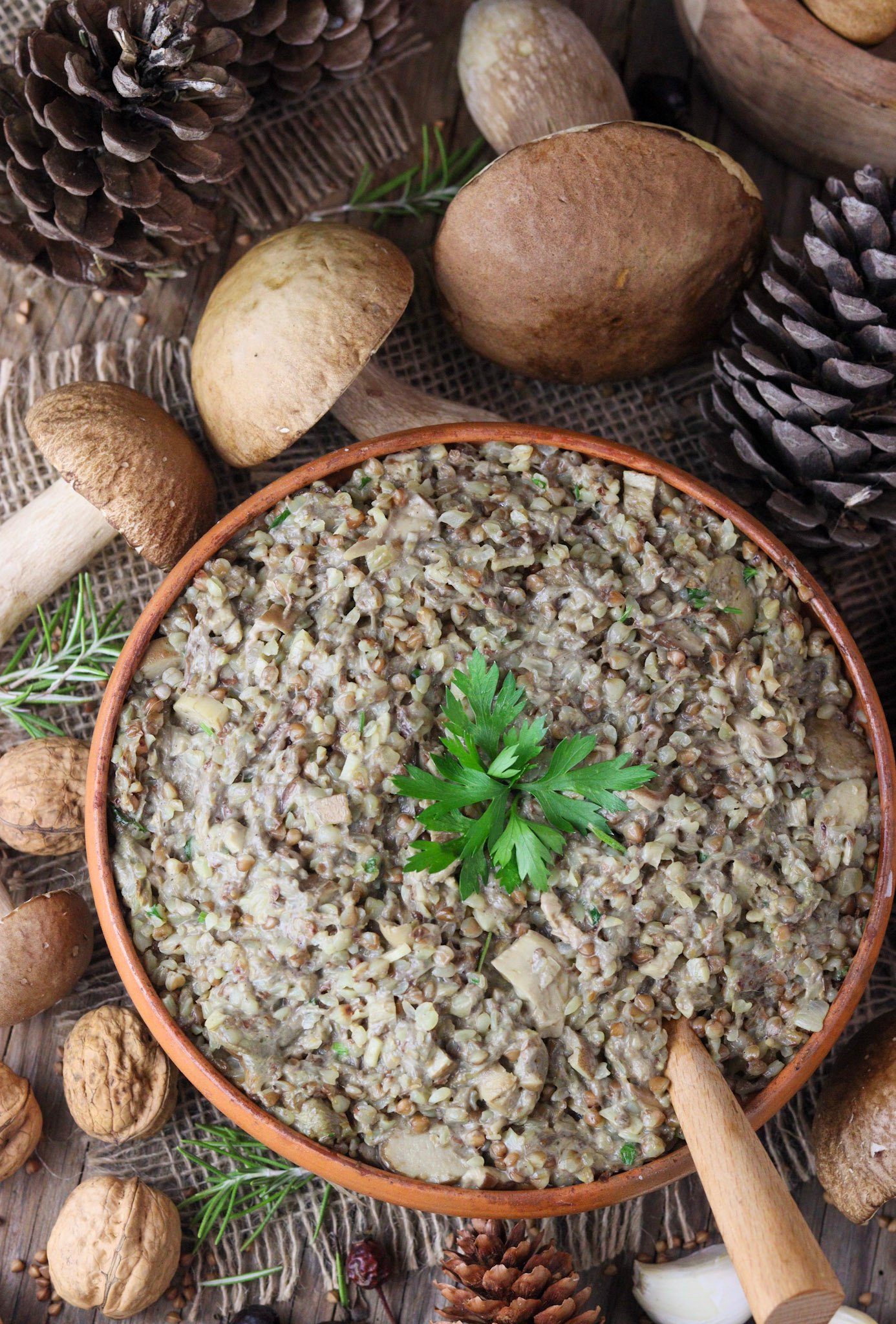
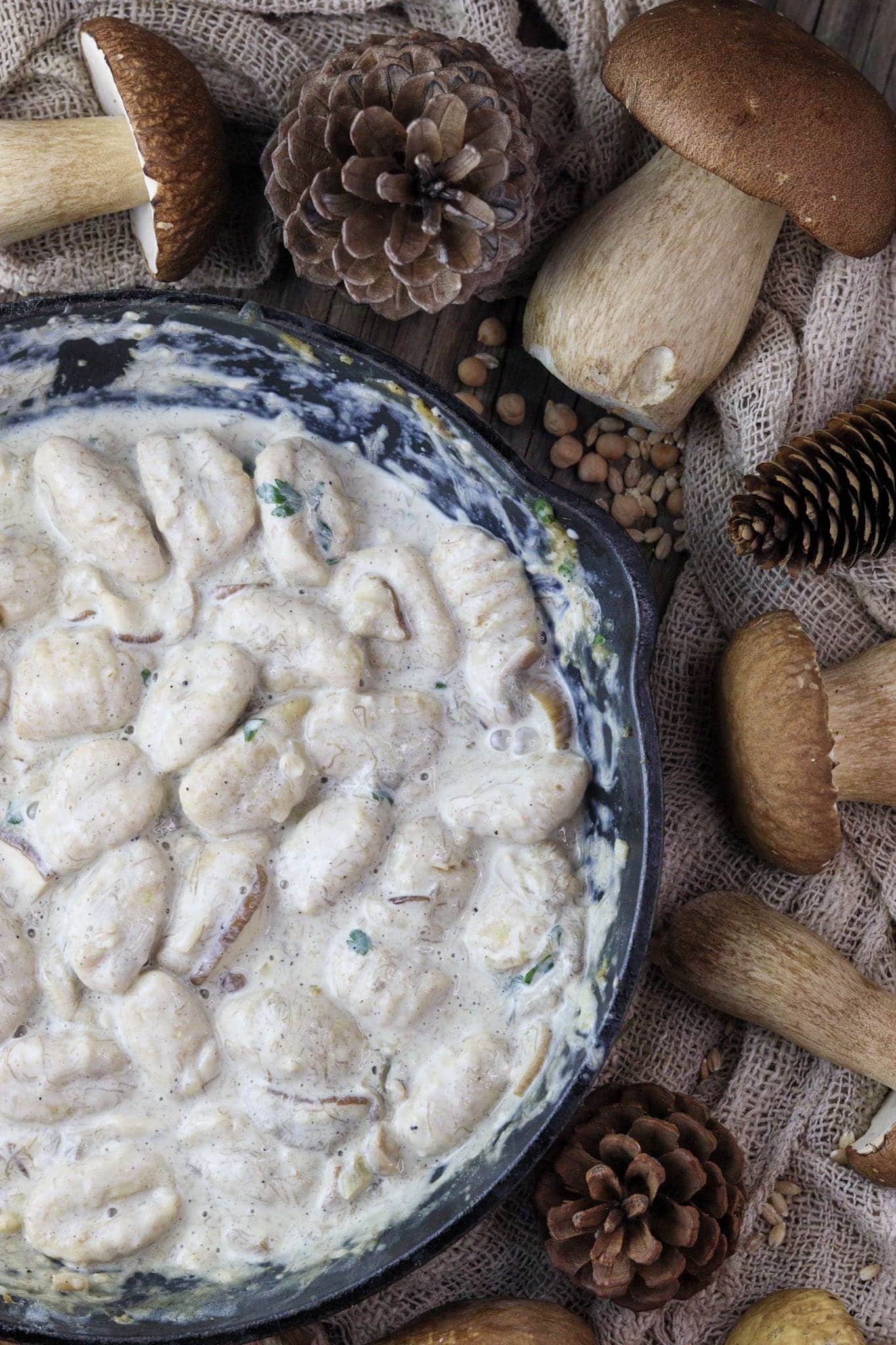
Need more porcini recipes?
Here are some delicious porcini dishes you should try:
Recipe

Buckwheat Porcini Ravioli
EQUIPMENT
- 1 Rolling Pin
- 1 cooking pot
- 1 large skillet
- 1 blender (optional – for the sauce)
- 1 pasta maker (optional)
INGREDIENTS
Porcini Ravioli
- 2 ⅔ cups buckwheat flour
- 9 oz porcini mushrooms (or 1 oz dried porcini)
- ½ cup Grana Padano
- 3 eggs
- 1 egg white
- 2 tbsp olive oil
- 1 onion
- 2 cloves garlic
- 1 tsp marjoram, dried
- 2 tsp salt
- 1 tsp black pepper
Walnut Sauce (optional)
- 1 slice bread (gluten-free)
- 1 ⅓ cups ground walnuts
- 1 cup milk
- ½ cup Grana Padano or Parmesan cheese
- 1 clove garlic
- 1 tbsp olive oil
- 1 tsp salt
INSTRUCTIONS
- If using dried porcini (1 oz/25 g), cover them with warm water for 20 minutes. Squeeze them dry and chop finely.
- In a large bowl, beat the eggs (3) and one egg white with salt (1 tsp).
- Work in the buckwheat flour (2 ⅔ cups/300 g) until the crumbs come together. Knead on a floured counter for about 5 minutes, by hand or with a mixer, until smooth.
- Cover the dough and leave it to rest for 15 minutes.
- Meanwhile, thinly slice the fresh porcini (9 oz/250 g) and onion (1 medium), and mince the garlic (2 cloves).
- Warm the olive oil (2 tbsp/30 ml) in a large skillet over medium heat. Cook the onion, stirring often, until soft and golden.
- Stir in the porcini and garlic, then season with salt (1 tsp), black pepper (1 tsp) and dried marjoram (1 tsp). Cook for about 7 minutes, until the liquid evaporates and the mushrooms shrink. If they stick, add a splash of water or white wine.
- Spread the mushrooms in a bowl to cool, then fold in the Grana Padano (½ cup/50 g). The filling should hold its shape.
- Divide the rested dough into 8 pieces. Flour each one well and flatten it with a rolling pin into a long strip.
- Halve the strips and pass them through a pasta machine on the second-thickest setting, then once more on the next. Lay the sheets on a floured tray.
- Spoon small mounds of filling along a sheet, leaving space between them. Fold the sheet over or top it with a second one, then press around each mound to seal.
- Cut into squares or rounds and place on floured parchment. Repeat with the remaining dough and filling.
- Bring a large pot of salted water to a boil. Cook the ravioli at a gentle boil for 3 to 4 minutes, then lift them out with a slotted spoon.
For the sauce:
- Soak the bread (1 slice) in the milk (1 cup/240 ml) until soft. Squeeze it out and keep the milk.
- Blend the bread with the ground walnuts (1 ⅓ cups/135 g), garlic (1 clove), Grana Padano (½ cup/50 g), olive oil (1 tbsp/15 ml) and a pinch of salt. Pour in the reserved milk gradually until the sauce is smooth and creamy.
- Toss the hot ravioli with the sauce at room temperature, or warm it gently first, and serve. Enjoy!
NOTES
NUTRITION
Want to feature this recipe? Leave a note in the comments.