
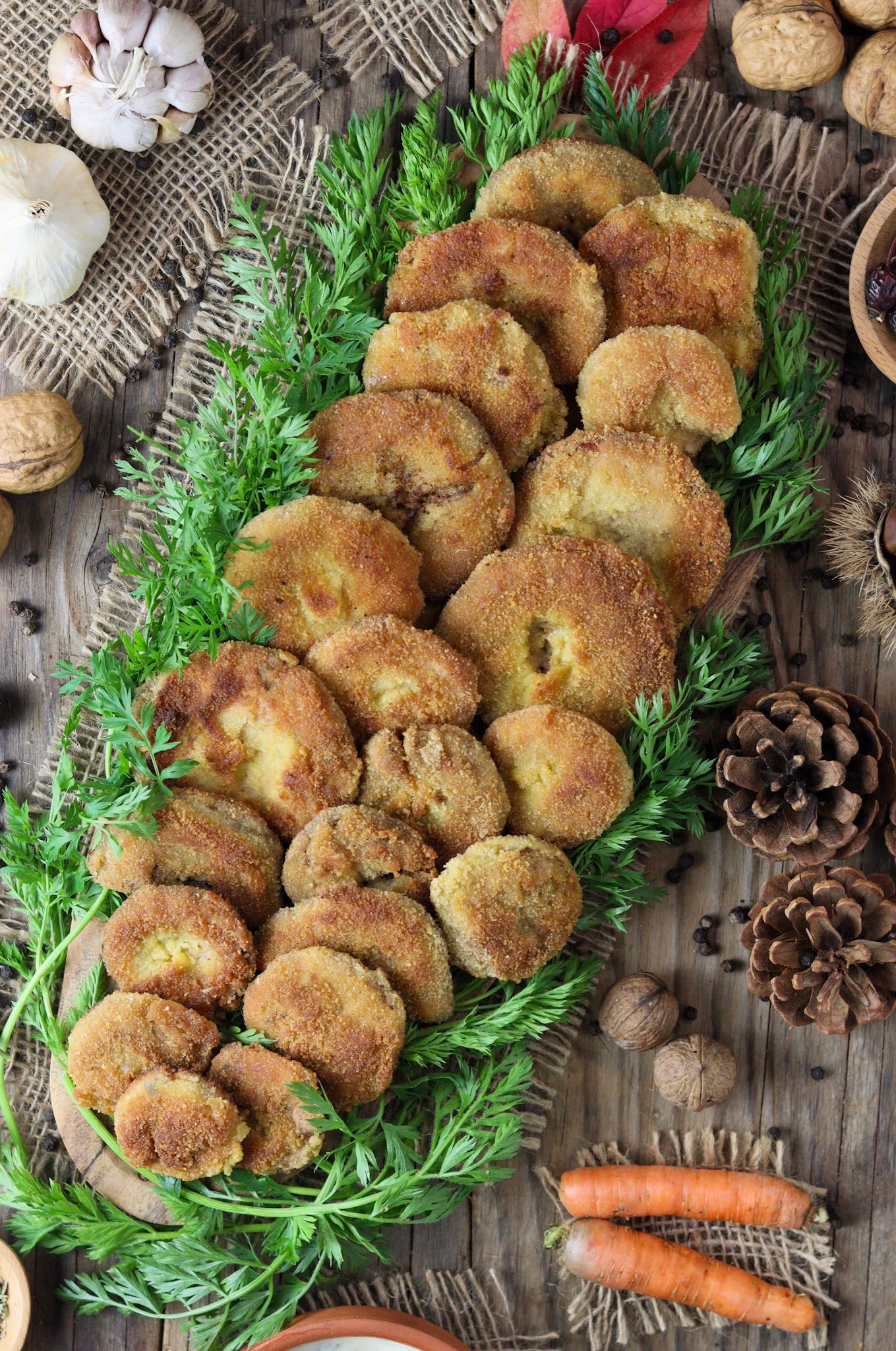
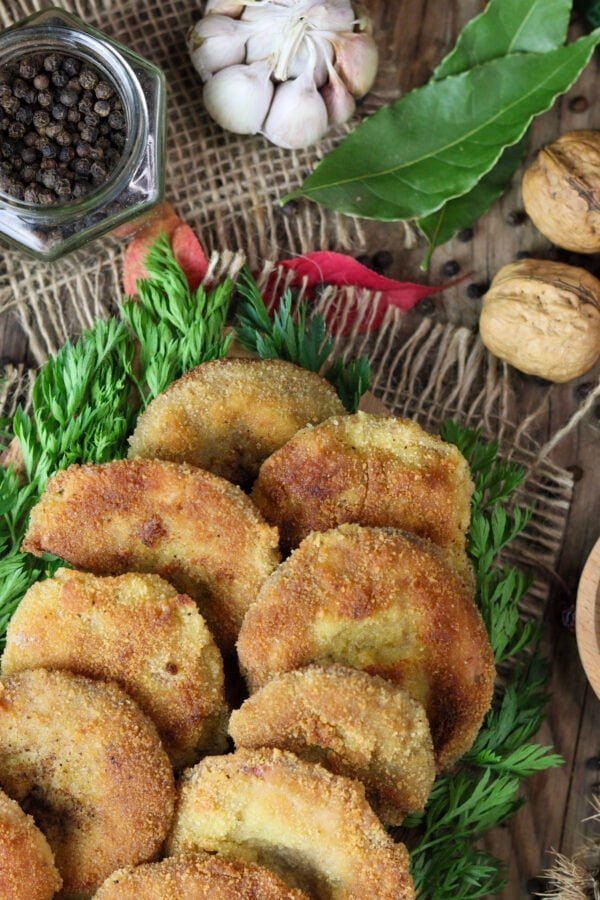
Breaded saffron milk caps might just become your favorite saffron milk cap recipe. The mushrooms get topped with garlic, coated with flour, eggs and breadcrumbs, then fried until golden and crispy.
Serve them with potatoes, a salad, or a slice of homemade bread, and you have a cozy fall dinner in 30 minutes. Believe it or not, these taste better than fried parasol mushrooms!

Are saffron milk cap mushrooms edible?
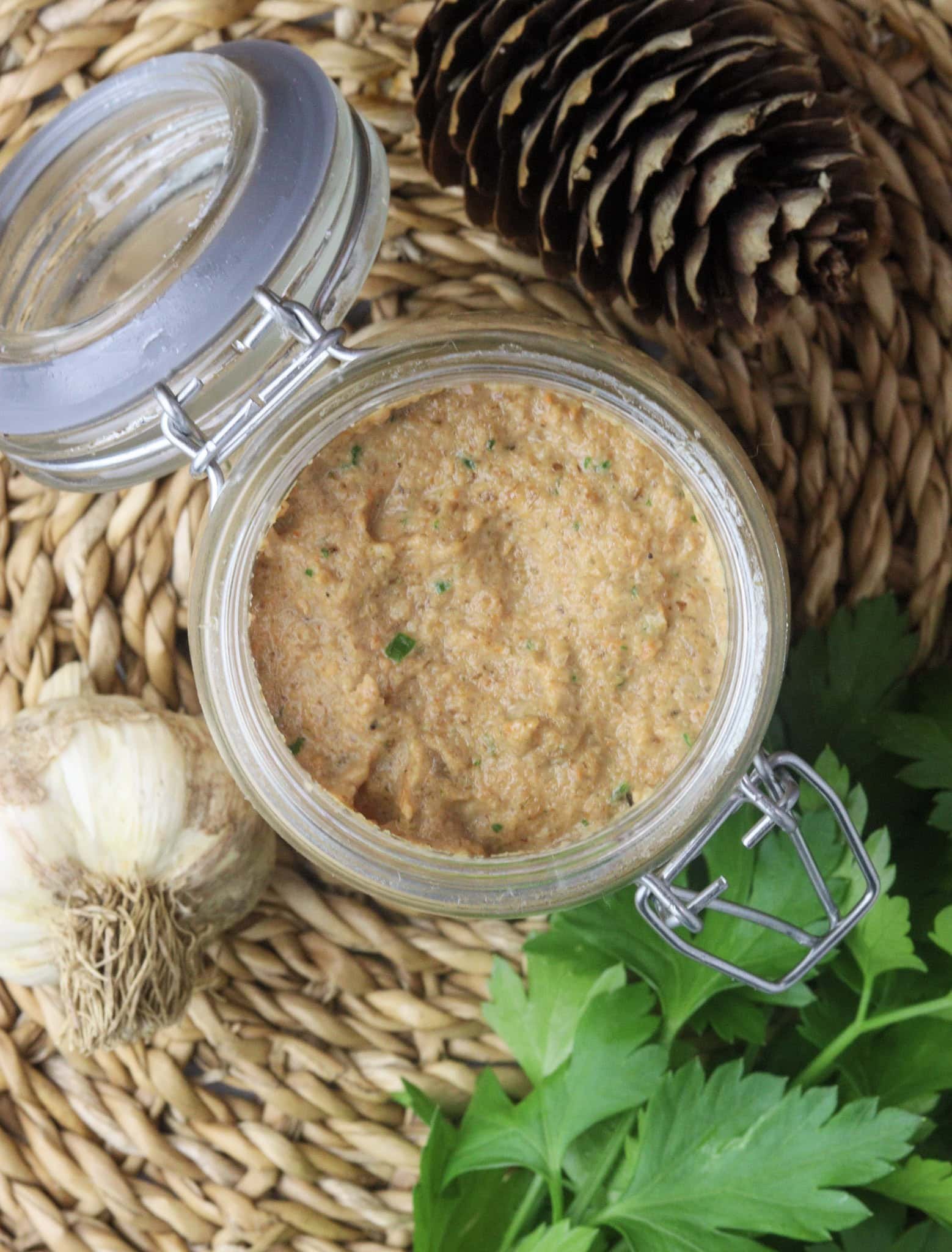
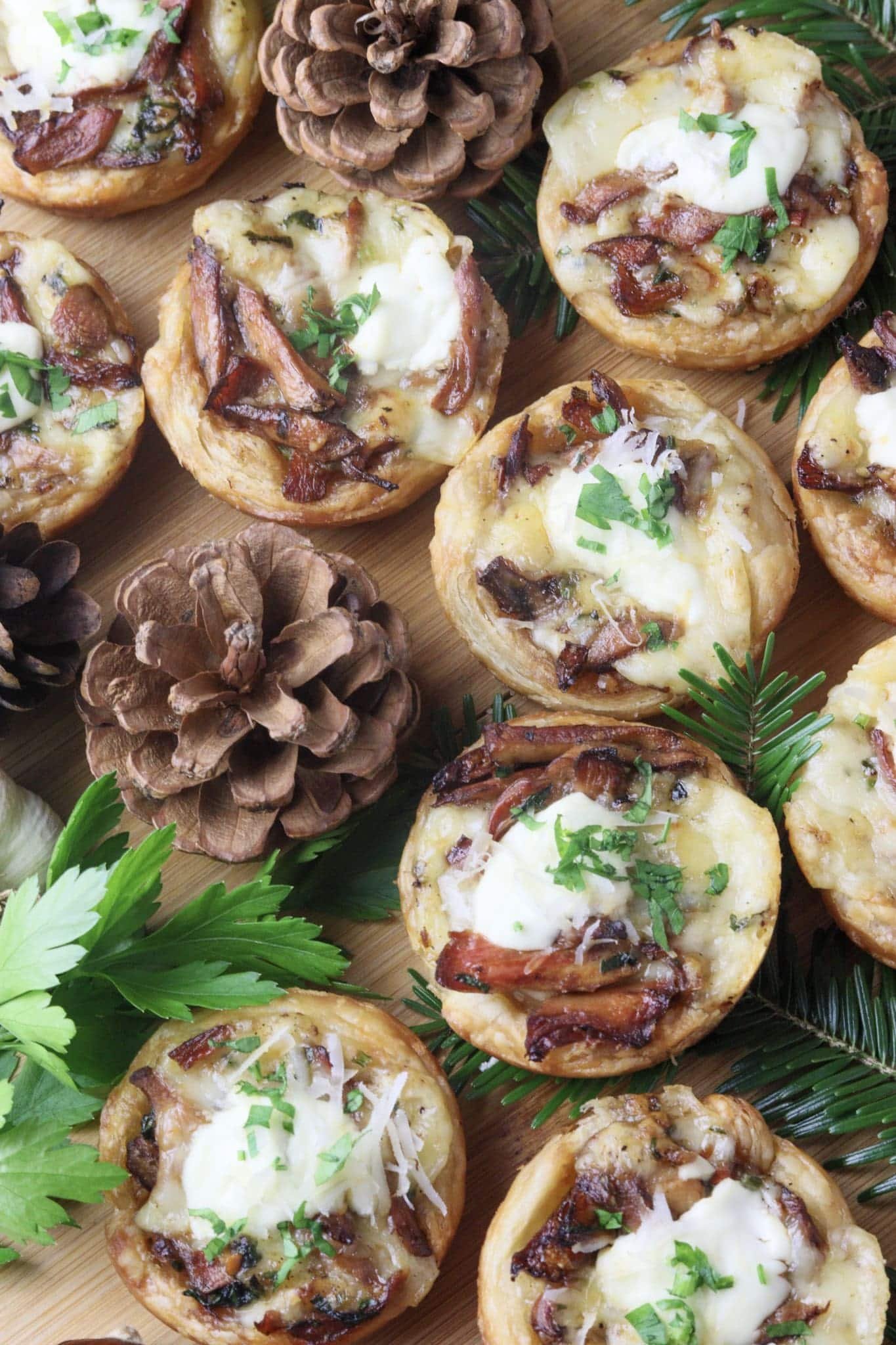
Yes, and they’re delicious! Saffron milk caps are among the most numerous edible wild mushrooms in Europe. They grow in abundance and taste best when they’re the youngest, no matter how you cook them. We’ve turned them into a creamy saffron milk cap soup, saffron milk cap pâté and baked them into crispy saffron milk cap tartlets.
People have foraged saffron milk caps since ancient times. In Herculaneum, the Roman town buried by the eruption of Vesuvius in 79 AD, archaeologists found a fresco in the House of the Deer that shows the famous mushrooms. Today, they’re still a seasonal delicacy across Spain, France, and the Slavic countries.
Historically, they’ve been valued not only as food but also as a rich source of vitamins, minerals, and medicinal compounds. Researchers have studied saffron milk caps for their antioxidant, antibacterial, anti-inflammatory, antihyperglycemic, anti-tumor, and immunostimulant activity.

What’s so good about breaded saffron milk caps
- They’re easy to spot. Their bright orange caps stand out against the forest floor, and where you find one, you’ll usually find many more. In a good season, a single patch can fill your basket.
- The flavor. Their mild, slightly cheesy taste comes through even more under a crispy breadcrumb coating. If you usually bread parasols, these are well worth trying. Plus, these mushrooms are highly nutritious.
- They pair well with garlic. Young saffron milk caps and garlic complement each other nicely. The garlic settles into the gills and flavors the mushroom as it fries.
- They’re easy on the stomach. Many people find saffron milk caps easier to digest than other wild mushrooms.
- Ready in 30 minutes. Serve them as a main dish with potatoes and roasted vegetables, with a slice of buckwheat soda bread, or add them to a salad like this fried chicken of the woods salad. A creamy garlic sauce or homemade kajmak goes well on the side.

Ingredients and substitutions
SAFFRON MILK CAP MUSHROOMS – Use them as fresh as possible. Saffron milk caps will release a bright orange milky liquid and turn green when bruised, but that doesn’t make them inedible.
FLOUR – The flour helps the egg stick to the mushrooms. All-purpose flour works fine, but buckwheat flour adds a lovely nutty note and keeps the recipe gluten-free.
EGGS – You’ll need 3 eggs. Once the mushrooms are floured, the egg acts as the glue that holds the breadcrumbs in place.
BREADCRUMBS – They give you the crispy crust and keep the mushroom juicy inside. If you don’t have them at home, grate a few pieces of dried bread, and you’ll have a cup in no time. Homemade often tastes better anyway. For a gluten-free version, use gluten-free breadcrumbs.

GARLIC – Don’t skimp on it. Five cloves of garlic might sound like a lot, but it’s what gives these mushrooms their flavor.
OIL – We fry them in olive oil, but sunflower oil works too. You can also fry them in butter, as long as you keep the heat moderate so it doesn’t burn.
SALT & BLACK PEPPER – That’s all the seasoning they need. Saffron milk caps have a delicate flavor of their own, and strong spices or herbs would only cover it up.
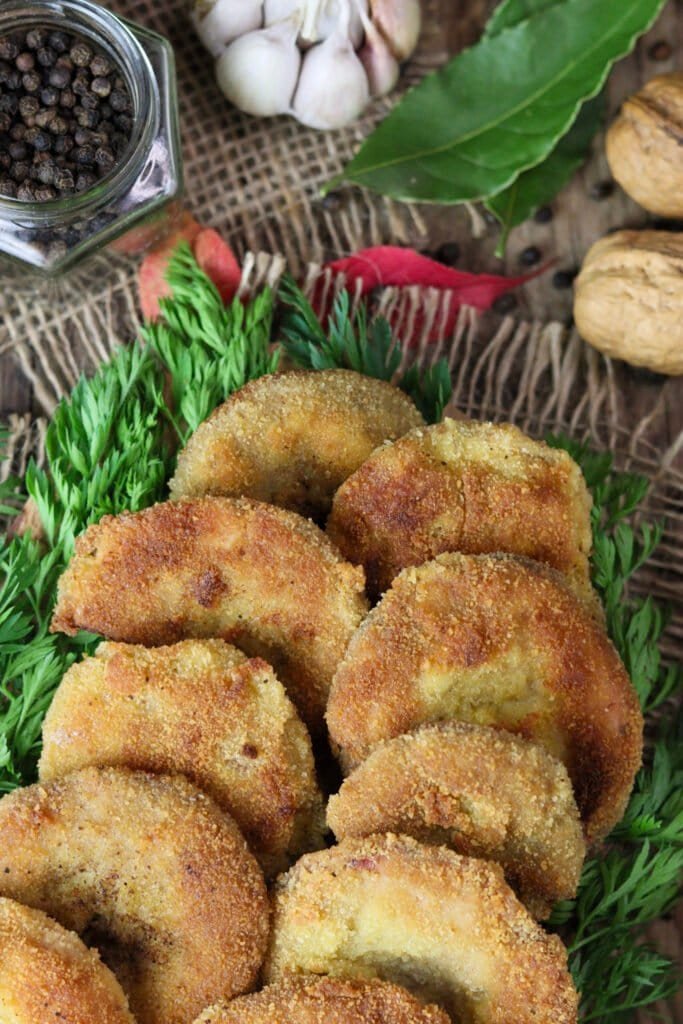
How to make breaded saffron milk caps
PREPARING THE MUSHROOMS
STEP 1: Brush off any soil, pine needles, and bits of wood with a dry, clean cloth. Skip the water, because wet mushrooms won’t hold the breading.

STEP 2: Cut the stems off as close to the cap as you can, so the mushrooms lie flat and are easier to coat. Peel the garlic and crush or finely chop it. Season the mushrooms with salt and black pepper, then spread the garlic over the gills, pressing it in gently so it stays in place.

BREADING AND FRYING
STEP 3: Set up your breading station with three bowls or plates: flour in the first, whisked eggs in the second, and breadcrumbs in the third.

STEP 4: Coat each mushroom in flour on both sides. Make sure no bare spots are left, or the egg won’t stick there.

STEP 5: Next, dip the floured mushroom into the eggs. A fork helps you turn it over until it’s fully covered.
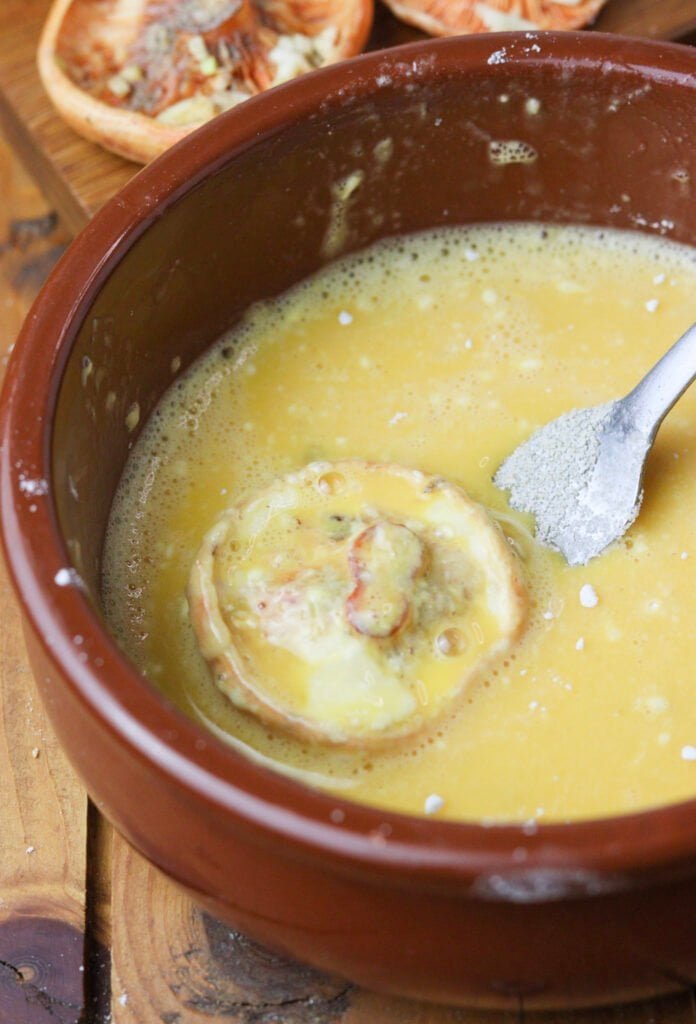
STEP 6: Now dredge it in the third bowl with breadcrumbs, making sure they stick to the mushroom on all sides.

STEP 7: Repeat with the rest of the saffron milk caps and gently line them up on a plate, ready for the pan.

STEP 8: Heat the olive oil in a large frying pan. Once it’s hot, lay the mushrooms in and fry them over medium heat for about 3 minutes.

STEP 9: Flip them and fry the other side until deep brown and crispy. If the crust browns too fast, turn the heat down a little. Young caps are thin and cook through quickly, so a few minutes per side is enough.

STEP 10: Lift them onto a plate lined with paper towels to drain the extra oil. Serve hot with your favorite sauce or a spoonful of homemade kajmak.

Recipe notes and tips
Make them fresh. Saffron milk caps are best cooked the day you pick them. If you need to wait, keep them in the fridge, but no longer than 24 hours.
Pick them young. Young saffron milk caps have flat tops with rolled-in edges, so they’re easier to bread and fry evenly. They also taste better. Older, funnel-shaped caps get crumbly and have a different flavor (not so nice).
Save the stems. Don’t throw them away. Chop them into soup, a risotto, or a mushroom sauce, or freeze them until you have enough for a batch of pâté.
Keep the first batch warm. Put fried mushrooms on a baking sheet in the oven at 200°F (95°C) while you finish the rest.
False saffron milk caps are ok, too. Lactarius deterrimus grows under spruce, and you can bread and fry it the same way. Its flavor is a little milder and, yes, slightly bitter.
For a perfect meal, serve with a hearty salad like taboule.

Storage and reheating
Breaded saffron milk caps are at their best straight from the pan, while the crust is still crispy. If you have leftovers, let them cool and refrigerate them within two hours. Eat them the same day.
Like all mushrooms, saffron milk caps are rich in protein that breaks down quickly at room temperature, so don’t leave them for long. We don’t recommend reheating or freezing fried breaded mushrooms. The breading goes soggy, and they lose most of their flavor and texture.
If you’ve picked more than you can cook, preserve the fresh mushrooms instead. Saffron milk caps can be dried, or blanched and frozen. In Eastern Europe, they’re traditionally salted or pickled in vinegar.

Breaded saffron milk caps FAQs
No. Saffron milk caps, like all mushrooms, are naturally gluten-free. The breading is where the gluten comes in. To make this recipe gluten-free, coat the mushrooms in buckwheat flour or a gluten-free flour blend, and use gluten-free breadcrumbs.
The mushrooms themselves are already low in carbs. Only the coating needs a swap. Use almond flour instead of regular flour, keep the eggs, and replace the breadcrumbs with keto breadcrumbs made from pork rinds or grated Parmesan cheese mixed with almond flour.
Very. Their Latin name, Lactarius deliciosus, literally means “delicious milk cap”. You can cook them in many ways: simply fried in olive oil with garlic, blended into a creamy saffron milk cap pâté, or stirred into risotto, pasta, soup, tarts, and even pizza. In Eastern Europe, young caps are traditionally salted or fermented raw, and many people there consider this the very best way to enjoy them.
Saffron milk caps are firm but quite crumbly when raw, and they can taste slightly spicy. That sharpness fades once they’re cooked, leaving a mild flavor with a hint of cheese.
Saffron milk caps (Lactarius deliciosus) are also called red pine mushrooms in English. In Europe, they have many local names:
- Spain: níscalo, or rovelló (rovellons) in Catalonia
- France: lactaire délicieux
- Italy: lattario delizioso, also pinarolo
- Portugal: sancha or pinheira
- Germany: Echter Reizker
- Netherlands: oranjegroene melkzwam
- Sweden: blodriska
- Poland: rydz (mleczaj rydz)
- Czech Republic: ryzec pravý
- Russia: ryzhik
- Bulgaria: ryzhika
- Slovenia: užitna sirovka
- Croatia, Serbia and Bosnia: rujnica
Saffron milk cap recipes
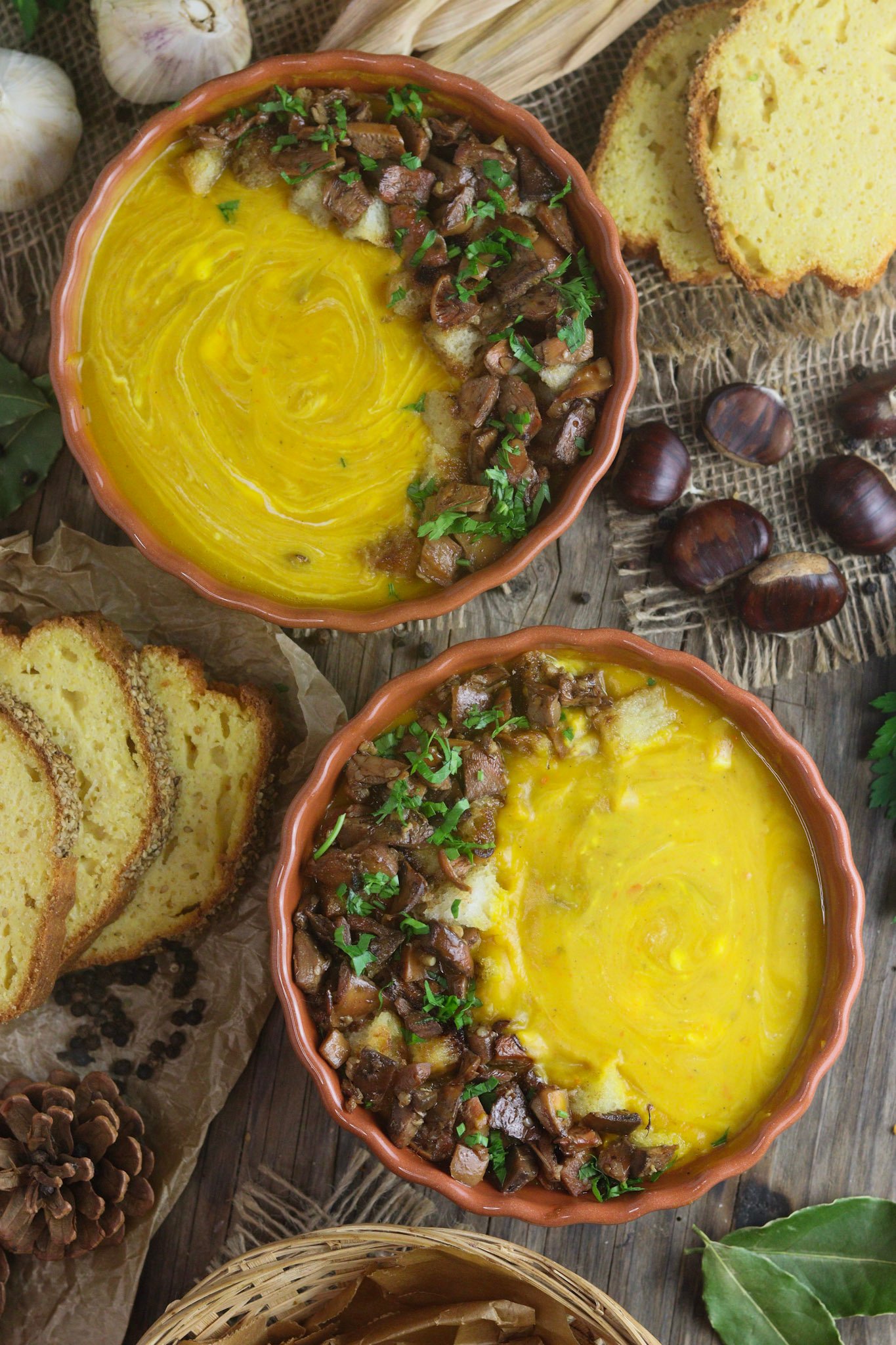
More wild mushroom recipes
- Chicken of the woods fritters
- Fried chicken of the woods salad
- Fried parasol mushroom rolls
- Black trumpet risotto
- Black trumpet mushroom jam
- Bulgur risotto with chanterelle mushrooms
- Pizza with porcini mushrooms
- Porcini walnut pâté
Breaded Saffron Milk Caps
EQUIPMENT
- 3 bowls
- 1 frying pan
INGREDIENTS
- 1.1 lb saffron milk cap mushrooms
- 3 eggs
- 1 cup flour
- 1.5 cups breadcrumbs
- ⅓ cup oil
- 5 cloves of garlic
- 2 tsp salt
- 1 tsp black pepper
INSTRUCTIONS
- Wipe 1.1 lb (500 g) saffron milk caps with a dry cloth and remove any forest debris.
- Trim the stems flush with the caps. Sprinkle the gill side with 1 tsp (6 g) salt and 1 tsp of black pepper. Crush 5 garlic cloves and press them into the gills.
- Fill three shallow dishes: 1 cup (120 g) flour in the first, 3 beaten eggs in the second, and 1½ cups (170 g) breadcrumbs in the third.
- Dust each cap with flour, dunk it in egg, then press it firmly into the crumbs until evenly covered. Set the coated caps aside.
- Warm ⅓ cup (80 ml) olive oil in a large skillet. When it shimmers, add the mushrooms and cook over medium heat for about 3 minutes.
- Turn them over and cook until both sides are crunchy and well browned. Lower the heat if the coating darkens too quickly.
- Transfer to kitchen paper to blot off the excess oil, and serve while hot. Enjoy!
These sound fantastic! Pinned to try later.
Your neighbor at Unlimited Linky #99 #121&122
Thanks Paula!
These are definitely worth a try. If you ask me, they taste better than fried parasol mushrooms.
Thanks for magnificent info I was looking for this information for my mission.
I’m glad I could help you Jack!
Thye look tasty! I don’t think I’ve ever seen these genre of mushrooms here, but I bet this recipe would also be used for large portobellow mushrooms, which are often sold in groacery stores.
Hi Pat, thanks for stopping by 🙂 Yes, it works great with other types of mushrooms, too!
Oh wow, I love visiting your blog for new recipes. I bet these taste great. Thank you for sharing.
They do! Thanks for stopping by 🙂