
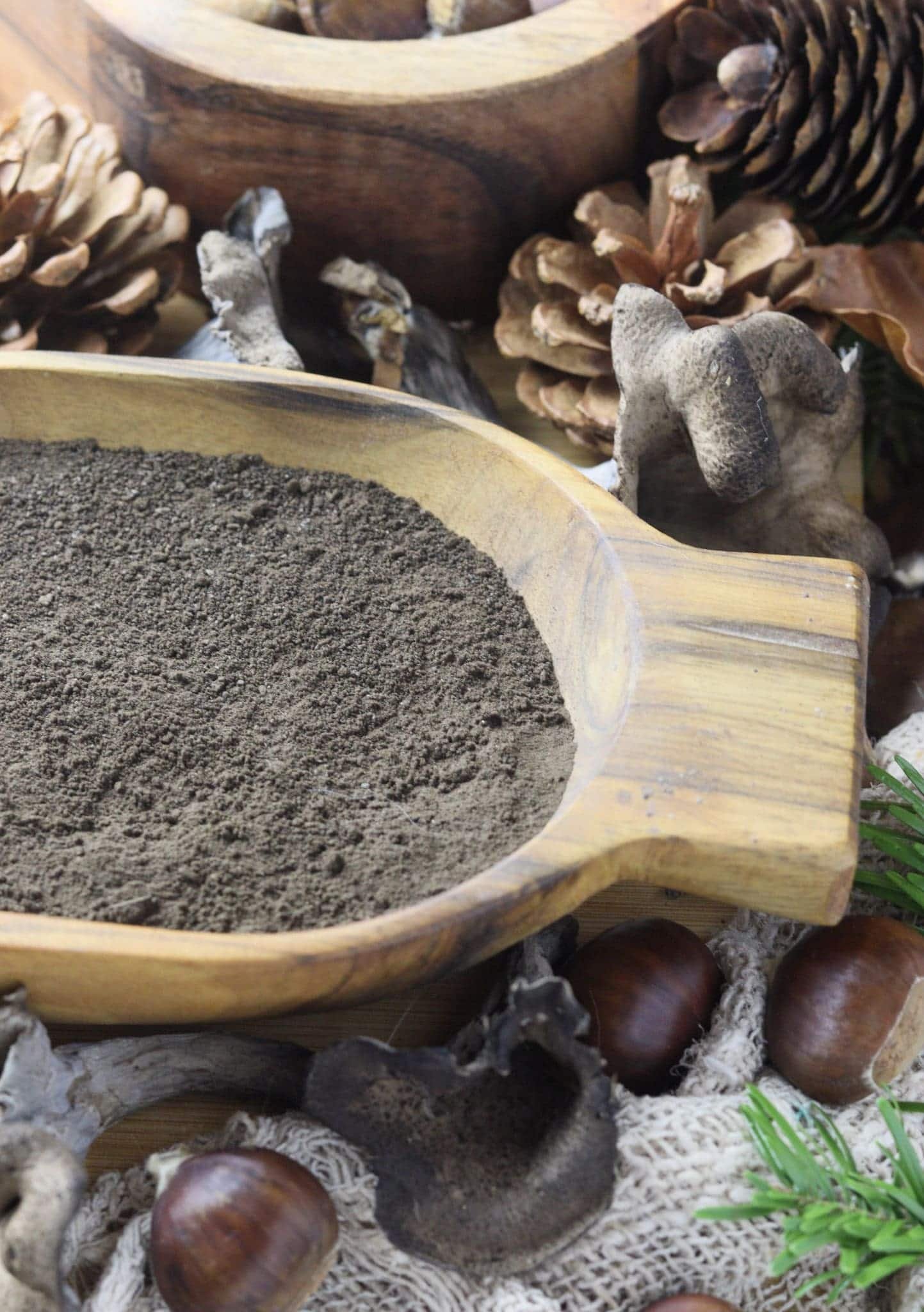
You’ll rarely find just a few black trumpets; these mushrooms love to grow in large patches, so once you spot one, you’re basically committed to filling a basket. Drying black trumpets and grinding some into black trumpet mushroom powder will give you a remarkably powerful flavor booster always at hand.
It’s a little jar of magic, the #1 secret ingredient that older-generation chefs in Europe often hoard. And once you use it, you’ll swear Craterellus cornucopioides deserves its nickname, Horn of Plenty, for more reasons than just its shape.
The umami and flavor of black trumpet mushrooms
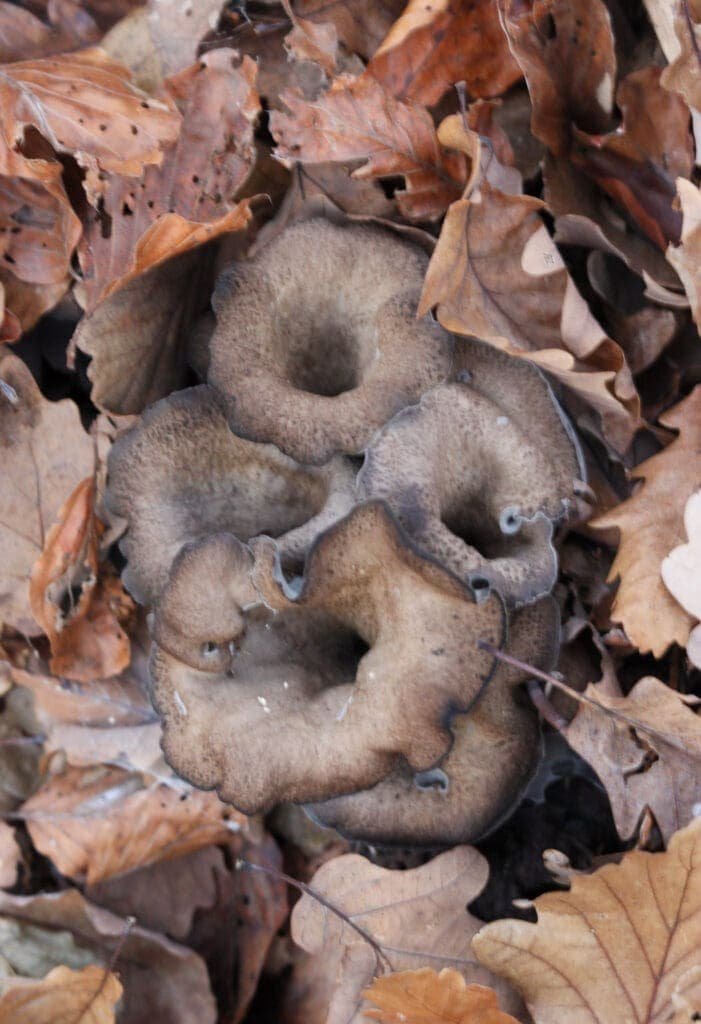
Black trumpets (Craterellus cornucopioides) go by two very different names. The cheerful one is horn of plenty, a nod to the cornucopia of Greek and Roman mythology, a symbol of abundance and generosity. The gloomier one is trompette de la mort, the French “trumpet of death,” and folk tales once portrayed these dark mushrooms as much scarier than they actually are.
Somehow dramatic, but completely undeserved. Mushroom hunters know black trumpets for what they really are: one of the best edible mushrooms you can put in a basket, with almost no toxic look-alikes to worry about. Some people call them the poor man’s truffle, too, not because they taste like a budget version of black truffles, but because of their deep, dark color.
In truth, there’s real chemistry behind that fame. Black trumpets contain meaningful amounts of free amino acids and 5′-nucleotides, the exact compounds responsible for umami, the fifth taste your mouth’s been obsessing over long before science found a name for it.
Identified in 1908 by Japanese chemist Dr. Kikunae Ikeda, umami is triggered by specific receptors on the tongue that respond to compounds like glutamate (an amino acid) and inosinate and guanylate (nucleotides).
In one study, glutamic acid alone accounted for 70% of the free amino acids in black trumpets; that’s a lot of umami! This is actually what signals that a food contains protein; it’s your body’s way of saying “yes, more of this please,” triggering a strong salivation response. It’s the same family of compounds found in parmesan, soy sauce, and aged meats.
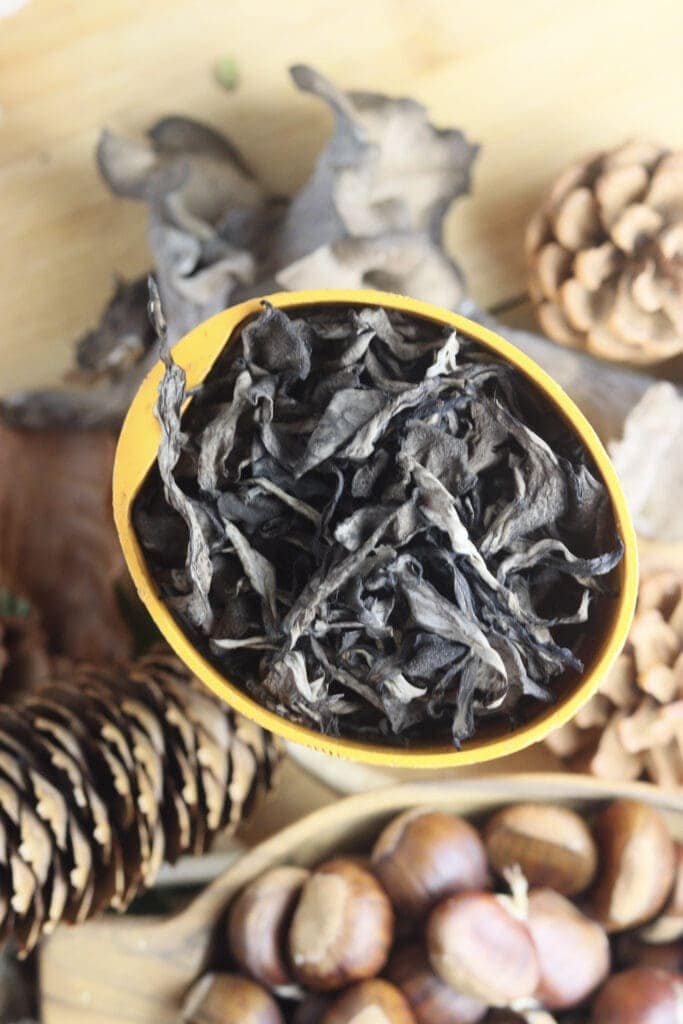
Drying black trumpet mushrooms is not just a way to preserve them; it also reshuffles their flavor compounds, which may be why dried black trumpets and their powder are so valued by top chefs.
Yet for all that flavor complexity, science still calls black trumpets an underestimated mushroom, mostly because so little research has gone into what they could actually be used for.
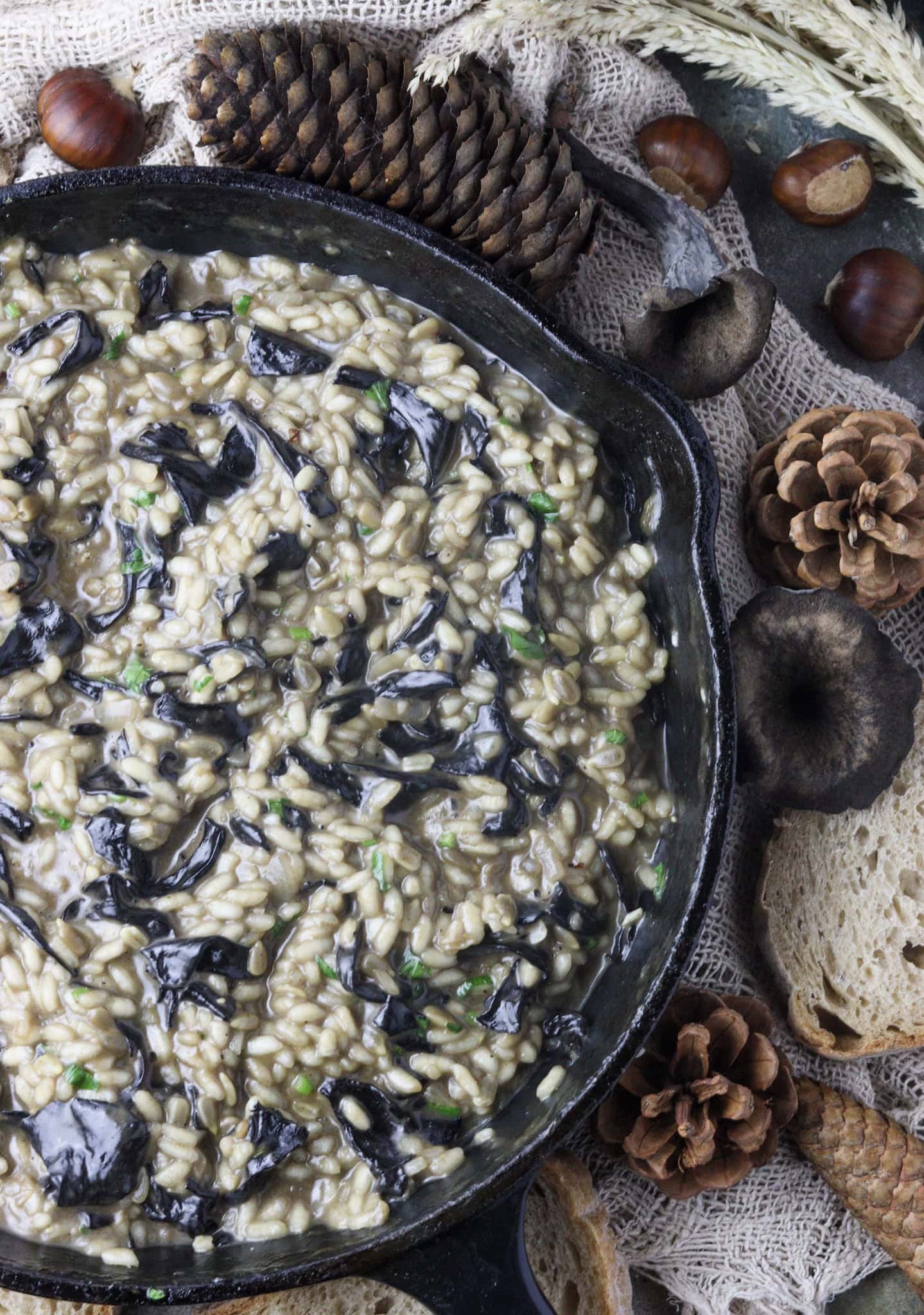
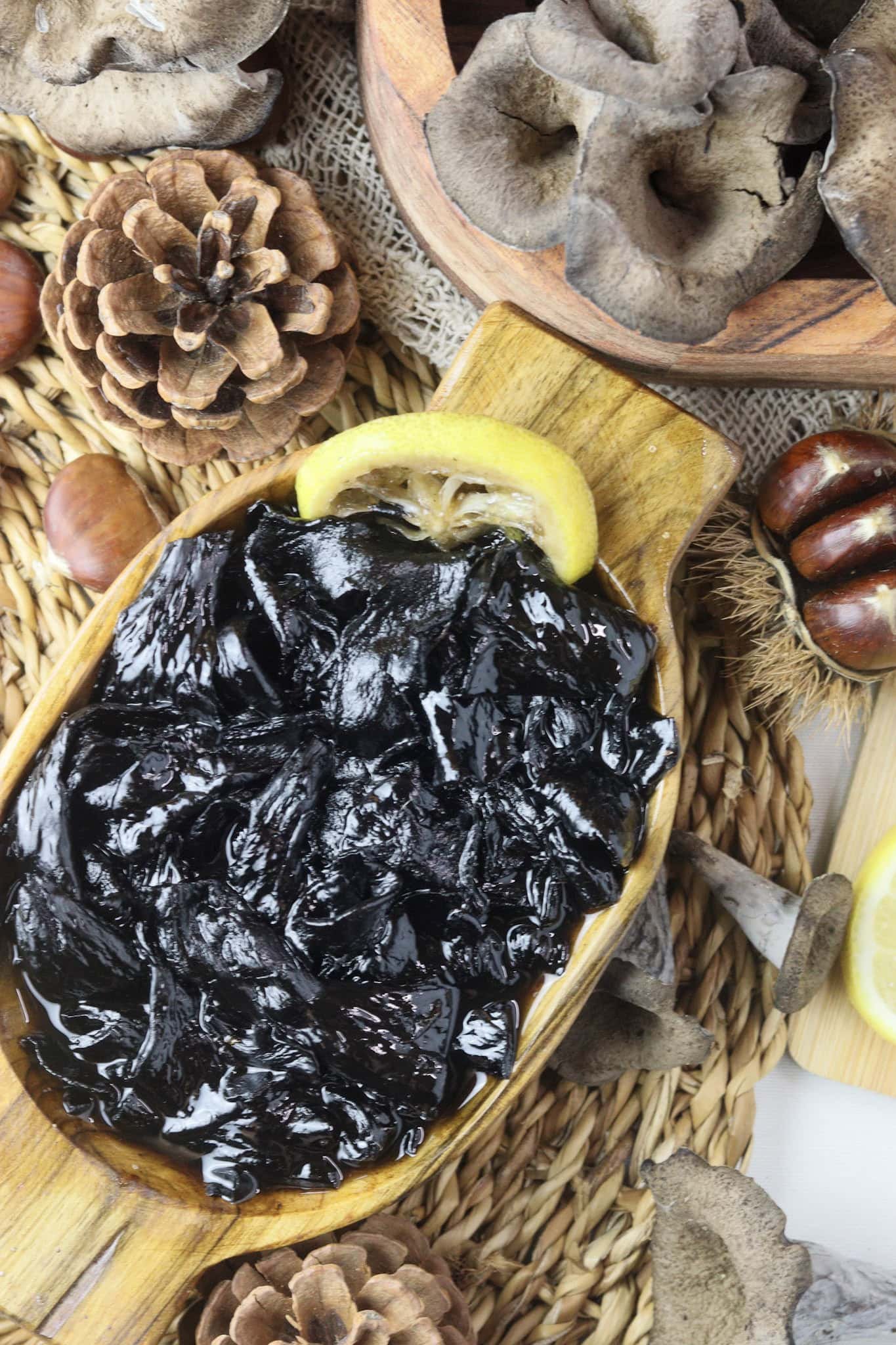
However, we’ve put their amazing flavor to work in a black trumpet risotto, a black trumpet mushroom jam, and a black trumpet soup so far. And what my Slavic kitchen roots have taught me is that a slow-cooked beef goulash is never the real thing without black trumpet mushroom powder.
Spotting black trumpets in the wild
Black trumpets grow in both North America and Eurasia, but their season mostly depends on where you are. In Europe, look for them in September through late November. East Coast US foragers get them sometimes as early as late June to October, while the West Coast has a longer window, usually from November through March.
They’re funnel-like, dark and smooth on the inside, lighter and rougher on the outside, and they usually top out around 10 to 12 cm (4 to 5 inches).
They like deciduous forests, moist and shaded, growing near oak and beech; moss and thick leaf litter are usually a good sign you’re in the right spot. Black trumpets might pop up in similar places to chanterelles, so keep an eye out for these. They are not the same as black chanterelles, even though some people mix the two up.
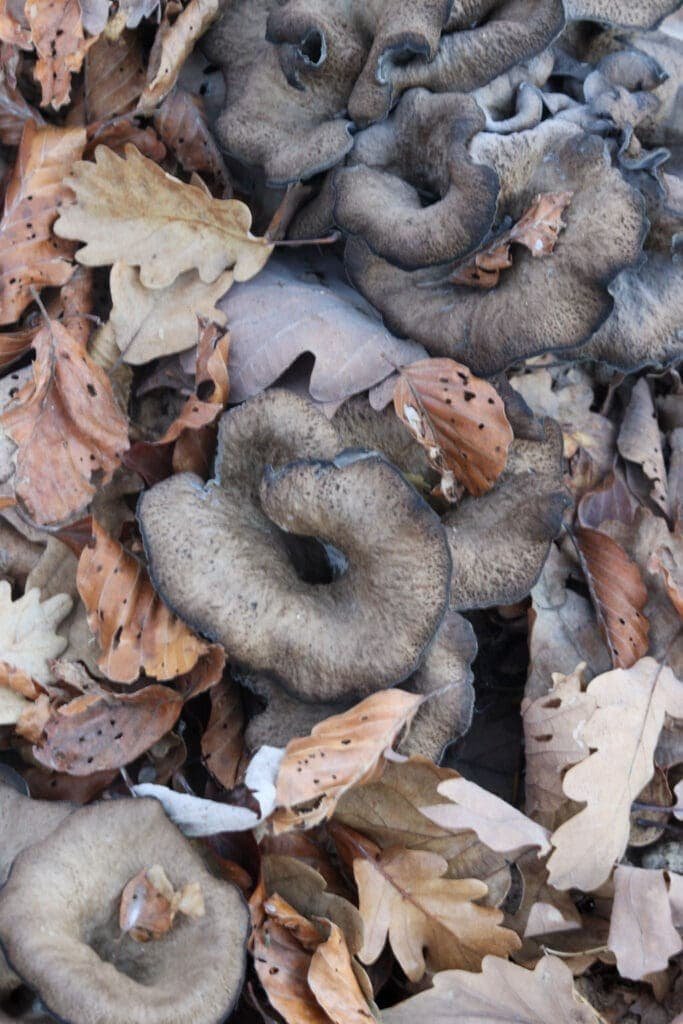
They grow in clusters, often in very large patches, and they hide pretty well. They blend in with fallen debris and soil so well that even people who’ve been foraging for years can walk right past them. It might easily happen that you find yourself standing right on top of a cluster, convinced you’re just looking at holes in the dirt.
Once you find a spot, remember it. Black trumpets grow in a mycorrhizal relationship with the roots of beech and oak trees, so the same patch will likely produce harvests again next year, if the conditions (temperature and moisture) are right.
When you find them, it’s wise (and nice) to leave some behind. These mushrooms love to have a peaceful life (like you do), and a patch that gets picked clean every year eventually stops coming back.
Cleaning black trumpet mushrooms
The cleaning process actually starts in the forest. Before your trumpets go in the basket, gently brush off the bigger chunks of debris, soil, or anything else that came along for the ride. Treat them gently; these mushrooms are very fragile. And start drying them as soon as you can; waiting too long does affect the quality.
Some folks rinse mushrooms under cold water, but for black trumpets specifically, that gets tricky, especially when making the powder. They soak up water fast, and that extra moisture can slow down drying and leave them sitting damp longer than they should.
Give microorganisms that kind of head start, and you risk decay, color changes, and a drop in overall quality. There’s also the fact that some of the good stuff, the compounds on the outer surface that make these mushrooms worth foraging in the first place, ends up rinsed away with the dirt.
Here’s how we do it instead: trim off the base with a pair of scissors to remove the grit. Most of the debris hides in that hollow stem, so splitting the mushroom into two pieces gives you direct access to clean it out with a soft toothbrush. Expect to find soil, bits of leaf, sand, and the occasional tiny forest creature.
Once fully dried, before grinding into powder, we put the mushrooms back in the oven for a few minutes, just enough to kill off anything unwanted that might still be hiding inside.
If you insist that some of the mushrooms are impossible to clean with a brush alone, pick just those, pull them apart into a couple of pieces, give them a quick rinse under water, place them in a colander, and then pat them dry right away with a napkin or clean cloth.
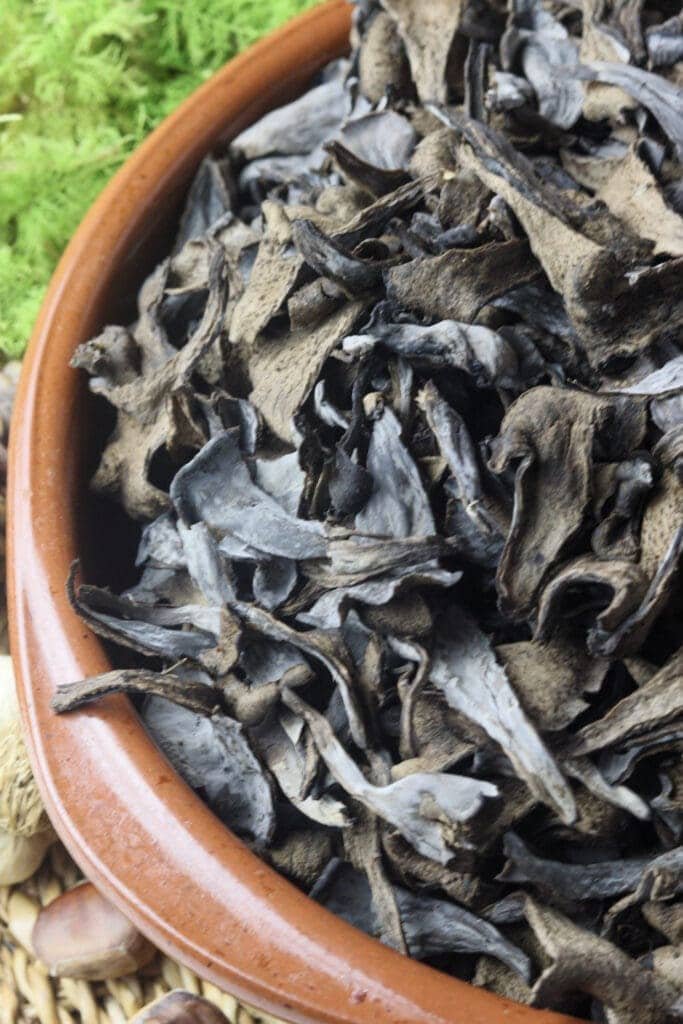
How to dry black trumpet mushrooms
Once your trumpets are clean, you’ve got choices. A dehydrator is the fastest, most reliable option if you have one. And the oven works just as well. If the weather’s cooperating, sun-drying is the oldest trick in the book. The older generations who still had large wood-burning bread ovens actually relied on them because they were the cheapest and most practical.
Whichever method you pick, the goal is the same: pull out the moisture slowly enough that the mushroom doesn’t cook, but fast enough that mold doesn’t get a chance to move in.
1. DRYING BLACK TRUMPET MUSHROOMS IN A DEHYDRATOR
Clean the mushrooms, cut them into smaller slices, and spread them in a single layer on the dehydrator trays. Don’t crowd them; they need airflow in between to dry properly. Set the temperature somewhere between 113°F and 135°F (45–57°C). Lower and slower keeps more of the precious compounds intact. Higher is what gets you there faster if you’re working through a big harvest and don’t want to wait three days for it to finish.
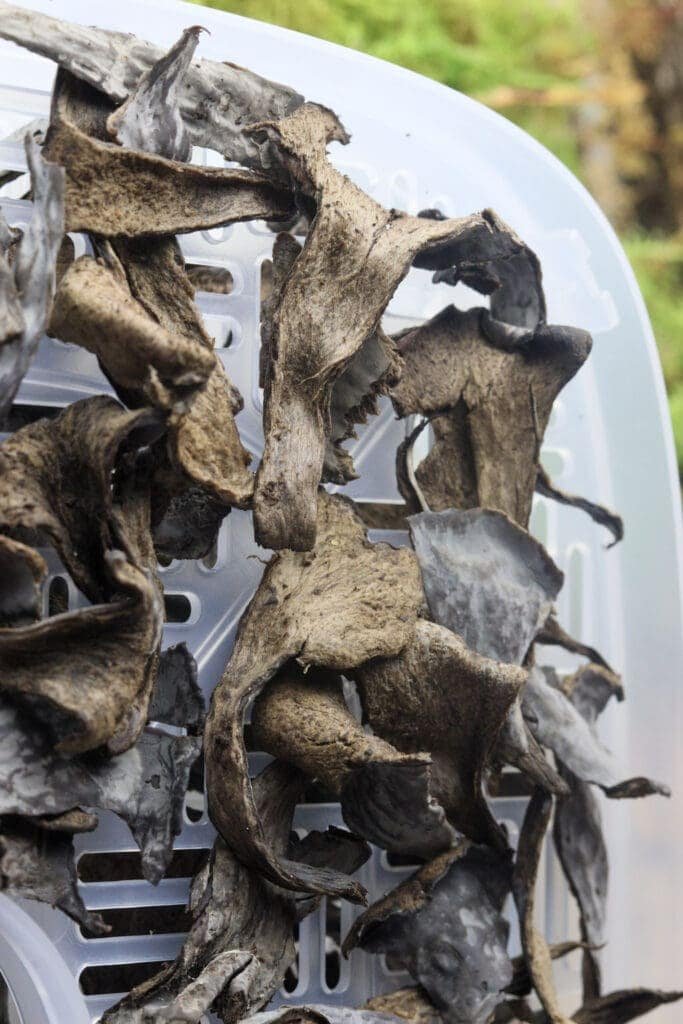
Depending on your batch size, expect anywhere from 5 hours to overnight. Check every couple of hours, and it’s worth rotating the trays or turning the bigger chunks around partway through. Black trumpets are thin, so once the moisture starts leaving, they actually dry faster than a lot of other mushrooms.
You’ll know they’re done when they’re completely crisp and crumbly, not just leathery. If they still bend instead of snap, give them more time.
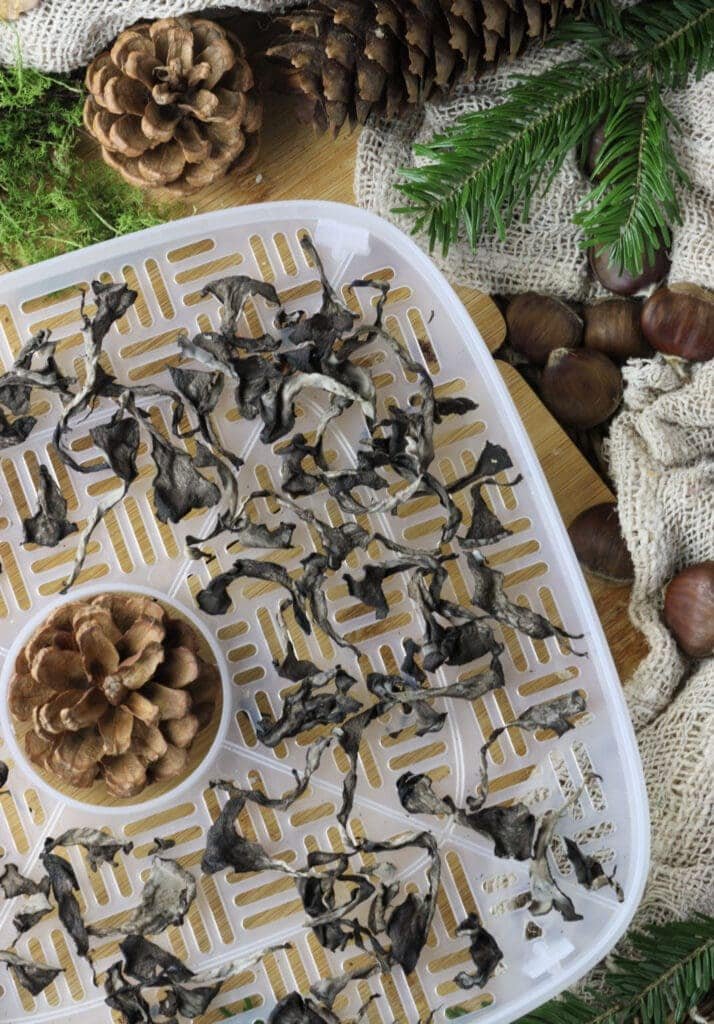
Before you store them or grind them into powder, spread the dried black trumpets on a baking sheet lined with parchment and give them one more short bake at 100°C (212°F) for 5 minutes.
This is an old trick of an experienced mushroom hunter who swore by it, and it does make sense. A quick blast of heat kills off anything unwanted that might still be hiding inside, so your winter stash stays safe.
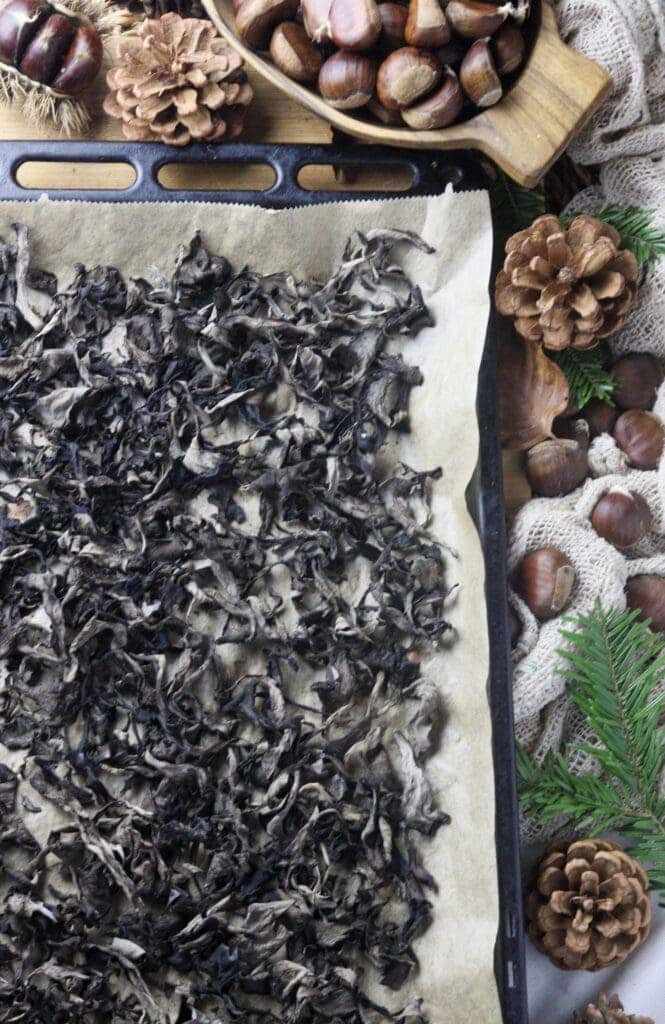
2. DRYING BLACK TRUMPETS IN THE OVEN
The same cleaning process applies here, though the oven can handle slightly larger chunks than the dehydrator.
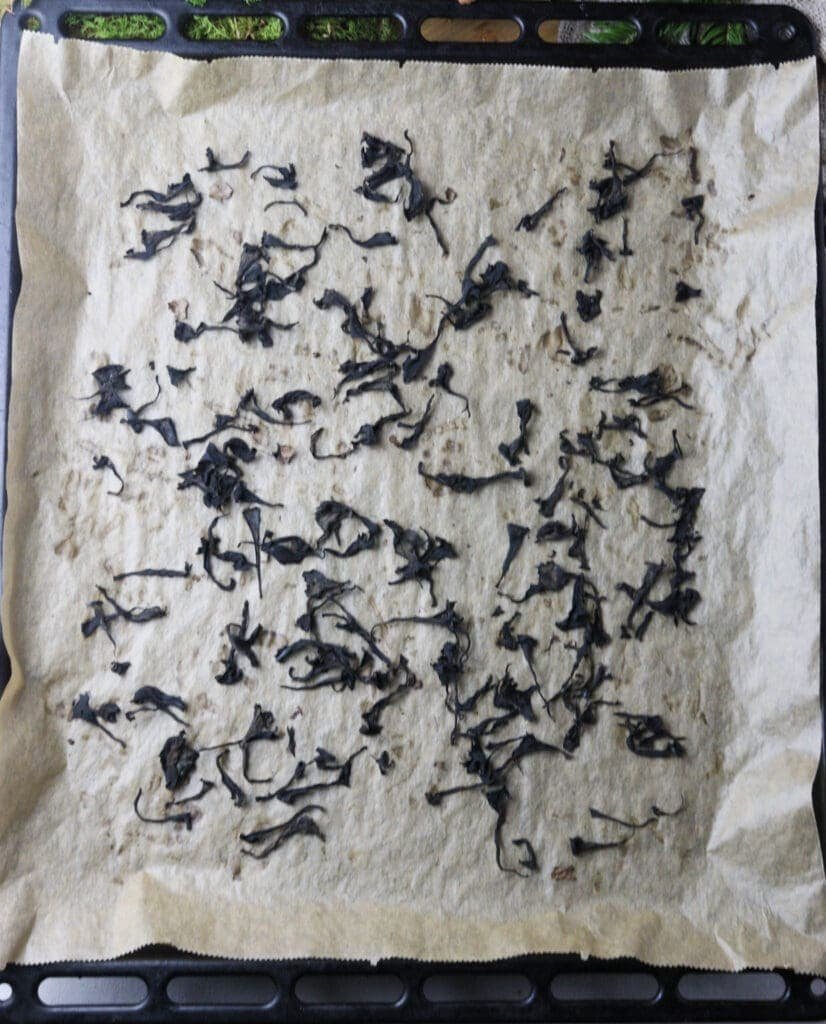
Preheat to somewhere between 104 and 158°F (40°C-70°C). Line a wide, shallow baking sheet with parchment paper and spread the mushrooms out with space between each piece. Let them stay in the oven for an hour. Then remove the sheet, turn the mushrooms over, and put them back in.
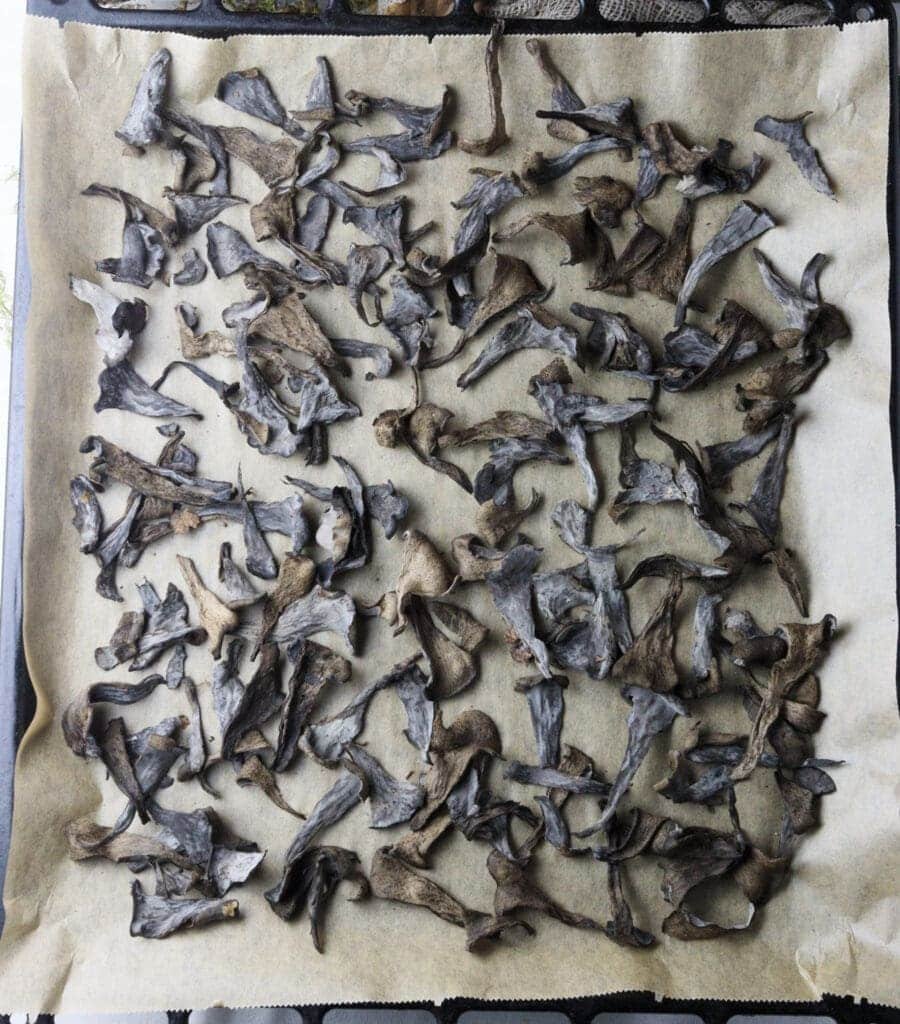
Fully dry means they snap cleanly when you crack one in half, and that usually takes around 4-5 hours total, depending on your oven temperature and the size of the pieces. They’ll shrink a lot as they dry, so check on them often.
Once they’re done, give them the same final safety bake as above: 212°F (100°C) for 5 minutes, to kill off anything unwelcome before storing.
3. SUN-DRIED BLACK TRUMPET MUSHROOMS
If the weather still cooperates by the time you find them, this is the oldest, most foolproof, and cheapest method there is.
Clean the mushrooms as described above, split them into smaller chunks, and spread them on a clean carton or wooden surface; a large clean kitchen cloth works fine too. A rack with holes underneath, so air can move both above and below the mushrooms, works even better.
Place them in a sunny, breezy spot and turn them a few times throughout drying. If the weather turns, bring them inside before they start pulling moisture back in, and either pick up the next sunny morning or finish them off in the oven.
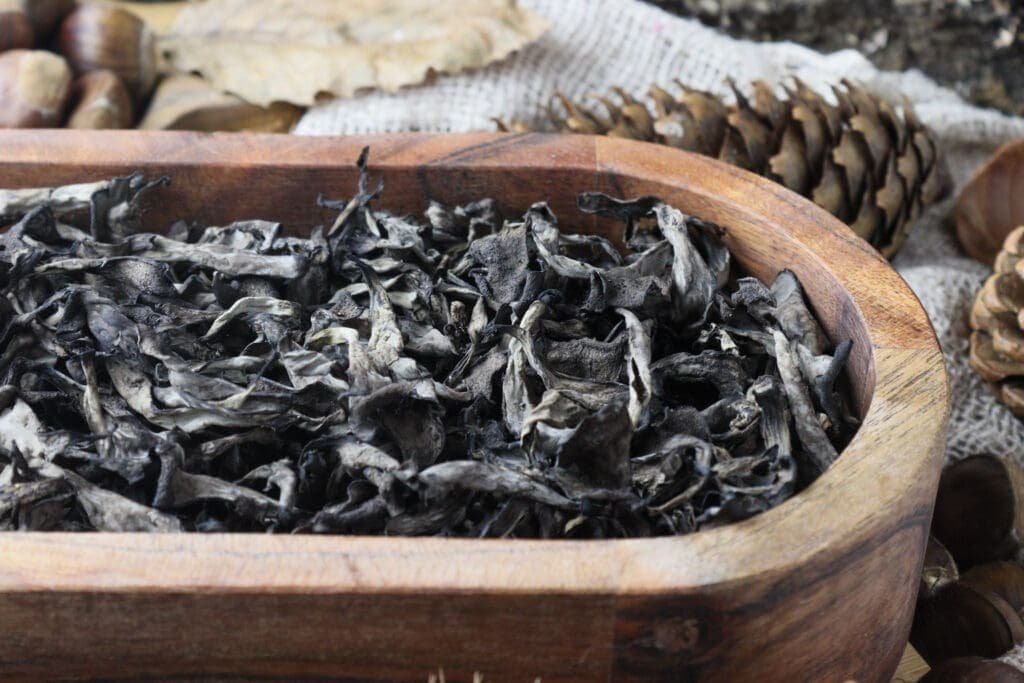
The same rule (as with other methods) applies here too: once they’re dry, give them a final bake at 100°C (212°F) for 5 minutes before packing them for the winter or grinding them into powder.
4. CLAY OVEN DRIED BLACK TRUMPETS
In the Balkans, mushrooms (and fruits) were traditionally dried on top of large traditional wood-burning bread ovens, most often made of thick clay tiles. A wooden rack was used to keep the mushrooms off the heat.
Those stoves were burning slowly, providing just enough warmth to heat the house and dry the mushrooms. This, in fact, was very convenient, as they were large enough to dry a whole basket of mushrooms at once.
If you have a wood-burning oven or a stove that’s warm on the outside, but not too hot, you can do the same. Rig up a rack or shelf somewhere warm but not blazing hot, right beside it or on a raised spot above where it’s not too intense.
Lay the mushrooms out on parchment, carton, or a clean cloth like you would for sun-drying, turn them a few times, and check for the snap when they’re ready.
How to make black trumpet mushroom powder
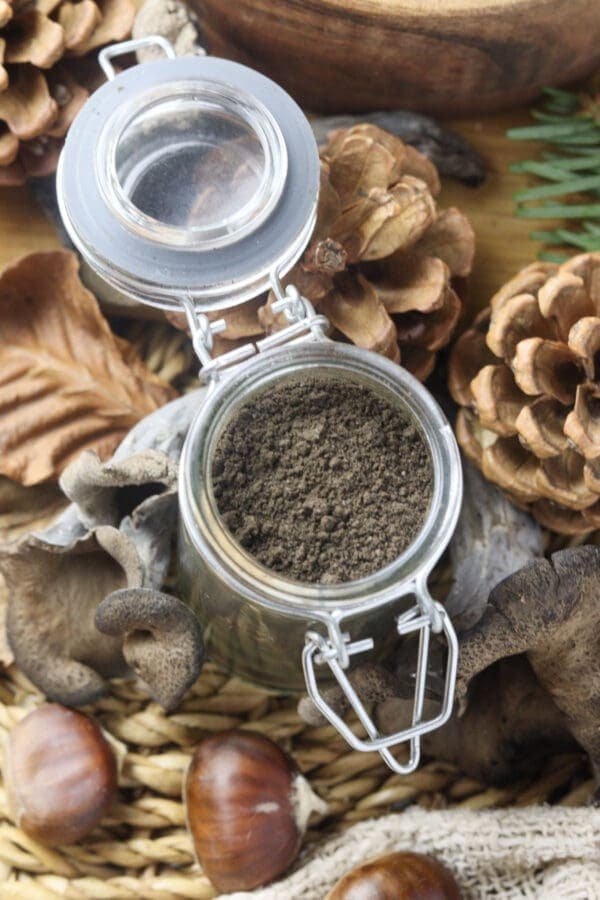
Dried black trumpet mushroom powder will become your favorite secret ingredient for almost every savory dish. It adds a very special depth (with a pinch of magic) to your dishes, one that you can’t get any other way.
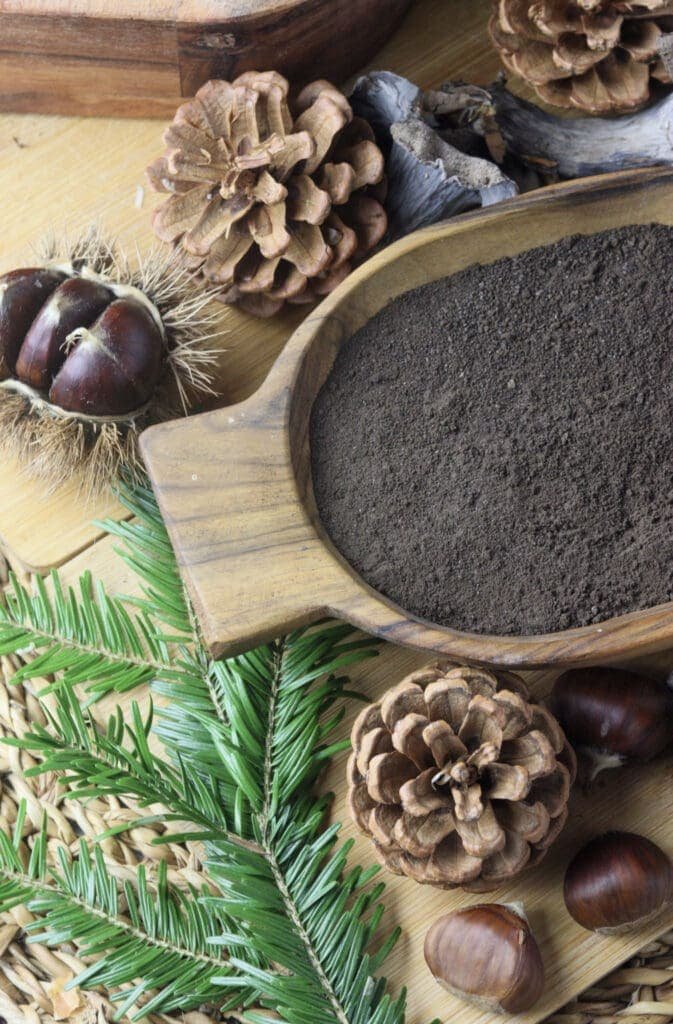
As a rough guide, 1 kilogram of fresh black trumpets yields about 100 grams of powder. If the mushrooms were slightly wet when you dried them (like freshly picked after a rainfall), expect about 20% less.
The easiest way to make it is to grind the dried mushrooms while they’re still warm, right after you give them that final burst in the oven. Warm mushrooms grind much easier. At room temperature, they get softer, therefore harder to work with.
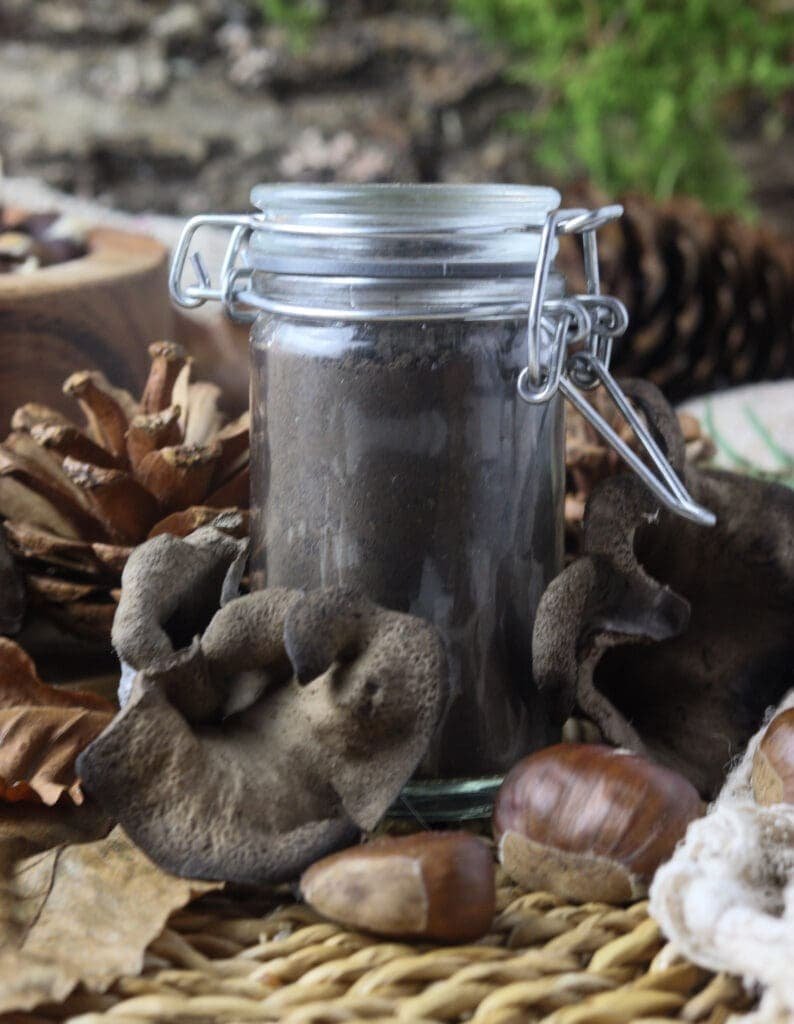
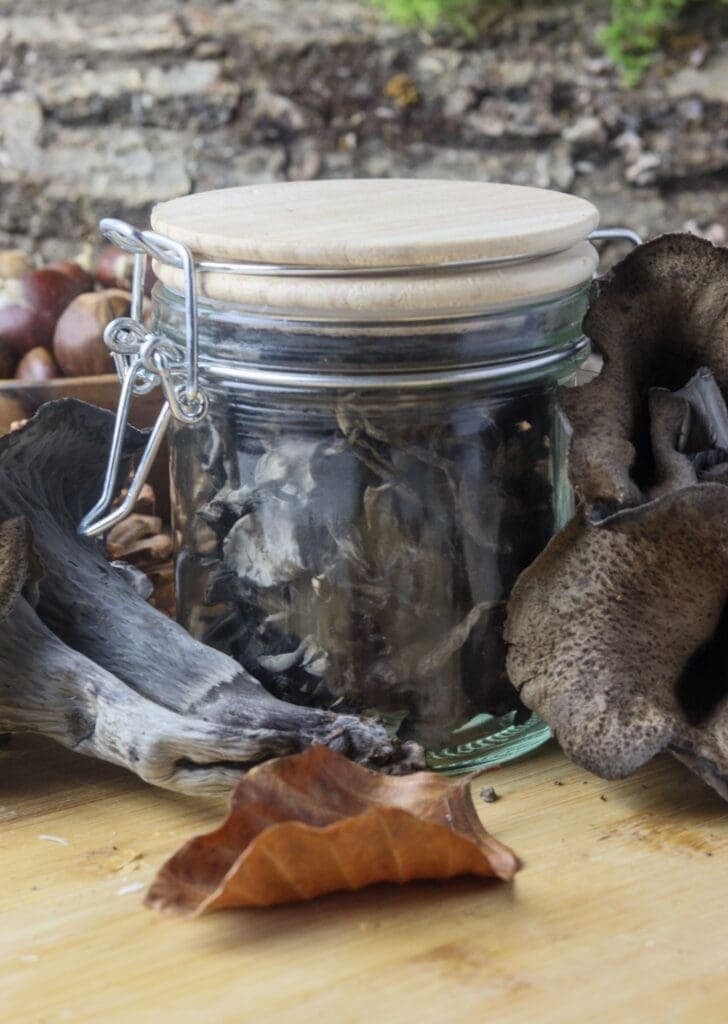
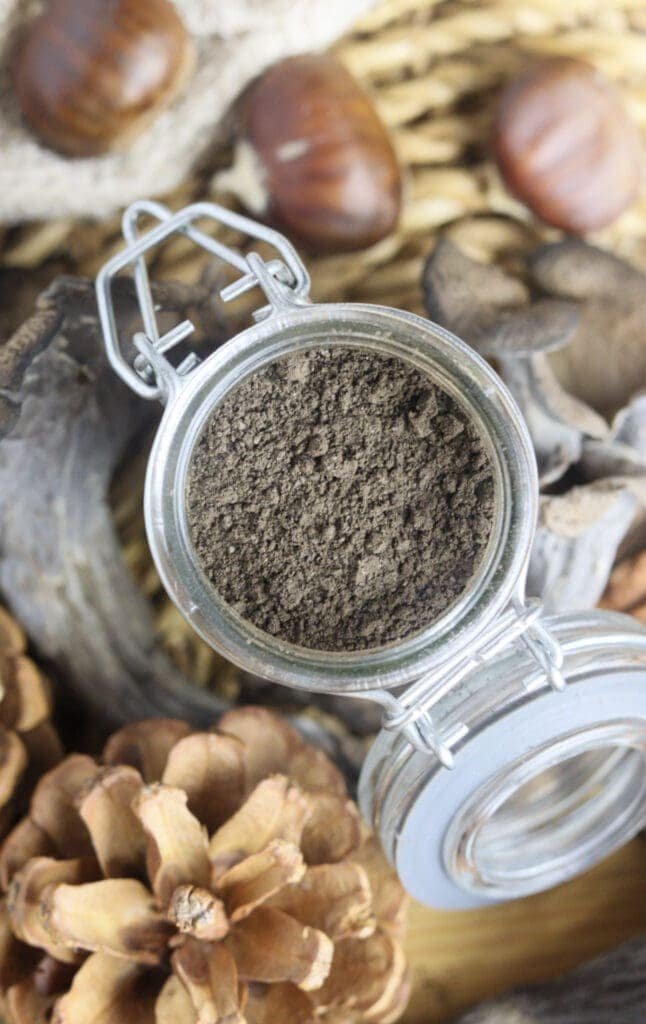
We use a small coffee grinder for this and grind them in batches. Then we pack the powder into tightly sealed jars for year-round use. A blender works just as well, or if you want to do it the old way, a mortar and pestle will do the trick too.
If you plan on using this powder often, you can stretch it further by blending in salt, black pepper, onion powder, and garlic powder. That said, black trumpet powder isn’t cheap to make; it’s a little treasure, in fact. So it’s worth keeping at least one jar of it pure, with no additions, for when only the real thing will do.
How to store dried black trumpets and powder
Dried black trumpet mushrooms need to cool completely before you seal them up. Warm mushrooms in a jar invite condensation, and (no, thanks) condensation means mold.
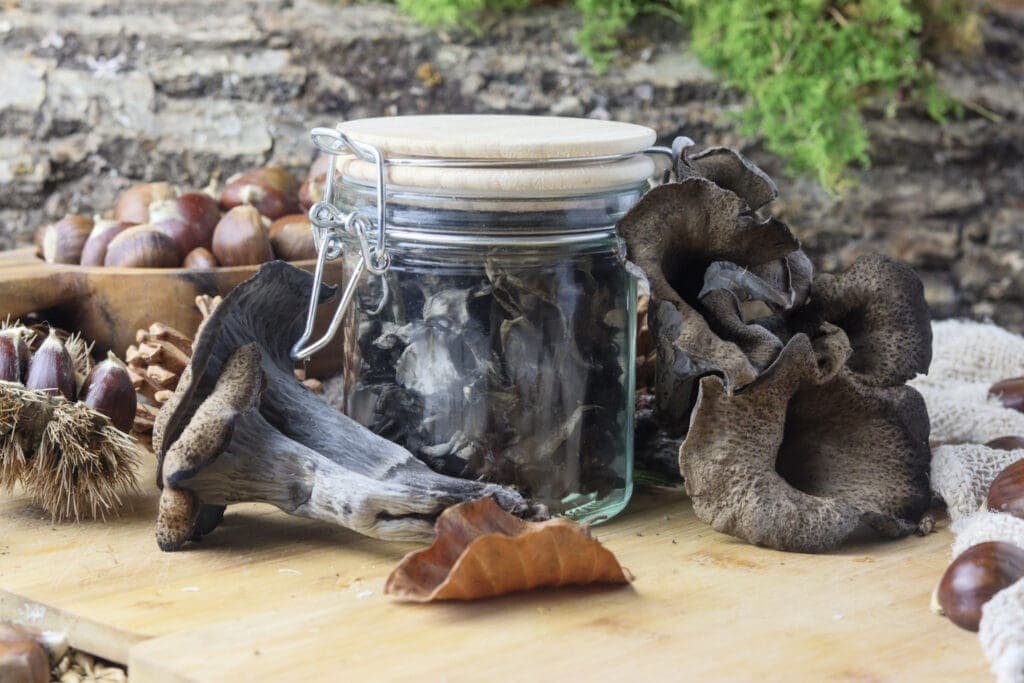
Store them in glass jars with tight lids in a cool, dark, dry place. A pantry shelf is perfect. Skip anywhere near the stove or a sunny window.
For the first week, open the jars once a day and let them air out for an hour. This catches any leftover moisture before it turns into a problem. Done right, dried black trumpets will keep at least till the next mushroom season.
Black trumpet powder needs a little more care, since grinding exposes more surface to air. We pack it into small, airtight jars, which are additionally covered with thin plastic foil beneath the lid. Store it the same cool, dark way as the whole mushrooms.
Used regularly, a jar of powder stays at its best for 6 to 12 months. After that it won’t spoil, but the famous aroma does fade a little.
How to use dried black trumpets and powder
Dried mushrooms can serve you just as well as fresh ones; they just need a little water. Once rehydrated, they can be cooked into a wonderful black trumpet risotto, stirred into a creamy mushroom sauce, simmered into a bowl of black trumpet mushroom soup, mixed into a delicious mushroom butter, and even turned into something sweet like black trumpet mushroom jam. Yes, really, they’re fantastic in a sweet version too.
To rehydrate, drop them into a bowl of warm water and let them sit for 20 minutes to an hour. After that, use them exactly like you would fresh mushrooms.
Black trumpet mushroom powder, though, is a whole different level. Add it to almost any savory dish, and it instantly deepens the aroma of your favorite recipes; it’s that good. Any kind of meat, especially game, tastes completely different once it’s been seasoned or marinated with this stuff.
You can use it for hearty soups and stews, and it will especially lift meaty sauces. It’ll boost the flavor and add a unique taste to dishes made with cultivated mushrooms like button and oyster mushrooms; it’s almost obligatory for game and beef goulash; you can add it to chicken and to any cream sauce you can think of.
Wherever it goes, this magic powder brings a hit of pure forest umami. And believe it or not, those who really know what this powder is about mix it into cookies too! (Oh yes, I do!)
Enjoy!
Black trumpet recipes to try
Here are some black trumpet recipes you might like:

Black Trumpet Mushroom Powder
EQUIPMENT
- 1 soft brush
- 1 dehydrator, oven, or a sunny spot outdoors
- 1 baking sheet + parchment paper
- 1 coffee grinder, blender, or mortar and pestle
- 1 small airtight jar
INSTRUCTIONS
- Clean the mushrooms. Trim the base off with scissors, split each mushroom in half, and brush out any dirt or debris hiding inside with a soft toothbrush. Do not wash them.
- Choose your drying method. Whichever fits best:
- Dehydrator: Spread the pieces in a single layer on the trays. Set between 113–135°F (45–57°C) and run for 5 hours to overnight, checking every couple of hours.
- Oven: Spread the pieces on a parchment-lined baking sheet. Set between 104–158°F (40–70°C) and dry for about 4 – 5 hours, flipping the mushrooms halfway through.
- Sun-drying: Spread the pieces on a clean surface or rack outdoors, somewhere sunny and breezy. Turn them a few times through the day, and bring them inside if the weather turns bad.
- Bread oven or wood stove: Set the pieces on a rack above or beside a slow-burning wood stove. Turn occasionally until fully dry.
- Whichever method you use, the mushrooms are ready when they snap cleanly instead of bending.
- Give them a final safety bake. Spread the dried mushrooms on a parchment-lined baking sheet and bake at 100°C (212°F) for 5 minutes. This kills off anything unwanted before storage.
- Grind into powder. While the mushrooms are still warm from the oven, grind them immediately, using a coffee grinder, blender, or mortar and pestle..
- Store. Pack the powder into small, airtight jars, filled close to the top. Keep in a cool, dark spot. Best used within 6 to 12 months.
What a wonderful process for preparing the mushrooms for convenient use.
Michele, thank you for stopping by! I hope you’ll find it useful.
Mariama, your instructions are excellent and so easy to follow; I enjoyed learning about this process and found it very interesting. Thank you for sharing it with us.
Thank you Stephanie, nice to see you here!
Fascinating information on the mushrooms. Thanks for joining in with #pocolo
My pleasure! Thank you! 🙂