

Jota is a hearty, traditional soup from the northern Adriatic region, made with beans, sauerkraut, potatoes, and smoked meat. Our jota recipe uses Carniolan sausages for a delightful, smoky flavor, but it works just as well with smoked ribs or as a vegetarian version. It’s gluten-free, tastes even better the next day, and even though it takes a bit of time and a few pots, it’s easy to make and absolutely worth it.
The traditional jota soup
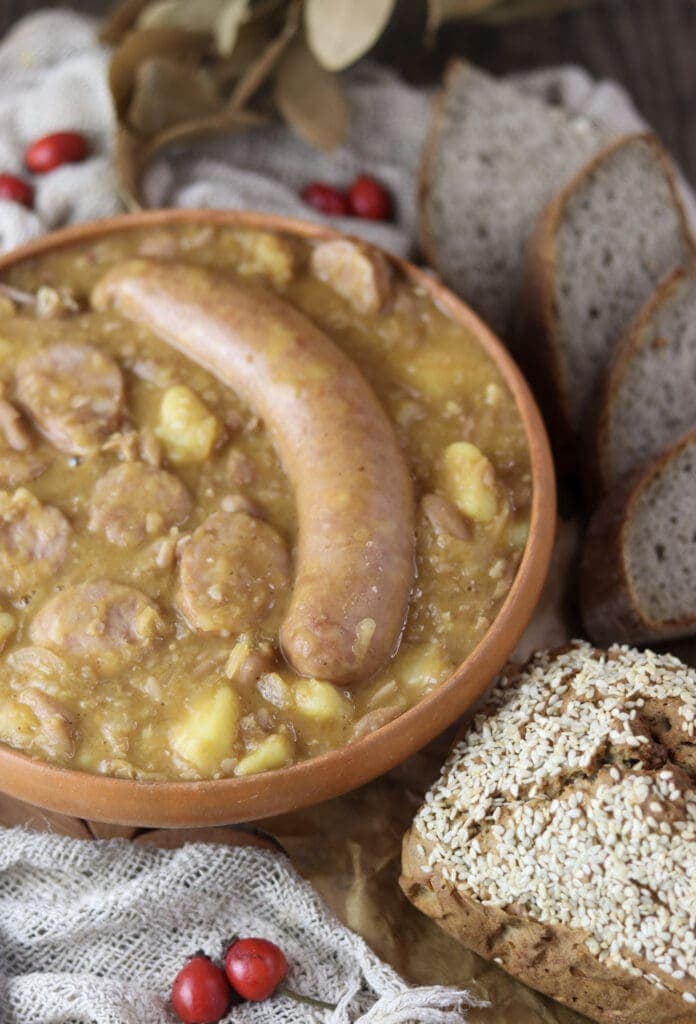
Jota is one of the old dishes of the northern Adriatic; you’ll find it (in slightly different variations) around Trieste and parts of the Friuli region, as well as in the Slovenian Goriška and Primorska regions, and in Croatian Istria.
The name jota comes from the Friulian jote, which in turn comes from the Gallic word iutta, meaning “soup.” Historical sources suggest the dish likely originated in Friuli before spreading toward Trieste and the Slovenian coast.
Although the base ingredients are similar, each area prepares jota in its own way.
The Karst and Triestine versions use beans, potatoes, sauerkraut, garlic, bay leaves, and smoked pork. In the Friuli region, sauerkraut was sometimes replaced with sour turnip (brovada), and pork rind or cured cuts like muset were used instead of smoked meat.
Istrian jota is usually made without potatoes, with a sharper and lighter flavor. In Kostanjevica, it’s thickened with a simple cornmeal slurry. After World War I, a meatless version became common in Trieste due to shortages; this jota was enriched with sautéed garlic or a bit of roux.

The traditional jota is usually thick and hearty, which is why beans and potatoes are simmered long enough to break down naturally, giving the soup its delightful creamy texture. These can also be mashed and stirred back in. However, some prefer keeping the potatoes and beans whole. In that case, it’s almost obligatory to serve some good homemade bread on the side.
While you can make an incredibly tasty vegetarian version with only a little smoked paprika, jota is usually cooked with smoked meat: slab bacon, smoked ribs, smoked ham, or sausages. And yes, you can use canned beans, but dried beans really make it so much better. They do need to be soaked overnight, but the broth they create while simmering is indeed an irreplaceable part of the flavor.
Besides ričet and cabbage rolls with buckwheat, jota is undoubtedly one of our favorite Slovenian recipes. I can’t imagine winter without it. On a snowy day, a big pot of jota soup with freshly baked buckwheat soda bread and maybe a slice of homemade strudel after – well… I don’t think it really gets much better than that.
Let’s see how to make it!
The ingredients
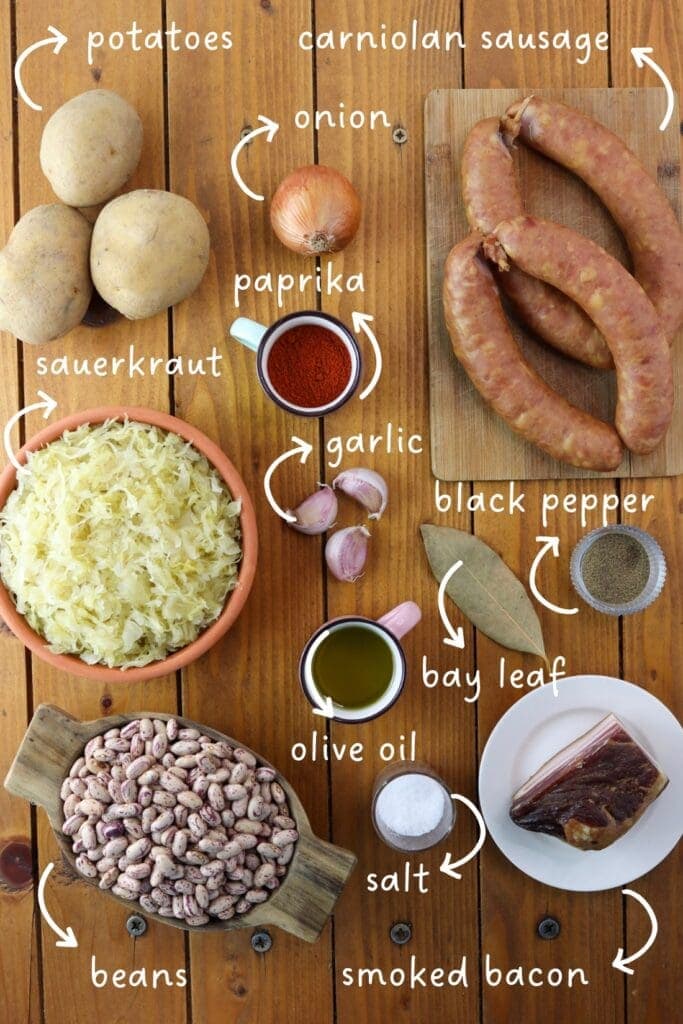
SAUERKRAUT – Some people rinse their sauerkraut before cooking, but we use it as is. Ours isn’t overly sour, and it gives the soup that perfect refreshing flavor. Some Italian recipes sometimes replace it with sour turnip.
POTATOES – The basic rule is to use the same amount of potatoes as sauerkraut, and about half that amount of beans. White potatoes hold their shape a bit better than yellow ones.
DRIED BEANS – Canned beans are fine, but the soup won’t turn out as creamy or as flavorful as it does with dried ones. Borlotti, cranberry, or pinto beans work best.
CARNIOLAN SAUSAGE – If you don’t have these, use any smoked pork sausage, smoked pork leg or ribs. These need to cook longer, so cook them together with sauerkraut and add them back to the soup at the end.
SMOKED BACON – The basic deal here is simple: homemade tastes better.
OLIVE OIL – you’ll need about two tablespoons to sauté the onions. Traditionally, this was also often done with lard, so use it if that’s what you have.
ONION – One medium onion is enough. Yellow onions work best, but shallots are also a good substitute.
GARLIC – We used three cloves; feel free to add more if you like a stronger garlic flavor.
SALT & BLACK PEPPER – Although ground black pepper works fine, sauerkraut is traditionally cooked with whole peppercorns (and a little ground pepper on top).
PAPRIKA – Choose smoked paprika. It brings extra smokiness, especially if you’re making the soup without meat.
BAY LEAVES – Don’t skip these (unless you want to be alone for the rest of the day)! Add one to the sauerkraut and two to the beans. Besides flavor, bay leaves actually help to reduce bloating (and farting) from beans and cabbage.

If you wish to try sauerkraut with sausage in a wonderful combination with buckwheat noodles, please see our lazanki recipe.
A no-fail jota soup recipe
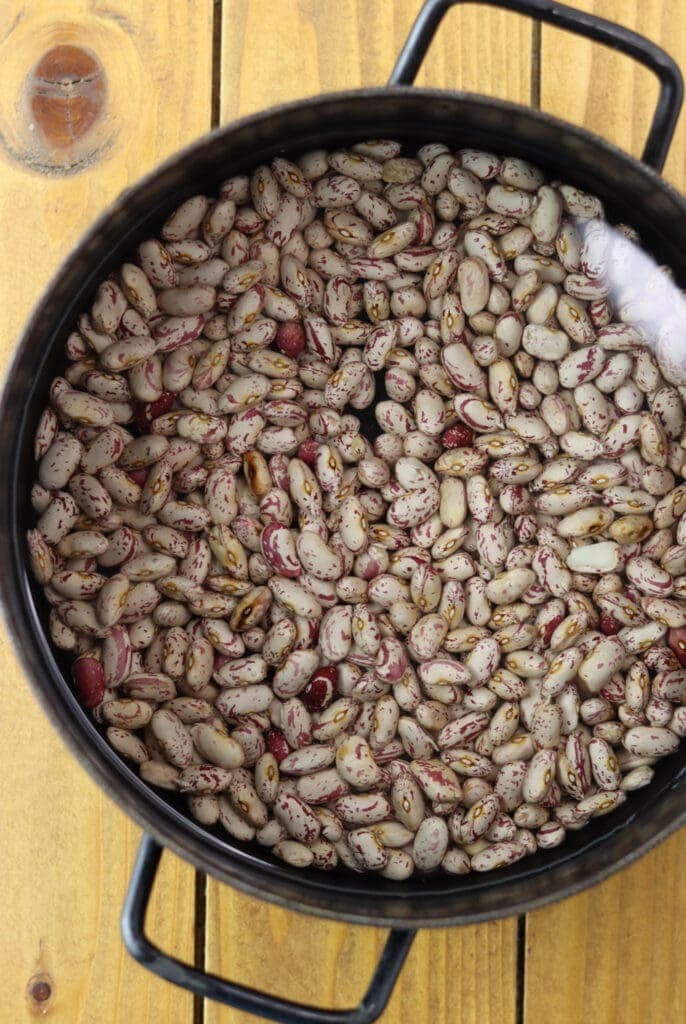
STEP 1: The night before, rinse the beans and soak them in about three times their volume of water. Let them soak for at least 10 hours, but no longer than a full day. Remove any damaged beans that float to the surface, and top up with more water if needed while they soak.
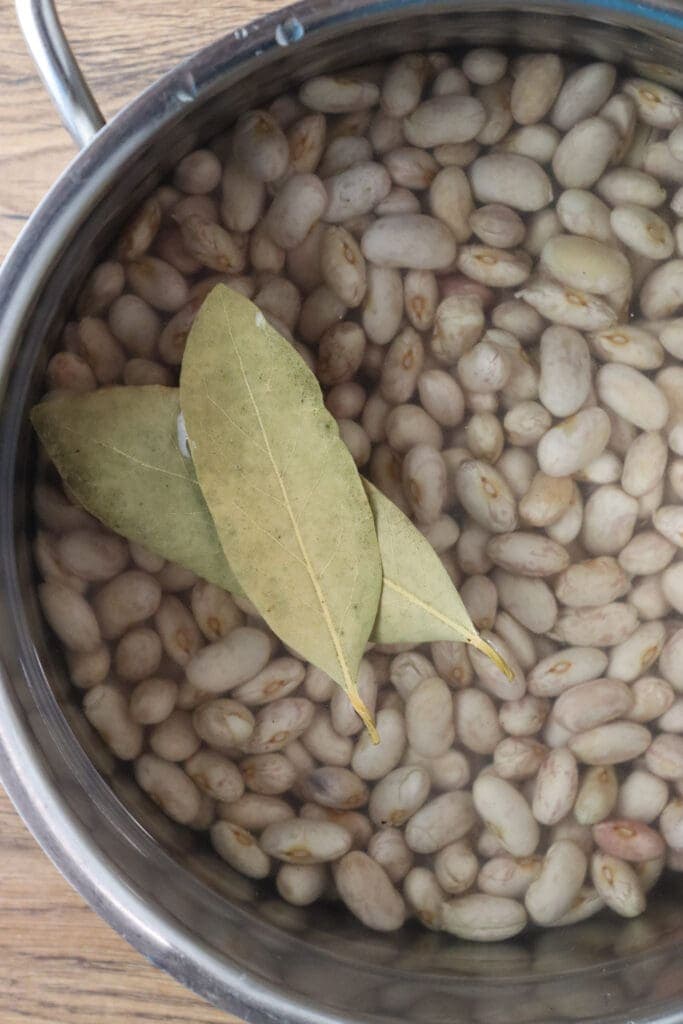
STEP 2: Before cooking, rinse the beans once more, then place them in a pot and cover with fresh, cold water. Cook slowly over low heat for about 45 minutes, adding two or three bay leaves. Do not add salt at this stage; beans soften better and cook more evenly without it. You can, however, add a tablespoon or two of olive oil if you like; it helps to keep them tender and silky.
STEP 3: Prepare the potatoes separately. Bring a pot of water to a boil, add a pinch of salt, and cook the diced potatoes for about 15 minutes, until just tender. This step is important for a proper jota soup. If potatoes are cooked with sauerkraut, they won’t soften properly; the outside stays firm while absorbing the sauerkraut juices.
STEP 4: Place the sauerkraut in another pot together with whole black pepper and one bay leaf. Cover with cold water. If you’re using smoked ribs or other smoked pork that needs longer cooking than sausages do, cook it with the sauerkraut. Bring to a boil, then cook on medium heat for about 45 minutes.
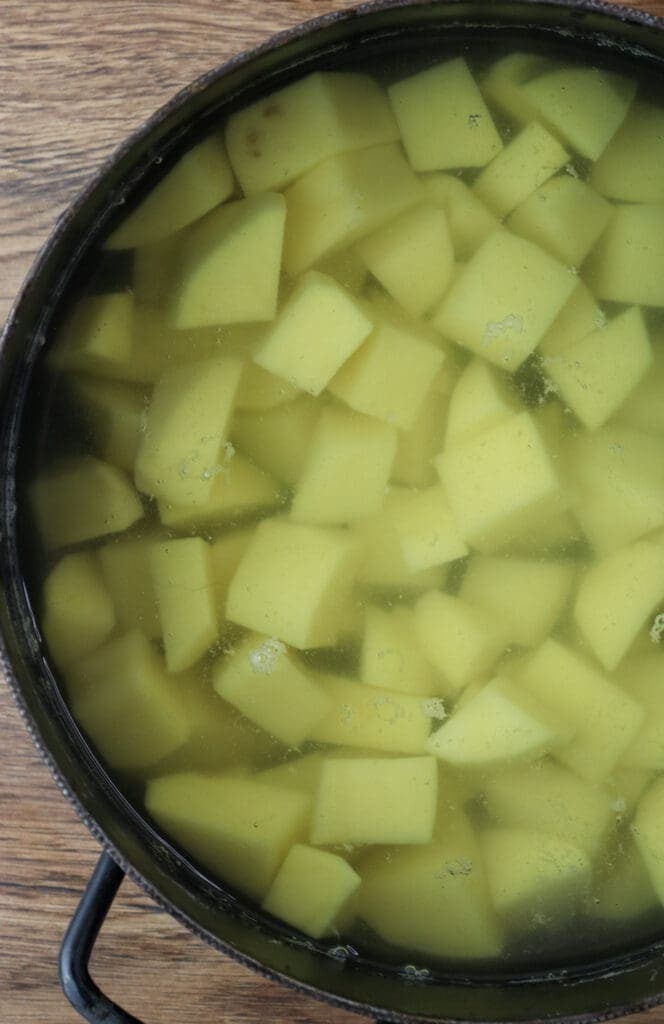
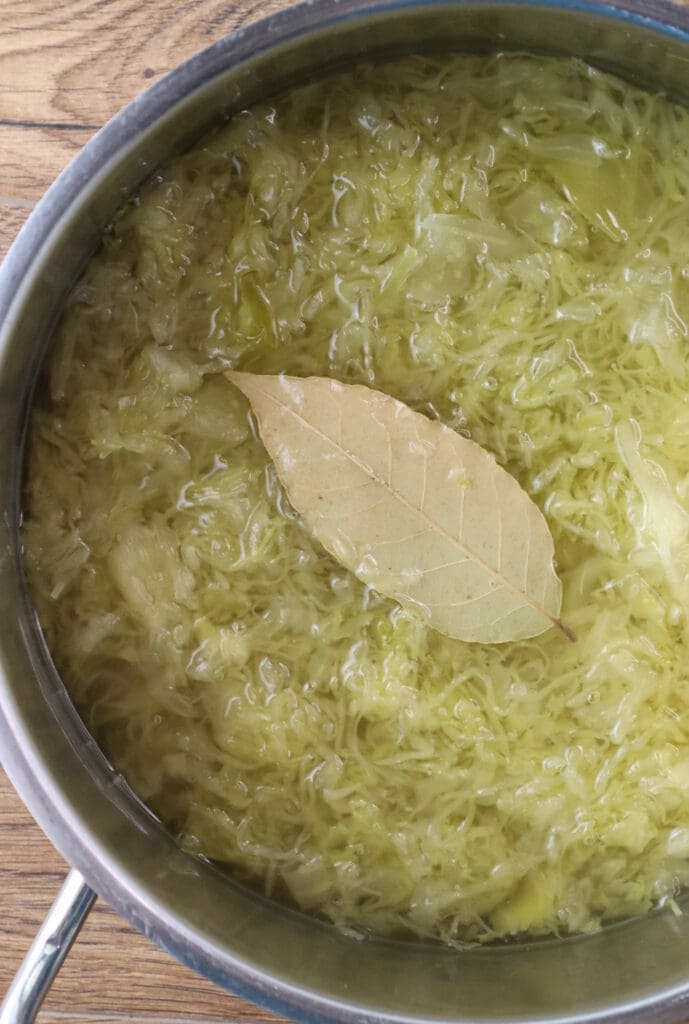
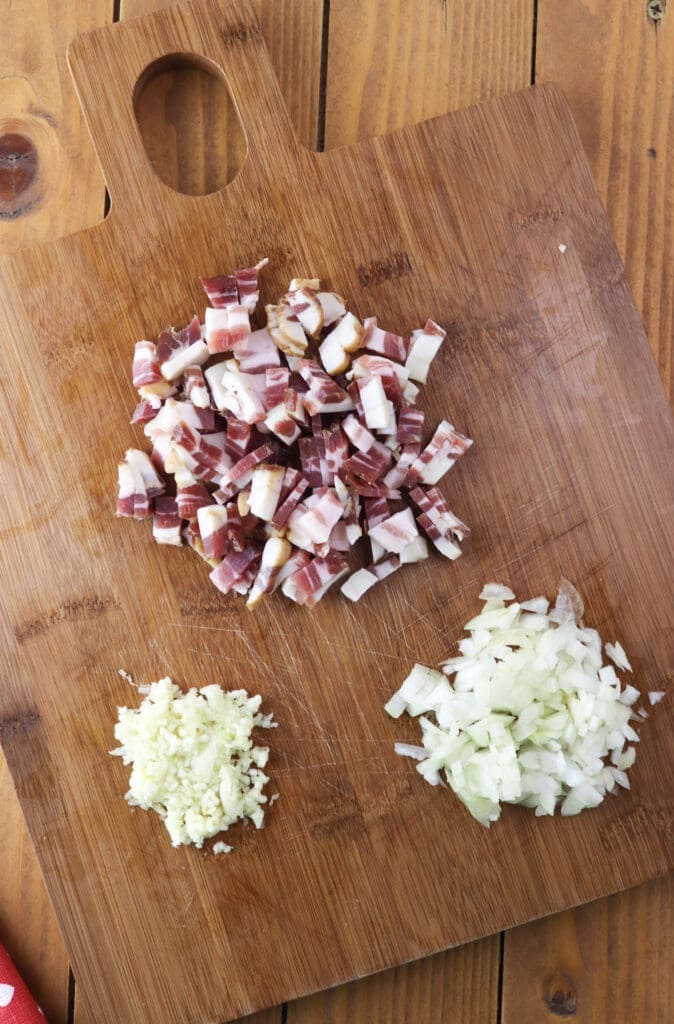
STEP 5: While everything is cooking, slice the smoked bacon into small pieces and finely dice the onion and garlic. Once the beans, potatoes, and sauerkraut are done, strain them well, but (important) don’t discard the cooking liquids from the beans and sauerkraut. Those flavorful liquids are somewhat essential for building the true depth of the jota soup later.
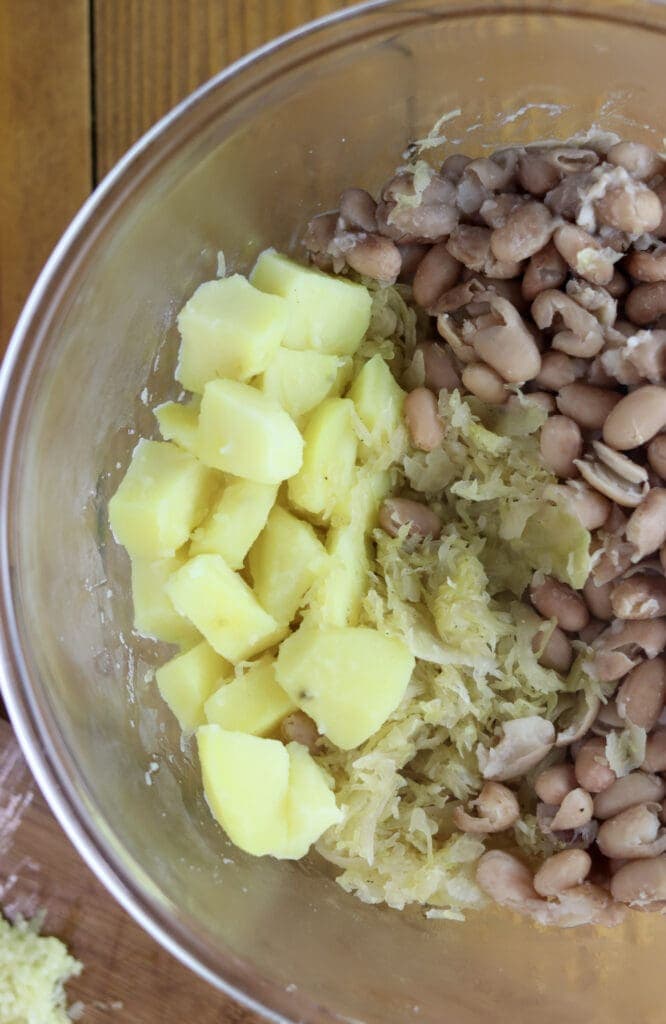
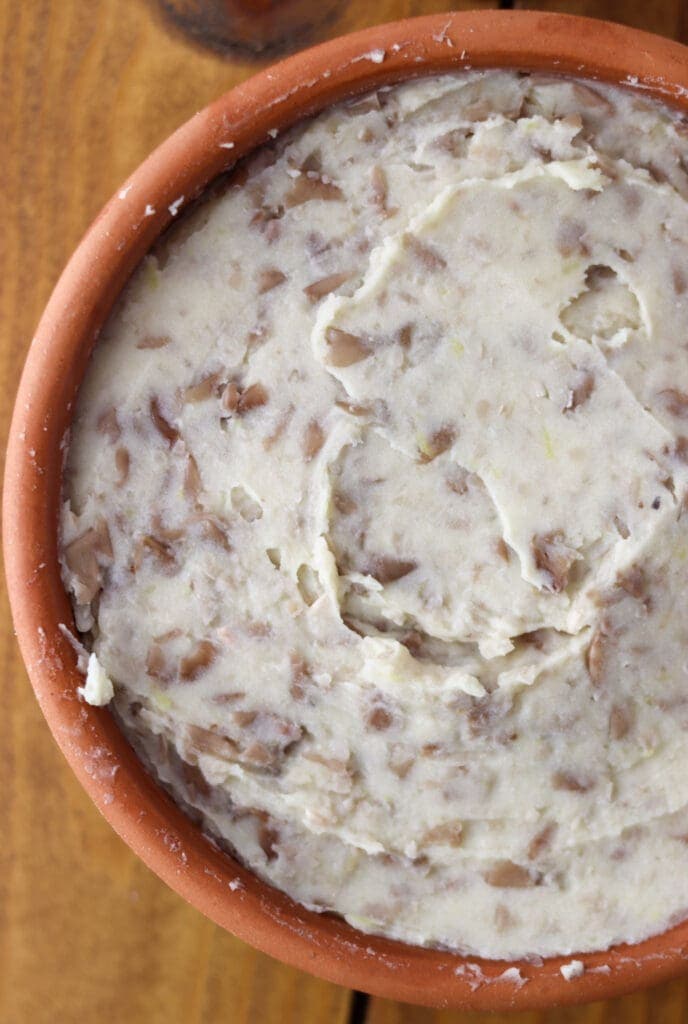
STEP 6: Next, take out a small portion of the cooked beans and about half a cup of cooked potatoes. Mash them together using a potato masher or a hand blender. This simple mixture will serve as the natural thickener for the jota soup, giving it a richer texture and a much better flavor than any flour could. Plus, it will keep the soup gluten-free.
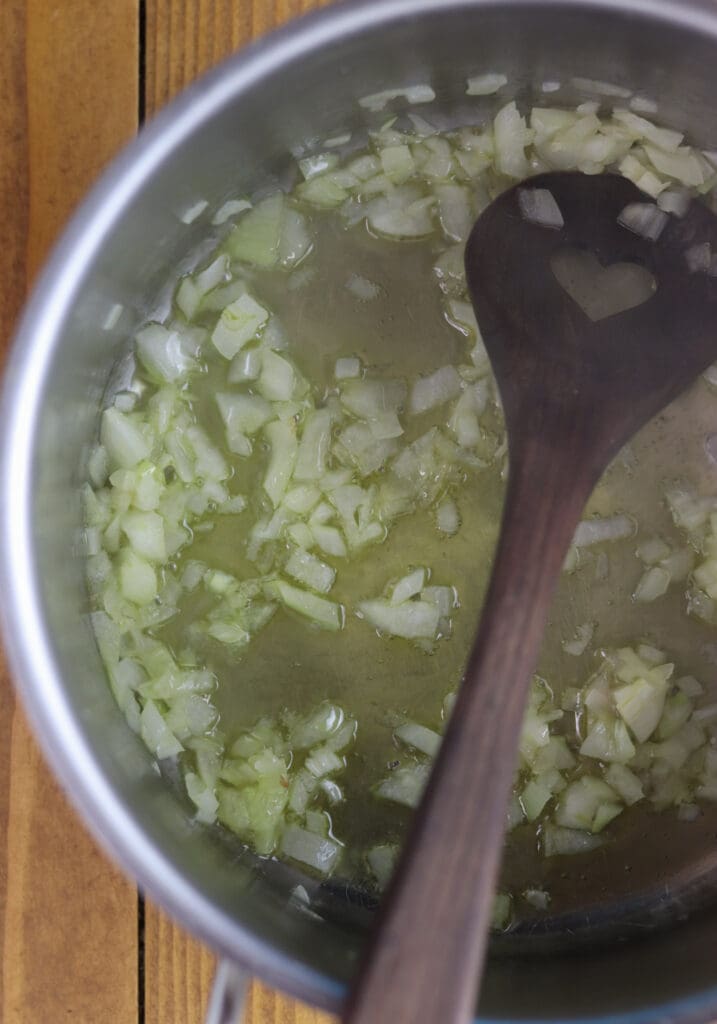
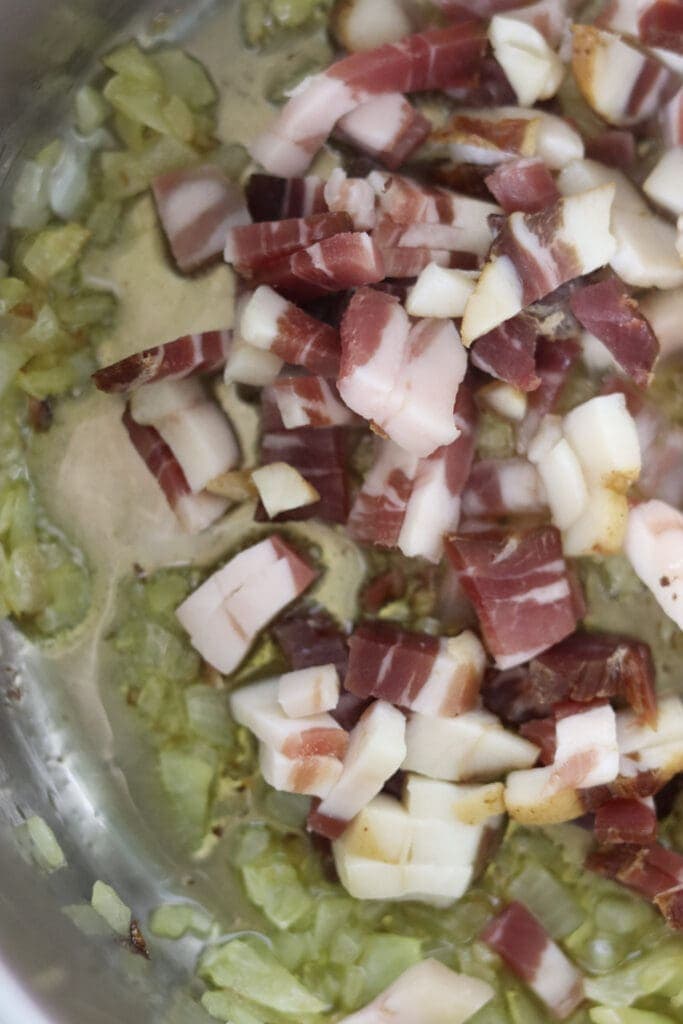
STEP 7: In a large pot, big enough to hold all the ingredients, heat the olive oil over medium heat. Add the onion and sauté until soft, lightly golden, and fragrant. Once it smells just right, add the sliced smoked bacon and cook for another minute, stirring gently.
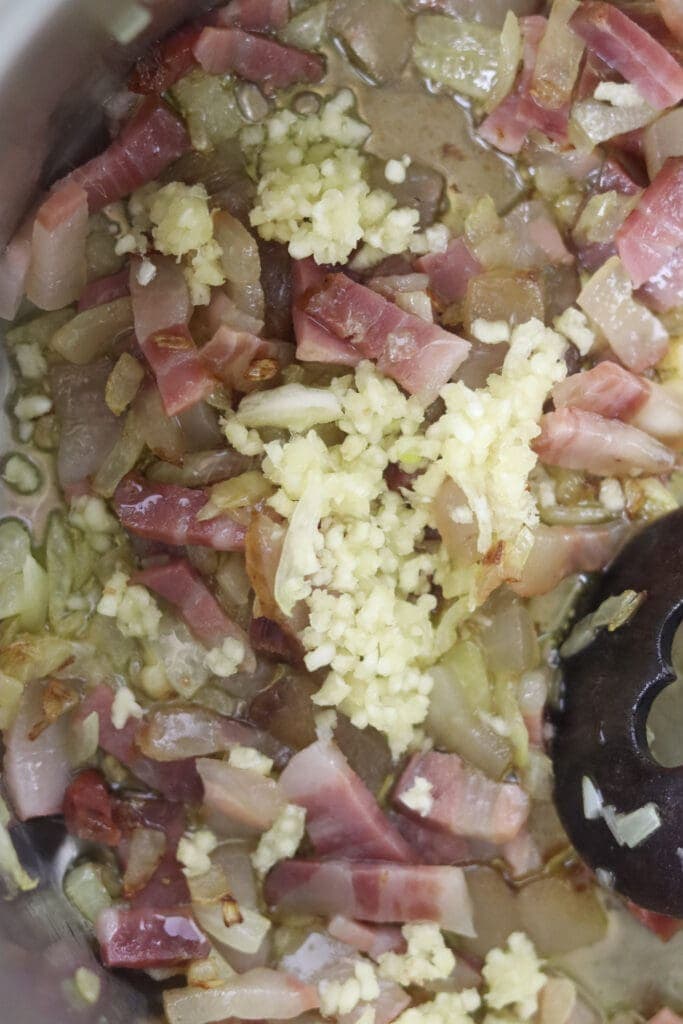
STEP 8: Add the garlic and smoked paprika and quickly stir everything together so the garlic doesn’t burn. Then add the cooked sauerkraut, beans, and potatoes to the pot, along with the bay leaves. Pour in some of the reserved bean and sauerkraut cooking liquids and top up with additional water if needed, just enough so everything is generously covered.
STEP 9: Stir in the bean–potato mash and mix it thoroughly into the jota soup, and once that’s done, add the sausages. Finally, bring the soup to a gentle boil, then lower the heat, cover with a lid, and let it simmer slowly for another 12 to 15 minutes so all the flavors graciously fuse.
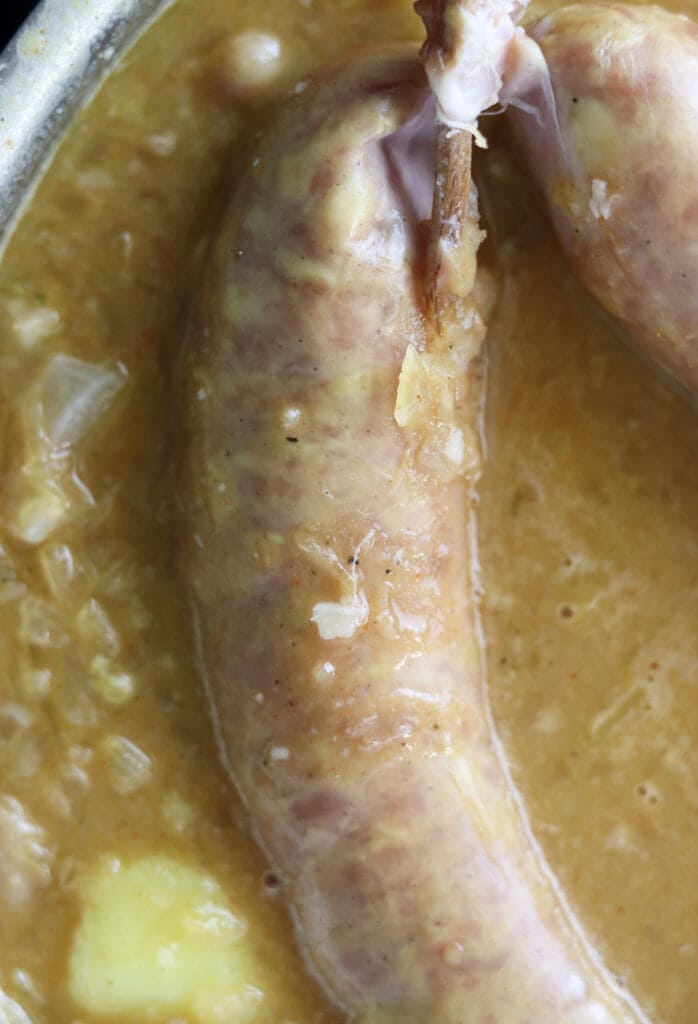
STEP 10: Once the jota is cooked, taste and adjust the salt if needed, then sprinkle with a little ground black pepper. Cover the pot and let the soup rest for at least 15 minutes before serving.
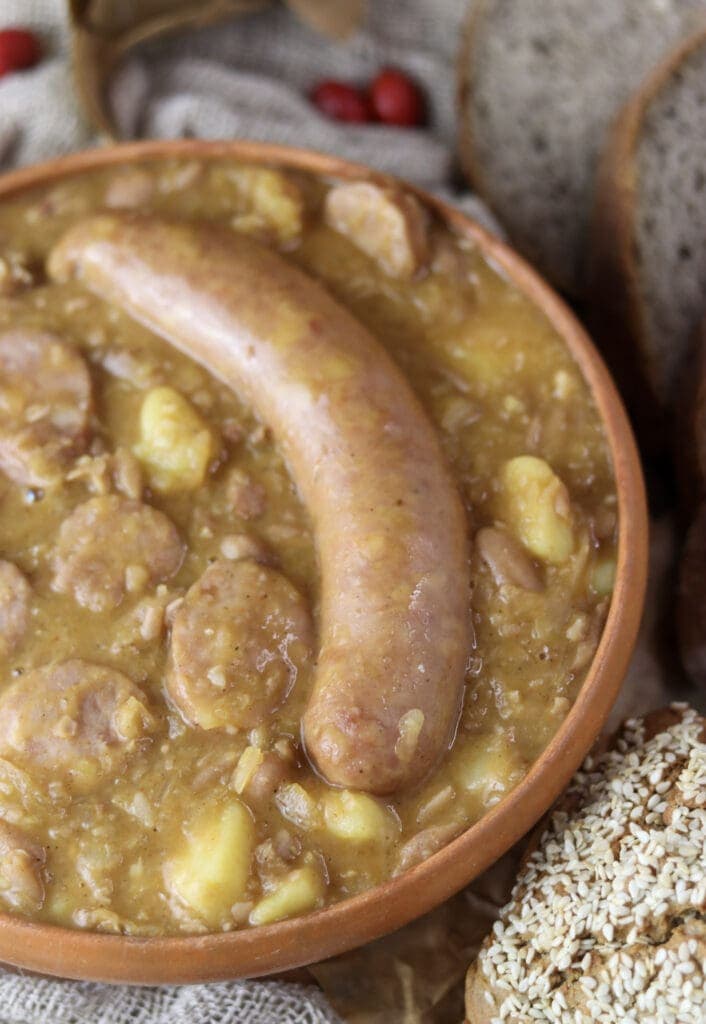
You can remove the sausages and slice them for easier serving, or leave them whole – one generous sausage half per bowl is never a mistake, especially when served with a piece of delicious, fresh homemade buckwheat soda bread.
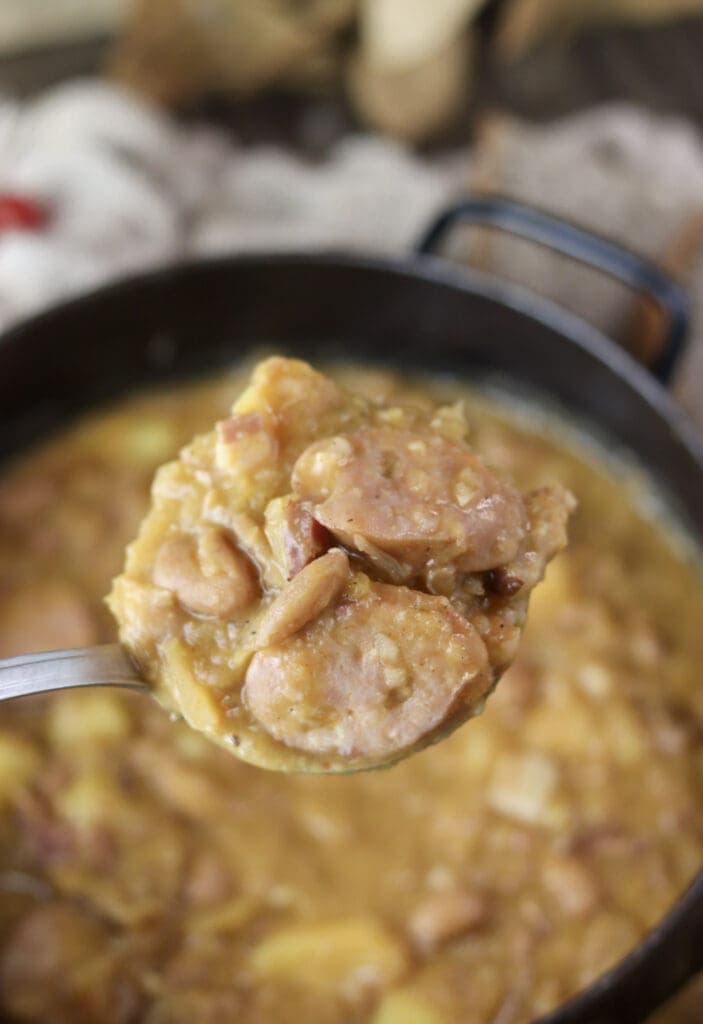
Tips to make the best jota soup
Use canned beans if you’re short on time. Jota won’t have the same depth or creamy texture as it does with dried beans, but it’s still an incredibly tasty soup when you don’t have time to soak beans overnight.
Avoid salt while the beans are cooking. Let them soften first, then season later. This helps them cook evenly and prevents the skins from toughening.
Don’t skip bay leaves. They’re not just there for aroma. When cooked with beans and sauerkraut, bay leaves help reduce bloating, that overly full feeling, and yes… farting, too.
Choose good smoked meat. Homemade is always best! Sausages, smoked pork neck, ribs or nuckle work great. You can mix different smoked cuts together. Just keep the cooking times in mind: Carniolan sausages need only about 12 minutes of boiling, while larger smoked cuts need much longer.
Cook the ingredients separately. Beans, potatoes, and sauerkraut all behave differently. Cooking them separately gives you better texture, especially since potatoes don’t soften well in acidic sauerkraut. Once combined, give them enough time to fully fuse together.
Serve warm in winter and cold in summer. Jota soup is usually cooked in winter when sauerkraut is at its best, but it can also be served cold in summer as a surprisingly refreshing, hearty (and healthy) dish – a real blessing for your gut.
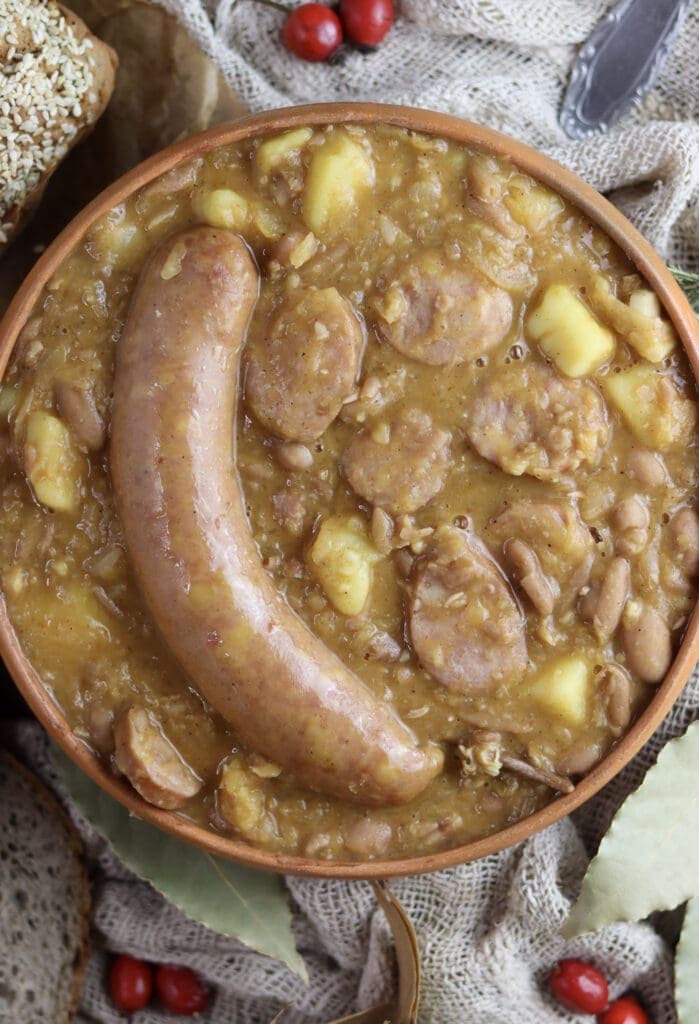
Storage and leftovers
Jota really does taste better and better with each new reheating. The most amazing jota I’ve tried was one sitting in the fridge for over two days.
Although potatoes and sauerkraut don’t freeze well, the soup will last up to 3 days when refrigerated in a covered pot or a sealed container.
One of the best ways to preserve jota soup is by canning it. Start by washing large jars and their lids, leaving them slightly wet. Place the jars in an oven preheated to 275°F (100°C) and let them heat for about 10 minutes to sterilize. Carefully fill the hot jars to the top with the soup, seal them tightly, then turn them upside down. Cover the jars with a thick blanket and let them cool slowly – this gentle cooling helps create a proper seal.
Stored this way, jota can keep for up to six months if kept in a cool and dark place. It’s a wonderful, nourishing meal to have ready for busy days, when you want something homemade and healthy without having to cook from scratch.
Questions you might ask
Yes, jota can also be made with fresh cabbage or fresh turnip, but the soup won’t have the same tangy depth as when it’s made with sauerkraut or sour turnip. There’s a variation of jota with fresh cabbage from the Slovenian Karst region known as jota pr’silenka.
Sauerkraut soup originates in Central and Eastern Europe, where fermenting cabbage was a practical way to preserve vegetables for winter. It’s traditionally cooked across the Alpine and northern Adriatic regions, Austria, southern Germany, Hungary, Slovakia, Poland, parts of the Czech Republic, and the Balkans. Each region has its own version, ranging from thick, stew-like soups to lighter brothy ones, made with beans, potatoes, root vegetables, smoked meats, or sometimes prepared completely meatless.
Sauerkraut doesn’t freeze well because freezing breaks down its cell walls. When thawed, it releases excess liquid and becomes soft and mushy, it looses it’s texture and much of the flavor.
More soup recipes
- Ricet – Slovenian barley soup
- Creamy porcini mushroom soup
- Black trumpet soup with pears and potatoes
- Chicken of the woods minestra soup

Jota Soup With Sauerkraut and Sausage
EQUIPMENT
- 3 cooking pots
INGREDIENTS
- 500 g sauerkraut
- 450 g potatoes
- 300 g dry beans
- 2 smoked sausages
- 100 g smoked bacon
- 1 onion
- 4 cloves garlic
- 60 ml olive oil
- 3 tsp smoked paprika
- 2 tsp salt
- 1 tsp black pepper whole
- 1 tsp ground black pepper
- 3 bay leaves
INSTRUCTIONS
- Rinse the dried beans and soak them overnight in plenty of water (about three times their volume). Soak for at least 10 hours, up to 24h. Discard any beans that float and add more water if needed.
- On the day of cooking jota soup, drain and rinse the beans again, then transfer them to a pot and cover with fresh cold water. Add two or three bay leaves and simmer gently for about 45 minutes. Don’t salt yet – beans soften better without salt. A little olive oil can be added if you like.
- Cook the potatoes separately. Boil the diced potatoes in lightly salted water for about 25 minutes, until they become tender. This prevents them from staying firm later when combined with sauerkraut.
- Place the sauerkraut in another pot with whole black pepper and one bay leaf. Cover with cold water. If using smoked ribs or other large smoked cuts, add them here. Bring to a boil and cook on medium heat for about 45 minutes.
- While everything cooks, finely chop the onion and garlic and cut the smoked bacon into small pieces. Once the beans, potatoes, and sauerkraut are ready, drain them — but save the cooking liquids from the beans and sauerkraut.
- Scoop out a small portion of the beans and about half a cup of potatoes. Mash them together until smooth. This will naturally thicken the jota soup without flour.
- Heat olive oil in a large pot. Add the sliced onion and stir fry gently until soft and lightly golden. Stir in the bacon and cook briefly until fragrant.
- Add the garlic and smoked paprika. Next, add the beans, potatoes, sauerkraut, bay leaves, and sausages. Pour in some of the reserved cooking liquids and add more water if needed to cover everything.
- Thoroughly in the mashed bean–potato mixture. After adding the sausages, bring the soup to a gentle boil, then lower the heat, cover, and simmer in a covered pot for 12–15 minutes until the flavors come together.
- Taste and adjust seasoning with salt and ground black pepper. Let the soup rest, covered, for at least 15 minutes before serving. Slice the sausages if you wish before serving, or serve them whole. Serve with homemade bread.
NOTES
NUTRITION
Featured at Homemade On a Weeknight.
If you made this jota soup, let us know! Drop a comment below – we’d love to hear how yours turned out!
And hey, please do hit that share button and spread a little sauerkraut love. ❤️
I was just thinking yesterday that I had not seen a recipe from you in some time! This one is stunning, and I love the top about bay leaves.
Thanks Melynda 🙂 Yes, we had some health issues so I’ll have to make it up in the following months. Hope you’ll enjoy the soup!
Never before heard of Jota Soup. Will bookmark for later.
Visiting via Pam’s Party & Practical Tips: It’s Time to Dare to Share!
Hey Esme, thank you for stopping by! I hope you love sauerkraut, nothing beats soup this on a cozy winter day.
This soup is great! I made it with canned beans and I loved it!
I’m super happy to hear that Milo! I bet you’ll love it even more tomorrow after it sits a while.
I’m always looking for new recipes! Great instructions as well. Glad to see you’re back with your wonderful recipes. Wishing you a healthy and beautiful year.
Hi Stephanie, I’m so glad to see you stopping by! I hope you’ll try out our new recipes! Wishing you a wonderful new year too 🙂
Such a great soup recipe! Thank you for linking up on the #HomeMattersParty last week. I hope to see you again next week, so you can check out your feature!