
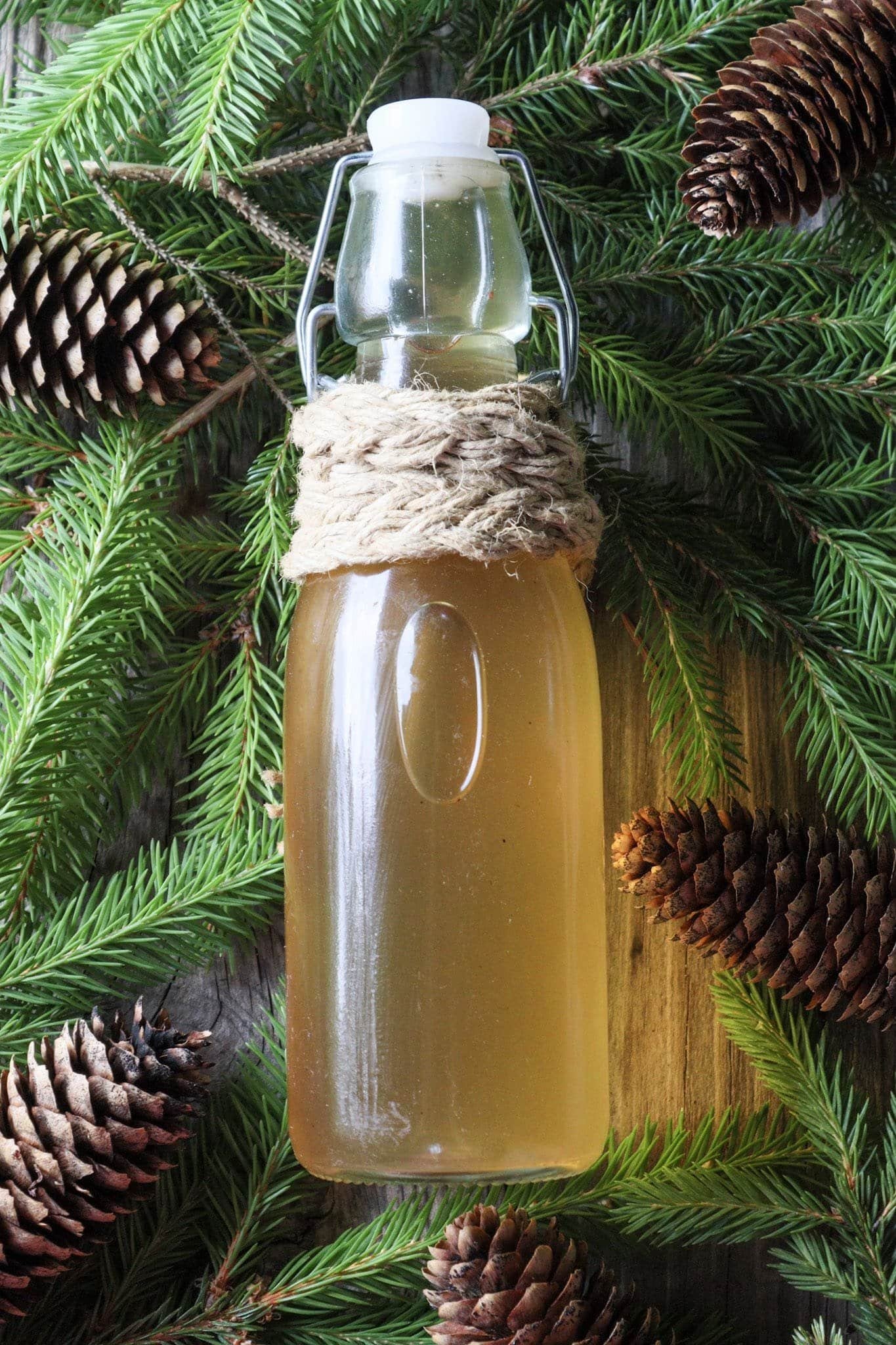
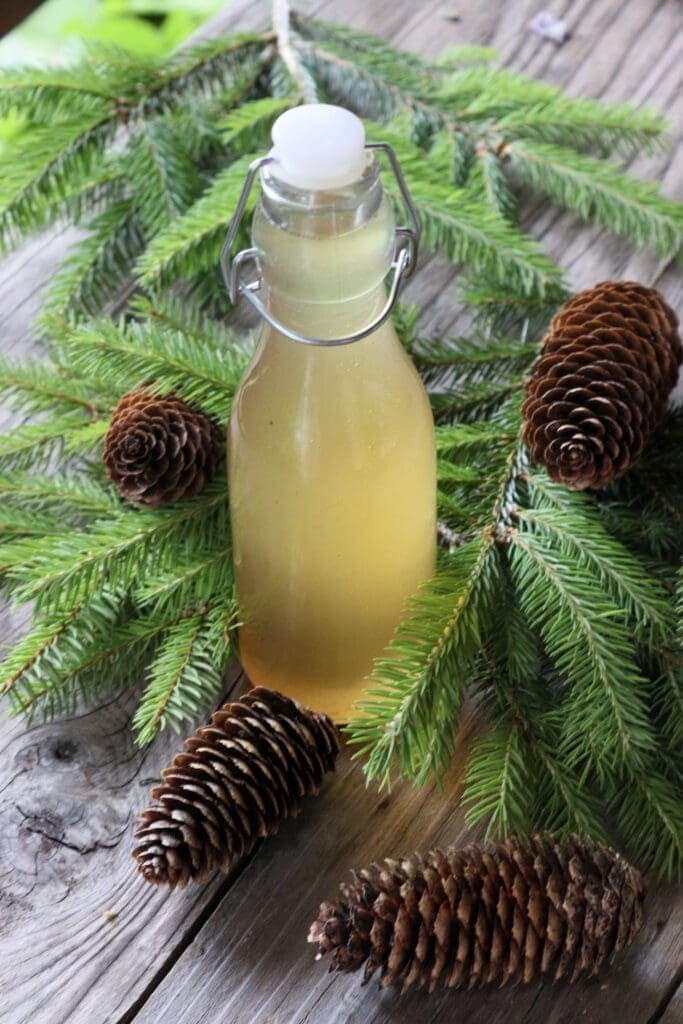
This is a homemade spruce tip syrup recipe made the traditional way. It’s very easy to make, keeps well for a long time, and works as a great natural cough reliever during winter.
Spruce tip syrup
Spruce tip syrup is a wonderful home remedy for soothing coughs. It helps clean and disinfect the respiratory tract and has a positive effect on the lungs. It also improves blood circulation in the mucous membranes, helping to strengthen, protect, and restore them.
Besides delicious spruce tip dishes like spruce tip cakes, spruce tip pesto and spruce tip ice cream, this syrup is a traditional must-have in our home pharmacy. All it really takes is fresh baby spruce tips in the springtime, sugar or honey and a few glass jars – old, reused ones work perfectly. It’s easy to store, and it keeps perfectly well till next spring.
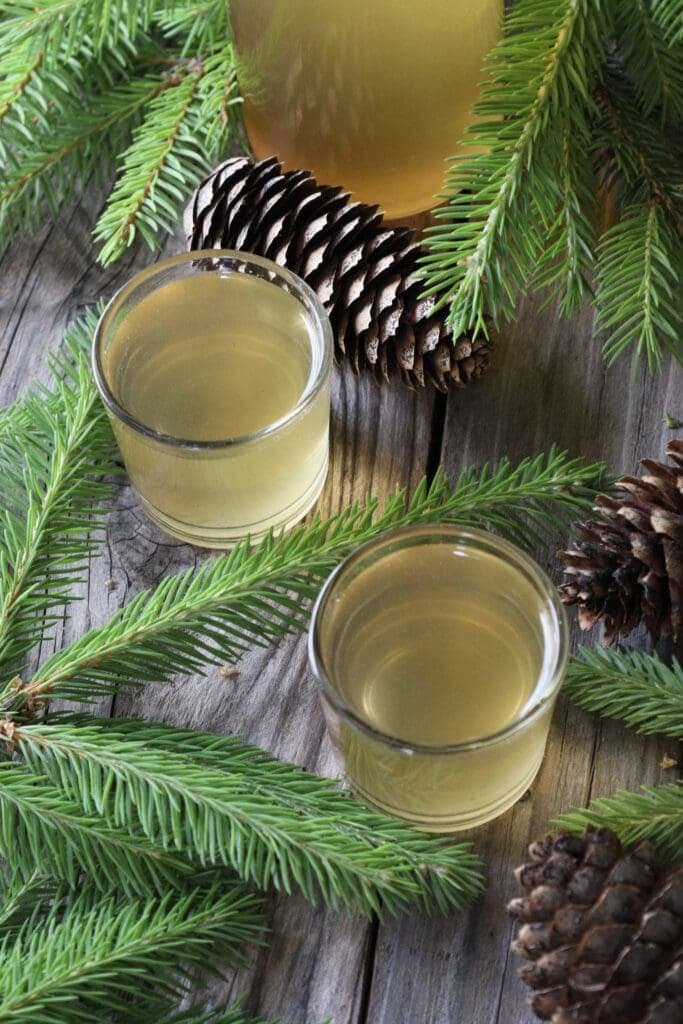
What are spruce tips?
Spruce tips are the fresh, early spring growth of spruce trees (Picea abies and other trees from the Picea genus in the pine family). Spruce trees grow throughout the Northern Hemisphere, especially in cooler, forested regions.
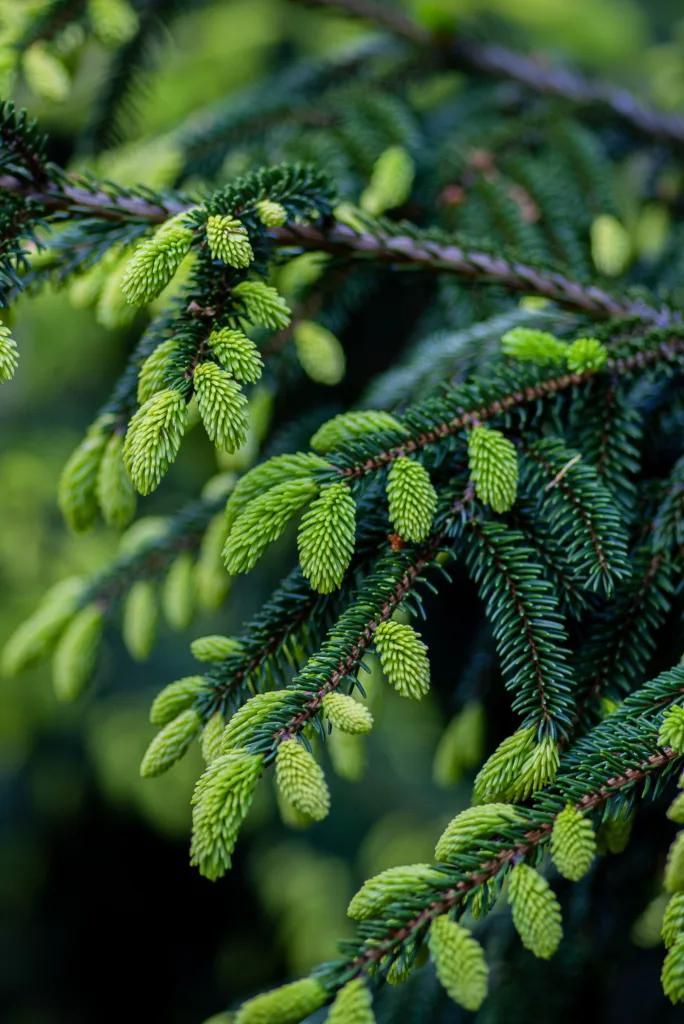
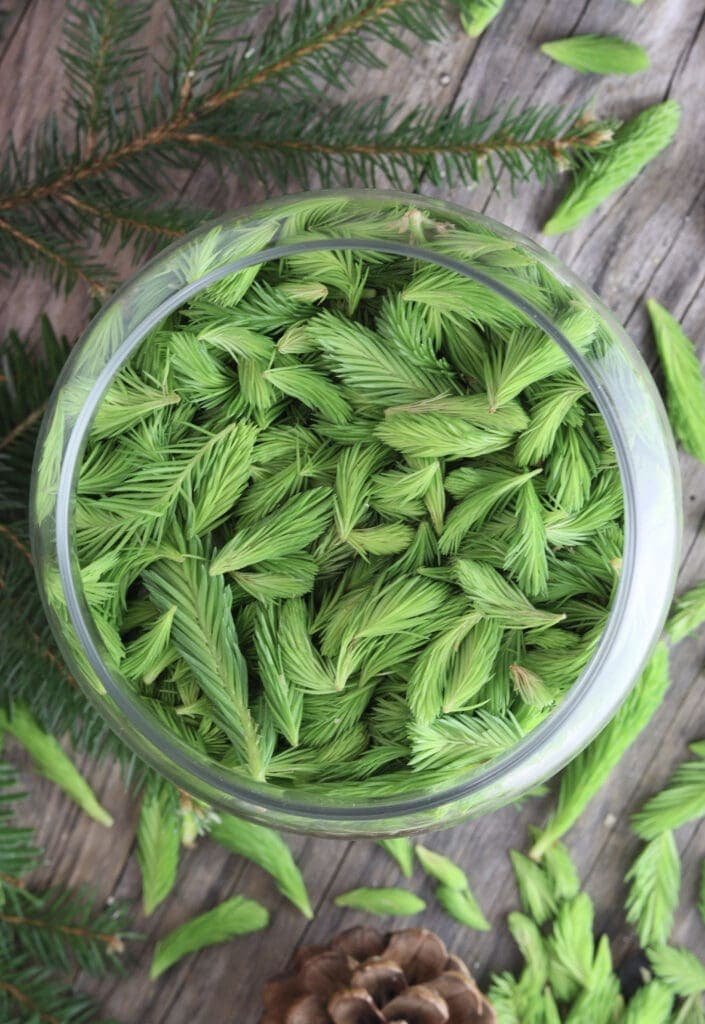
These young tips appear at the very ends of spruce branches. At first, they look like small buds wrapped in thin, papery sheaths. As they open, they grow into clusters of soft, bright green needles. Their color is the easiest way to recognize them – much lighter and fresher-looking than the older, darker needles behind them.
Spruce tips are tender and delicate when young, nothing like the sharp needles later in the season. Their flavor is fresh and complex, with a wonderful woodsy note and a mild, resinous, citrus-like finish. The older they get, the more resinous and bitter they taste.

Spruce tip uses
Fresh spruce tips can be eaten as is or used in all kinds of dishes – smoothies, soups, sauces, and more. Making spruce tip tea is simple, and turning them into spruce tip syrup with sugar or honey couldn’t be easier.
Spruce tip extract is often used as a filling for candies, and spruce tips are also harvested for making spruce tip gin. They show up in many recipes, but we definitely adore them most in spruce tip desserts.
Young spruce tips can be added to a hot bath. A spruce tip bath helps open the respiratory pathways, boosts blood circulation, supports wound healing, and gently cleanses the whole body. It’s simple, but incredibly comforting.
They are also an excellent natural source of vitamin C, acting as a strong antioxidant. Vitamin C supports the immune system and helps many essential body processes run smoothly. If you collect spruce tips in spring, you can freeze them and use them later in winter, when your body needs them most.
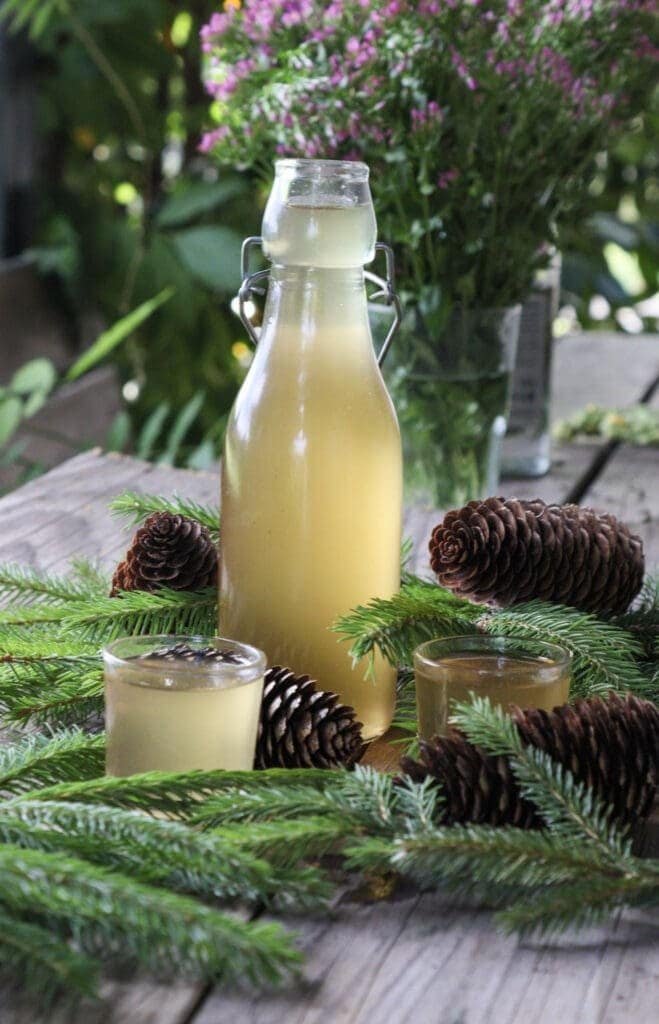
Spruce tip syrup uses and benefits
Spruce tip syrup is an excellent remedy for relieving coughs and treating colds.
It helps calm irritation, gently disinfects the respiratory tract, and supports healthy mucus flow. By improving circulation in the mucous membranes, it can soothe an inflamed throat, ease hoarseness, and make coughing more productive and effective.
Spruce syrup is especially helpful when the respiratory tract feels dry and irritated. It helps restore and protect the mucous membranes, making breathing feel easier and more comfortable. Spruce tip syrup is also traditionally valued for its ability to limit the growth of unwanted microorganisms and help the body better resist infections.
Spruce tips are naturally rich in vitamin C, which plays an important role in immune support. Vitamin C helps strengthen resistance, supports overall vitality, purifies the blood, and fights fatigue – something we all appreciate during the colder months.
In addition to vitamin C, spruce tips contain carotenoids, compounds linked to melanin, which is present in the hair, skin, and eyes and helps protect tissues from damage. They also provide minerals such as potassium and magnesium, both of which are important for healthy metabolic processes, especially in the liver. Chlorophyll, another compound found in spruce tips, is traditionally associated with supporting wound healing and energy boosting.
How to harvest spruce tips for the syrup
You’ll find young spruce tips in the Northern Hemisphere from early to mid-spring. Later in the season, older shoots become richer in resin, which makes them tougher and much less pleasant to eat. The best ones are the soft, young baby buds, just as the new clusters of needles are forming.
They’re easy to spot. Look for fresh, bright green tips at the very ends of spruce branches – their color is much lighter than the older needles behind them. Harvesting is simple, too. In most cases, you can gently pluck them off with your fingers.
That said, it’s important to harvest responsibly. Once a spruce tip is removed, that branch won’t grow a new one. For this reason, it’s best to collect tips from mature trees. Taking too many from the top of a young spruce can slow the future growth for the entire following year.
Never strip all the tips from a single tree. Instead, take a small amount from several healthy trees. This way, you don’t harm the tree, and it can continue growing normally. It’s also a good idea to pick tips from the shadier parts of the tree or from the undersides of the branches.
When foraging, always choose healthy trees. Pick tips that are soft, bright green, and easy to remove. Avoid trees growing close to roads or heavy traffic, and if possible, harvest well away from polluted or dusty areas.
Fresh growing tips lose their quality quickly, so it’s best to use them soon after picking. If needed, you can also dry or freeze them for later use in teas, syrups, drinks, or cooking.
What you’ll need to make spruce tip syrup
SPRUCE TIPS – Use freshly picked spruce tips whenever possible. The fresher they are, the better the flavor and quality of the syrup.
SUGAR – Brown sugar works even better than white sugar and produces a better flavor. For a more natural (and pricier) option, you can make spruce tip syrup with honey. If you follow a keto or low-carb diet, erythritol is another option. Use a 1:1 ratio of spruce tips to sugar.
Equipment needed
– glass jars
– glass bottles or jars for storing
– strainer
– gauze
How to make spruce tip syrup the traditional way
STEP 1: Fill the jars by layering freshly picked spruce tips with sugar (or your chosen substitute) until the jars are full. After each layer, gently press everything down with a spoon or small tamper. Try to pack the jars as tightly as possible so there’s as little air inside as possible.
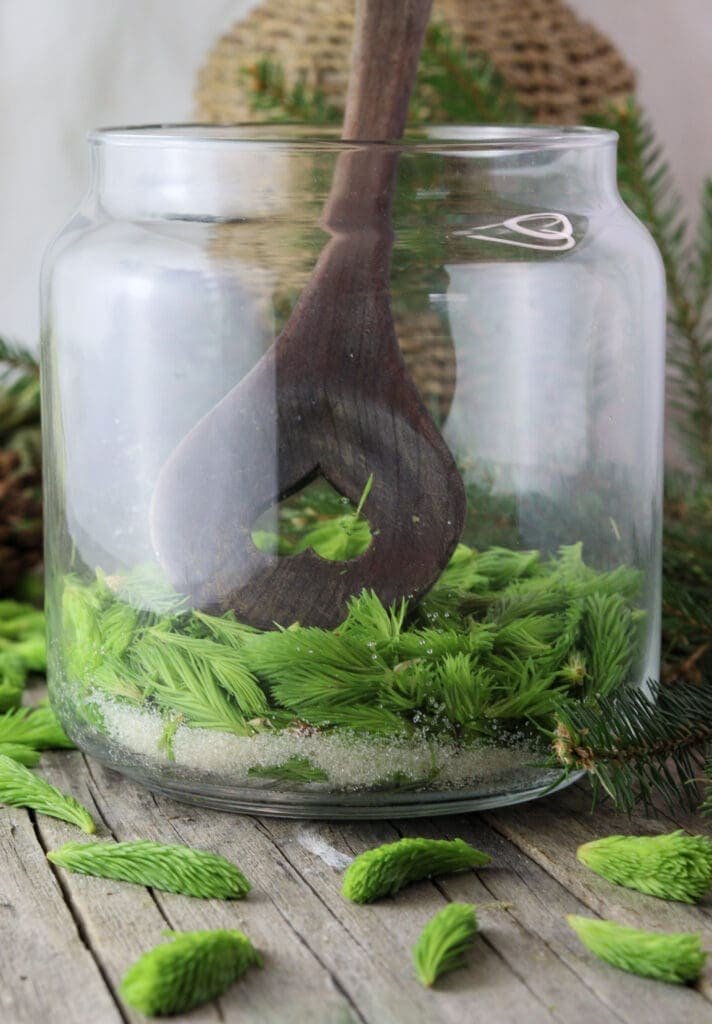
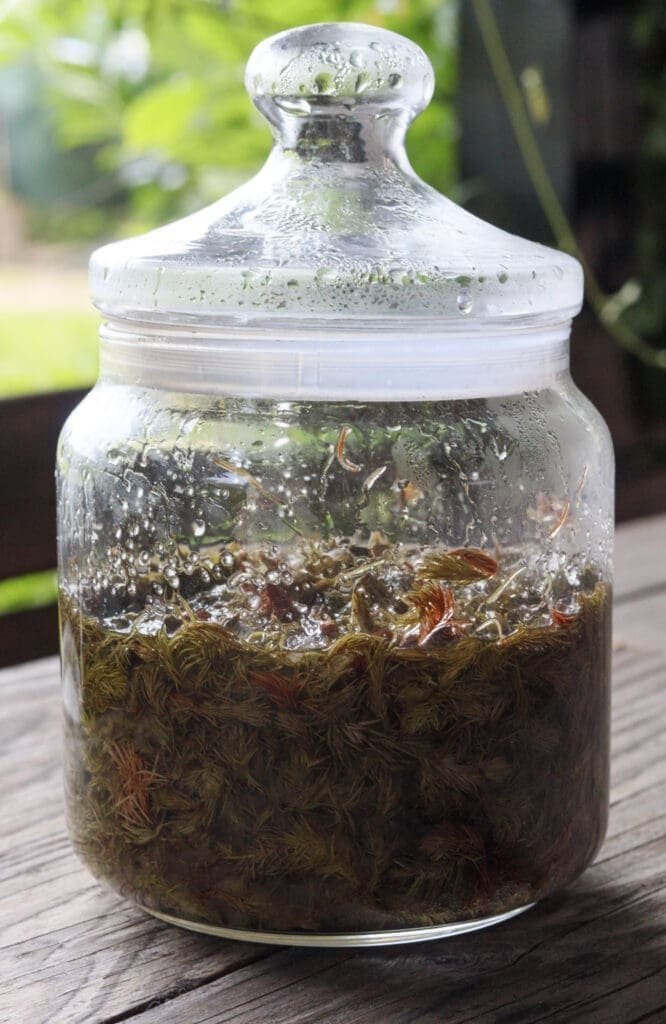
Once the jars are placed in the sun, the sugar will slowly melt and draw the liquid out of the spruce tips. As this happens, the contents will settle, so the jars won’t stay as full as they were at the start – that’s completely normal.
Seal the jars tightly with their lids.
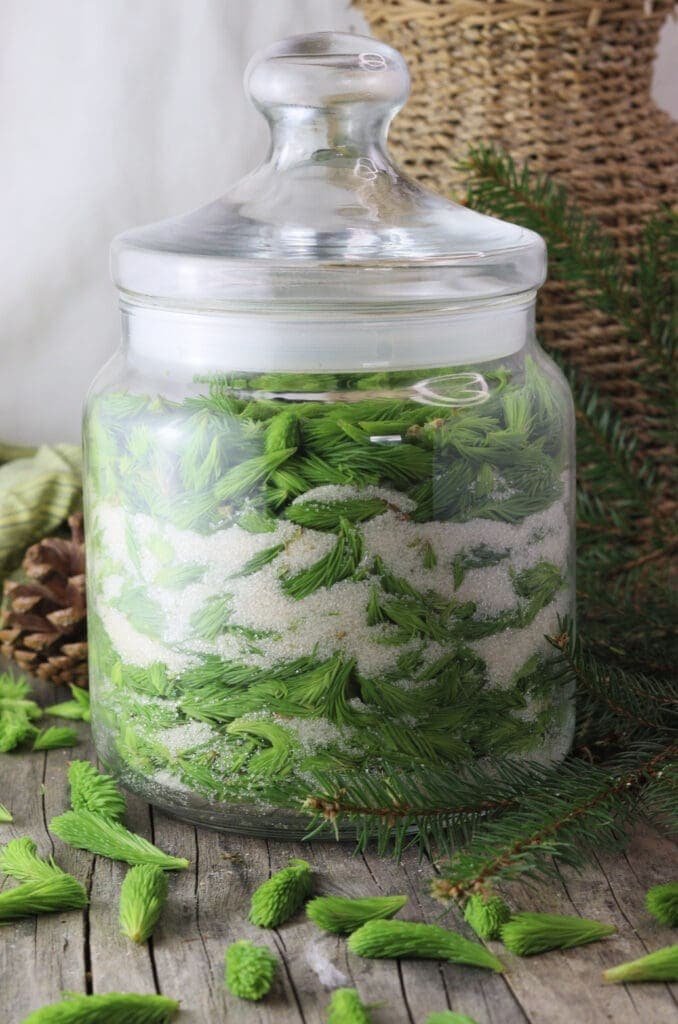
STEP 2: Find a sunny spot around the house where the jars will get plenty of sunlight. I used to leave mine right on the edge of the roof. Keep the jars in the sun for about 40 days, making sure they’re tightly sealed and clean.
Any sugar left on the outside will quickly turn the jars into a picnic spot for ants and wasps, so wipe them well before setting them out in the sun.
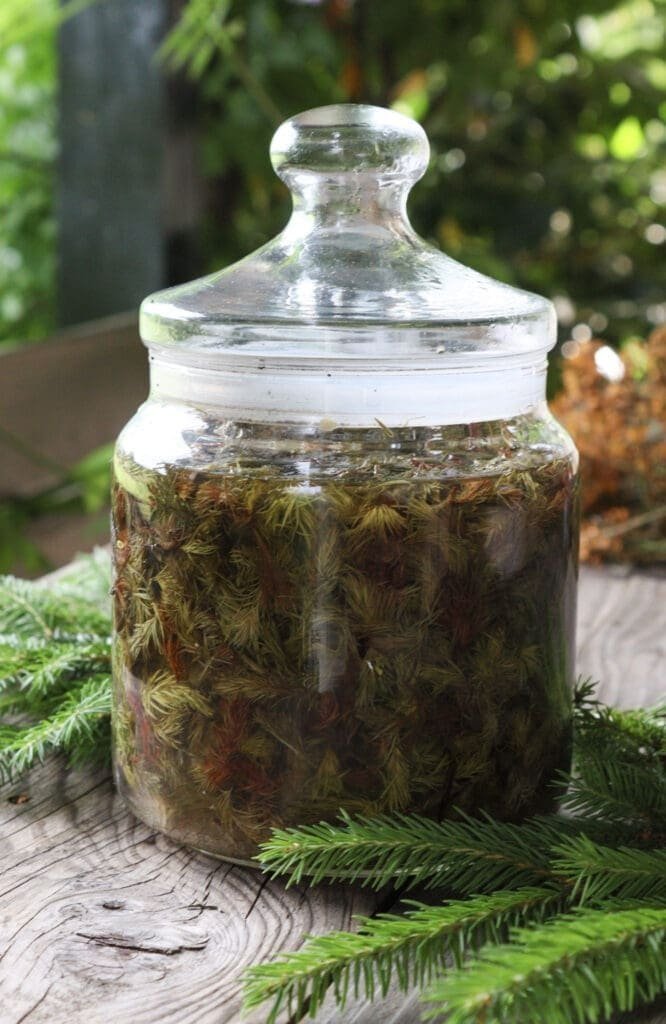
STEP 3: Once the sugar starts to melt, turn the jars every two or three days so the spruce tips stay fully covered by the dissolved sugar. Don’t worry if you see a lot of moisture in the jar; there’s nothing wrong with that.
STEP 4: After 40 days, open the jars and strain the syrup through a fine strainer or, even better, a clean piece of gauze. Compost the used spruce tips.

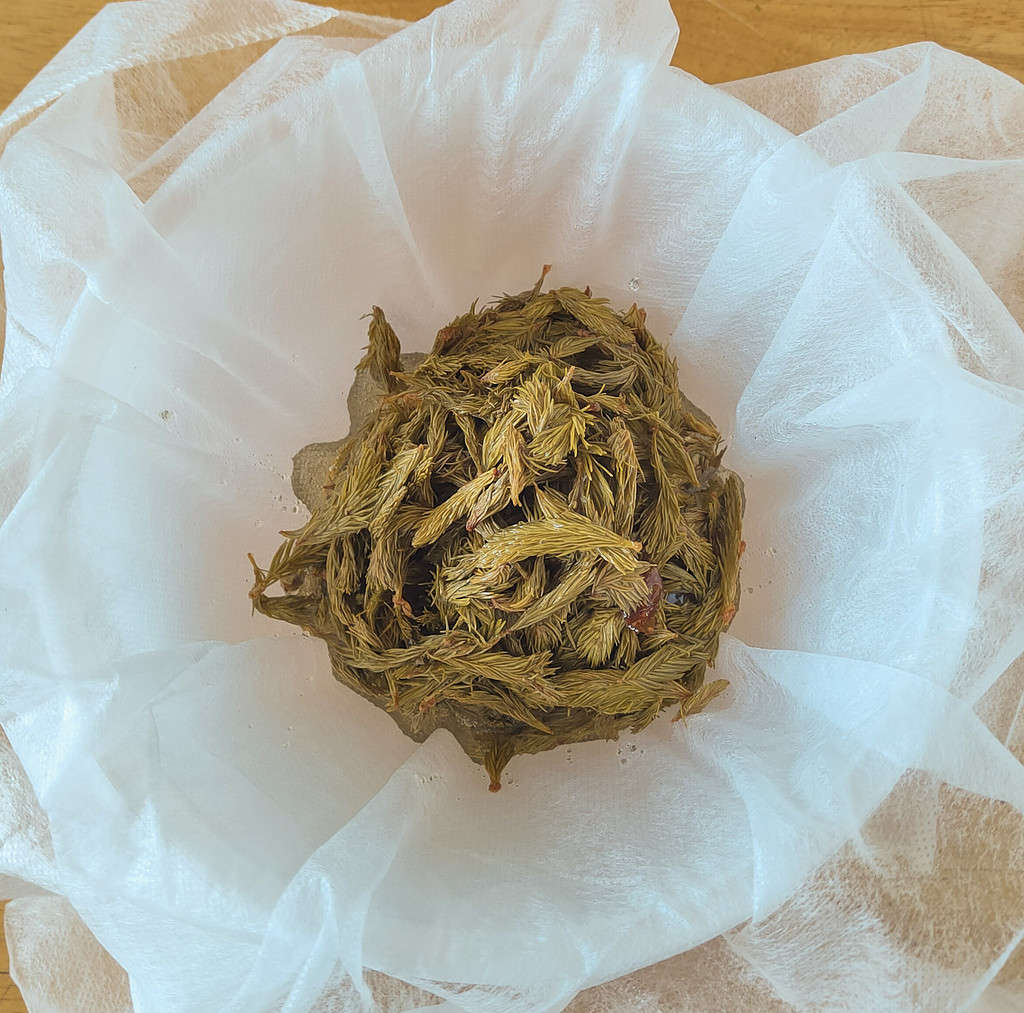
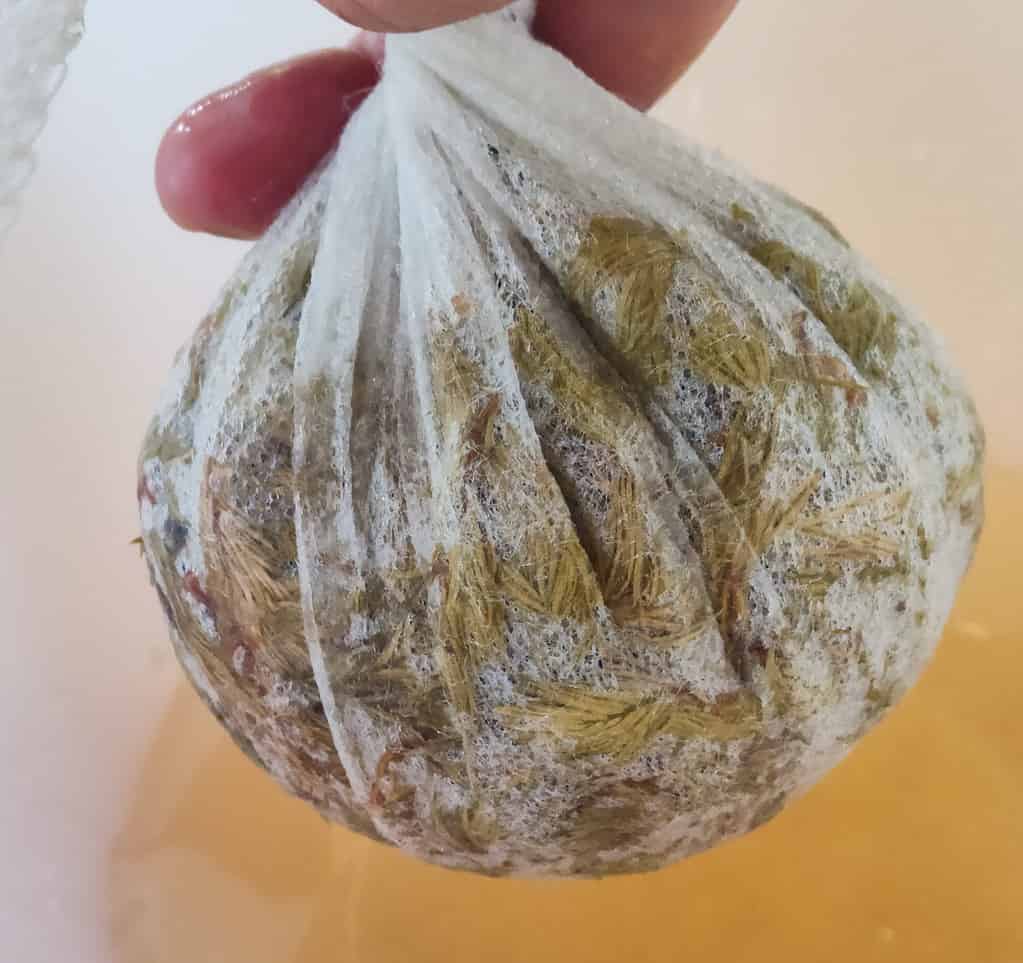
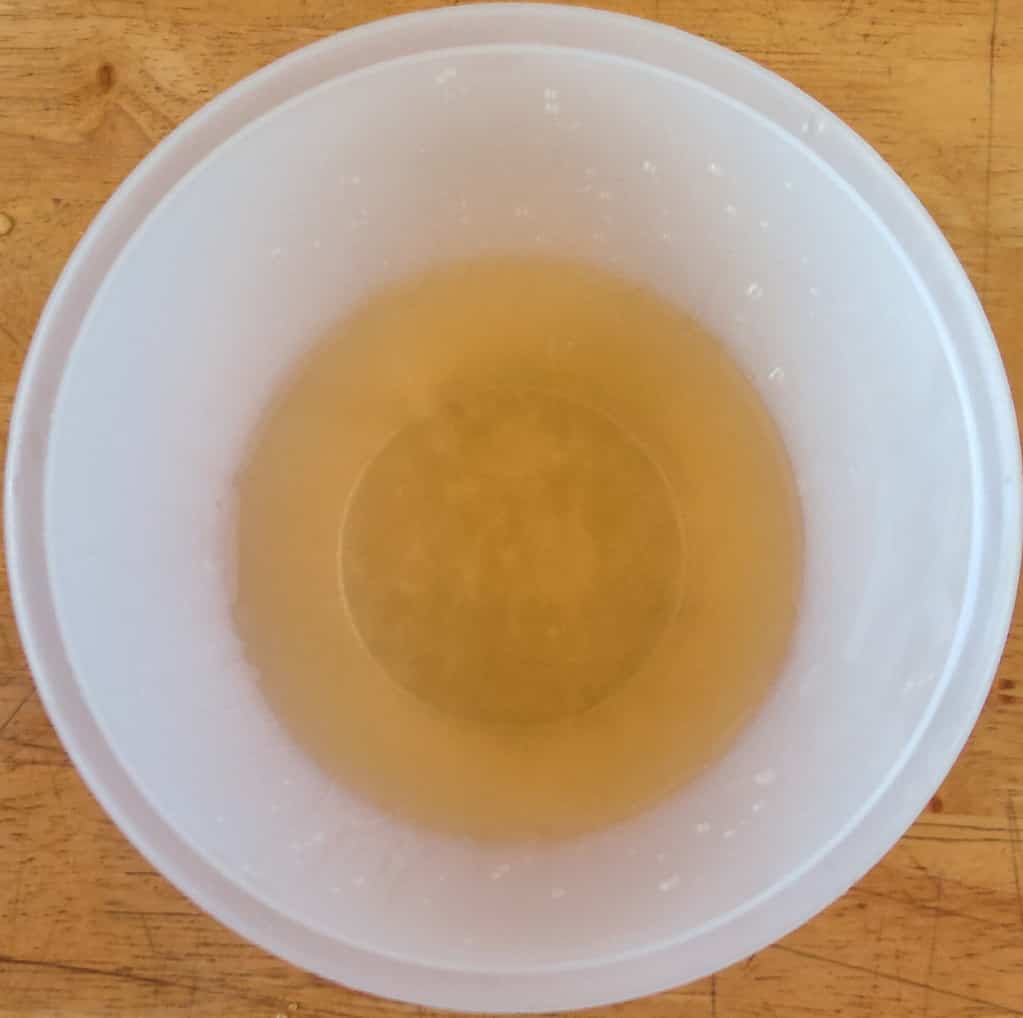
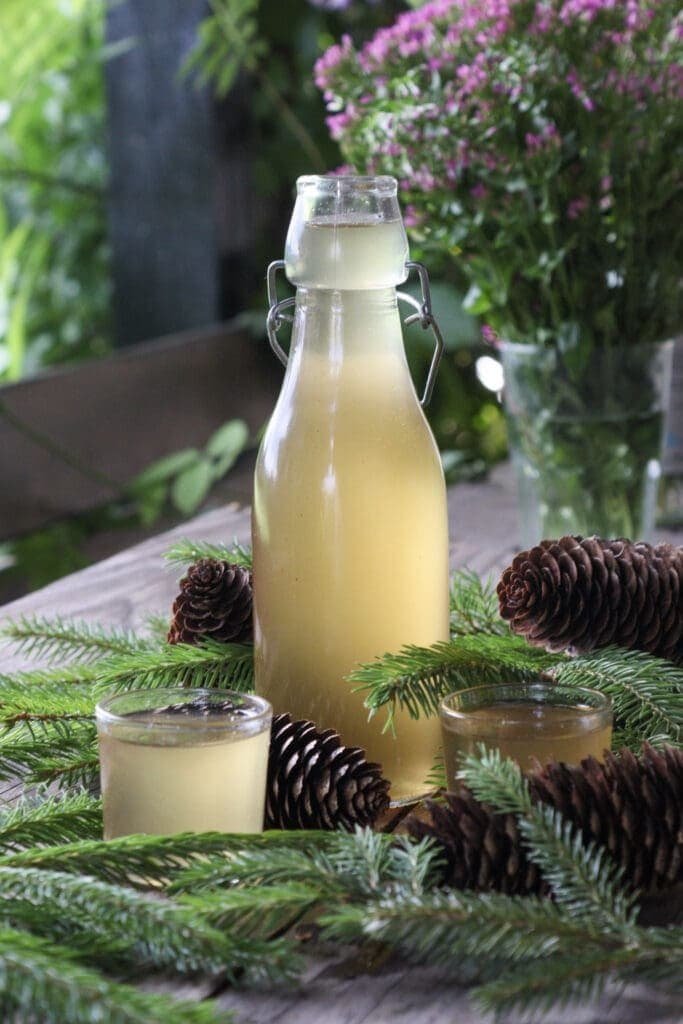
STEP 5: Pour the syrup into clean bottles or smaller jars and store it in a cool, dark place. It’s thick enough that you don’t need to keep it in the fridge.
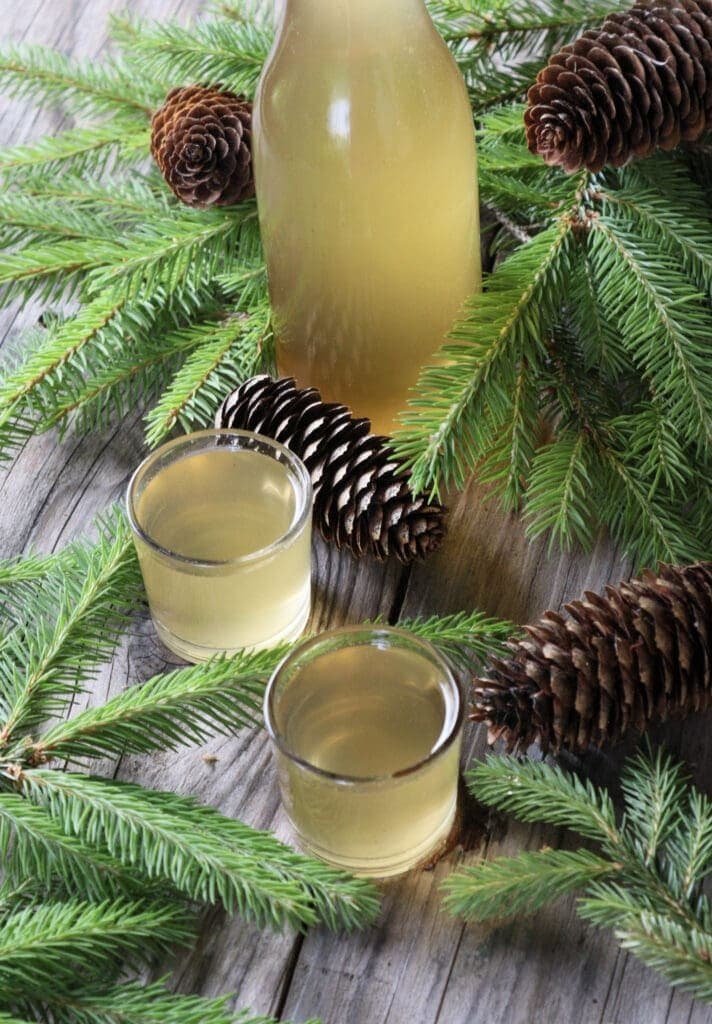
STEP 6: Use it on its own as a cough syrup or stir it into tea. If you enjoy the flavor, you can also dilute it with water to make a refreshing drink, combine it with lemon to make a woodsy lemonade, use it as a natural sweetener, mix it into a yummy coctail or drizzle it over pancakes and other desserts. It works for salads, too!
Tips to remember
Avoid harvesting spruce tips near busy roads or in polluted areas. Higher elevations are usually a safer and cleaner choice. Pick them while they’re young, bright green and tender.
Once harvested, use them as soon as possible. For best results, place them in jars with sugar right after picking.
Always make sure the spruce tips stay fully covered with syrup. If you notice there isn’t enough liquid forming, add a bit more sugar as needed. Turn the jars or gently stir the contents with a spoon every few days to keep the tips coated.
Spruce tips slowly lose their beneficial properties over time, especially after a year, so it’s best to harvest fresh tips each spring for the season ahead.
Spruce tip syrup FAQs
Spruce tip syrup can last up to 2 years when stored in bottles or jars in a dark, cool place; however, for the best quality, make a fresh batch of spruce tip syrup every spring for the following winter.
Do not worry; no part of the spruce tree is poisonous. However, if your spruce tip syrup contains visible pieces, strain it again using a clean gauze folded in two layers.
Yes, within a few days in the sun, the sugar will draw out liquid from the spruce tips, triggering natural fermentation. However, because of the high sugar content, it doesn’t taste sour at all.
The recommended amount of spruce tip syrup is no more than 30 ml daily, taken three times a day, with one tablespoon at each dose. If the syrup is made with sugar or honey, please be extra mindful if offering it to people with diabetes and/or other health issues.
If you’re not making your own, the pharmacy store is your best bet.
Yes, if you like the taste, you can eat the sugary spruce tips left over from making the syrup. You can use them for other spruce tip recipes.
Spruce tip recipes
More herbs
Spruce Tip Syrup
EQUIPMENT
- glass jars
- glass bottles
- strainer or gauze
INSTRUCTIONS
- Start with clean glass jars. Add a layer of fresh spruce tips, then cover them with sugar (or your preferred alternative). Press everything down firmly with a spoon before adding the next layer. Keep repeating until the jar is filled to the top, packing it as snugly as you can so very little air remains inside.
- Once the jars are set in the sun, the sugar will slowly dissolve and pull moisture from the spruce tips. As this happens, the contents will sink down – this is expected and nothing to worry about. Close the jars tightly with lids.
- Place the jars in a bright, sunny spot where they’ll get plenty of light throughout the day. Anywhere around the house works, as long as the sun reaches them. Leave the jars there for about 40 days.
- As the sugar liquefies, gently turn the jars upside down every two to three days. This helps keep the spruce tips fully submerged in the syrup as it forms.
- After 40 days, open the jars and strain the syrup. A fine sieve works, but clean gauze gives the best result. Let the syrup drip through slowly, then discard or compost the softened spruce tips.
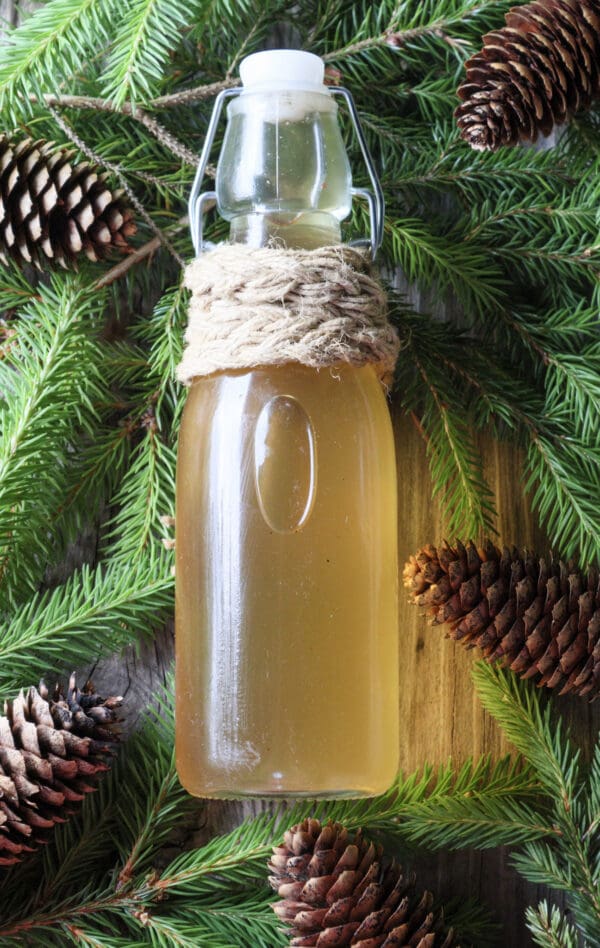
- Transfer the finished syrup into clean bottles or smaller jars. Store it somewhere cool and dark. The syrup is thick enough that refrigeration isn’t necessary.
Thanks for sharing at Funtastic Friday. I have never heard of this before and was fascinated by the use and the simplicity. Pinned
Thank you Michele, this syrup is so easy to make, and it’s much better than the cooked one. I hope it will motivate you to pick up some spruce tips when they start growing 🙂
Amazing and very interesting, never heard of this before. Will have to have a look to see if I can find it in our area.
I visited you via Memorial Day Craftastic Monday Link Party
If not already part of SSPS, and are interested, find my entries: 34+35
You will find the linkup information (1) In the Top bar under Blogging: Weekly Senior Salon Pit Stop OR 2nd image In the sidebar
We hope to meet you there virtually.
Thank you Esme!
I wish there were a sugar-free option for this syrup recipe to cater to those with diabetes (my daughter and I both have type one diabetes.) Saved on my Pinterest board! 🙂
You’re right Eugene, that’s exactly what I was thinking many times too… next spring we’ll definitely try to find a way to make it without sugar.
What about doing a tincture in apple cider vinegar?
Sure Rachel, that’s another great idea too. Going right on the list for next year’s spruce tip harvest 🙂