
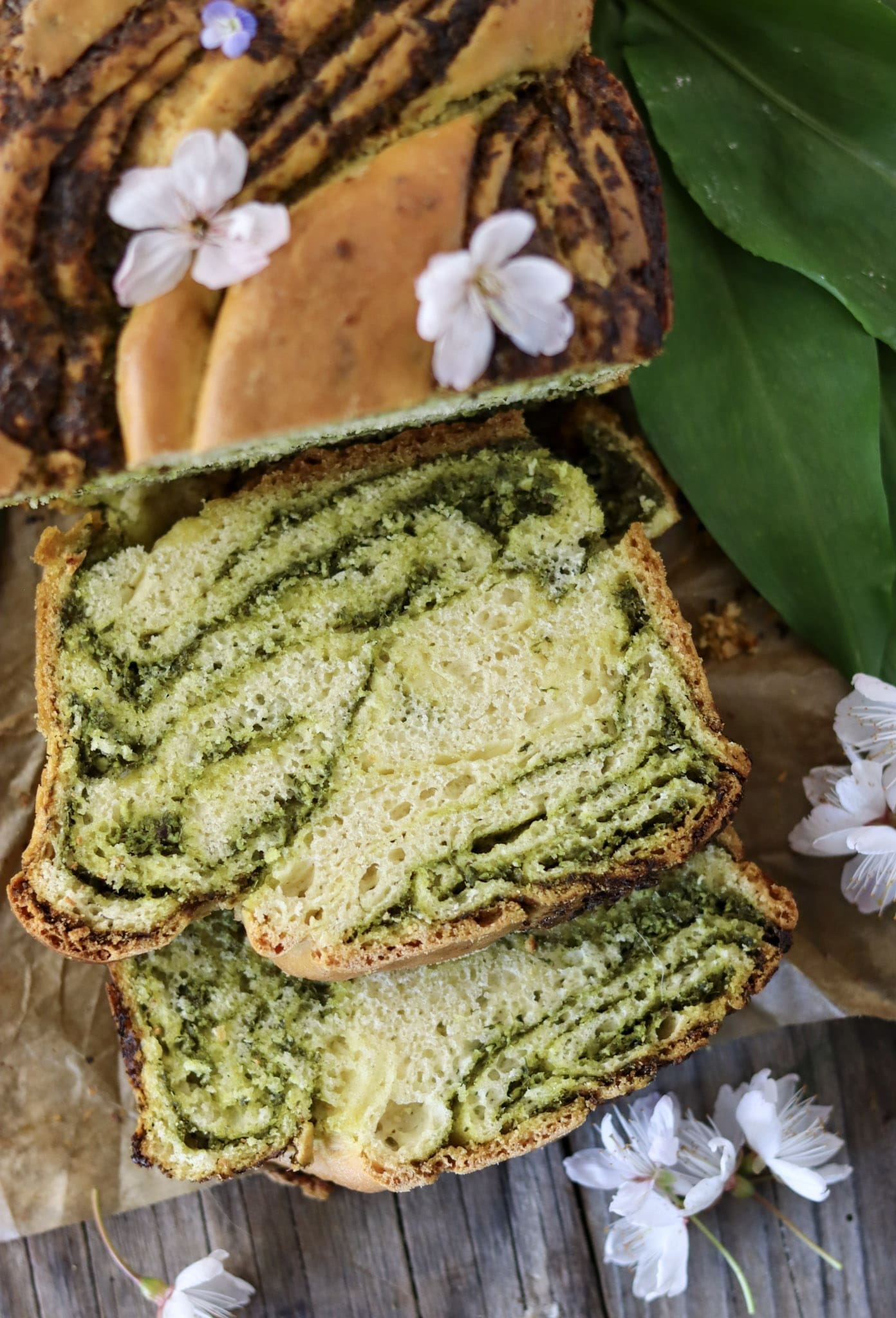
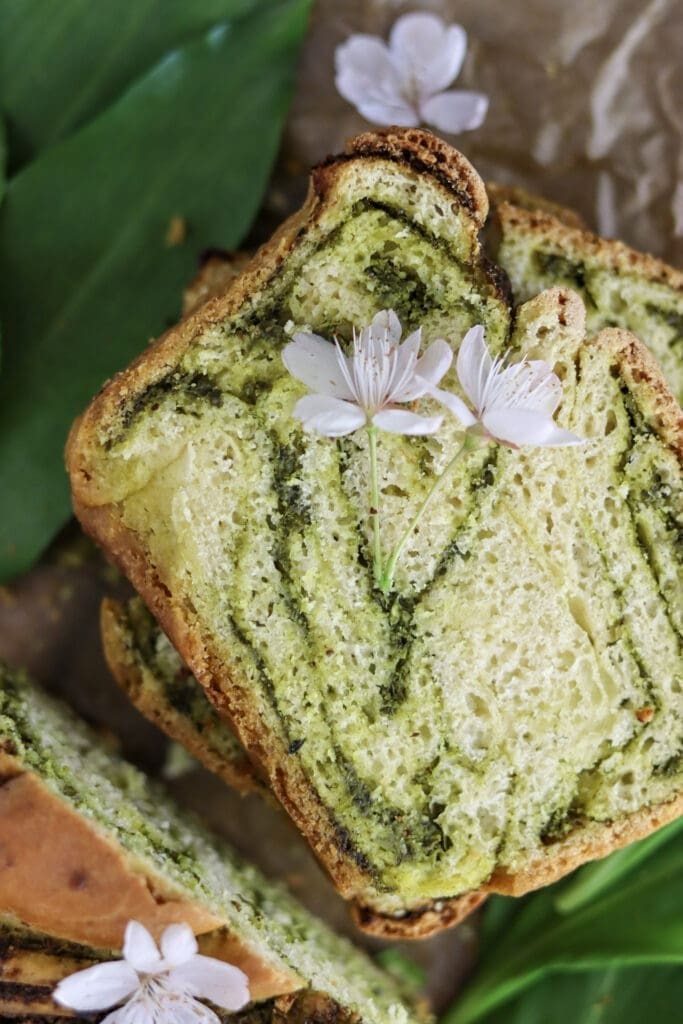
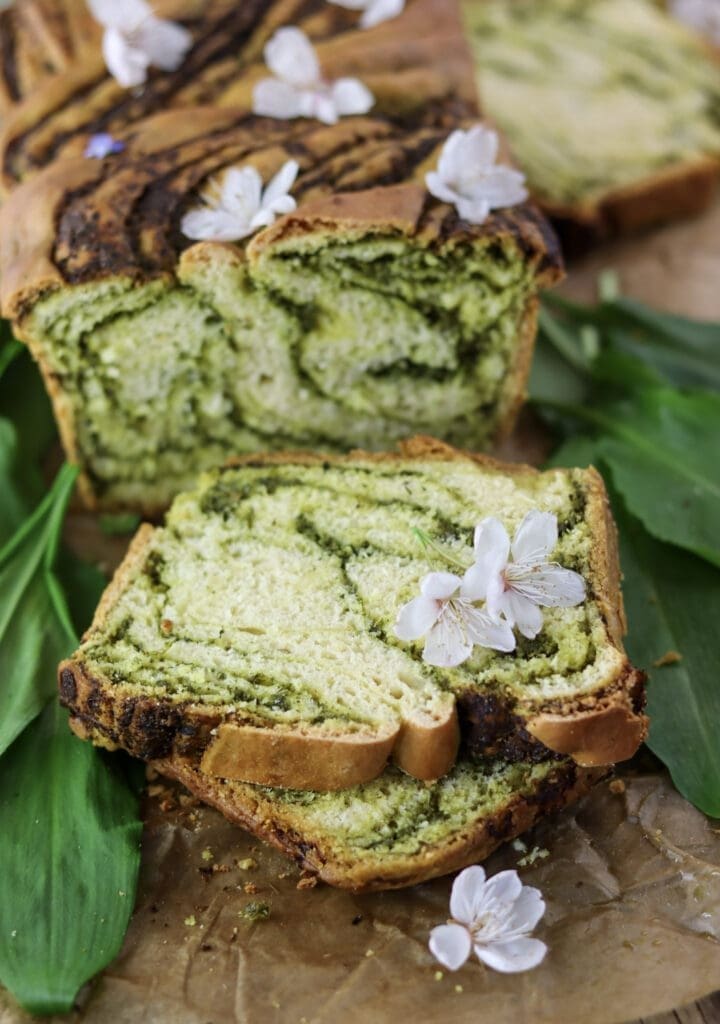
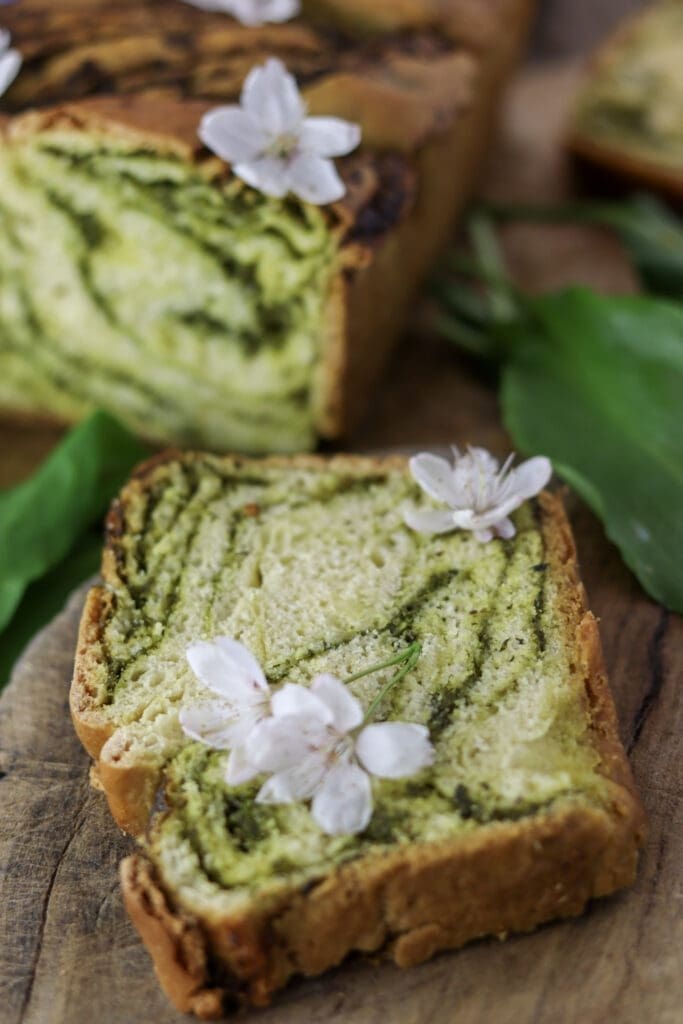
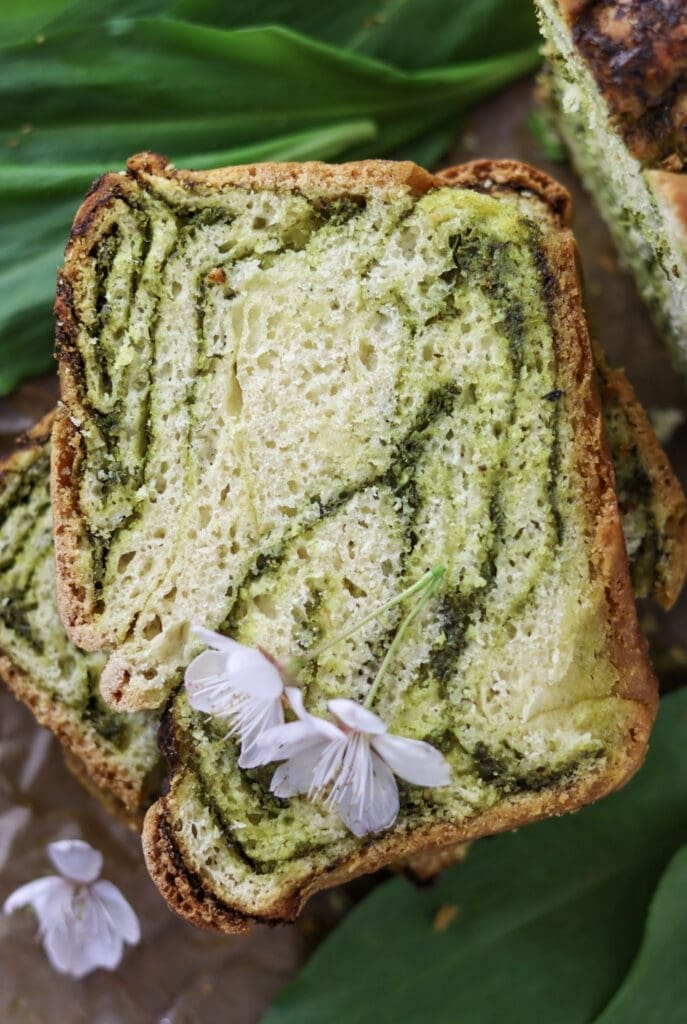
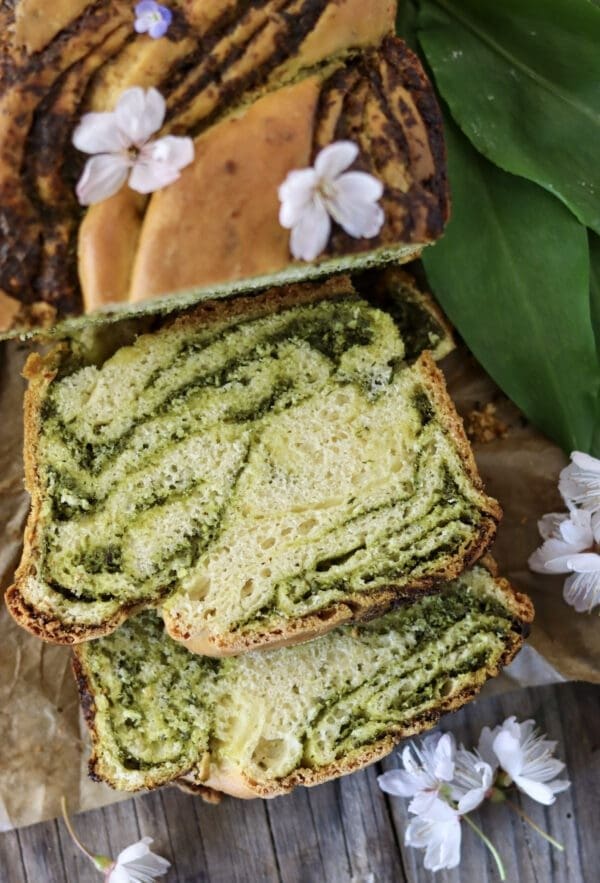
A beautiful wild garlic bread baked in a babka style, with soft, fluffy spelt dough and ribbons of vibrant green wild garlic pesto running between the layers. Rich, buttery, and impossible to leave alone once sliced.
Wild garlic bread with a character
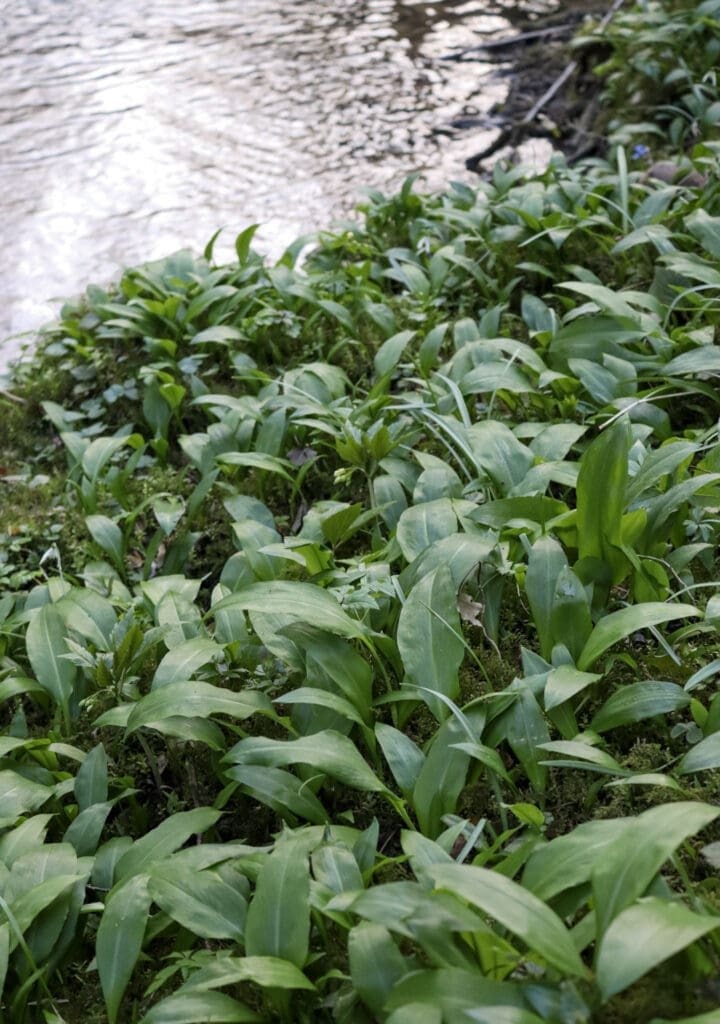
A new spring day, a new season, a fresh start… and right along with it, a basket full of wild garlic. Its season is short, just a few quiet weeks between March and May, and that’s probably what makes it feel so special when it finally pops up.
If you’re in North America, you might know its cousin, the ramp (Allium tricoccum). It’s a bit stronger, more onion-like. Wild garlic (Allium ursinum), the one we forage here, is softer, leafier, with broader leaves and gentle white flowers. Same family, just a slightly different taste. Ramps can also be used in this recipe.
Long before either landed on a restaurant menu, both were already part of old folklore. Europeans believed that bears (ursinum means bear) would seek out wild garlic after hibernation to regain their strength, so eating it was thought to make you strong like a bear. It was hung over doorways to repel vampires and witches, and carried during the plague as protection against disease. If you found a patch of wild garlic on the woodland floor, it marked a place of fertile soil, touched by something a little beyond the ordinary.
There are even stories from not so long ago about folks known as “ramp eaters” who had to sit at the back of the church, simply because the strong garlic smell gave them away. Can you imagine that?
These days, our obsession is more culinary than superstitious. Every spring, we look forward to creating new recipes with this vibrant plant – from a bright, herby wild garlic pesto that works on almost everything, to a creamy wild garlic risotto, to bright green wild garlic pasta dough, and wild garlic pizza with roasted chickpeas and fresh cheese.
This week, we baked a wonderful wild garlic babka bread with a soft, pillowy dough swirled with wild garlic pesto filling. It’s indulgent and feels somewhere between a classic babka and a rustic tear-and-share wild garlic bread that’s hard to stop eating. It looks impressive, like something you spent hours on… but really, it’s just a simple dough and a good handful of wild garlic doing all the work.
If you’ve never baked wild garlic bread like this before, you’re here for something super tasty. I love it. Let’s see how to make it!
Ingredients you’ll need
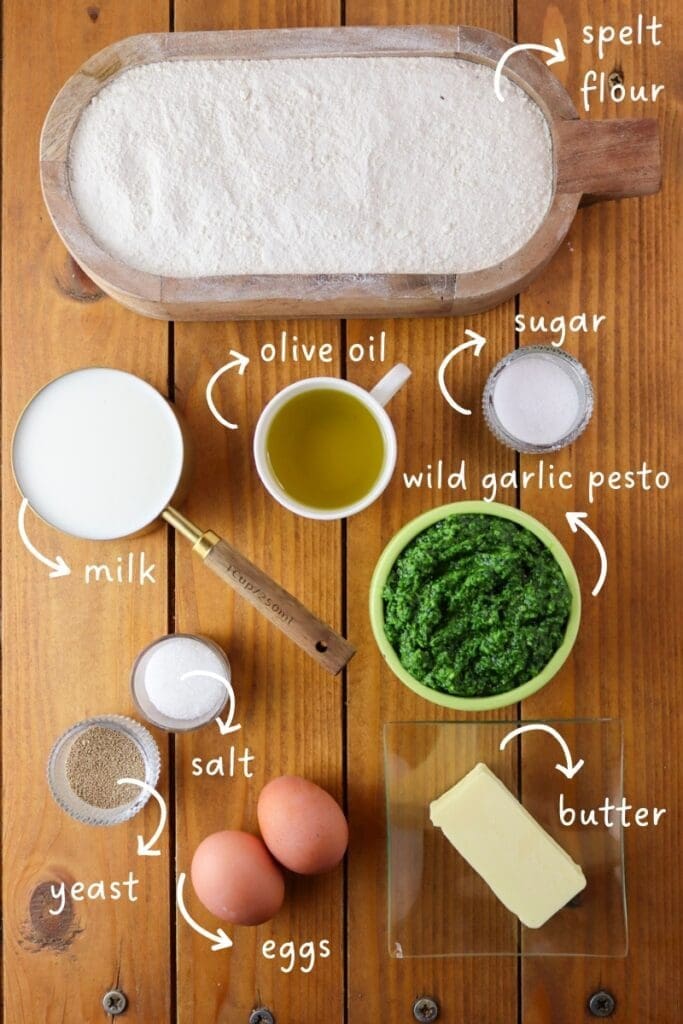
WILD GARLIC PESTO – We made ours with hazelnuts instead of pine nuts, and the combination works great. You can play around here as much as you like, as long as there’s enough wild garlic in it. If the pesto feels too loose, add a few more leaves so it spreads nicely and stays in place when you roll the dough.
SPELT FLOUR – White spelt flour is perfect for this bread. It’s healthier, lighter, easier to work with, and requires less kneading. It gives you a soft, fluffy crumb with minimal effort. You’ll love it!
BUTTER – It goes into the dough, and it’s exactly what makes this bread so rich and soft; it just melts in your mouth. Don’t skip it.
EGGS – One goes into the dough, and the other is used to brush the loaf before baking for a wonderful golden-brown crust.
MILK – Used to activate the yeast and make the dough really soft. It won’t make it taste milky, just nicely fluffy.
OLIVE OIL – Just a tablespoon to grease the pan. It creates a crispy crust on the outside.
DRY YEAST – We used dry yeast, and it works perfectly with spelt flour. No need to overthink it or go hunting for fresh yeast.
SEA SALT – Just a pinch for balance and to bring out that beautiful garlicky flavor.
SUGAR – Optional, but a small spoonful helps the yeast wake up faster.
How to make wild garlic babka bread step by step
STEP 1: Before you start with the dough, activate the dry yeast. In a small bowl or cup, combine lukewarm milk or water with a teaspoon of sugar. Add the yeast and let it sit for a few minutes. You’ll know it’s ready when it turns foamy and slightly bubbly on top.
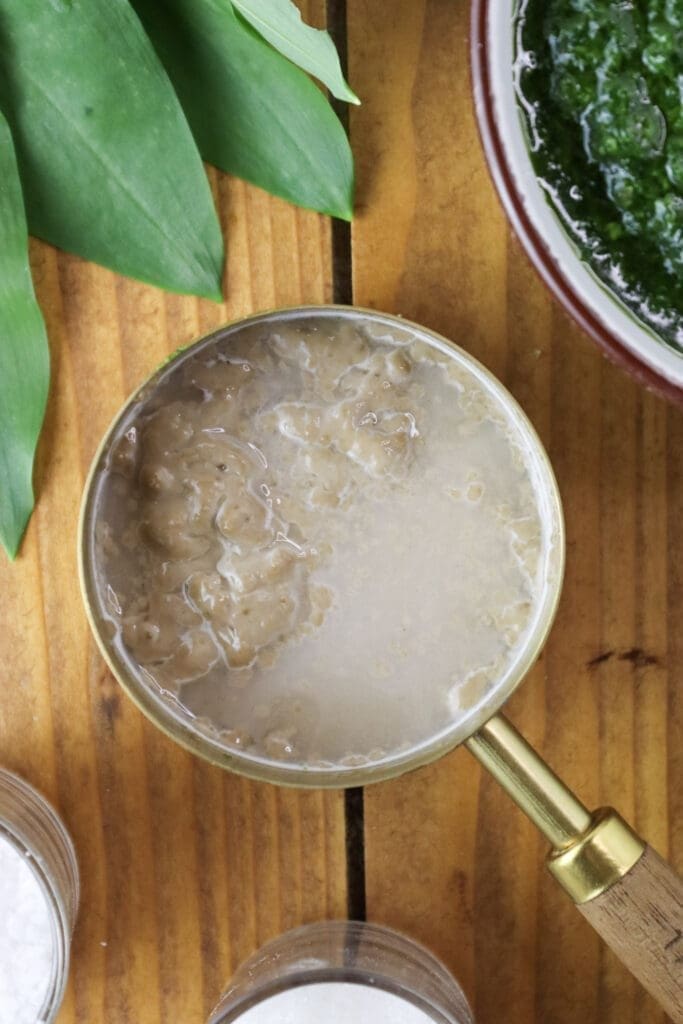
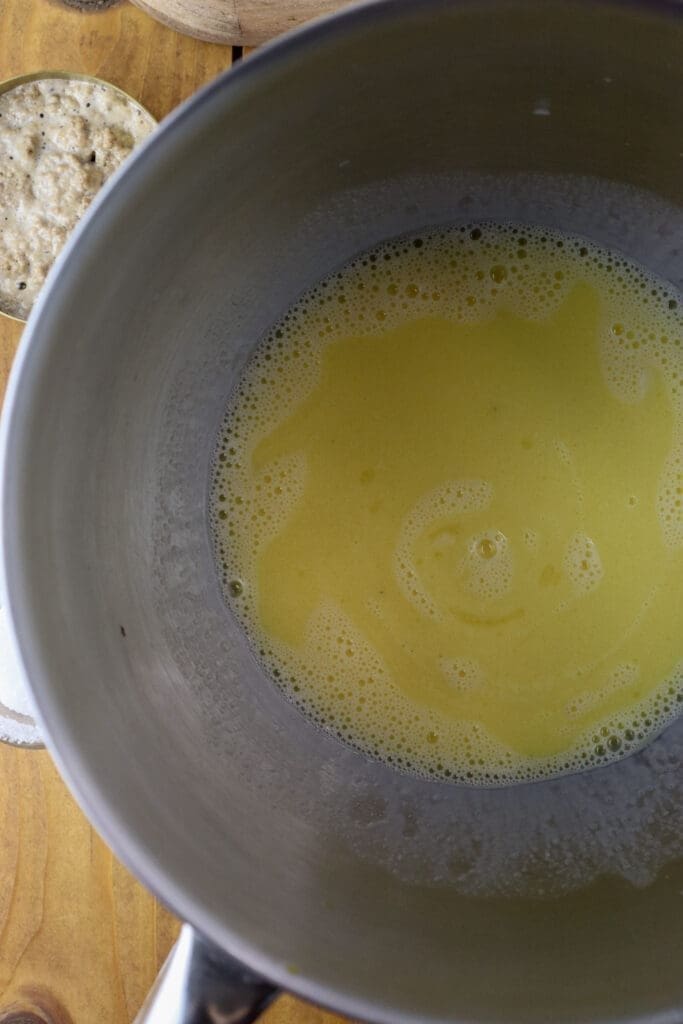
STEP 2: Melt the butter in the remaining milk. In a large bowl, whisk one egg, then pour in the warm buttery milk mixture.
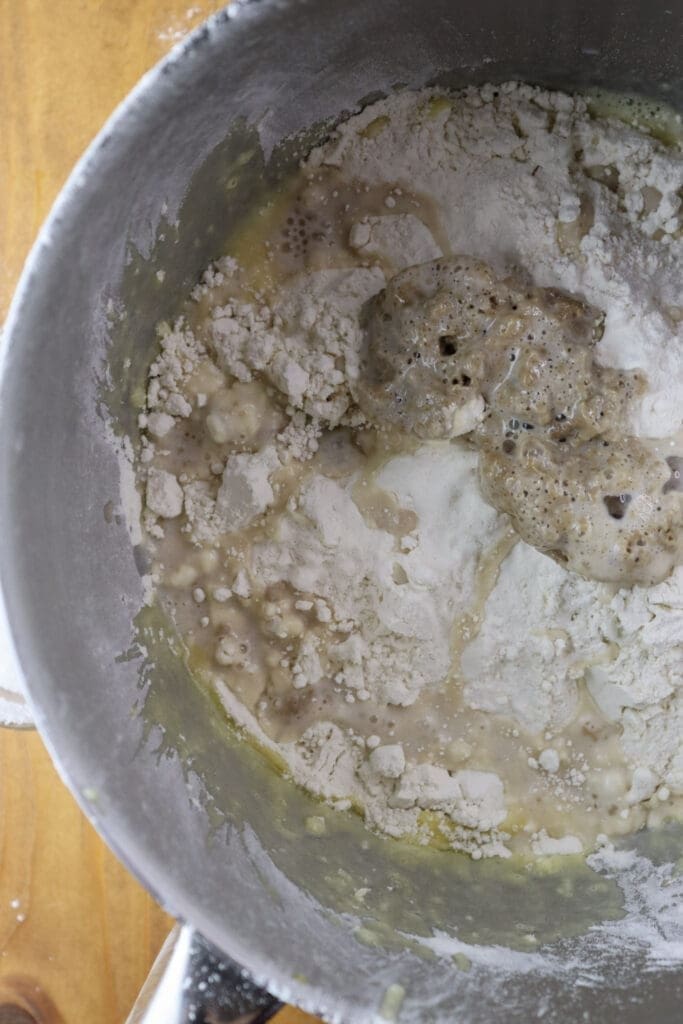
STEP 3: In a separate bowl, mix the spelt flour with a pinch of salt. Once the yeast is ready, add it to the egg and milk mixture, then gradually stir in the flour. Mix until you get a rough, slightly sticky dough.
STEP 4: At this stage, you’ll have a rough dough that still needs to be kneaded. If you’re using a stand mixer with a dough hook, let it knead for about five minutes. The same goes if you’re working by hand. Spelt flour needs less kneading than regular all-purpose flour, so be careful not to overdo it.
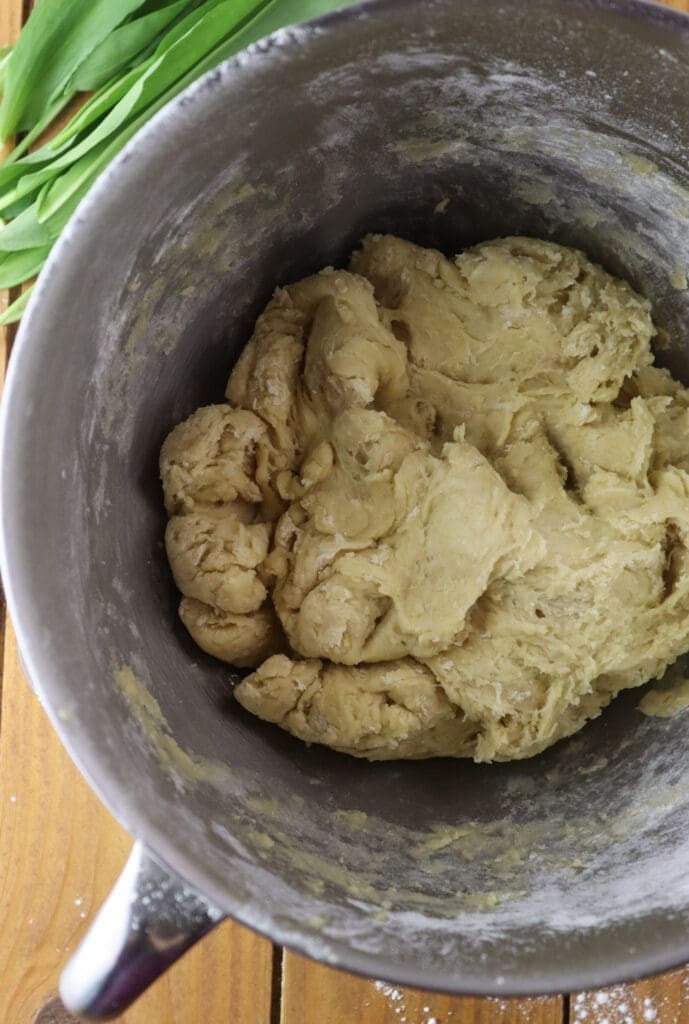
STEP 5: Once the dough is properly kneaded, place it in a lightly floured bowl, cover it with plastic wrap or two kitchen towels, and let it rise in a warm place. This should happen in about 45 minutes.
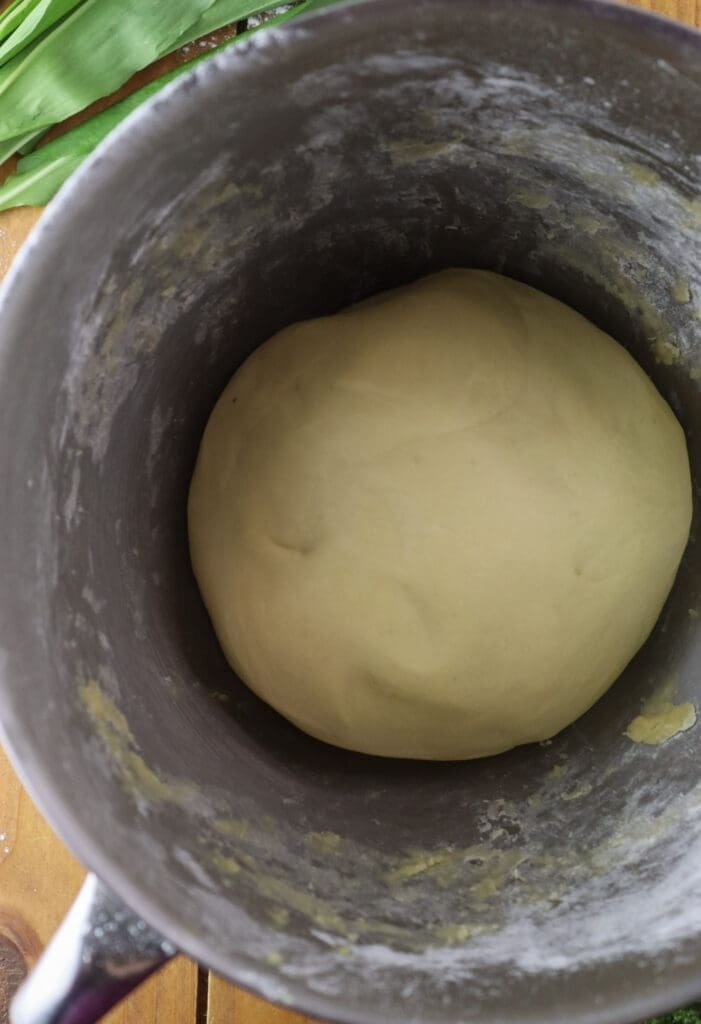
STEP 6: When the dough is ready, it will have tripled in size and feel very soft and airy. That’s your sign to move on to the filling. Don’t forget to preheat the oven to 175°C/347°F.
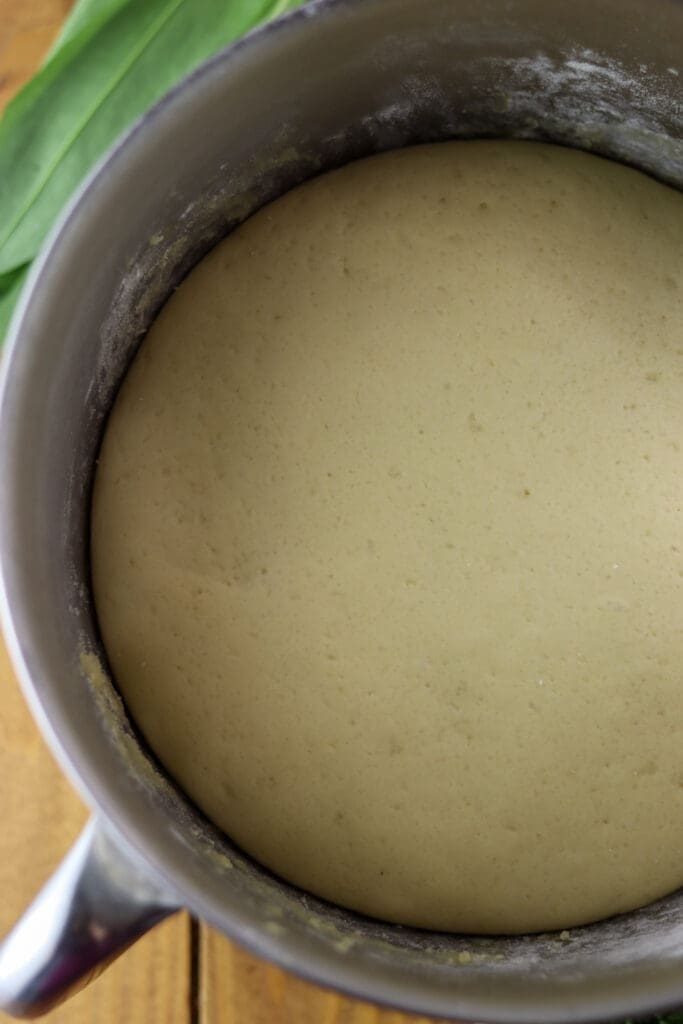
STEP 7: Lightly flour a clean work surface and roll the dough into a large rectangle, about 0.5 cm (around ¼ inch) thick. Try to keep the thickness even across the whole dough.
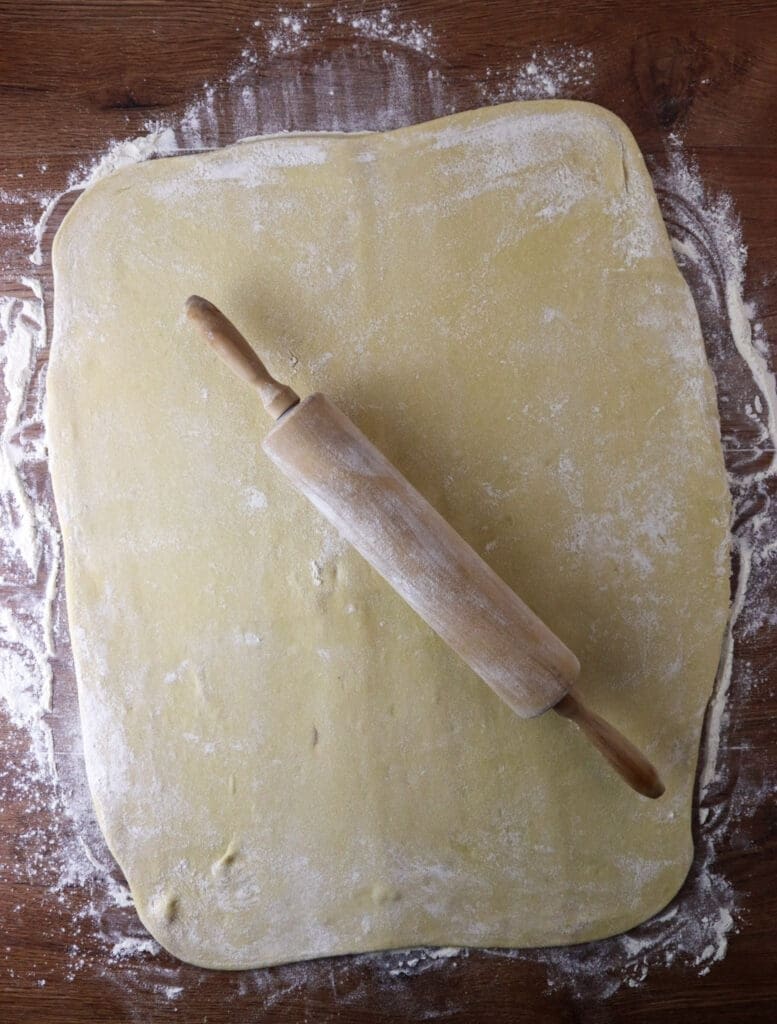
STEP 8: Now it’s time to spread the wild garlic pesto. Use a spatula to gently cover the dough in an even layer. Don’t hold back; a generous amount makes the bread so delicious! If the pesto feels too runny, add a few more wild garlic leaves to a blender to thicken it up.
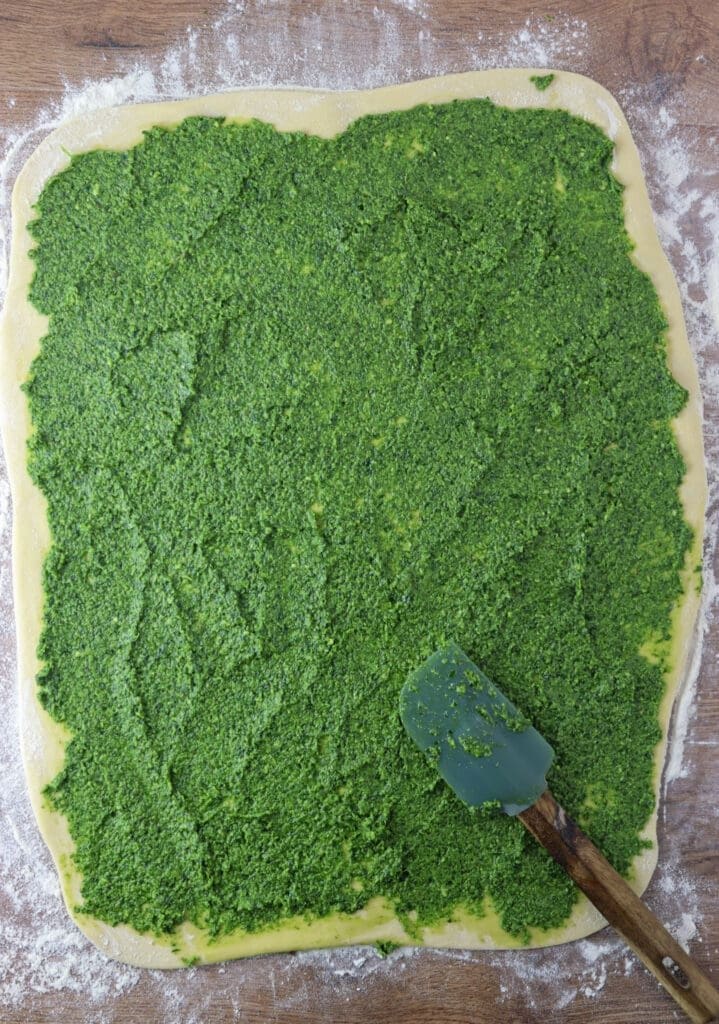
STEP 9: Roll the dough into a fairly tight log. Don’t press it too hard, but keep it snug enough so it holds its shape when you cut and transfer it to the pan. A tighter roll will be much easier to work with.
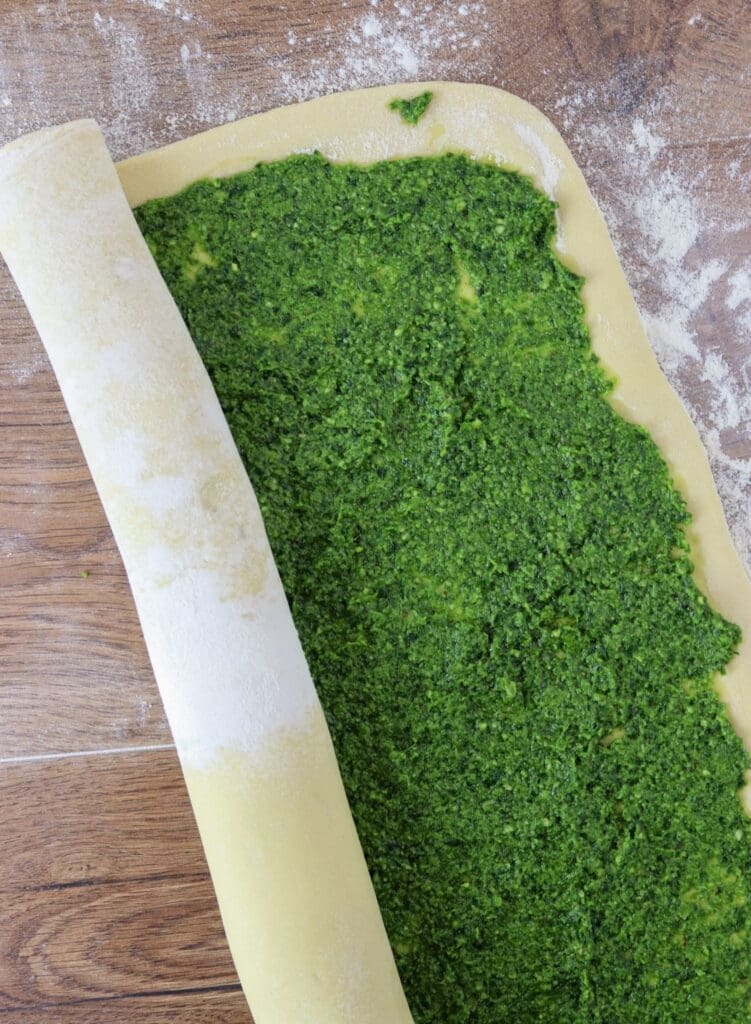
STEP 10: Then cut the log into two even pieces using a sharp knife.
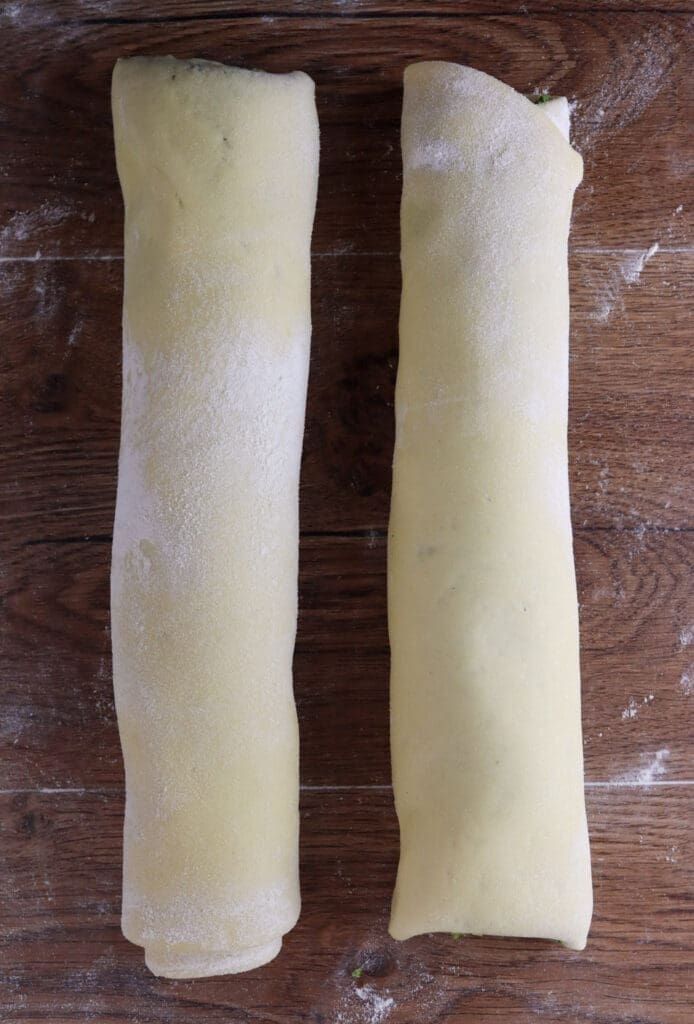
STEP 11: Cut each piece in half lengthwise. You can leave one end connected if that makes it easier to handle. I usually don’t cut all the way through and keep the bottom intact, as it makes transferring the dough to the pan much simpler.
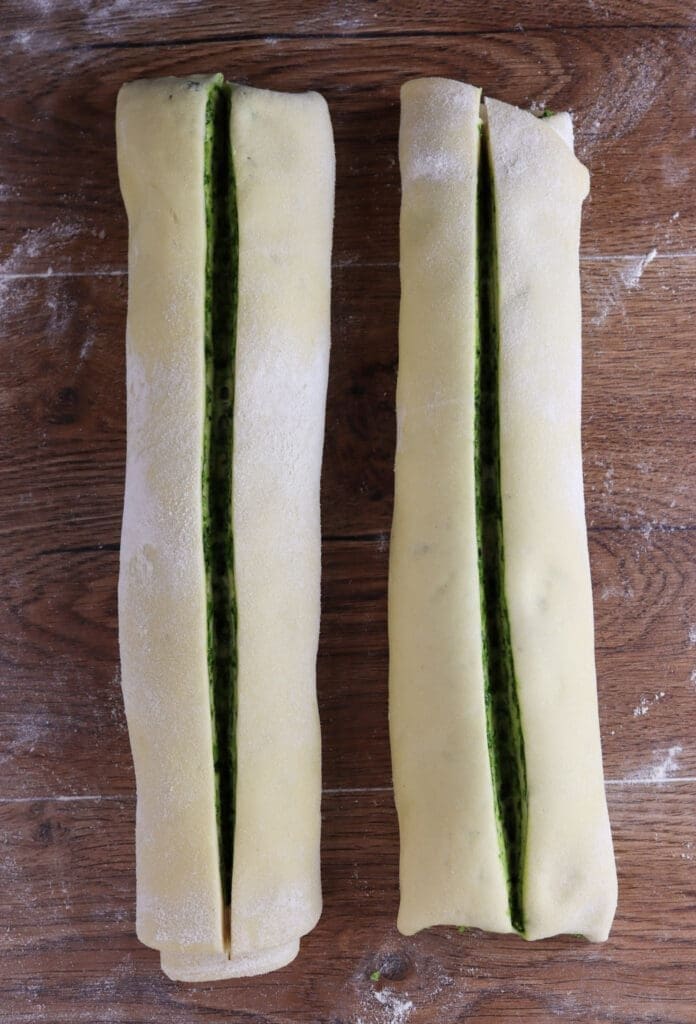
STEP 12: Now gently twist the two pieces around each other and pinch the ends to seal. The bread will open up a bit, revealing that beautiful wild garlic pesto inside.
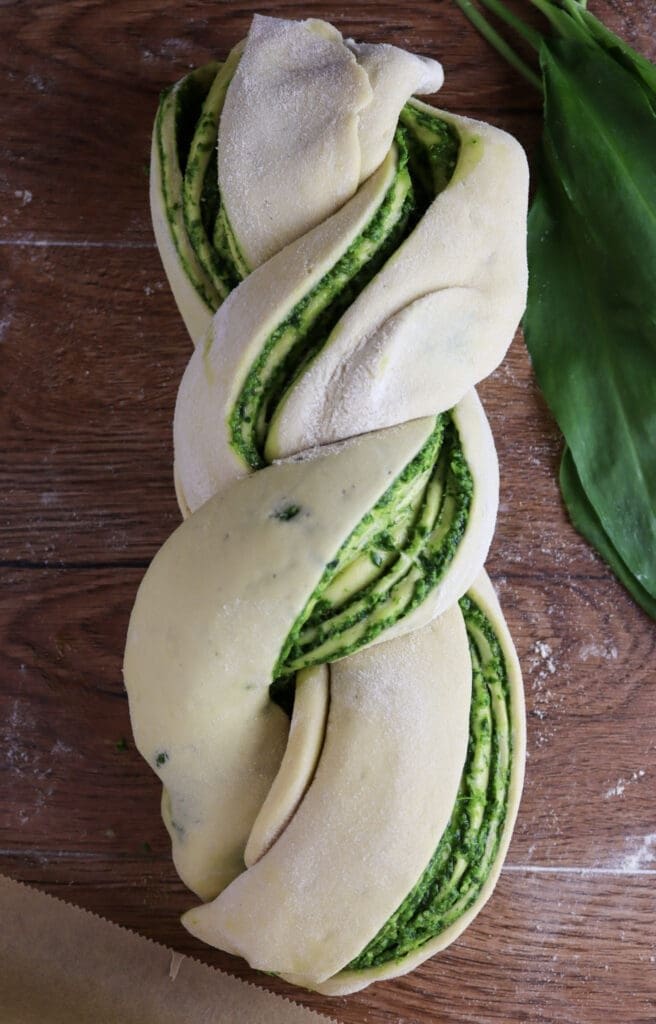
STEP 13: Carefully transfer it to a loaf pan lined with parchment paper and generously greased with olive oil. You might need to gently tuck the ends in so it fits. Cover with two kitchen towels and let it rise again in a warm place. Once it’s nicely puffed up, brush it with an egg wash made from egg yolk and a little water.
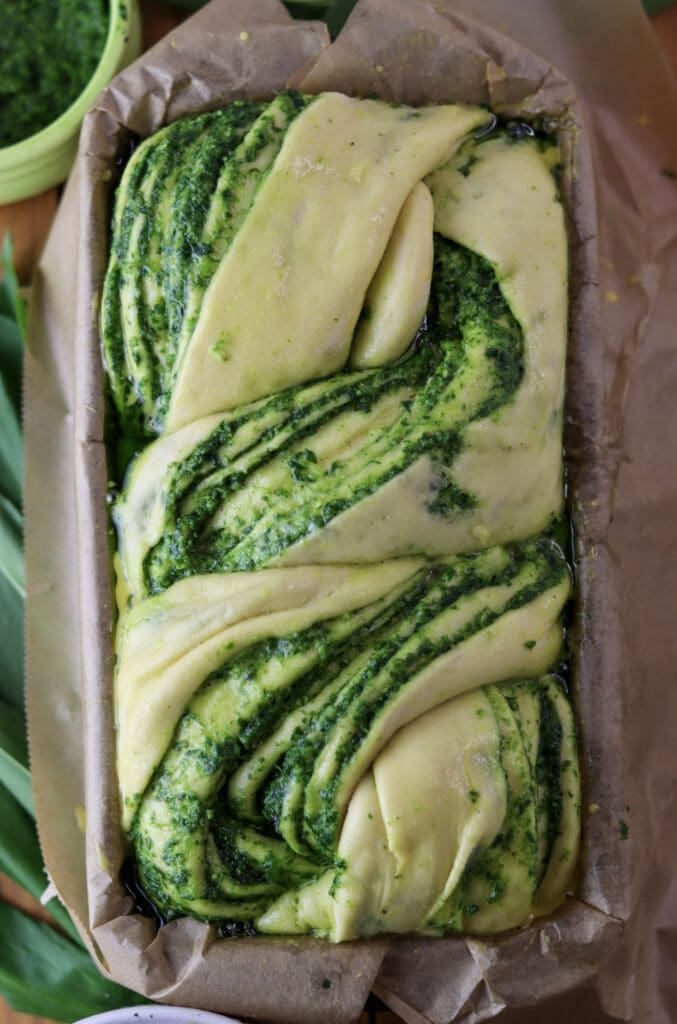
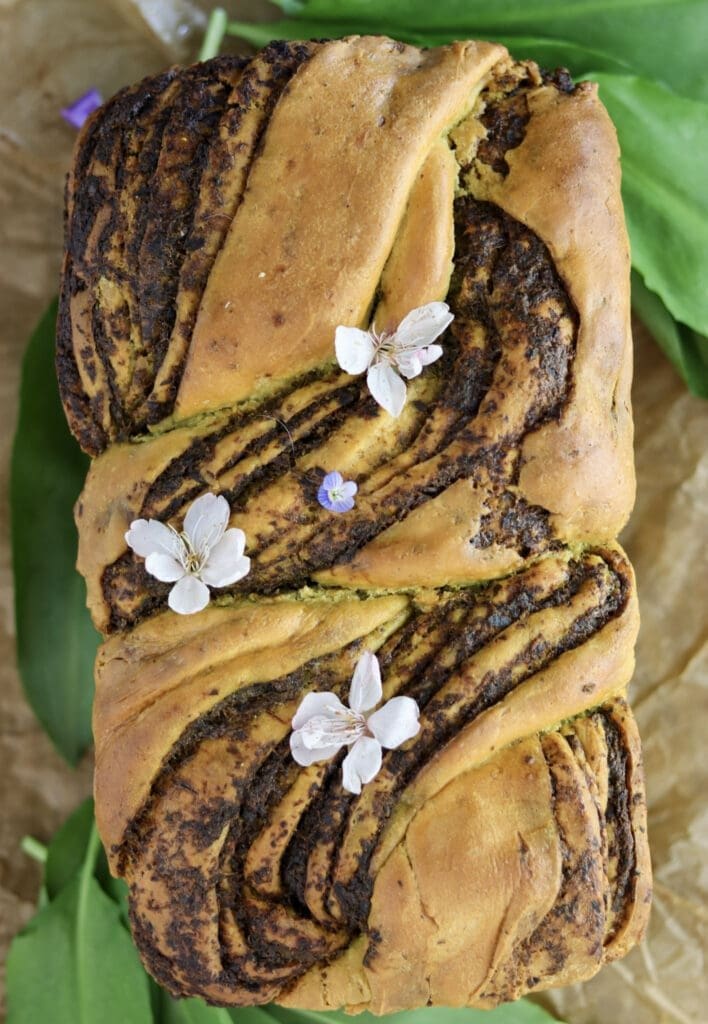
STEP 14: Bake at 175°C / 347°F for about 55 minutes. After the first 15 minutes, loosely cover it with a piece of parchment paper to keep the exposed wild garlic pesto from browning too much. When it’s done, the top should be golden and crisp.
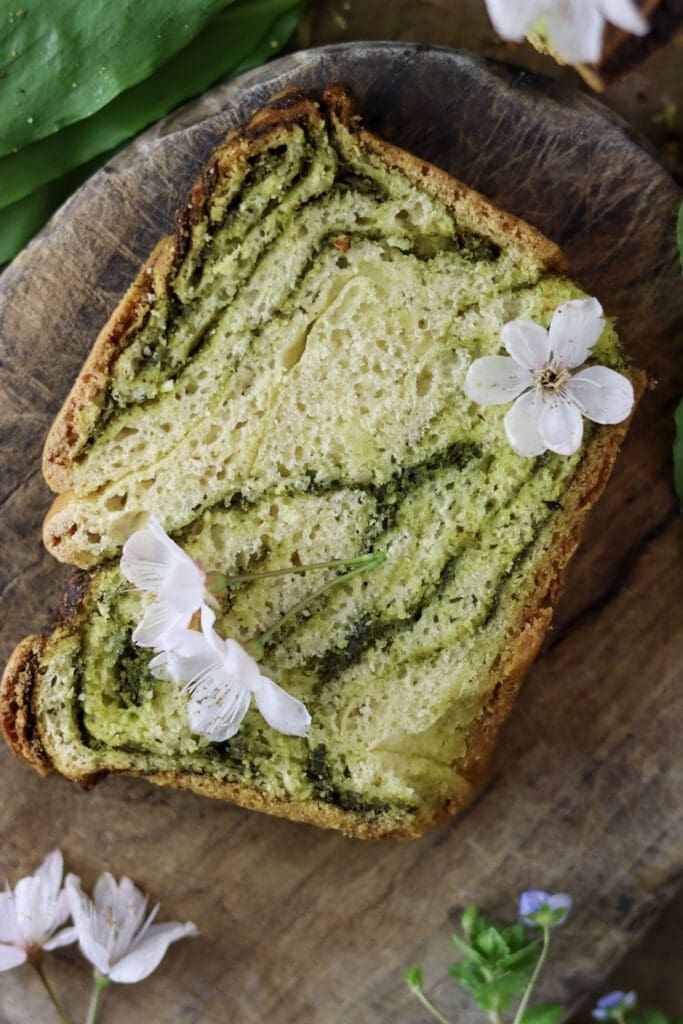
Before slicing, let it rest for a few minutes wrapped in a clean kitchen towel. I know, I know, it smells incredible, so waiting isn’t easy. But trust me, it’s worth it.
Tips for the best soft and fluffy wild garlic bread
Use fresh wild garlic pesto. Although the one you saved for winter is good enough, the bread will taste much more aromatic and flavorful with a new batch. Freshly foraged, vibrant leaves (before the plants bloom) are simply the best.
Keep the pesto thick. Add a few more leaves if needed, so it’s thick enough to spread easily without leaking when you roll the dough.
Don’t knead for too long. Spelt flour needs less kneading than all-purpose flour. Its gluten is more delicate and fragile, so if you overdo it, the structure can break instead of strengthen.
Be generous with the filling. When the bread bakes, the oil and cheese from the pesto soak into the dough, and that’s exactly what makes it so good and irresistible.
Roll the dough snugly. It makes it easier to work with, easier to cut, and much smoother to twist into a babka shape. Still, keep it loose enough so the layers can open up as it bakes.
Be careful how you cut it. The dough is soft, so use a really sharp knife. Leave the bottom of the log in one piece so twisting the babka is easier, and transferring it to the loaf pan goes more smoothly.
Cover the bread while baking. Place a piece of parchment paper on top to keep the pesto from browning too quickly or burning.
Wild garlic babka bread is great with
- a savory breakfast spread like wild garlic butter or kajmak
- fresh spring salads like dandelion salad or taboule
- a bowl of rustic soup, like pear-potato soup or barley soup
- slow-cooked stews like beans, lentils or goulash
- snacks like olives, cheese and smoked sausages
How to store it
This delicious wild garlic bread will stay fresh and tasty for up to 3 days if you keep it in a sealed container or wrap it in foil. Just make sure it has cooled to room temperature before storing.
It also freezes well and will keep for up to 3 months in the freezer.
Wild garlic bread FAQ’s
Yes! Spelt flour absorbs liquid more quickly than all-purpose flour, so you’ll need to add about 20% more milk or warm water. Also, wild garlic bread with all-purpose flour needs longer kneading, about 8 minutes.
If your wild garlic babka bread didn’t rise enough, the yeast is usually the reason. It may not have activated properly if the milk was too hot or too cold. A cold kitchen can also slow things down, so give the dough enough time to rise. Make sure it’s covered. With spelt flour, avoid overkneading, as it can weaken the dough rather than strengthen it.
For the pesto, it’s best to use fresh wild garlic leaves. There will usually be some stems as well, especially with more mature plants, but don’t worry, the stem is soft and fully edible; it blends into the pesto without any problem.
It’s much milder than raw garlic. Once baked, it becomes soft, sweeter, and aromatic rather than sharp. The Parmesan and the nuts from pesto add even more flavour.
More wild garlic recipes
Wild Garlic Babka Bread
EQUIPMENT
- 1 loaf baking pan
INGREDIENTS
- 500 g spelt flour
- 200 g wild garlic pesto
- 240 ml milk
- 2 eggs
- 70 g butter
- 10 g dry yeast
- 1 tbsp olive oil
- 1 tsp salt
- 1 tsp sugar
INSTRUCTIONS
- First activate the yeast. In a small bowl or cup, mix lukewarm milk (or water) with a teaspoon of sugar. Stir in the dry yeast and leave it for a few minutes. It should turn foamy on top, that’s how you know it’s ready.
- Warm the remaining milk and melt the butter into it. In a large mixing bowl, whisk the egg, then pour in the warm milk and butter mixture.
- In another bowl, combine the spelt flour with a pinch of salt. Add the activated yeast to the wet ingredients, then gradually mix in the flour. Stir until everything comes together into a soft, slightly sticky dough.
- Now knead the dough until it becomes smooth. If you’re using a mixer, let it run with a dough hook for about 5 minutes. If kneading by hand, follow the same timing. Spelt flour is delicate, so don’t overwork it.
- Transfer the dough to a lightly floured bowl, cover it, and leave it in a warm spot to rise for about 45 minutes, or until it has grown noticeably in size.
- Once risen, the dough should feel very soft and airy. At this point, preheat your oven to 175°C/347°F.
- Turn the dough onto a lightly floured surface and roll it out into a large rectangle, about 0.5 cm (¼ inch) thick. Keep it as even as you can.
- Spread the wild garlic pesto evenly over the dough. Use a spatula and go generous with it, this is where the flavor comes from. If it feels too thin, blend in a few extra leaves to thicken it.
- Roll the dough up into a log. Keep it fairly tight so it holds together, but don’t press it too hard.
- Slice the log into two equal pieces with a sharp knife.
- Twist the pieces around each other and pinch the ends to seal. The layers of wild garlic pesto will show on top.
- Place the shaped dough into a loaf pan lined with parchment paper and lightly greased with olive oil. Tuck it at the ends if needed. Cover and let it rise again until slightly puffed then brush it with egg yolk mixed with a little water.
- Bake at 175°C / 347°F for about 55 minutes. After 15 minutes, loosely cover with parchment paper to protect the top from over-browning. The bread should come out golden with a lightly crisp crust. You can check the inside with a toothpick.
- Let it rest for a few minutes wrapped in a kitchen towel before slicing. Enjoy 🙂
Wow, this bread looks so beautiful! I love baking with spelt flour, it’s easier on the stomach and not overly modified as modern wheat. Thank you for the recipe, we’ll make one this weekend 😊
Thanks Milo, enjoy!