
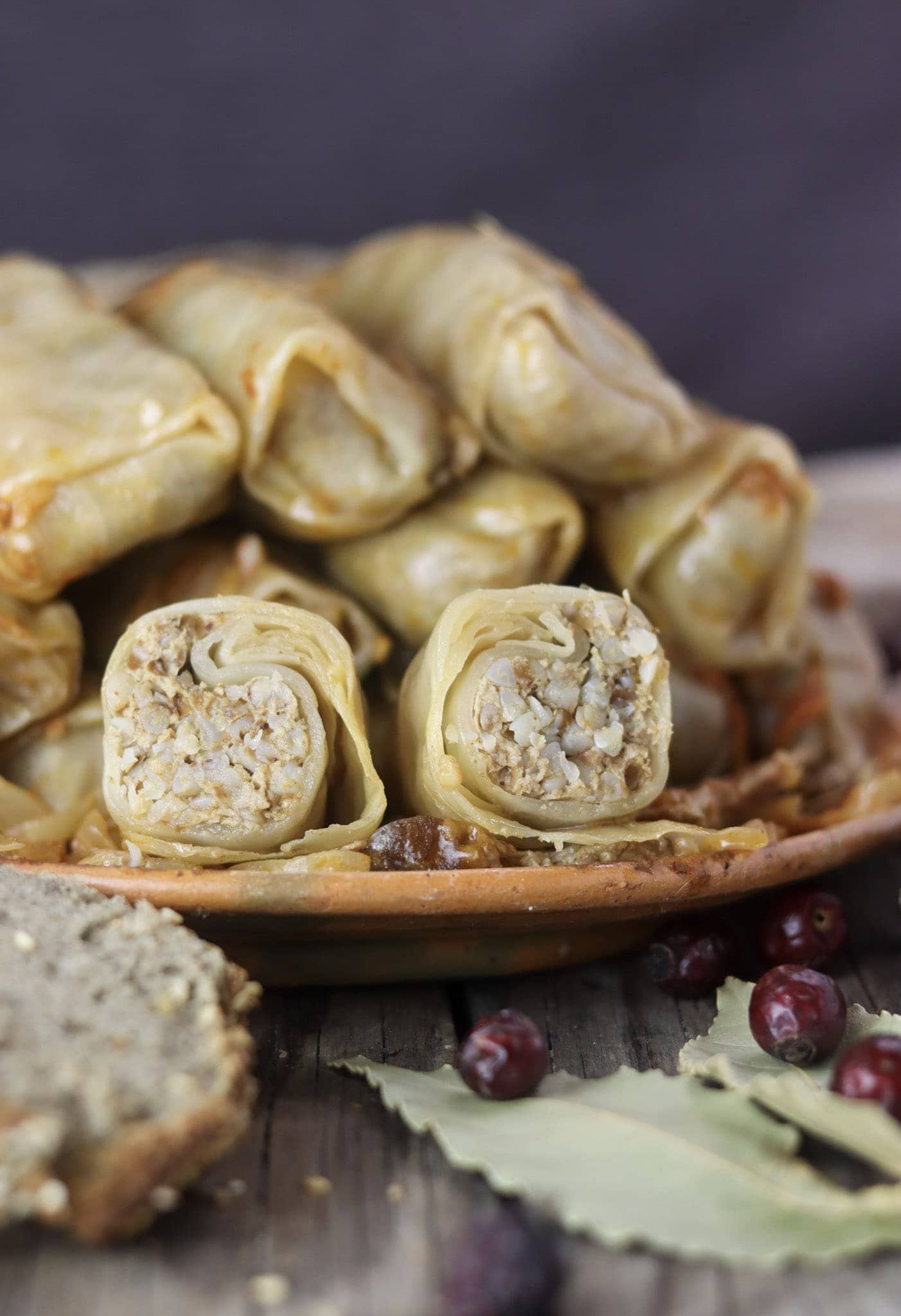
These cabbage rolls with buckwheat are a simple variation on classic sour cabbage rolls, combined with (or without) ground meat, cooked in tomato sauce, and nicely flavored with smoked pork ribs. Traditional, but a little different.
They’re baked in the oven instead of cooked on the stove (which keeps things simpler), naturally gluten-free, and a solid choice for a healthy, slow-cooked winter meal with a touch of old-fashioned inspiration.
Cabbage rolls with buckwheat instead of rice
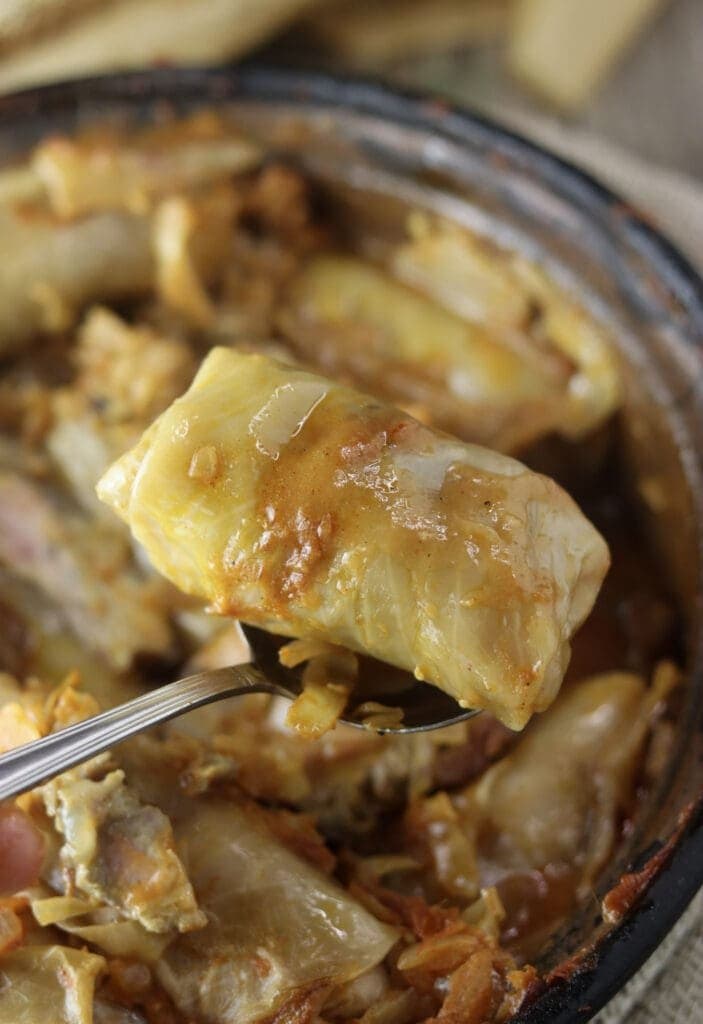
Stuffed sour cabbage is a traditional winter dish across Slavic countries, most often cooked during the colder months when fermented cabbage is always on hand. Called sarma in the Balkans, this is very likely the first thing you’ll eat on the first New Year’s day! The dish has basically the same sour note as the delicious Slovenian jota soup or Polish lazanki noodles (also made with buckwheat), where sauerkraut adds a unique flavor that can’t be replaced.
If you’ve tried any of our buckwheat recipes, this one is truly a must. These rolls are filled much like japrak, but instead of grape leaves, everything is wrapped in sour cabbage. Buckwheat replaces the classic rice, pairs great with the smoky flavors and the hearty sauce, and works just as well with or without ground meat.
Why you’ll like this recipe

Baking makes things easier. These cabbage rolls aren’t cooked like classic sarma but baked in the oven instead. You simply stack them in a covered baking pot, pour over the sauce, and let the oven do the work.
Buckwheat is a healthier choice. It’s far more nutritious than white rice, naturally rich in minerals, vitamins, and fiber, and its earthy aroma pairs especially well with sour cabbage.
There’s no need to cook it first. As the rolls bake, buckwheat quickly absorbs enough liquid from the sauce and softens perfectly on its own.
They hold together well. The stuffing includes an egg for structure, and each roll is secured with a toothpick, so nothing falls apart when you cut them in half.
They’re completely gluten-free. Nutritious, light, and gut-friendly, these rolls won’t leave you feeling heavy even if you eat the whole pot.
100% naturally gluten-free, without any tricks. Grain-free, with no unusual binders or specialty ingredients; everything holds together just with pantry staples you likely already have at home.
They last. Like most cabbage dishes, they taste even better the next day.
Ingredients and substitutions
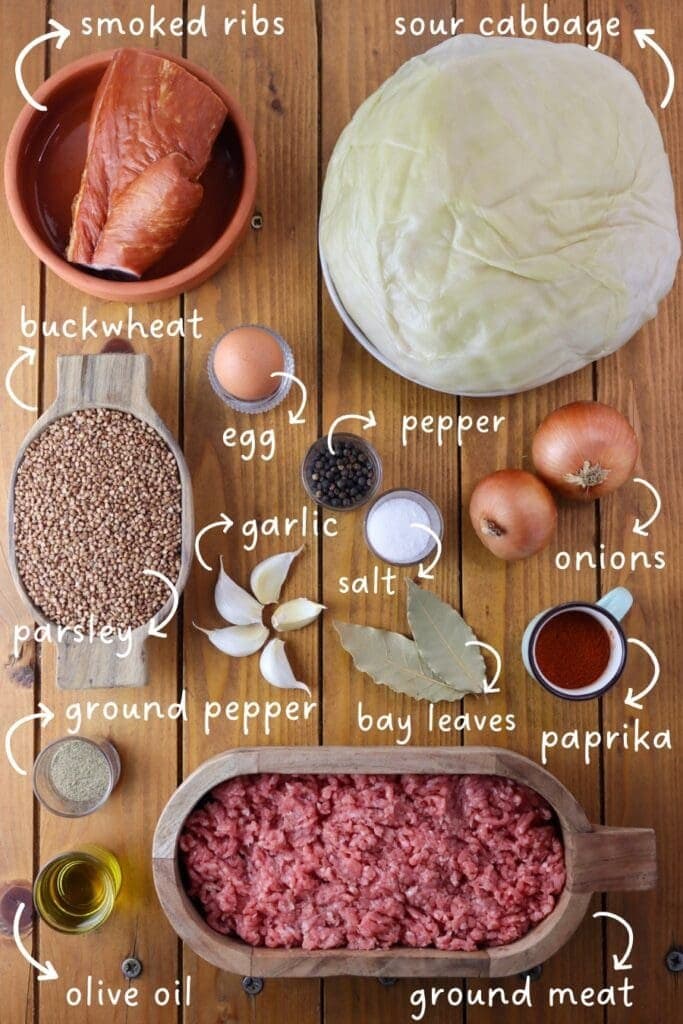
SOUR CABBAGE LEAVES – If you can’t find these in the market, it’s well worth rolling up your sleeves and stacking up on homemade whole fermented sour cabbage heads. It takes a little work, but it always pays off!
BUCKWHEAT GROATS – I used hulled buckwheat groats from common buckwheat. Go organic if you can.
GROUND MEAT (optional) – Use whatever type you prefer; we used a mixture of ground beef and pork. You can also replace it with cooked beans (or lentils) for a vegetarian version or make some very tasty mushroom cabbage rolls with fresh mushrooms.
SMOKED PORK RIBS (optional) – You can swap these for other smoked cuts, like smoked bacon or pork neck, or use extra smoked paprika for a vegetarian option. Just don’t skip the smoky note – it’s what gives these cabbage rolls with buckwheat their character.
AN EGG – One egg goes into the filling to bind everything together, so the rolls hold their shape when you cut into them.
OLIVE OIL – I used olive oil, but if you prefer to stick closer to tradition, lard is a good option.
ONIONS – Two onions are used here: one for the filling and one for the sauce. Red onions don’t work well in this recipe.
GARLIC – Five cloves give just enough garlic aroma to balance the smoky and sour flavors.
TOMATO SAUCE – Fresh tomatoes work too; they just need a bit more time to cook down into a sauce.
BUCKWHEAT FLOUR – Only two tablespoons are needed to thicken the sauce while still keeping it light and gluten-free.
SMOKED PAPRIKA – Non-negotiable. This is one ingredient where quality really shows, so use the best you can.
SALT, BLACK PEPPER AND BAY LEAVES – And that’s it. Black pepper comes in both whole and ground, and bay leaves add flavor while also helping with digestion (yes, including the farting part).

How to make baked sour cabbage rolls with buckwheat
STEP 1: Preheat the oven to 356°F / 180°C.
Find a small skillet and heat a tablespoon of olive oil. Finely chop one large onion and sauté on medium heat it until soft, golden brown, and translucent. Set it aside and let it cool slightly.


STEP 2: In a bowl (big enough for all stuffing ingredients), combine the ground meat and buckwheat groats. Add the beaten egg, the sautéed onion, half a tablespoon of smoked paprika, a teaspoon of salt, and ground black pepper. Mix well so the buckwheat is evenly distributed and the mixture feels sticky.

STEP 3: Then finely chop or crush the garlic and add it to the mixture. Pour in 1 cup of cold water and mix again until the liquid is almost completely absorbed. The filling should feel softer now, but still sturdy enough to hold its shape when stuffed.


STEP 4: Gently separate the outer leaves from the fermented cabbage head and lightly score the thick vein running down the center of each leaf. This makes the leaves more flexible and much easier to roll. You’ll have just enough filling for about 21 cabbage leaves.

STEP 5: Lay a cabbage leaf flat on a board or plate. Spoon slightly less than ¼ cup of filling a few centimeters from the base of the leaf. If the stem feels too thick, trim it down a bit so it doesn’t get in the way.

STEP 6: Fold the sides of the leaf over the filling, then roll it up firmly toward the tip of the leaf. You want the roll snug, but not tight.


STEP 7: Secure each roll with a toothpick if needed. This helps keep everything neatly wrapped while baking and makes slicing later much easier.


STEP 8: Repeat with the remaining leaves and filling. Try to keep the rolls roughly the same size so they cook evenly. There’s no need for perfection, just consistency. You can see mine turned out everything but perfect, but they baked and tasted divine!

STEP 9: Now lightly grease a deep baking pot or pan (one that can be covered with a lid or aluminum foil). Spread a thin layer of leftover sliced cabbage on the bottom to protect the rolls and add flavor.

STEP 10: Arrange the cabbage rolls in the pot. If your pot is round, tuck small pieces of smoked pork or bacon into the gaps between the rolls. This is where that delicious smoky flavor comes from!

STEP 11: Scatter a few thin slices of smoked pork over the first layer of rolls, then continue with the next layer. Find a small spot for a bay leaf, too.

STEP 12: Add the remaining cabbage rolls and again tuck small pieces of smoked pork between them wherever there’s space.

STEP 13: If you have extra cabbage leaves left, slice them thinly and spread them over the top. This keeps the rolls from drying out and you can later mix the slices into the sauce. Pour in about 2 cups of water, or just enough to reach the top of the rolls. Cover the pot and bake for 1 hour at 356°F / 180°C.

STEP 14: While the rolls bake, prepare the sauce. Finely chop the second onion and sauté it in a little olive oil until golden. Add the buckwheat flour and smoked paprika, stir briefly, then pour in about 1½ cups of water. Season with salt and pepper and simmer for 4–5 minutes.


STEP 15: After one hour, remove the pot from the oven. Pour the sauce over the cabbage rolls, making sure they’re fully covered. Add a little more water if needed, then return the pot to the oven and bake for another 35 minutes at 338°F / 170°C. For a thicker sauce, bake the rolls uncovered in the last 15 minutes.

STEP 16: The dish is ready when the sauce looks rich and settled around the edges of the pot. Remove from the oven, gently mix the sliced cabbage from the top into the sauce, and serve the rolls hot.
Indeed, this is one of those dishes that only gets better as it sits. But (I know, I know), like most Balkan recipes, it’s nearly impossible not to dig in right away. Enjoy!

Tips worth remembering
Shorten the cooking time by soaking the buckwheat. It will cook a bit faster, just remember to reduce the amount of water and sauce so the filling doesn’t become too loose.
Rinse the cabbage leaves if they’re very sour. A quick rinse under cold water softens the sharpness while keeping the fermented goodness.
Score the thick vein properly. Don’t skip this step. A shallow cut along the stem makes the leaves more flexible and much easier to roll.
Don’t overfill the rolls. Buckwheat expands as it cooks, so leave a little room or the rolls may burst open in the oven. At the same time, pack them firmly enough to hold their shape. A toothpick helps keep the leaf from opening.
Keep the rolls similar in size. They don’t need to look perfect, just close enough so they cook evenly.
Don’t pack them too tightly in the pan. Leave some space to tuck in the smoked bacon slices. They’ll soften as they cook allow the rolls just enough room to expand during baking.
Uncover the pot if needed. If you want a thicker sauce, uncover for the last 10–15 minutes and let it reduce as it bakes.
Make extra rolls. They keep well for a few days, and they only get better with time!

Serving suggestions
I love eating these cabbage rolls with mashed potatoes, polenta, or homemade dumplings on the side. But they’re just as good (if not better) with just a slice of polenta bread or buckwheat bread with walnuts. A piece of strudel makes a great sweet ending.
For a really nice gluten-free dinner, serve them with buckwheat soda bread and finish with walnut-stuffed apples (tufahije). Or just a cup of black coffee and buckwheat cookies. Nothing truly beats the Balkan kitchen, does it?

Storing the leftovers
Freezing works too. Pack the rolls into smaller portions and store them in an airtight container. They’ll keep in the freezer for up to 3 months. Thaw them overnight in the refrigerator, then reheat as described above. Freeze only once.
When reheating, you can put them back in the oven at 302°F/150°C, or reheat them gently on the stovetop (if there’s enough sauce left). If the sauce is too thick, add a bit of water.
Cabbage rolls with buckwheat keep very well in the fridge for up to seven days, and they honestly get more and more delicious every day. The key here is storage: make sure the pot or container is tightly covered.
Cabbage rolls with buckwheat FAQs
To make vegan cabbage rolls with buckwheat skip the meat and egg, use cooked lentils or beans instead, add a little extra buckwheat for body, and add smoked paprika (or another smoked spice) for depth. This variation is especially tasty when combined with wild mushrooms.
Yes, you can, but it’s not necessary. Buckwheat cooks through while the rolls bake, and it absorbs the sauce nicely. If you do cook it beforehand, reduce the liquid in the recipe so the filling doesn’t turn too soft.
For fermenting whole cabbage heads, white cabbage varieties are best. Look for late-season or winter cabbages with tight, dense heads, high natural sugar content and thick leaves that hold up well during fermentation and stay flexible once fermented. Avoid early or loose-leaf cabbages, as they are often too soft and tear easily when you try to roll them.

Baked Sour Cabbage Rolls With Buckwheat
EQUIPMENT
- 1 bowl
- 1 baking pot or pan (covered)
INGREDIENTS
- 1 sour cabbage head (21 cabbage leaves)
- 250 g buckwheat groats
- 500 g ground meat
- 400 g smoked pork ribs
- 100 ml tomato sauce
- 2 onions
- 5 garlic cloves
- 1 egg
- 2 tbsp olive oil
- 2 tbsp buckwheat flour
- 3 tbsp smoked paprika (powdered)
- 2 tsp salt
- 1 tsp whole black pepper
- 1 tsp ground black pepper
- 2 bay leaves
INSTRUCTIONS
- Preheat the oven to 356°F/180°C.
- Heat the olive oil in a small skillet. Finely chop one onion and cook it over medium heat until soft, golden, and translucent. Set aside to cool slightly.
- In a large bowl, combine the ground meat and buckwheat groats. Add the beaten egg, cooked onion, smoked paprika, salt, and black pepper. Mix until the mixture is evenly combined and sticky.
- Add the chopped or crushed garlic and pour in 1 cup cold water. Mix again until the liquid is mostly absorbed. The filling should be soft but still firm enough to shape.
- Carefully separate the cabbage leaves and lightly score the thick center vein of each leaf to make them flexible. You should have enough filling for about 21 leaves.
- Place a cabbage leaf flat on a work surface. Add just under ¼ cup of filling near the base of the leaf. Trim the stem if it’s too thick.
- Fold the sides over the filling, then roll the leaf up firmly toward the tip to form a compact roll.
- Secure each roll with a toothpick if needed. This helps them keep their shape while baking.
- Repeat with the remaining leaves, keeping the rolls roughly the same size so they cook evenly.
- Lightly grease a deep baking pot or pan that can be covered. Line the bottom with a thin layer of sliced cabbage.
- Arrange the cabbage rolls in the pot. Tuck small pieces of smoked pork or bacon between the rolls where there’s space.
- Scatter a few slices of smoked pork and a bay leaf over the first layer, then add the remaining rolls and more smoked pieces between them.
- f you have extra cabbage leaves, slice them thinly and spread them over the top. Pour in about 2 cups of water, or enough to reach the top of the rolls. Cover and bake in the oven for 1 hour.
- While the rolls bake, prepare the sauce. Sauté the second chopped onion in olive oil until golden. Stir in the buckwheat flour and smoked paprika, then add 1½ cups water, season with salt and pepper, and simmer for a few minutes.
- fter one hour, remove the rolls from the oven and pour the sauce over them, making sure everything is covered. Add more water if needed.
- Return to the oven and bake for 35 minutes at 338°F/170°C. For a thicker sauce, uncover the pot during the last 15 minutes.
- The rolls are ready when the sauce looks rich and settled around the edges. Remove from the oven, stir the cabbage on top into the sauce, and serve hot. Enjoy!
NOTES
- Soaking the buckwheat beforehand will speed up the cooking. If you do this, reduce the liquid in the recipe so the filling doesn’t turn too soft.
- If the cabbage leaves are very sour, rinse them briefly under cold water to mellow the flavor.
- Always score the thick center vein of the cabbage leaves. This small cut makes rolling much easier and prevents tearing.
- Don’t overfill the rolls. Buckwheat swells as it cooks, so leave a little space. Roll them snugly and use a toothpick if needed to keep them closed.
- Aim for rolls of similar size. They don’t need to look perfect, just even enough to bake at the same rate.
- Leave a bit of space between the rolls in the pan. This makes room for the smoked pork and allows the rolls to expand gently as they cook.
- Uncover the pot near the end only if you want a thicker sauce. The last 10–15 minutes uncovered is usually enough.
- Make more than you think you need. These rolls keep well for several days and taste even better after resting.
- Use cooked beans, lentils or wild mushrooms instead of meat for tasty vegan variation.
- Serve with mashed potatoes, polenta, or homemade dumplings for a classic plate. They’re also excellent with simple homemade bread on the side.
- For a fully gluten-free meal, pair them with buckwheat soda bread and finish with walnut-stuffed apples (tufahije).
- Refrigerate: Store the cabbage rolls tightly covered in the fridge for up to 7 days. The flavor improves as they rest.
- Freeze: Portion the rolls into airtight containers and freeze for up to 3 months. Thaw overnight in the refrigerator. Freeze only once.
- Reheat: Warm in the oven at 300°F/150°C, or gently on the stovetop if there’s enough sauce. Add a little water if the sauce has thickened.
NUTRITION
This recipe was featured at My Life Abundant and Esme Salon.
Congratulations, your post will be featured at SSPS 396, see you Monday. Thanks for sharing.
Aww, thank you so much, Esme; I’m so glad you liked these rolls! You just made my day brighter.😊
I love stuffed cabbage rolls known to me as Halupki. These sound great!
Thanks so much for sharing with Sweet Tea & Friends this month dear friend. I’m so happy you’re here.
Thanks so much, Paula! I’m really happy to hear you enjoyed the recipe 😊
Mariama, a few years ago I used a cabbage roll recipe, and it turned out wonderfully. Your recipe sounds delicious. I’m going to save it and give it a try. Thank you for taking the time to share it with us at The Crazy Little Lovebirds link party. We appreciate it very much.
Thanks Stephanie, it’s always such a pleasure to visit and it’s also really nice to see you stopping by:) I’m super glad that you like our recipe!
This sounds like a wonderful recipe! Healthy and tasty. I will try.
I’m so happy to hear that! Let us know how it turns out!